Normal view

There are new articles available, click to refresh the page.
Before yesterdayMain stream

The Metro: How ‘social prescribing’ could solve America’s loneliness epidemic

5 May 2026 at 16:51

Some public health researchers are turning to a new kind of prescription to address the problem. It’s called “social prescribing.” According to former U.S. Surgeon General Vivek Murthy, Americans are in the midst of a loneliness epidemic, and it’s a problem that only seems to be getting worse.

Around 40% of Americans ages 45 and up report being lonely, which puts them at higher risk for all kinds of serious health concerns like dementia and stroke. 

Some public health researchers are turning to a new kind of prescription to address the problem. It’s called “social prescribing.”

Dr. Mary Henningfield is the executive director of the Wisconsin Research and Education Network at the University of Wisconsin. She joined the show to discuss why is loneliness so common, why it is difficult for people to overcome, and how “social prescribing” can help the healthcare can system address loneliness, instead of only its negative consequences.

Listen to The Metro weekdays from 10 a.m. to noon ET on 101.9 FM and streaming on demand.

Subscribe to The Metro on Apple Podcasts, Spotify, NPR.org or wherever you get your podcasts.

Support the podcasts you love.

One-of-a-kind podcasts from WDET bring you engaging conversations, news you need to know and stories you love to hear. Keep the conversations coming. Please make a gift today.

More stories from The Metro

The post The Metro: How ‘social prescribing’ could solve America’s loneliness epidemic appeared first on WDET 101.9 FM.

How voters view vaccines could influence midterm elections

30 April 2026 at 17:51

A survey finds Michigan voters concerned about an issue that might surprise some political candidates: the use of vaccines.

The data comes from the group Communities United for Smart Policy (CUSP).

CUSP spokesperson retired physician and former Texas Republican Congressman Michael Burgess says Michiganders will have vaccines in mind when they cast a ballot.

Listen: How voters view vaccines could influence midterm elections

The following interview was edited for length and clarity.

Michael Burgess: There is a significant percentage of Republican voters, 35%, who might be less likely to support a candidate if they perceive them as not going to make vaccines available. That is a real concern for people.

It’s the same problem for Republican, Democrat and independent candidates. If their constituents perceive them as someone who’s going to put obstacles in their way to receiving vaccines for them or their children, it’s going to have a very negative effect on the perception of that candidate.

Quinn Klinefelter, WDET News: There’s been a lot of vaccine hesitancy among some people, especially since COVID and when the pandemic erupted. How are you finding voters responding now as to whether or not they trust vaccines? Especially in light of the changes with the U.S. Health and Human Services department, where some vaccines have been pretty well slammed by the current secretary.

MB: COVID messed a lot of things up, I think it’s safe to say that. And when I discuss vaccines, I’m generally careful to separate the two issues. But there was a lot of loss of confidence in our public health system during COVID. And part of the job, as I see it, for people going forward is to regain that confidence.

You don’t do that by calling everything into question and saying nothing that you believed before is actually accurate.

This country has a pretty long history of successfully dealing with what are broadly termed as “vaccine preventable diseases.” And most of the public recognizes that and does not want to go back to a time when those vaccine preventable diseases are prevalent, because they don’t have to be. The vaccines are there, they’re safe and they’re effective. And they will protect against measles, mumps, rubella, meningitis, hepatitis B. There are a number of illnesses that just don’t generally cross the threshold of recognition for people because they haven’t had to worry about them for so long.

QK: As you look towards the midterm elections, there are a lot of people worried about affordability problems, rising prices, the war underway now with Iran, all sorts of other issues. Do you think whether or not someone believes a candidate will either push or put up obstacles to vaccine use is going to really make a difference in how they will vote?

MB: Yes, it will. Maybe not in every voter’s mind in every race, but it will make a difference. Everything’s all about the midterms right now. And there’s a reason for that, because depending upon how the midterms turn out, the direction of the country going forward could look vastly different. And it can hinge on a very few number of votes in selected states. So that’s why there’s so much emphasis on this.

QK: Again, I will hear some people say they just don’t trust what a particular government agency will put out, one way the other, in regards to vaccines and whether they’re usable or not. Do you see a way to rebuild trust in vaccines? Or is it good to have more of a skeptical look at them?

MB: Well, the lack of faith in institutions was going on even before the COVID years. That’s real, it’s significant, and guess what? These illnesses have not gone away. And that’s why you saw the numbers that you did in the polling that say “hey, I might not support someone who would prevent me from accessing what has been broadly perceived as protective for myself and my family.”

Editor’s Note: A typo in the top excerpt listed CUSP as “Communities United for Smart Politics”. It has been corrected to Communities United for Smart Policy” as of 5/8/2026. We apologize for the error. 

Trusted, accurate, up-to-date.

WDET strives to make our journalism accessible to everyone. As a public media institution, we maintain our journalistic integrity through independent support from readers like you. If you value WDET as your source of news, music and conversation, please make a gift today.

Donate today »

The post How voters view vaccines could influence midterm elections appeared first on WDET 101.9 FM.

The Metro: Detroit pays private ambulances. Patients pay, too

28 April 2026 at 20:37

When you call 911 in Detroit, who’s paying for the ambulance? It’s a question that’s tripped up the Detroit City Council twice in two years… and the answer goes to a vote this afternoon.

Detroit pays three private ambulance companies between $500,000 and $600,000 each per year. That’s to keep a guaranteed number of rigs staged in the city.

Those same companies can also bill you — or your insurance — when they pick you up. Councilmember Angela Whitfield Calloway has called that “double dipping.” But The Detroit Documenters pulled the original 2023 contract documents and confirmed: that is how the deal is written.

So what is Detroit paying for? And what does it say about American healthcare that a city has to cut million-dollar checks just to guarantee an ambulance shows up?

Noah Kincade, coordinator for Detroit Documenters, joined Robyn Vincent on The Metro to walk through what’s in the contracts and what’s at stake in a city council vote on the matter.

Editor’s Note: After this segment aired, the Detroit City Council voted 4-3 to send the ambulance contracts back to committee rather than vote on them directly. Council President James Tate was absent, and President Pro Tem Coleman Young II presided. Young, Scott Benson, Latisha Johnson and Denzel McCampbell voted to send the contracts back. Mary Waters, Angela Whitfield-Calloway and Renata Miller voted no. The Public Health and Service Committee will take the contracts up May 4 at 10 a.m.

Listen to The Metro weekdays from 10 a.m. to noon ET on 101.9 FM and streaming on demand.

Subscribe to The Metro on Apple Podcasts, Spotify, NPR.org or wherever you get your podcasts.

Support local journalism.

WDET strives to cover what’s happening in your community. As a public media institution, we maintain our ability to explore the music and culture of our region through independent support from readers like you. If you value WDET as your source of news, music and conversation, please make a gift today.

More stories from The Metro

The post The Metro: Detroit pays private ambulances. Patients pay, too appeared first on WDET 101.9 FM.

The Metro: A clinician’s perspective on why therapy is so inaccessible

By: Sam Corey
23 April 2026 at 20:25

For the first time in decades, more people are seeking talk therapy over medication

The good news is there’s less stigma preventing people from accessing care. The bad news: A lot of people struggle to access therapy. Some clinicians argue that one of the big issues is private equity. 

Private equity investments in health care have grown to over $750 billion over the past decade.

Linda Michaels says that’s had devastating consequences for both clients and clinicians. People are less likely to get the therapy they need. And therapists are in a worse position to offer it

That’s the premise of Michaels’ talk this Sunday at a local fundraiser for a metro Detroit clinic. She is a psychologist in private practice in Chicago and a co-founder of the Psychotherapy Action Network. She spoke with The Metro‘s Robyn Vincent.

The Metro reached out to two big health insurance providers, United Behavioral Health and Cigna. We wanted their perspective on how their administrative systems have complicated work for therapists, and made getting therapy harder. We did the same for several private equity groups. None of them offered a comment.

Listen to The Metro weekdays from 10 a.m. to noon ET on 101.9 FM and streaming on demand.

Subscribe to The Metro on Apple Podcasts, Spotify, NPR.org or wherever you get your podcasts.

Support the podcasts you love.

One-of-a-kind podcasts from WDET bring you engaging conversations, news you need to know and stories you love to hear. Keep the conversations coming. Please make a gift today.

More stories from The Metro

The post The Metro: A clinician’s perspective on why therapy is so inaccessible appeared first on WDET 101.9 FM.

The Metro: The Y Arts teen film festival gives young filmmakers a powerful platform

21 April 2026 at 19:32

Young people have stories to tell. The Detroit Teen Truth Film Festival is a place for them to share those stories. It started in 2019 and has been growing ever since.

Teens from Wayne, Oakland, and Macomb Counties create films that are just fifteen seconds long.

Watch the 2025 grand prize film from the 2025 Detroit Teen Truth Festival, directed by Johan Calderon.

Fifteen seconds to share a perspective. Fifteen seconds to express what matters to them. Each year, the festival chooses a theme. The teens help pick it, so it reflects what they care about most. The films are creative, honest, and often really powerful. This year’s is “My Mental Health, Myself.”

Finalists can win cash prizes and scholarships. But even more important, they get a chance to be heard. These films help communities see the world through young people’s eyes. It gives teens a voice and empowers them to share it.

Margaret Edwartowski
Executive Director of Y Arts
YMCA Detroit
Nicolas Cucinella
Board member for The Y Arts
YMCA Detroit

In this conversation, we were joined by Y Arts Executive Director Margret Edwartowski and Y Arts Board member Nicolas Cucinella. We learned more about the importance of giving teens space to express their ideas.

The 2026 festival is Saturday April 25 at 2:00 p.m. at the Marlene Boll Theatre at the Boll Family YMCA.

Listen to The Metro weekdays from 10 a.m. to noon ET on 101.9 FM and streaming on demand.

Subscribe to The Metro on Apple Podcasts, Spotify, NPR.org or wherever you get your podcasts.

Support local journalism.

WDET strives to cover what’s happening in your community. As a public media institution, we maintain our ability to explore the music and culture of our region through independent support from readers like you. If you value WDET as your source of news, music and conversation, please make a gift today.

More stories from The Metro

The post The Metro: The Y Arts teen film festival gives young filmmakers a powerful platform appeared first on WDET 101.9 FM.

Major cuts to the US Forest Service could devastate Michigan’s tree canopy

21 April 2026 at 19:07

The U.S. Forest Service is shutting down all four of its research centers in Michigan as part of a nationwide reorganization, sparking concerns about the future health of forests in the Great Lakes.

According to environmental advocates, the closure could increase problems like invasive pests and diseases, as well as harm wildlife, outdoor recreation, and forest biomes. 

Emma Shedd is with the Sierra Club’s Michigan Chapter. She says the importance of these research centers cannot be ignored.

“It is a big deal….there are a lot of impacts that we can expect to see [like layoffs and loss of skilled research staff]…we can [also] expect to see a much weaker agency, and that trickles down to a lack of regional research to support our forests here [in Michigan].” 

Researchers with the U.S. Forest Service study forest health, monitor invasive species, and collect long-term data that help both federal and state agencies make decisions. Shedd says this includes a nationwide program which guides actions about logging, wildlife habitats, water quality, and outdoor activities.

Without these facilities, she says, a lot of that work could be reduced or lost. 

Shedd says, “Forest management is a long term game…we’ve got rotations of 60 to 80 to 100 years going on in our forest, and so having a lack of management now…has effects that span whole lifetimes.” 

She says Michigan residents who oppose the drastic cuts to the U.S. Forest Service should call their representatives. “This is something that we really need to push back on for… the health of our forests in the long term,” Shedd says.

This story is a part of WDET’s ongoing series, the Detroit Tree Canopy Project.

Trusted, accurate, up-to-date.

WDET strives to make our journalism accessible to everyone. As a public media institution, we maintain our journalistic integrity through independent support from readers like you. If you value WDET as your source of news, music and conversation, please make a gift today.

Donate today »

The post Major cuts to the US Forest Service could devastate Michigan’s tree canopy appeared first on WDET 101.9 FM.

The Metro: Changing the culture surrounding maternal health with birthing centers

14 April 2026 at 19:53

This week is national Black Maternal Health Week. It’s not only a time to raise awareness, but a time to have honest conversations about what families are experiencing right now.

In the U.S., Black women are still significantly more likely to face serious complications or even die from pregnancy-related causes. According to the Centers for Disease Control, the maternal mortality rate for Black women was nearly 45 deaths per 100,000 live births in 2024.

What would it look like to center families, to bring birth back into the community? What would it look like for families to have options like birthing centers? 

Leseliey Welch is the co-founder of Birth Detroit  and Birth Center Equity. She is a poet and social entrepreneur. She joined The Metro’s Tia Graham to explore the culture of birthing in this country and what needs to be done to protect Black moms.

Listen to The Metro weekdays from 10 a.m. to noon ET on 101.9 FM and streaming on demand.

Subscribe to The Metro on Apple Podcasts, Spotify, NPR.org or wherever you get your podcasts.

Support the podcasts you love.

One-of-a-kind podcasts from WDET bring you engaging conversations, news you need to know and stories you love to hear. Keep the conversations coming. Please make a gift today.

More stories from The Metro

The post The Metro: Changing the culture surrounding maternal health with birthing centers appeared first on WDET 101.9 FM.

The Metro: Michigan’s measles tab is $100,000 and counting

13 April 2026 at 21:25

It’s a Sunday night, and you’re sitting in the emergency room with your sick kid. The waiting room is packed — coughs and sneezes everywhere. Your child has a fever, so you wait. You worry.

Four months later, the health department calls. Your infant was exposed to measles that night. Now you’re facing weeks of medical monitoring.

That’s what happened to families at DMC Huron Valley-Sinai Hospital in Oakland County last December.

As more people opt out of vaccinating their kids, what are the costs of containing an outbreak?

In Washtenaw County, health officials have spent close to $100,000 containing seven measles cases. That’s more than $14,000 per case.

The system worked: They contained the outbreak, conducted contact tracing, and prevented it from escalating into hundreds of cases. But we are spending enormous resources to achieve what used to happen easily through herd immunity.

Oakland County saw two measles cases last year and handled them well. But the county is now spending an extra $300,000 on vaccines even as vaccination rates keep sliding — Oakland County’s childhood MMR rate sits around 81%, well below the 95% threshold needed for herd immunity.

Kate Guzmán, health officer for the Oakland County Health Division, joined WDET’s Robyn Vincent to talk about the hidden costs of outbreaks, and what communities lose when prevention falls behind.

Listen to The Metro weekdays from 10 a.m. to noon ET on 101.9 FM and streaming on demand.

Subscribe to The Metro on Apple Podcasts, Spotify, NPR.org or wherever you get your podcasts.

Trusted, accurate, up-to-date.

WDET strives to make our journalism accessible to everyone. As a public media institution, we maintain our journalistic integrity through independent support from readers like you. If you value WDET as your source of news, music and conversation, please make a gift today.

Donate today »

More stories from The Metro

The post The Metro: Michigan’s measles tab is $100,000 and counting appeared first on WDET 101.9 FM.

GOP governor candidate Tom Leonard says Michigan needs a Detroit Lions-esque turnaround

13 April 2026 at 21:17

Michigan elects a new governor this year and WDET is talking to the candidates vying to replace term-limited Democrat Gretchen Whitmer.

One of those in the crowded Republican field for governor is former Michigan Speaker of the House Tom Leonard. He wants to lower taxes and reduce government spending.

But Leonard says he’s also running to protect the future for Michigan’s children, including his own kids.

Listen: GOP governor candidate Tom Leonard speaks with WDET’s Quinn Klinefelter

The following interview has been edited for clarity and length.

Tom Leonard: There’s three very simple reasons why I’m doing this. And those are Hannah, Thomas, and Danny. That’s our nine-year-old, our six-year-old, and our now 20-month-old.

When you look at the state of our state right now, the unemployment, the lack of income growth, a quarter of our population right now suffers from some type of mental health issue. Half of them are not getting treatment. The list goes on.

We are doing this because the last thing that we want is for one of our kids to come to us in the next 15-20 years and say, “Dad, we’d love to stay in the greatest state in the country. But unfortunately we have to leave because there’s no opportunity for us here in Michigan.” That’s why we’re doing this.

Education serves as a foundation

Quinn Klinefelter, WDET News: If you were elected governor, how would you try to address some of that?

TL: There are so many things that we have got to get done to turn this state around. One of the biggest issues that I’m focused on right now is education. Fourth graders right now in this state cannot read at a proficient level. Quinn, that is our foundation, that is our base. And I can tell you as a former prosecutor, if somebody has to drop out of school because they’re illiterate, you have created a pipeline to a welfare check or a prison cell.

I believe we need to make Michigan a right-to-work state again. Growth states in this country are right-to-work states. I believe we need to phase out the income tax.

I hear many of these candidates out there gaslighting people across the state, saying that they’re going to eliminate the state income tax on day one. That’s despite the fact that the legislature isn’t even sworn in until nearly two weeks after the governor comes into office.

I would say look at my past track record and my history. That’s what we did when I was speaker. And when I’m the state’s next governor that’s exactly what we’re going to do. We’re going to get these big-ticket items across the finish line.

Mental health crisis

QK: You mentioned education. What other issues do you think are vitally important at the moment to Michigan?

TL: I seem to be the one candidate out there right now that’s talking about this mental health crisis. As I said, a quarter of our population suffers from some type of mental health issue. Half of them are not getting treatment.

I believe it starts with ending the stigma that comes attached when somebody is diagnosed with a mental health issue. Think about this for a moment. If you or somebody is diagnosed with something physically, what do they typically do? They go to their friends, they go to their family, they go to their place of worship, they ask for prayer, they start treatment.

Sadly, when people are diagnosed with a mental health issue, they are scared. They don’t know what to do. We’ve got to end the stigma that comes attached.

Energy policy reform

TL: Energy costs. This is a big one right now as I travel the state. I’m hearing more and more of people that can no longer afford their electricity bills. Frankly, we’ve got a broken system. We’ve got a Michigan Public Service Commission that no longer works for the people of this state. They work for two monopoly utilities. They sign off on every single rate increase that they ask for.

Enough is enough. We are the one campaign that has put forth a plan to not only bring choice and competition to the state and the utility monopolies, but also shake up the Michigan Public Service Commission.

Right now those regulators, who dictate our rates, are three unelected bureaucrats appointed by the governor. That is way too much power given to the governor. The governor should never control those appointments. Our plan calls for increasing the Michigan Public Service Commission from three to five members, only giving the governor two appointments.

The other appointments would be made by the attorney general, the speaker of the Michigan house and the senate majority leader. These are the types of bold solutions we are putting on the table to address the problems that the people of this state are facing.

Data centers feed into energy problems

QK: There’s been concerns raised by some people about the possibility of rate increases and energy or water problems from the advent of data centers across the state. From some of your past statements, it sounds like you’re not exactly a fan of data centers.

TL: The one being proposed right now that’s being built in Saline Township is 1.4 gigawatts. That is equivalent to the energy used by a million homes. There’s now one being proposed in Van Buren that’s nearly double that, with energy use equal to 2 million homes. Quinn, there are only 4.5 million homes in this entire state. Two industrial-sized data centers alone that they’re proposing would equal the energy for 3 million homes.

I don’t want these things driving-up our energy rates. We need to end the tax subsidies that come attached with these things.

The legislature a couple years ago passed legislation to give tens of millions of dollars to these big tech data centers. They should not be taking money out of our pockets and putting it in the hands of big tech to go out and buy up our farmland. So, end the subsidies.

We need to ban the use of non-disclosure agreements. You’ve got these local governments that are signing these NDA’s. The local citizens have no idea who’s going to be built in their area. They have no idea who’s going to be running these data centers.

These data centers do not create long-term jobs. Yet there is the risk that they are going to drive up our energy rates. And every time I push back on this energy issue, people say, “Well, they’re going to be regulated.” And then I ask the question, “Who’s going to regulate them?” “The Michigan Public Service Commission.” And I say, “So the same three regulators that have given us some of the highest electricity rates in the country, the same three regulators that refuse to tell DTE Energy and Consumers Energy ‘No,’ we are now going to allow to regulate these data centers?” I don’t think so.

I fear that they’re going to drive up our rates. We’ve already got the highest rates in the Midwest and some of the highest in the country. We cannot afford to pay more on our electricity bills.

What to do about political division

QK: It’s no secret how politically divided not only lawmakers but the country and the state as a whole are nowadays. Do you think it’s possible that anyone who would be governor will be able to bring people together at this point in time? Or is it just simply a matter of, “We’ve got to go forward with our policies and hope the other side comes along at some point?”

TL: I believe Democrats gave Republicans a playbook two years ago for what happens when you wake up every day and you have no vision and your only focus is hatred of one person. You lose. And I believe, as a Republican, if Republicans wake up every day and their only focus is hatred of Democrats, they will lose.

They’ve got to put forth a vision. That’s why every single day I’m focused on tackling problems, not people. I’m going to stay bold in my convictions, I’m a strong conservative. I don’t shy away from that. But there is nothing wrong with working across the aisle when it comes to accomplishing things for our state. We’ve actually labeled it the “Dan Campbell” approach.

You may recall when Coach Campbell became the coach of the Lions and he stood on that stage at the first press conference. He didn’t focus on six decades of failure. He didn’t cast blame. He didn’t point the finger. He just simply said, “We’ve got a problem here. And with a lot of grit, a lot of determination, working together with a positive vision every single day, we’re going to turn this program around.”

If Coach Campbell was able to turn the absolute worst sports franchise in the history of all mankind around with that type of vision, we can do the same thing for this state.

Trusted, accurate, up-to-date.

WDET strives to make our journalism accessible to everyone. As a public media institution, we maintain our journalistic integrity through independent support from readers like you. If you value WDET as your source of news, music and conversation, please make a gift today.

Donate today »

The post GOP governor candidate Tom Leonard says Michigan needs a Detroit Lions-esque turnaround appeared first on WDET 101.9 FM.

The Metro: Michigan’s ‘RFK Jr.’ is re-shaping public health in St. Clair County

13 April 2026 at 19:57

St. Clair County’s medical director, Dr. Remington Nevin, is re-shaping the county’s public health. He has helped lower the barrier for school vaccine waiver applications and fought to eliminate fluoridated drinking water in the county.

His positions on a number of public health issues reflect a growing skepticism of medical doctors, hospitals and pharmaceutical companies. They also reflect many of the views of Robert F. Kennedy Jr., head of the U.S. Department of Health and Human Services.

Nevin tells Bridge Michigan’s Eli Newman he welcomes the comparison. “To the extent that some residents may be comparing us, I would consider that a great compliment and honor. One underestimates him and the strength of his convictions at their peril.”

Nevin received medical training at Johns Hopkins University and has been the part-time medical director of St. Clair County since 2023.

Eli Newman, health reporter for Bridge Michigan, joined The Metro to share his reporting on Dr. Nevin and how he is changing public health policy and perceptions in St. Clair County.

Subscribe to The Metro on Apple Podcasts, Spotify, NPR.org or wherever you get your podcasts.

Listen to The Metro weekdays from 10 a.m. to noon ET on 101.9 FM and streaming on demand.

More stories from The Metro

Support local journalism.

WDET strives to cover what’s happening in your community. As a public media institution, we maintain our ability to explore the music and culture of our region through independent support from readers like you. If you value WDET as your source of news, music and conversation, please make a gift today.

The post The Metro: Michigan’s ‘RFK Jr.’ is re-shaping public health in St. Clair County appeared first on WDET 101.9 FM.

Detroit Evening Report: Hamtramck student kidnapped at bus stop

13 April 2026 at 19:49

A 16-year-old student was kidnapped from a bus stop in Hamtramck at gunpoint this morning. Classmates tracked the student through their social media and cell phone.

Hamtramck Police located the student and made an arrest. Hamtramck Police Chief Hussein Farhat said that the incident happened at 7:08 a.m. He said a weapon was recovered.

Hamtramck School Board President Abdulmalik Algahaim says there will be additional measures for safety and security during pick-up and drop-off. The police department will also increase security measures. 

The kidnapper was caught within 30 minutes of the incident. 

Additional headlines for Monday, April 13, 2026

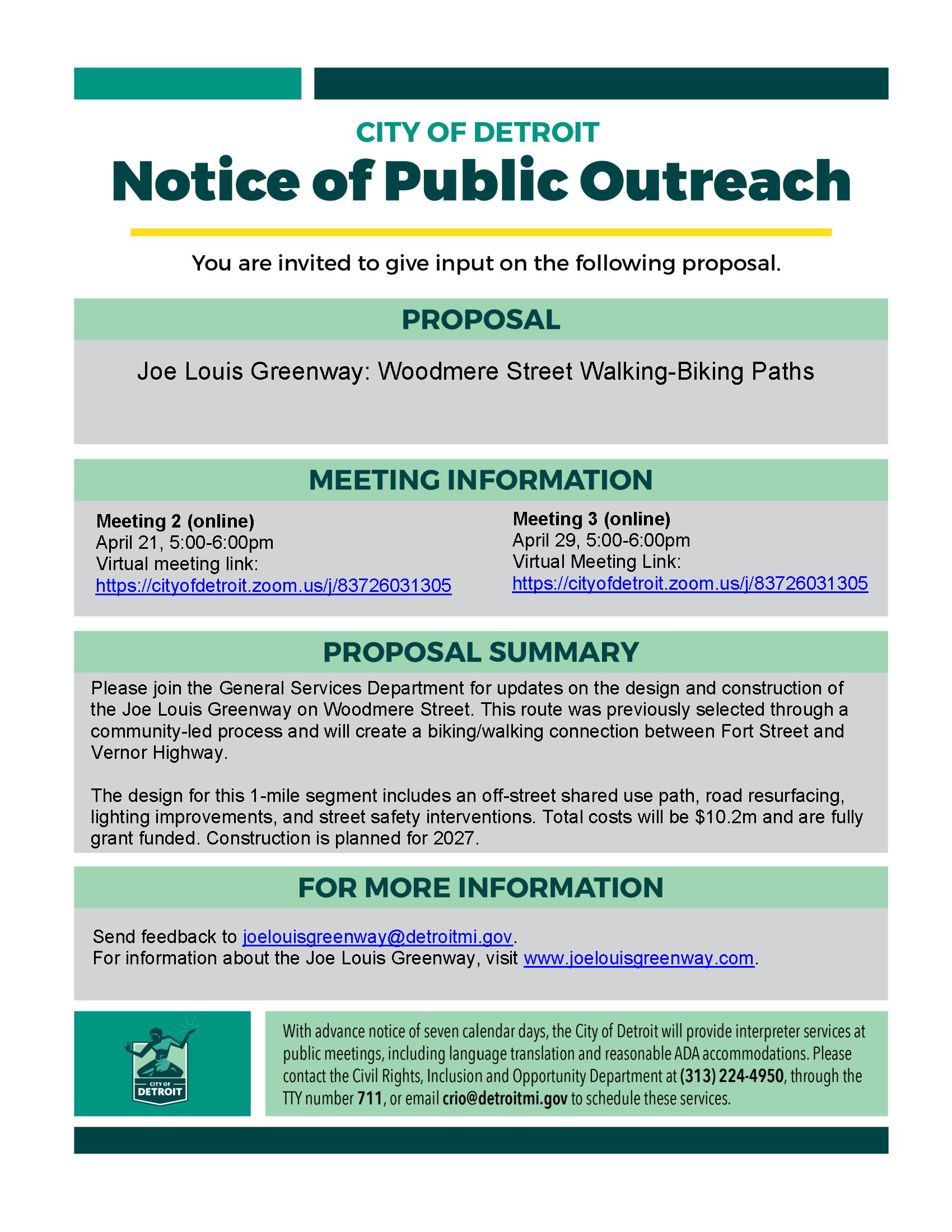
Joe Louis Greenway community meetings

Community meetings are being held regarding expansion of the Woodmere part of the Joe Louis Greenway. The next virtual meetings are April 21 and April 29.

The General Services Department is holding the meetings to discuss the designs and construction on Woodmere Street for a bike and walking connection between Fort Street and Vernor Highway.

The project has been funded through a $10 million grant and is expected to be completed in 2027. 

Outlier Earth Day event

The Outlier Media collective is hosting an Earth Day seed packing social this month. The hands-on volunteer event is in partnership with Keep Growing Detroit’s Garden Resource Program.

There will be free non-alcoholic beverages by the Gardenside Brewery and refreshments by Vámonos. The seed packing event takes place April 22nd from noon-2 p.m at Vámonos. 

Healthy Homes

The City of Detroit is hosting another Healthy Homes resource event. The next one takes place Saturday, April 18, from 10 a.m. to 3 p.m. Services will include HOPE application assistance, health screenings and more.

People can schedule a Lyft service to attend by calling 866-313-2520. 

Black & Arab Solidarity Lab

The Black and Arab Solidarity Lab + Political Discussion is an event co-hosted by Arab Americans for Progress, Dream of Detroit, Detroit Action and MI Working Family Party.

Guest speakers include Abraham Aiyash, former MI State Representative and House Majority Leader and Tomena Rawls, the Statutory Vice chair of the 12th Congressional District Democrats. 

The discussion will be held on April 25 at 11 a.m. 

Arab and Chaldean American Panel at WSU

The Arab American Women’s Business Council is hosting a panel this week. The networking mixer will host women leaders who will share insights on navigating the professional world as Arab and Chaldean women.

The event takes place on April 15 at Wayne State University Student Center, Room 775 from 11:30 a.m. to 1 p.m. 

Listen to the latest episode of the “Detroit Evening Report” on Apple Podcasts, Spotify, NPR.org or wherever you get your podcasts.

Support local journalism.

WDET strives to cover what’s happening in your community. As a public media institution, we maintain our ability to explore the music and culture of our region through independent support from readers like you. If you value WDET as your source of news, music and conversation, please make a gift today.

The post Detroit Evening Report: Hamtramck student kidnapped at bus stop appeared first on WDET 101.9 FM.

DER Weekends: Birth Detroit provides alternative birthing options for Detroiters

11 April 2026 at 12:00

On this episode of Detroit Evening Report Weekends, we speak to Elon Geffrard, Birth Detroit Co-founder and Perinatal Support and Education Director. 

We discuss how doulas, midwives, and birthing centers are providing alternative support services for women to give birth in Detroit. That leads to better health outcomes, including fewer infant and maternal mortalities in communities of color.

Listen to the episode using the media player above. 

Subscribe to the Detroit Evening Report on Apple PodcastsSpotifyNPR.org or wherever you get your podcasts. 


Support the podcasts you love.

One-of-a-kind podcasts from WDET bring you engaging conversations, news you need to know and stories you love to hear. Keep the conversations coming. Please make a gift today.

Picture of Nargis Rahman

Nargis Rahman

Nargis Hakim Rahman is the Civic Reporter at 101.9 WDET. She works with the Documenters program to increase civic engagement. Rahman graduated from Wayne State University, where she was a part of the Journalism Institute of Media Diversity. Rahman started as an intern at WDET in 2010. She participated in the Feet in Two Worlds food journalism fellowship with WDET's Detroit Storymakers project in 2018.

Rahman is a Bangladeshi American who was raised in Metro Detroit. She is passionate about community journalism in the Greater Detroit area. She hopes to give American Muslims and minorities a voice in the press.

The post DER Weekends: Birth Detroit provides alternative birthing options for Detroiters appeared first on WDET 101.9 FM.

Detroit Chief Public Health Officer Ali Abazeed aims to expand citywide health initiatives

9 April 2026 at 19:09

Detroit Mayor Mary Sheffield recently appointed Ali Abazeed as the city’s new Chief Public Health Officer, saying he would be a part of creating a “health in all policies” approach to government.

“We’re really excited to get up and going and also to continue the good work that the department has done over the years, but also to upgrade the software of what public health can look like in the city of Detroit,” he shares. 

Abazeed previously created and led the city of Dearborn’s health department. He also worked as a public health advisor at the National Institutes of Health (NIH). 

Past policies shape today’s health issues

He says health is impacted by housing quality and environment. He hopes to work with the department’s staff of 280 people to create better health outcomes for Detroiters.

“The challenges that Detroit faces from a health perspective, those aren’t inevitable…  they’re created by decades, if not centuries of decisions made by man, policies that have been excluding people from opportunities,” he says.

Ali Abazeed previously created and served as the Dearborn Department of Health’s Chief Public Health Officer.

Abazeed says the city focuses on a harm reduction approach by working with all city departments to connect the dots for people who live in the city. He says part of that will include having more health department officials out in the city.

“90% of your life expectancy happens in the communities where you live, learn, work, worship, play…  then it requires us to take that 90% collaborative approach across everything that we do at the city,” he says. 

Abazeed says Detroiters face health burdens like asthma, which he says require a multifaceted response. 

He says everyone is entitled to good health. 

“Understanding who has been disqualified, who has been sort of pushed to the side, and whether that’s… in Washington or Dearborn and now in Detroit, I think the work is relatively the same, even if it does take on a little bit of a different scale,” he says. 

Trusted, accurate, up-to-date.

WDET strives to make our journalism accessible to everyone. As a public media institution, we maintain our journalistic integrity through independent support from readers like you. If you value WDET as your source of news, music and conversation, please make a gift today.

Donate today »

The post Detroit Chief Public Health Officer Ali Abazeed aims to expand citywide health initiatives appeared first on WDET 101.9 FM.

Insect and fungal infestation leads to tree removal and replanting on Wayne State University campus

10 April 2026 at 03:23

Last October, Ground Services at Wayne State University discovered an infestation of bark beetles on trees in Gullen Mall. 

Donna Reincke, Associate Director of Grounds for Wayne State University, explains how these tiny insects caused great harm. 

“They burrow into the tree trunks and leave these tiny little holes, maybe about the size of a pencil eraser. With that, the insect infestation introduced a fungus [blue stain fungus] into the tree, which stopped the tree from being able to take up water, and killed a couple of the trees.”

Blue stain fungus on wood

The fungus spread to surrounding trees and left them too damaged to save.

Reincke says sadly, they had to remove 11 pine trees in Gullen Mall, as dead trees pose a major safety risk.

“We do remove them to avoid any accidents from happening, and it’s just a safety issue with the risk of it falling, and dead branches falling down,” explains Reincke. 

Expanding campus tree canopy

With the help of many volunteers from The Greening of Detroit and Wayne State University’s Office of Sustainability, Reincke is happy to share that they replanted 30 trees in the same area. 

Reincke says, “even though the trees are smaller than the ones that were removed, we wanted to make sure we still did right by planting trees that could fill in the canopy, and it was a really fun, successful event.”

In addition to Gullen Mall, Reincke stated they planted 71 trees at Wayne State University’s athletic complex, on the corner of Warren Avenue and Trumbull Street. 

Over these two spaces, they planted Hackberry, Kentucky Coffee ‘Decaf’, Bald Cypress, ‘Autumn Splendor’ Buckeye, Allegheny Serviceberry, London Plane, Blackgum, Tulip Tree, Basswood, Accolade Cherry, and Swamp White Oak. 

Wayne State University’s Ground Services and Office of Sustainability are partnering up again to host a tree planting event for Arbor Day, April 24th, 2026.

For more details, visit Wayne State University’s Get Involved page.

Support local journalism.

WDET strives to cover what’s happening in your community. As a public media institution, we maintain our ability to explore the music and culture of our region through independent support from readers like you. If you value WDET as your source of news, music and conversation, please make a gift today.

The post Insect and fungal infestation leads to tree removal and replanting on Wayne State University campus appeared first on WDET 101.9 FM.

Detroit Evening Report: Gov. Whitmer considers tax breaks for parents to pay private school tuition, afterschool programs

7 April 2026 at 20:45

Michigan does not currently participate in a federal program that gives tax breaks to people for donating money to nonprofits that award scholarships for tutoring and private school tuition. Governor Whitmer is weighing whether to opt into the federal initiative.

If adopted, taxpayers in Michigan would receive a $1,700 tax break parents could use for private school tuition, tutors or after school programs. 

U.S. Education Secretary Linda McMahon recently stopped in Hamtramck to promote the program. 

Detroit Public Schools Superintendent Dr. Nikolai Vitti says the program might help kids on an individual basis,But I would just continue to say, you know, as a nation, we have to think about at scale investments. How do we improve institutions that benefit the majority of our children, not isolated improvement?” 

Teachers unions and Democratic lawmakers have expressed concern that the program would funnel money into private schools, and away from public schools and their students. 

Vitti says funding public schools should be the priority. “I’d rather see us use taxpayer dollars and not decrease taxpayer dollars in investing in large scale systems that benefit the majority of American children, not individual children or families.” 

Right now, people in Michigan can still make the donation and get the tax break; however, students in the state would not be eligible for the scholarships. Using public money for private schools is prohibited by the state constitution. 

-Reporting by Russ McNamara

Additional headlines for Tuesday, April 7, 2026

Gas prices rise

Gasoline prices surged overnight. AAA said Michigan drivers paid an average of $4.01 for a gallon of regular unleaded this morning. That’s 15 cents higher than it was yesterday. The national average is $4.14 a gallon, the highest in almost 4 years. 

GasBuddy petroleum analyst Patrick DeHaan says escalations between the U.S. and Iran have intensified concerns about disruptions in oil shipments. He adds prices will likely remain high until Iran reopens the Strait of Hormuz.

Governor Gretchen Whitmer signed an order last week allowing Michigan gas stations to sell cheaper winter fuel blends through the end of June. 

Delta expands flights to Europe

Delta Air Lines is expanding flights from Metro Airport to Europe. The Detroit Free Press reports Delta will offer daily service to Rome in November and March, allowing passengers to take advantage of off-peak travel. 

Public Health Week

It’s Public Health Week in Detroit. The city’s health department is offering free services including health screenings, immunizations, lead testing, and overdose prevention resources.

Chief Public Health Officer Ali Abazeed says health department staff will host free events through Saturday at various community centers. The goal is to make it easier for residents to get health care by bringing it to them. 

Listen to the latest episode of the “Detroit Evening Report” on Apple Podcasts, Spotify, NPR.org or wherever you get your podcasts.

Support local journalism.

WDET strives to cover what’s happening in your community. As a public media institution, we maintain our ability to explore the music and culture of our region through independent support from readers like you. If you value WDET as your source of news, music and conversation, please make a gift today.

The post Detroit Evening Report: Gov. Whitmer considers tax breaks for parents to pay private school tuition, afterschool programs appeared first on WDET 101.9 FM.

The Metro: School vaccine waivers increase risk of measles outbreaks

30 March 2026 at 18:57

Seven people are confirmed to have contracted measles in Washtenaw County with exposure sites in Ypsilanti, Ann Arbor, and Canton. None of those people were vaccinated against the disease. 

Vaccination rates have declined since 2024, despite decades of medical practice and data that show the MMR vaccine that protects against measles, mumps and rubella, is safe and highly effective. 

Last year, an advisory panel appointed by Secretary of Health and Human Services Robert F. Kennedy Jr. recommended the Centers for Disease Control and Prevention (CDC) adopt new restrictions on the MMRV vaccine, which provides protection against measles, mumps, rubella and chickenpox. The panel advised that children under 4 should get protection against those diseases in separate vaccines.

In the time since Kennedy Jr. was appointed to head HHS by President Trump, vaccination rates have declined for toddlers, school-age kids and adults, making Southeast Michigan more vulnerable to outbreaks.

When the population’s vaccine rate dips below the level of ‘herd immunity’, the chance of a measles outbreak increases substantially.

What’s stopping people from vaccinating themselves or their kids, and who is most at risk when an outbreak happens?

Dr. Rupali Limaye is an Associate Professor at the George Mason College of Public Health. She is an expert in vaccine behavior, hesitancy and acceptance. She spoke with Cary Junior II on The Metro.

Listen to The Metro weekdays from 10 a.m. to noon ET on 101.9 FM and streaming on demand.

Subscribe to The Metro on Apple Podcasts, Spotify, NPR.org or wherever you get your podcasts.

Support local journalism.

WDET strives to cover what’s happening in your community. As a public media institution, we maintain our ability to explore the music and culture of our region through independent support from readers like you. If you value WDET as your source of news, music and conversation, please make a gift today.

The post The Metro: School vaccine waivers increase risk of measles outbreaks appeared first on WDET 101.9 FM.

The Metro: Men are getting vasectomies at record rates, but do they really understand reproductive health?

25 March 2026 at 18:07

In 2022, the Supreme court overturned Roe v. Wade which eliminated the constitutional right to an abortion for pregnant people. After the ruling, the number of vasectomy consultations and procedures increased. 

In the first six months after the Dobbs decision, vasectomy rates nationwide increased nearly 60% in men under 30 years old, according to Planned Parenthood of Michigan. Abortions are legal in Michigan. But renewed interest in vasectomies still prompted the healthcare provider to announce plans in January to resume its vasectomy services—ten years after the organization suspended the procedure because they did not have the resources to support it. 

Vasectomies are just one small part of the larger umbrella that makes up reproductive health, so the growing interest among men to undergo the procedure doesn’t necessarily mean men understand more about reproductive health overall.  

Dominick Shattuck, a community psychologist, a men’s health fellow at the American Institute for Boys and Men, and faculty member in the OBGYN department of the Johns Hopkins School of Medicine, joins the show to discuss how men can take on a larger role in reproductive health.

Listen to The Metro weekdays from 10 a.m. to noon ET on 101.9 FM and streaming on demand.

Subscribe to The Metro on Apple Podcasts, Spotify, NPR.org or wherever you get your podcasts.

Support the podcasts you love.

One-of-a-kind podcasts from WDET bring you engaging conversations, news you need to know and stories you love to hear. Keep the conversations coming. Please make a gift today.

More stories from The Metro

The post The Metro: Men are getting vasectomies at record rates, but do they really understand reproductive health? appeared first on WDET 101.9 FM.

The Metro: Roundup’s safety science is falling apart. The government is protecting it anyway

23 March 2026 at 18:48

What happens when the regulatory systems we depend on to protect us break down?

In February, President Trump signed an executive order invoking the Defense Production Act — a wartime authority — to guarantee the domestic supply of glyphosate, the active ingredient in Roundup, the world’s most widely used weedkiller. The order extends legal immunity to its producers. It came one day after Bayer proposed a $7.25 billion settlement to resolve tens of thousands of cancer lawsuits without admitting wrongdoing.

The World Health Organization classifies glyphosate as a probable carcinogen.

Separately, the Supreme Court hears oral arguments April 27 in a case that could shut down state-level Roundup lawsuits nationwide. The EPA faces an October deadline to rule on glyphosate safety — with most of its research staff gone.

Last month on The Metro, Harvard historian Naomi Oreskes explained how the landmark safety study behind Roundup was ghostwritten by Monsanto, cited by regulators worldwide for 25 years, and finally retracted after she and researcher Alexander Kaurov documented its influence. Since then, she has identified more scientific research ghostwritten by Monsanto.

To discuss, Oreskes, author of “Merchants of Doubt,” returned to The Metro to join Robyn Vincent.

Hear the full conversation using the media player above.

Listen to The Metro weekdays from 10 a.m. to noon ET on 101.9 FM and streaming on demand.

Subscribe to The Metro on Apple PodcastsSpotifyNPR.org or wherever you get your podcasts.

Trusted, accurate, up-to-date.

WDET strives to make our journalism accessible to everyone. As a public media institution, we maintain our journalistic integrity through independent support from readers like you. If you value WDET as your source of news, music and conversation, please make a gift today.

Donate today »

More stories from The Metro

The post The Metro: Roundup’s safety science is falling apart. The government is protecting it anyway appeared first on WDET 101.9 FM.

The Metro: More young people have cancer. A Detroit doctor weighs in

By: Sam Corey
23 March 2026 at 18:27

It’s a medical mystery with destructive elements. Our cells divide and grow with unstoppable force. They seize surrounding tissue. They invade from within. 

That’s how cancer works. And cases of younger people getting cancer — folks under the age of 50 — have been growing. Someone born in 1990 is now four times more likely to get rectal cancer, and two times more likely to get colon cancer than someone born in 1950. 

Why? And, what is it like to be a doctor in metro Detroit fielding these cases?

Dr. Thomas Kelly is a gastroenterologist at the Karmanos Cancer Institute. He spoke with The Metro‘s Robyn Vincent about different dietary and environmental factors that may be contributing to rising cancer rates.

Listen to The Metro weekdays from 10 a.m. to noon ET on 101.9 FM and streaming on demand.

Subscribe to The Metro on Apple Podcasts, Spotify, NPR.org or wherever you get your podcasts.

Support the podcasts you love.

One-of-a-kind podcasts from WDET bring you engaging conversations, news you need to know and stories you love to hear. Keep the conversations coming. Please make a gift today.

More stories from The Metro

The post The Metro: More young people have cancer. A Detroit doctor weighs in appeared first on WDET 101.9 FM.

❌
❌