Reading view

There are new articles available, click to refresh the page.

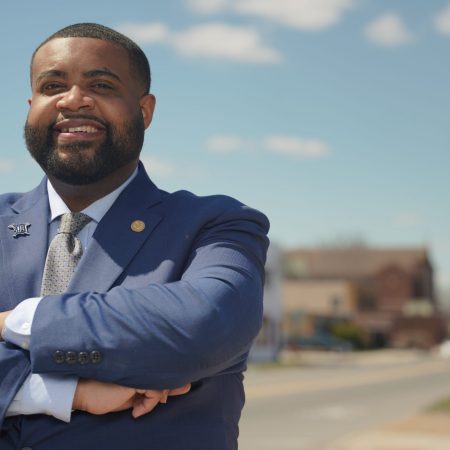
The Metro: Justin Onwenu says state government should protect residents from the ‘insanity’ of national politics

Life is becoming less affordable for Michiganders. And in Lansing, despite the constraints they face, many believe lawmakers are not doing enough to change that for residents. 

With state Senator Erika Geiss term limited out of her seat, two Democrats are now vying to improve life for residents in parts of Detroit and Downriver.

Justin Onwenu is running as a Democrat for District 1’s state Senate. He spoke about what he wants to change with The Metro‘s Robyn Vincent.

Listen to The Metro weekdays from 10 a.m. to noon ET on 101.9 FM and streaming on demand.

Subscribe to The Metro on Apple Podcasts, Spotify, NPR.org or wherever you get your podcasts.

Support the podcasts you love.

One-of-a-kind podcasts from WDET bring you engaging conversations, news you need to know and stories you love to hear. Keep the conversations coming. Please make a gift today.

More stories from The Metro

The post The Metro: Justin Onwenu says state government should protect residents from the ‘insanity’ of national politics appeared first on WDET 101.9 FM.

The Metro: Why Rx Kids has bipartisan support from all corners of Michigan

Money is getting tighter.

The cost of life can be even more daunting if you have a kids. Children are expensive — diapers, food, clothing, and so much more. 

We don’t have paid family leave in Michigan, but a public-private partnership has tried to ease the cost burden. Rx Kids provides unrestricted cash to mothers who are at least 16 weeks pregnant or to guardians who have a child who is six months or younger. 

It began in Flint two years ago. Now, Rx Kids has expanded to dozens of communities across Michigan. 

What have the impacts been for moms and kids? And, why is Rx Kids popular among people and places across the political spectrum?

Nushrat Rahman is the Economic Mobility Reporter at the Detroit Free Press and BridgeDetroit. She spoke with The Metro‘s Robyn Vincent.

Listen to The Metro weekdays from 10 a.m. to noon ET on 101.9 FM and streaming on demand.

Subscribe to The Metro on Apple Podcasts, Spotify, NPR.org or wherever you get your podcasts.

Support the podcasts you love.

One-of-a-kind podcasts from WDET bring you engaging conversations, news you need to know and stories you love to hear. Keep the conversations coming. Please make a gift today.

More stories from The Metro

The post The Metro: Why Rx Kids has bipartisan support from all corners of Michigan appeared first on WDET 101.9 FM.

The Metro: Darryl DeAngelo Terrell’s art builds a world where Black gay life can thrive

Liberation work doesn’t look one way. For multidisciplinary artist Darryl DeAngelo Terrell, it looks like photography, videography, and sound working in concert to create a world free of race and gender constructs.

Rooted in their lived experience growing up Black and gay in Detroit, Terrell’s work questions our conventional understanding of desire, beauty and home then forces those who experience the work to confront how limited our portraits of Blackness within those themes actually are.

Terrell joined the show to explain how their art, in all its forms, serves as a tool to realize a world free of those limitations. A dark photo of a house in front of trees. A smear of light brown lightly sparkles.

279º W 42º21’39” N 83º2’20″W Detroit, MI by Darryl DeAngelo Terrell

Listen to The Metro weekdays from 10 a.m. to noon ET on 101.9 FM and streaming on demand.

Subscribe to The Metro on Apple Podcasts, Spotify, NPR.org or wherever you get your podcasts.

Support the podcasts you love.

One-of-a-kind podcasts from WDET bring you engaging conversations, news you need to know and stories you love to hear. Keep the conversations coming. Please make a gift today.

More stories from The Metro

The post The Metro: Darryl DeAngelo Terrell’s art builds a world where Black gay life can thrive appeared first on WDET 101.9 FM.

The Metro: The body keeps the receipt

Have you ever sat in your car in a grocery store parking lot, looked at the receipt, and felt something in your chest tighten?

You’re not alone. Roughly half of Americans say they struggle to afford their rent or mortgage. Food prices rose more than 3% over the past year and are forecast to keep climbing. Total household debt just hit a record $18.8 trillion.

The cost of daily life and the weight of debt are taking a toll on our mental health, especially in a moment when the term“affordability crisis” has entered the national lexicon.

Lindsay Bryan-Podvin is a financial therapist based in Ann Arbor, the founder of Mind Money Balance, and the author of “The Financial Anxiety Solution.” She joined host Robyn Vincent on The Metro to talk about how the financial pressures of this moment are affecting our mental health, and what we can do to feel better.

Hear the full conversation using the media player above.

Listen to The Metro weekdays from 10 a.m. to noon ET on 101.9 FM and streaming on demand.

Subscribe to The Metro on Apple PodcastsSpotifyNPR.org or wherever you get your podcasts.

Support the podcasts you love.

One-of-a-kind podcasts from WDET bring you engaging conversations, news you need to know and stories you love to hear. Keep the conversations coming. Please make a gift today.

More stories from The Metro

The post The Metro: The body keeps the receipt appeared first on WDET 101.9 FM.

The Metro: Detroit Techno history and future on stage at Movement this weekend

Since it’s founding in 2000, Movement has honored the raw, electrified spirit of the city where Techno was born. It’s a space where sound, struggle, and innovation come together, uniting people through electronic music.

It’s grown into a massive event at Hart Plaza that draws DJ’s and visitors from around the world. Despite it’s growing popularity and international appeal, the festival still puts local talent on stage, from legendary DJ’s like Kevin Saunderson and Stacey “Hotwaxx” Hale to newer artists like Tammy Lakkis and Kesswa.

To hear more about Movement this year, Tia Graham spoke with Sam Fotias, operations manager at Paxahau, the organization that produces the festival.

WDET is a proud media partner of the Movement Electronic Music Festival. We will have live DJ sets on In The Groove this week from 2 to 3 p.m. ET.

On Memorial Day, catch all three performances rebroadcast back to back from noon to 3 p.m.

Subscribe to The Metro on Apple Podcasts, Spotify, NPR.org or wherever you get your podcasts.

Listen to The Metro weekdays from 10 a.m. to noon ET on 101.9 FM and streaming on demand.

Trusted, accurate, up-to-date.

WDET strives to make our journalism accessible to everyone. As a public media institution, we maintain our journalistic integrity through independent support from readers like you. If you value WDET as your source of news, music and conversation, please make a gift today.

Donate today »

The post The Metro: Detroit Techno history and future on stage at Movement this weekend appeared first on WDET 101.9 FM.

The Metro: Detroit’s teen takeovers force hard conversation

Over the weekend in downtown Detroit, a 14-year-old boy was shot in the chest near Library Street and Grand River Avenue. Two groups of teenagers had converged outside a Gucci store. Police say there was an argument and one teen, in the chief’s words, “decided to settle it with a firearm.” The boy is expected to live.

For months, teenagers across the country have been mobilizing each other on social media and meeting up. In Detroit, it has been mostly just noise — kids hanging out, looking for something to do in a city that wasn’t built with them in mind.

Some nights, it has turned chaotic.

Last weekend alone, Detroit police detained 109 teenagers across two large gatherings downtown and at Palmer Park, almost all for breaking curfew.

The city’s answer is to give teenagers somewhere to go and enforce the rules more strictly. Mayor Mary Sheffield is working with organizers to move the gatherings into sanctioned spaces. Police are leaning into the existing curfew — 10 p.m. for kids under 16, 11 p.m. for 16 and 17-year-olds—and ticketing parents whose children break it.

One member of the Board of Police Commissioners says this isn’t enough. Darious Morris represents District 3 on the civilian board that oversees the Detroit Police Department. He joined Robyn Vincent on The Metro to talk about what the city owes its teenagers, and what their parents owe them, too.

Hear the full conversation using the media player above.

Listen to The Metro weekdays from 10 a.m. to noon ET on 101.9 FM and streaming on demand.

Subscribe to The Metro on Apple PodcastsSpotifyNPR.org or wherever you get your podcasts.

Support the podcasts you love.

One-of-a-kind podcasts from WDET bring you engaging conversations, news you need to know and stories you love to hear. Keep the conversations coming. Please make a gift today.

More stories from The Metro

The post The Metro: Detroit’s teen takeovers force hard conversation appeared first on WDET 101.9 FM.

The Metro: How Abraham Aiyash plans to lower costs if he’s elected to the state Senate

Partisanship isn’t just a Washington problem. 

This year, Michigan’s Legislature has been one of the slowest in recent memory as only a few bills passed since January. This is happening as costs keep climbing and families keep stretching. Life is getting really expensive and people want their leaders to take action.

With state Senator Erika Geiss, who is overseeing parts of Detroit and Downriver, unable to run for re-election, two Democrats are now vying to fix the problem of rising costs.

One of them is former state House representative Abraham Aiyash. He spoke about his campaign and his plans with The Metro‘s Robyn Vincent.

Editor’s note: this conversation discussed the possibility of data centers recycling water. Water sprayed or circulated in evaporative cooling systems can be recycled at data centers. But the recycling process requires significant on-site treatment to manage high concentrations of salts and other contaminants.


Subscribe to The Metro on Apple Podcasts, Spotify, NPR.org or wherever you get your podcasts.

Listen to The Metro weekdays from 10 a.m. to noon ET on 101.9 FM and streaming on demand.

Support the podcasts you love.

One-of-a-kind podcasts from WDET bring you engaging conversations, news you need to know and stories you love to hear. Keep the conversations coming. Please make a gift today.

More stories from The Metro

The post The Metro: How Abraham Aiyash plans to lower costs if he’s elected to the state Senate appeared first on WDET 101.9 FM.

The Metro: Why health is the common theme threading Detroit’s city departments

Five years ago drug overdoses were killing more than 3,000 people a year in Michigan. It was the worst the state had seen. Behind that number were parents, sons and daughters — people who’d been trying to get well for years.

That number is coming down. By the state’s early count, last year had the fewest overdose deaths in more than a decade.

But the people who do this work are cautious about it. Fewer deaths may not mean fewer people in danger. 

Addiction touches lives in different ways. For many of us, it might be indirectly. One analysis put the cost to Michigan last year at $38 billion: lost work, lost wages, courts, treatment. 

Now there’s money to fight this—millions from the settlement with the maker of OxyContin, Purdue Pharma. Detroit gets a share, and it’s deciding how to spend it now.

Ali Abazeed leads Detroit’s health department, and founded Dearborn’s before that. He spoke to The Metro‘s Robyn Vincent about what the city is doing to reduce overdose deaths and help residents be healthier.

Listen to The Metro weekdays from 10 a.m. to noon ET on 101.9 FM and streaming on demand.

Subscribe to The Metro on Apple Podcasts, Spotify, NPR.org or wherever you get your podcasts.

Support the podcasts you love.

One-of-a-kind podcasts from WDET bring you engaging conversations, news you need to know and stories you love to hear. Keep the conversations coming. Please make a gift today.

More stories from The Metro

The post The Metro: Why health is the common theme threading Detroit’s city departments appeared first on WDET 101.9 FM.

The Metro: Catching up on the local culinary scene with Detroit News food critic

Since we last spoke to food critic Melody Baetens, new restaurants have opened, Detroit’s culinary scene has the opportunity to gain national and international attention, and the summer food festival calendar has rounded into shape. 

Melody is a restaurant critic and dining reporter at the Detroit News. She joined the show to catch us up. 

Listen to The Metro weekdays from 10 a.m. to noon ET on 101.9 FM and streaming on demand.

Subscribe to The Metro on Apple Podcasts, Spotify, NPR.org or wherever you get your podcasts.

Support local journalism.

WDET strives to cover what’s happening in your community. As a public media institution, we maintain our ability to explore the music and culture of our region through independent support from readers like you. If you value WDET as your source of news, music and conversation, please make a gift today.

More stories from The Metro

The post The Metro: Catching up on the local culinary scene with Detroit News food critic appeared first on WDET 101.9 FM.

The Metro: Why property taxes are preventing people from moving to Detroit

If you’re a leader in Detroit, your attention is trained on a big task: attract more people to the city. 

That’s for good reason — with more people comes more tax revenue. With more revenue, Detroit can provide better social services, quicker Detroit Department of Transit buses, more paved roads, and working streetlights.

But the city is running into a problem when it comes to increasing its population: High property taxes. 

Because property taxes are capped until a property is sold, homebuyers in Detroit neighborhoods that have become more desirable bear the burden of potentially very high taxes. As an example, hundreds of homes will see their taxes climb above $10,000. That’s according to an Outlier Media estimate of the city’s 2026 tax roll. 

So what does it mean when the system rewards staying still and punishes moving in? What does that do to a city trying to grow?

Kevin Bain is the chief financial officer for Public Sector Consultants, and a former debt manager for the city of Detroit. He spoke with The Metro‘s Robyn Vincent.

Listen to The Metro weekdays from 10 a.m. to noon ET on 101.9 FM and streaming on demand.

Subscribe to The Metro on Apple Podcasts, Spotify, NPR.org or wherever you get your podcasts.

Support local journalism.

WDET strives to cover what’s happening in your community. As a public media institution, we maintain our ability to explore the music and culture of our region through independent support from readers like you. If you value WDET as your source of news, music and conversation, please make a gift today.

More stories from The Metro

The post The Metro: Why property taxes are preventing people from moving to Detroit appeared first on WDET 101.9 FM.

The Metro: Healing the mental wounds of domestic violence

When someone finally walks out of an abusive home, we tend to think of it as the end of the story. The door closes, the survivor is safe, the danger is behind them. The truth, though, is thornier. 

Advocates say leaving is when the violence often spikes, when the threats escalate, and when survivors are left to rebuild a sense of self after years of being told they had none.

It’s Mental Health Awareness Month, and on The Metro, we spend time on the parts of a story that are often left out, like what happens after the crisis.

JoJo Dries knows a lot about the aftermath. She runs On the Wings of Angels, which meets survivors at the moment when they’re ready to leave, with shelter, security, therapy, and a community willing to catch them.

Ahead of an event this month on the mental health impacts of domestic violence, Dries stopped by The Metro. She spoke with Ahlem Mahdhi, a fellow at WDET through the U.S. State Department’s Professional Fellows Program.

Editor’s Note: This conversation includes descriptions of abuse. If you need help, the National Domestic Violence Hotline is 800-799-7233, or you can text START to 88788.

Hear the full conversation using the media player above.

Listen to The Metro weekdays from 10 a.m. to noon ET on 101.9 FM and streaming on demand.

Subscribe to The Metro on Apple PodcastsSpotifyNPR.org or wherever you get your podcasts.

Trusted, accurate, up-to-date.

WDET strives to make our journalism accessible to everyone. As a public media institution, we maintain our journalistic integrity through independent support from readers like you. If you value WDET as your source of news, music and conversation, please make a gift today.

Donate today »

More stories from The Metro

The post The Metro: Healing the mental wounds of domestic violence appeared first on WDET 101.9 FM.

The Metro: Who cheats and why, according to psychology

When relationships get tough, couples can venture into infidelity. While cheating remains as frequent as it has always been, we wanted to better understand why it happens. 

Todd Shackleford is an evolutionary psychologist from Oakland University. He joined the program to discuss how and why infidelity happens.

Listen to The Metro weekdays from 10 a.m. to noon ET on 101.9 FM and streaming on demand.

Subscribe to The Metro on Apple Podcasts, Spotify, NPR.org or wherever you get your podcasts.

Support the podcasts you love.

One-of-a-kind podcasts from WDET bring you engaging conversations, news you need to know and stories you love to hear. Keep the conversations coming. Please make a gift today.

More stories from The Metro

The post The Metro: Who cheats and why, according to psychology appeared first on WDET 101.9 FM.

The Metro: Are popular therapy terms helping or hurting how we understand mental illness?

For a long time the main focus of health was physical. It’s generally accepted that everyone should visit a doctor at least once a year. The same can’t be said about our mental health. But in many ways that’s beginning to change.

Mental Health Awareness Month is an opportunity to pay more attention. The increased awareness on mental health has shifted the way we think and talk about it—and it is literally altering the way an entire generation communicates with one another.

Terms you would typically only hear in therapy like “trauma,” “gaslighting” and “narcissist” are being used to refer to everyday experiences. Does the adoption of therapy terms in popular language help remove stigma around mental illness? Or does it dilute the terms’ original meaning?

Kristen Abraham, a professor and the chair of the psychology department at the University of Detroit Mercy, joined the show to explain how the mainstream use of therapy terms is changing our understanding of mental health.

Listen to The Metro weekdays from 10 a.m. to noon ET on 101.9 FM and streaming on demand.

Subscribe to The Metro on Apple Podcasts, Spotify, NPR.org or wherever you get your podcasts.

Support the podcasts you love.

One-of-a-kind podcasts from WDET bring you engaging conversations, news you need to know and stories you love to hear. Keep the conversations coming. Please make a gift today.

More stories from The Metro

The post The Metro: Are popular therapy terms helping or hurting how we understand mental illness? appeared first on WDET 101.9 FM.

The Metro: He served 23 years. Now he’s helping the next generation earn a degree behind bars

Inside a Michigan prison less than an hour from Detroit, 25 incarcerated men are doing something many people behind bars haven’t been able to do in decades. They’re working toward a bachelor’s degree from Wayne State University, paid for in part by federal Pell Grants.

Congress blocked those grants for incarcerated students in 1994. It restored access in 2023. But as the Trump administration restructures the Department of Education, the future of that funding is uncertain.

The question at the center of this story: Can a college degree behind bars change who walks out — and is the country willing to keep paying for it?

Jonathan Roden has lived both sides of that question. He spent 23 years in Michigan prisons. While he was inside, the college path available to him was an associate degree through Jackson College. He wanted more.

He came home in August of 2023. Nine days later, he started at Wayne State. In December, he graduated from the Mike Ilitch School of Business.

Now he walks back and forth through those same prison gates, this time as a coordinator for Wayne State’s prison education program. Roden, a Michigan Justice Fund fellow for WDET, is opening doors for men who are right where he used to be.

He joined Robyn Vincent on The Metro alongside audio from Carlton Banks, a student in the inaugural cohort at Macomb Correctional Facility. Banks was sentenced to life in prison for his role in the 1994 murder of a teenage Subway employee named Angela Garcia. He was 18. He’s now 48. Under a 2022 Michigan Supreme Court ruling, he expects to come home in 2028. He calls that prospect “a blessing, but not a celebration.”

Hear the full conversation using the media player above.

Listen to The Metro weekdays from 10 a.m. to noon ET on 101.9 FM and streaming on demand.

Subscribe to The Metro on Apple PodcastsSpotifyNPR.org or wherever you get your podcasts.

Support the podcasts you love.

One-of-a-kind podcasts from WDET bring you engaging conversations, news you need to know and stories you love to hear. Keep the conversations coming. Please make a gift today.

More stories from The Metro

The post The Metro: He served 23 years. Now he’s helping the next generation earn a degree behind bars appeared first on WDET 101.9 FM.

The Metro: How Detroit film lovers are creating spaces for independent cinema

In recent years, notable art theatres in metro Detroit have shuttered or completely changed the way they operate. 

Main Art Theatre which was in Royal Oak and Cinema Detroit which was based in midtown Detroit are recent examples. They both showed more niche, independent or foreign films you could not catch at a commercial movie theatre. The Main Art Theatre was demolished and replaced with apartments, and Cinema Detroit now operates as a pop-up. 

When theatres like them closed, John Monaghan and Kevin Maher became motivated to build a community that replicates the experience they provided.

The two started Motor City Cinematheque which is a series of art film screenings that will take place over the next few weeks. It supports independent, niche, art films and theatres in the metro area. John Monaghan joined the show to discuss their upcoming screenings and what they provide for the Detroit film community.

Listen to The Metro weekdays from 10 a.m. to noon ET on 101.9 FM and streaming on demand.

Subscribe to The Metro on Apple Podcasts, Spotify, NPR.org or wherever you get your podcasts.

Support the podcasts you love.

One-of-a-kind podcasts from WDET bring you engaging conversations, news you need to know and stories you love to hear. Keep the conversations coming. Please make a gift today.

More stories from The Metro

The post The Metro: How Detroit film lovers are creating spaces for independent cinema appeared first on WDET 101.9 FM.

The Metro: Why Cecil George is running for state Senate

The 13th district state Senate seat is open as Democrat Rosemary Bayer is stepping down after one term. There are several people running to represent the district that spans Northville, Plymouth, and West Bloomfield.

One of those individuals is Cecil George. The owner of a landscaping company, George has never before held public office. 

The Metro’s Sam Corey spoke to him about why he’s running.

Listen to The Metro weekdays from 10 a.m. to noon ET on 101.9 FM and streaming on demand.

Subscribe to The Metro on Apple Podcasts, Spotify, NPR.org or wherever you get your podcasts.

Support local journalism.

WDET strives to cover what’s happening in your community. As a public media institution, we maintain our ability to explore the music and culture of our region through independent support from readers like you. If you value WDET as your source of news, music and conversation, please make a gift today.

More stories from The Metro

The post The Metro: Why Cecil George is running for state Senate appeared first on WDET 101.9 FM.

The Metro: Why those closest to crimes are some of the biggest advocates for rehabilitation

A common assumption shapes American crime policy: that the people most exposed to crime — victims, and the officers who respond to it — want the harshest punishment in return. 

The evidence says otherwise. 

Crime victims, in survey after survey, favor rehabilitation over punishment, roughly two to one. And now officers are saying something similar. In a new survey from the Alliance for Safety and Justice, 8 in 10 officers said things like community violence intervention would make their jobs safer. 

Officers want neighborhood programs. They want clinicians on certain 911 calls. They want job training, therapy, and addiction treatment instead of long prison sentences. Why is that the view from inside law enforcement? And if it is, why haven’t we built the systems to match?

Harvey Santana is the Michigan director for the Alliance for Safety and Justice. He’s based in Detroit. He spoke about all this with The Metro’s Robyn Vincent.

Listen to The Metro weekdays from 10 a.m. to noon ET on 101.9 FM and streaming on demand.

Subscribe to The Metro on Apple Podcasts, Spotify, NPR.org or wherever you get your podcasts.

Support the podcasts you love.

One-of-a-kind podcasts from WDET bring you engaging conversations, news you need to know and stories you love to hear. Keep the conversations coming. Please make a gift today.

More stories from The Metro

The post The Metro: Why those closest to crimes are some of the biggest advocates for rehabilitation appeared first on WDET 101.9 FM.

The Metro: Howard Family Bookstore opens as a community beacon in Detroit

The Howard Family Bookstore is a dream realized for Detroit native Jerjuan Howard. He created the non-profit aimed at supporting students with literacy and interpersonal communication skills as a part of his mission to better his community with the next generation at the center.

Howard is also the founder of the Umoja Debate League. In 2025, Jerjuan joined The Metro to talk about 7-2 Day, a yearly celebration his Puritan Ave. neighborhood. While chatting about the celebratory day, Jerjuan talked about his future plans for a bookstore. 

Fast forward a year, Howard Family Bookstore is open.

Howard Family Book Store

Howard currently acts as the city of Detroit’s director of Youth Affairs. Due to the position, he took a step back from the day to day operations. The management of the bookstore is handled by Jerjuan’s aunt, Jamie Howard. 

In this conversation, we listen in on a past conversation, learning about his goals. In the latter half, we hear from Jamie and learn more about the importance the shop holds in the community. Jamie says watching her nephew grow into the man he is today is no surprise.

Jamie Howard; Manager of Howard Family Bookstore


Listen to The Metro weekdays from 10 a.m. to noon ET on 101.9 FM and streaming on demand.

Subscribe to The Metro on Apple Podcasts, Spotify, NPR.org or wherever you get your podcasts.

Support local journalism.

WDET strives to cover what’s happening in your community. As a public media institution, we maintain our ability to explore the music and culture of our region through independent support from readers like you. If you value WDET as your source of news, music and conversation, please make a gift today.

More stories from The Metro

The post The Metro: Howard Family Bookstore opens as a community beacon in Detroit appeared first on WDET 101.9 FM.

The Metro: Jeremy Xido’s journey home in ‘Sons of Detroit’

Some cities raise you. Detroit claims you. That’s true for so many who’ve called this city home. It starts early, with the way you walk, the way you talk or the particular pride you carry when you sport the city’s iconic symbols like the old English D on a hat or a Tigers jersey. 

Jeremy Xido knows this. He grew up in an unstable home. A family that lived nearby recognized his situation and took him in and raised him in his early years. Some years later, he and his biological family moved to a different part of town and he lost touch.

“Sons of Detroit” film poster.

Xido is a white man who was embraced by a Black Detroit family. In his film “Sons of Detroit” he explores what happened to that family.

The film took Jeremy on a 10 year discovery, not just of self but of community, love and connection. It’s part love letter, part detective story in which Xido reckons with the love he has for the city he left behind.

A still from the film

Listen to The Metro weekdays from 10 a.m. to noon ET on 101.9 FM and streaming on demand.

Subscribe to The Metro on Apple Podcasts, Spotify, NPR.org or wherever you get your podcasts.

Support the podcasts you love.

One-of-a-kind podcasts from WDET bring you engaging conversations, news you need to know and stories you love to hear. Keep the conversations coming. Please make a gift today.

More stories from The Metro

The post The Metro: Jeremy Xido’s journey home in ‘Sons of Detroit’ appeared first on WDET 101.9 FM.

❌