❌

Reading view

There are new articles available, click to refresh the page.

Stateside: Wednesday, Oct. 14, 2026

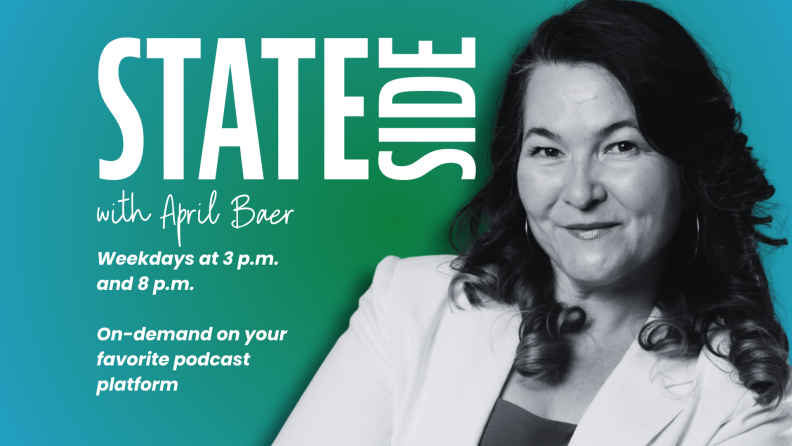
A black and white portrait of April Baer--a white woman with brown curly hair and a white blazer. The photo is against a green and blue ombre background. Text on the photo reads "Stateside with April Baer. Weekdays at 3pm and 8pm. On demand on your favorite podcast platform."

Today on Stateside, the details of lawsuit against the Michigan Department of Corrections. A woman is suing the agency over allegations that officers at the Women’s Huron Valley Correctional Facility used their body cams to record her without consent while she was giving birth and during her postpartum care. According to her attorney, the experience has left her traumatized.

Then, another installment of What The Vote?, a series highlighting Gen Z voters, their priorities, and their concerns leading up to the 2026 Midterms. This week, a Muskegon city commissioner and resident talked about the qualities she hopes to see in a candidate.

Also, a window into the operations at Froehlich's, a beloved bakery in Three Oaks, Michigan. Founder Colleen Froehlich joined us to talk about her new cookbook, The Froehlich's Cookbook: Recipes and Stories from the Beloved Restaurant and Bakery.

Plus, an off-Broadway play about the Flint Water Crisis makes its way to theatres in Michigan this week. We spoke with the writer and director behind The Poisoner. After the show in Detroit, there will be a talkback with the audience with Michigan Public’s Lindsey Smith and Vince Duffy, who were in Michigan Public's newsroom and closely followed the Flint Water Crisis in 2014.

GUESTS ON TODAY'S SHOW:

  • Zena Issa, criminal justice reporter for Michigan Public
  • Kiley Jackson, Muskegon city commissioner at-large
  • Colleen Froehlich, founder of Froelich's Bakery
  • Lee Sunday Evans, director, The Poisoner
  • Maura McCarthy Haney, writer, The Poisoner

Appeals court presses Trump administration on legality of DC National Guard deployment

More than a year after President Donald Trump deployed National Guard members to begin patrolling the streets of the nation's capital, a federal appeals court on Wednesday opened a hearing on the legality of his action by asking the government if there were any limits on a president's authority to do so.

The hearing began with the three-judge panel collectively questioning the government's attorney, Eric McArthur. Judge Cornelia T.L. Pillard asked how the government's argument about an administration's authorities was "not federalization and therefore running up against" the Posse Comitatus Act, an 1878 U.S. law forbidding the use of the federal military for domestic law enforcement unless authorized by the Constitution or Congress.

McArthur, answering Judge Judith Rogers' question on the limits of a president's action, said, "I think the limiting principle in our position is the president has to be calling out the guard in aid of the civil authorities."

Trump deployed the guard in August 2025 as part of what he said was a crime-fighting mission in Washington, D.C. The force, which rose to a peak of about 5,000 troops over the summer, has supported arrest operations, patrolled city streets and neighborhoods and participated in cleanup efforts.

DHS memo reveals plan to use National Guard in immigration enforcement

RELATED STORY | DHS memo shows Trump administration explored using National Guard in immigration enforcement

Trump's Republican administration says the deployment has contributed to a decrease in crime in the city, where crime was already on the decline before the National Guard arrived. Officials and activists in the overwhelmingly Democratic city say the deployment is a waste of taxpayer money and has normalized the militarization of a major American city.

Mitchell Reich, who was arguing for D.C., did not escape the hearing unscathed, with the panel concentrating on his argument that there are laws and guidelines that lay out a president's ability to call out the guard and there were circumstances when those steps would be unnecessary, including during an invasion or an insurrection.

"If there's any kind of organized violence in the district, the president can deploy the guard for the purpose of suppressing the same," he said.

The 90-minute hearing came months after a different three-judge panel paused a lower court's ruling that Trump's deployment of the guard was illegal.

Three judges who issued the stay last December two appointed by Trump and one appointed by President Barack Obama, a Democrat said in a unanimous 32-page ruling that a number of factors favored the Trump administration, including the "disruption to the lives of thousands of service members," as well as what it said was the president's interest "in the protection of federal governmental functions and property within the nation's capital."

The three judges on the panel on Wednesday were nominated by Democratic presidents: Pillard by Obama, Rogers by Bill Clinton and Bradley Garcia by Joe Biden.

ICYMI | Judge says Trump administration's National Guard deployment in DC violates the Constitution

The case is about whether the president has the authority

At the heart of the court case, brought by D.C.'s attorney general, is whether the president has the authority to deploy the National Guard to the city, which, as a federal district, has limited autonomy over its own affairs. The U.S. Constitution gives federal lawmakers authority over the District of Columbia, while the Home Rule Act of 1973 lets residents elect a mayor, a council and neighborhood commissioners.

The city has argued that the mobilization is an illegal use of the military for domestic law enforcement, a point Reich made during the hearing.

Last December, the three-judge panel that paused the lower court's ruling said Trump might prevail in his argument that the president "possesses a unique power" to mobilize the guard in Washington.

Those judges found that the district "has not identified any ongoing injury to its statutory interests."

Even if D.C. wins at the appeals court level, the Trump administration will undoubtedly go to the U.S. Supreme Court, which has already shown deference to the president in a number of cases.

Trump deploying National Guard to DC

A legal expert looks at the arguments

Syracuse law professor William Banks said D.C. might have a slim argument under its home rule, questioning whether National Guard units can be deployed to the city when it isn't authorized by local law.

But, he said, outside of that argument "there is no overarching federal principle that would bail out the district in this case."

Because D.C. is not a state and because the president is commander in chief, there's a "tremendous amount of leeway and discretion for the president" to control or delegate control of the local National Guard and out-of-state units, Banks said.

A judge said Trump couldn't unilaterally deploy the DC National Guard

U.S. District Judge Jia Cobb concluded last November that Trump's military takeover in Washington illegally intrudes on local officials' authority to direct law enforcement in the district.

Cobb, a Biden nominee, found that while the president does have authority to protect federal functioning and property, he can't unilaterally deploy the D.C. National Guard to help with crime control as he sees fit or call in troops from other states.

The appeals court stayed the order and has allowed the guard to remain in place while the case is pending.

The mobilization, extended until January 2029 by the Defense Department, has taken on a sense of permanence, despite the court case.

The federal government awarded a $292 million contract to a private company to provide members of the Joint Task Force-D.C. with apartments. The numbers have grown as well, ballooning to around 5,000 during the height of the semiquincentennial celebration. As of last week, that number had dropped to about 2,900.

DC residents rally against the National Guard's presence

Before the hearing began, several dozen people rallied outside the courthouse to oppose the continuing presence of the military in the city.

David Barrows, a retired office manager and city resident, was dressed in a Trump costume. "It's easier to boss around the people in Washington, D.C., because we don't have any representation in either House or Congress. So we're basically an abused people," he said. "We pay the highest federal taxes in the land, and we get no representation in both houses. So we're a cheated people, and we're scapegoats for Trump."

He also questioned the premise of the guard's presence: "There's no national emergency here in Washington," he said.

Jennifer Pace, a longtime resident and former banker, said she suspected the case would continue through the courts.

"But I really want it to move forward so they can just go home," Pace said. "I'm sure they want to go home, too, because it's clear they're bored. They're just standing around."

Financial struggles, work driving global rise in stress, study finds

A new study has found that struggles with money and work are the main factors driving global stress levels.

According to research conducted by the Worldwide Independent Network of Market Research, stress levels are rising worldwide, with women and younger adults reporting the highest levels.

RELATED STORY | Study finds small finance changes can dramatically reduce stress

Researchers found that 42% of people across the globe reported feeling stressed very often or fairly often.

This is up 10 percentage points from 2025.

Younger adults are reporting some of the highest stress levels. The study found that about 50% of people ages 18 to 34 report frequent stress, compared with 24% of those over 65.

The study found that everyday pressures are causing the most stress for people globally.

Among those who reported feeling stressed frequently, 44% cited financial difficulties, while 40% identified their job as a source of stress.

RELATED STORY | Most Gen Z workers struggle to live on their own, report finds

Other sources of stress included family and health concerns.

Researchers also found that the rise in stress is widespread. Of the 39 countries included in the study, 34 reported increases in stress levels.

Young voter turnout could be pivotal in this year's midterms

Americans under 30 dont vote as much as their older peers, but experts say 1829-year-olds may be a group to watch this election. There are signs Gen Z is motivated to show up to the polls in historically high numbers.

"This is personal for a lot of young people, and that's really what's motivating a lot of their political engagement, is the desire for change, for improvement in their lives, the lives of their peers and communities, explained Alberto Medina, the communications manager for the Center for Information & Research on Civic Learning and Engagement at Tufts University.

Midterm influence: The changing politics of young voters

A survey from Alliance for Youth Power PAC and YouGov released earlier this month focused on eight key battlegrounds, and that poll found over 80% of people age 18-29 said they probably or definitely plan to vote.

Medina says that high political engagement for young voters is a trend weve seen in recent years, and Gen Z is one of the most diverse generations in American history. Almost half of youth under age 30 are young people of color. About one in five of them identify as LGBTQ. So, on a lot of issues that they feel touch on, their identities, or their rights, or their rights for their peers, their friends, their communities, that can be something really, really powerful for young people in terms of their ideology or their political views.

RELATED STORY | Barack Obama to campaign with Ohio Democrats as he expands his outreach ahead of Election Day

Georgia, Michigan, North Carolina and Ohio all have competitive Senate races on the ballot, and that AYP survey found 60% of young voters in those states plan to vote for the Democratic candidate.

There are nearly 50 million people between 18 and 29 years old who are eligible to vote in November, and that age group often leans Democratic. But Gen Z is one of the most diverse generations in American history. Medina said young voters are usually swayed by the issues, and their political leanings stem from a desire for change. Almost half of youth under age 30 are young people of color. About one in five of them identify as LGBTQ. So, on a lot of issues that they feel touch on, their identities, or their rights, or their rights for their peers, their friends, their communities, that can be something really, really powerful for young people in terms of their ideology or their political views, he said.

Multiple surveys in 2026 show cost of living and economic issues are a top concern among young voters. Another big issue for them is combating corruption and big money in politics.

MORE ON MIDTERMS | Scripps News poll: 43% of voters say theyve been fooled by AI ads this campaign

"They want to improve their communities. They want to improve their own lives. And so they look at our political system and go, okay, What's in the way of me having power? of me being able to affect change? Medina said.

One advantage for politicians and advocacy groups young voters are more persuadable than other voting blocs and they're willing to consider new ideas.

Joni Mitchell is now an American citizen, six decades after moving to the US

Joni Mitchell has finally become an American citizen, more than 60 years after leaving her native Canada.

The legendary singer-songwriter posted a picture of herself holding a US flag at the naturalization ceremony on Tuesday, with the caption: A journey that began 62 years ago.

In the image shared with her more than 1 million Instagram followers, a smiling Mitchell wore a red beret and sunglasses, and extra stars and stripes pinned to her cardigan lapel.

Mitchell, who turns 83 next month and was using a walking stick, also posted a short video clip from the ceremony, in which she was applauded by others gathered in the room.

IN CASE YOU MISSED IT | Joni Mitchell's music catalog returns to Spotify after 2022 protest

Born in Fort Macleod in Alberta, Canada, in 1943, Mitchell will continue to have a Canadian passport as both countries allow residents to hold dual citizenship.

The iconic artist, who was inducted into the Rock and Roll Hall of Fame in 1997 and won a Lifetime Achievement Award at the Grammys in 2002, is best known for 1970s hits such as Big Yellow Taxi, Blue, Amelia and Woodstock.

She studied commercial art in Alberta before moving to Toronto in 1964, where she performed at local folk club and coffee houses. Then, during a brief marriage to folk singer Chuck Mitchell, she lived in Detroit before eventually relocating to New York City. It was there that she made her eponymous album, also known as Song to a Seagull.

Mitchell, who has 19 studio albums and six live records to her name, later moved to Los Angeles, where she settled in the citys Laurel Canyon before later moving to Bel Air.

It is unclear why Mitchell chose this time, when relations between Canada and the US are particularly strained, to become an American. She was widely reported to have taken a swipe at President Donald Trump while performing at the Hollywood Bowl ahead of the last presidential election in 2024.

According to media reports at the time, the noted protest singer encouraged her audience to go to the polls: Everybody get out and vote. This is an important one. I wish I could vote Im Canadian. Im one of those lousy immigrants.

Mitchell has suffered from a series of health problems in recent years, including a stroke and a brain aneurysm in 2015.

Her health setbacks did not stop her from performing at the 2024 Grammys, where she won the award for best folk album for her 2023 release Joni Mitchell at Newport. This year she also received a Lifetime Achievement Award at the Junos, Canadas equivalent of the Grammys.

An as yet untitled biopic of Mitchells life is said to be in development, with IMDb listing Cameron Crowe as the director and Meryl Streep in the starring role.

The-CNN-Wire & 2026 Cable News Network, Inc., a Warner Bros. Discovery Company. All rights reserved.

The hottest travel trend for 2027 isn't where you go. It's what you do there

Travelers may be planning their vacations a little differently in 2027. According to the Expedia Group's newly released "Unpack '27: The Trends in Travel" report, travelers are looking for more intentional and personalized experiences in the year ahead.

Vrbo, a vacation rental company owned by Expedia Group, has captured the shift with two new destination trends its calling "hobby hubs" and "heartland hideouts.

"Instead of asking where we should go, travelers are beginning to ask what we want to experience together," explained travel expert Tomeka Jones.

Next year, your favorite activity could determine where you travel. According to Vrbo, 68% of travelers surveyed say they're likely to take a hobby-focused trip, built around activities like crafting, photography, antiquing, birdwatching, stargazing and mahjong.

"I love this trend because the hobby becomes the reason for the trip," Jones said. "It's about bringing people together around something they enjoy."

Vrbo says travelers are also looking inward when it comes to vacation spots with an increased focus on landlocked states.

Fall travel ideas without breaking the bank

These inland destinations offer local culture, great food, art, history and outdoor adventures, often without the crowds associated with popular coastal cities. Nearly 65% of travelers surveyed by Vrbo say they've vacationed in a non-coastal destination during the past year.

Vrbos vacation rental search data shows Bentonville, Arkansas, leads with a 140% year-over-year increase in searches. Known for mountain biking and the Crystal Bridges Museum of American Art, the city combines outdoor adventure with cultural experiences.

Additional destinations include Deadwood, South Dakota, and Lincoln, Nebraska, each experienced 120% increases, while Knoxville, Tennessee, saw searches rise 90%.

RELATED STORY | Delta is giving its most luxurious cabins a major upgrade

Asheville, North Carolina, is also gaining attention, with searches increasing 35%.

"Some of the most interesting trips are happening in places travelers might not expect," Jones said.

Hotels.com, also part of the Expedia Group, said it is seeing travelers fit more frequent, bite-sized breaks into their busy lives, versus one big vacation. They're calling the trend "trip snacking."

As for the top destinations overall for 2027 trips? Expedia's search data identified traveler interest climbing for these

South Lake Tahoe, California (+195%) Hyogo, Japan (+95%) Punta del Este, Uruguay (+65%) Sedona, Arizona (+55%) Busan, South Korea (+50%) Holbox, Mexico (+45%) Perugia, Italy (+35%) The Tweed, New South Wales, Australia (+35%) Niagara-on-the-Lake, Canada (+35%) Chichester, U.K. (+30%)

RELATED STORY | US inflation climbs as gas, clothing, and airfares get more expensive

If you want to get started on planning your next getaway, Jones recommends starting with the experience before choosing the destination.

"Ask your friends or family what you want to do together, then pick a destination and vacation rental, like a Vrbo that can accommodate your group," Jones said.

The biggest takeaway for 2027? Make where you book your stay is part of the vacation and not just a place to sleep.

Nearly half of Americans say higher prices could ruin winter travel plans

As a new report shows inflation is making travel by both car and plane more expensive, nearly half of Americans say higher prices could ruin their winter travel plans.

According to a new WalletHub survey, 49% of Americans said higher travel costs could ruin their upcoming plans. Some travelers, however, appear willing to absorb the added expense. The survey found 30% of Americans believe travel is worth going into debt for.

RELATED STORY | Delta is giving its most luxurious cabins a major upgrade

The survey also found 30% of respondents are still paying off travel debt from last winter, while 27% said they are very stressed financially by travel costs.

The survey was released the same day the consumer price index showed prices for goods and services increased 3.7% over the past year. Among travel-related expenses, lodging away from home was 4.4% more expensive, airline fares were up 22.4%, and car rentals were 9.1% more expensive.

Despite the higher prices, Delta CEO Ed Bastian said in an interview with CNBC that many travelers are accepting the increased cost of travel.

RELATED STORY | US inflation climbs as gas, clothing, and airfares get more expensive

Fuel has been the impetus for the industry to move quickly to adjust the pricing environment, he said. But given the fact that the market has accepted these price points I think where were at is very sustainable.

Pope Leo XIV's South America trip remains planned after lung cancer surgery

Pope Leo XIV's planned trip to South America next month will go ahead as scheduled, the Vatican has confirmed, despite the 71-year-old pontiff's recent surgery for lung cancer.

RELATED STORY | Vatican says pope has lung cancer and lower lobe of his right lung was removed

Tests confirmed a diagnosis of lung adenocarcinoma, the Vatican said in a medical bulletin released Tuesday after the surgery, which marked the first major health event of his 17-month pontificate. The Vatican said the operation was successful with no implication and that Leo awoke normally after surgery, even enjoying an evening meal once the procedure was complete.

Doctors will now analyze the tissue removed from Leo's lung to determine what stage the cancer is at and whether any follow-up treatment will be needed. The Vatican has not indicated that any follow-up treatment, such as chemotherapy, is necessary.

WATCH | Doctor explains how nonsmokers can develop same type of lung cancer as Pope Leo XIV

Dr. explains how nonsmokers can develop same type of lung cancer as Pope Leo

As expected, Leo will spend the coming week recovering and resting, with no appointments planned until Tuesday of next week. He is then expected to travel to Uruguay, Argentina, and Peru, where millions of people are expected to travel to see him.

Ex-fiancé of Rep. Nancy Mace and 2 others charged with sex crimes she described in House speech

U.S. Rep. Nancy Mace's former fianc and two of his business associates were charged with sex crimes and voyeurism on Wednesday over an episode the South Carolina congresswoman described in detail during a speech last year on the House floor about how crimes against women are not investigated thoroughly.

John Douglas Osborne committed sex acts on a 23-year-old incapacitated and intoxicated woman while Mace's ex-fiance Patrick Bryant and Eric Bernard Bowman watched, according to sworn statements by agents from the State Law Enforcement Division, which brought the charges.

The men talked about who would assault the woman beforehand, took photos and recorded the assault, which was also seen on a security system feed at the home in Sullivan's Island, an affluent suburb of Charleston, state agents said. The woman had fallen into a pool and was passed out on a couch covering herself with a pillow, agents said.

RELATED STORY | Rep. Nancy Mace accuses ex-fianc of assaulting her, raping others in House speech

Another woman who happened to be watching the feed saw the assault and took pictures and wrote about it in a journal, police said. Mace and Bryant were not yet engaged at the time of the October 2018 assault.

Osborne, 46, is charged with first-degree assault and battery and two counts of third-degree criminal sexual conduct. Bryant, 53, and Bowman, 46, are each charged with voyeurism.

Along with the voyeurism charge, Bowman was also charged with obstruction of justice after agents said he did a factory reset on a cellphone he knew investigators were seeking in a search warrant, and with publishing the name of a victim of criminal sexual conduct after posting the victim's name and a video of her on X.

RELATED STORY | Nancy Maces bid for South Carolina governor ends in primary defeat

Bryant didn't return a message seeking comment on Wednesday, and attorneys who have been listed as representing Bowman and Osborne in other cases did not immediately return messages.

Mace, a Republican, described the assault at length in a nearly hourlong speech in February 2025 that named the men and described other photos and videos found when she looked at Bryant's cellphone when they were still together.

Mace said she "accidentally uncovered some of the most heinous crimes against women imaginable. We're talking about rape, non-consensual photos, non-consensual videos of women and underage girls, and the premeditated, calculated exploitation of women and girls in my district."

At the time, Bryant completely denied the allegations. "I take this matter seriously and will cooperate fully with any necessary legal processes to clear my name," he told The Associated Press.

The State Law Enforcement Division didn't say if their investigation into any of the men is continuing.

After the arrests, Mace released a statement detailing the 25 bills she says will protect victims of sexual assault, harassment or discrimination, including in retaliatory defamation and libel lawsuits that may result from allegations they bring to light.

The Republican, who is leaving the House this term after losing her bid to be South Carolina governor, introduced a proposal this week to require that anyone who brings such a case and loses must pay attorney fees for the defendant.

"Protecting women and holding predators accountable isn't a slogan. It's been one of my top priorities in Congress. For too long, survivors have faced broken systems while predators exploited loopholes and walked free," Mace said in her statement.

The Metro: A tariff is a tax. Who in Michigan is actually paying it?

In July, when Michigan opened a new bridge to Canada, the two countries were supposed to cut the ribbon together. Canada called that off and held its own ceremony on its side, citing the president’s tariff threats. 

Canada is Michigan’s biggest customer. The cars built here are still assembled on both sides of the Detroit River, where that new bridge stands. And right now the two countries are taxing each other’s goods.

At the top of the state, you can already see what that costs. Crossings at the Sault Ste. Marie International Bridge fell nearly 24% in 2025 — roughly 270,000 fewer trips, a steeper drop than at any other Michigan crossing. The bridge authority estimates the area lost at least $82.9 million in spending, most of it on the Michigan side. 

The legal ground has shifted, too. In February, the Supreme Court ruled that the emergency powers law “does not grant the President the power to unilaterally impose tariffs of indefinite scope”, voiding many tariffs.

Researchers at the University of Pennsylvania quantified the refunds owed to affected companies at up to $175 billion. However, the tariffs squeezing Michigan survived: steel, aluminum and autos, plus a 50% duty on a long list of Canadian goods.

That begs the question: who in Michigan is paying for tariffs?

Jason Miller, the Eli Broad Professor in the Department of Supply Chain Management at Michigan State University, joined host Robyn Vincent to follow the money.

Hear the full conversation using the media player above.

Listen to The Metro weekdays from 10 a.m. to noon ET on 101.9 FM and streaming on-demand. Never miss an episode — subscribe to The Metro on Apple Podcasts, Spotify, YouTube, or NPR, or wherever you get your podcasts. Have thoughts? Email the show at metro@wdet.org.

Support the podcasts you love.

One-of-a-kind podcasts from WDET bring you engaging conversations, news you need to know and stories you love to hear. Keep the conversations coming. Please make a gift today.

More stories from The Metro

The post The Metro: A tariff is a tax. Who in Michigan is actually paying it? appeared first on WDET 101.9 FM.

MI5 chief says Iran is targeting military sites and suspected plot at RAF Fairford is 'not unique’

Iran is trying to hit military sites in Britain and the suspected plot to attack a U.S.-run military air base in September is not unique," the head of the MI5 spy agency said Tuesday, as he warned that both Tehran and Moscow are expanding their attacks against the U.K.

Ken McCallum, who leads the U.K.s domestic security service, said Tehran is seeking to intensify its attacks in Britain beyond the traditional targets of Iranians opposed to the country's Islamic authorities.

That has included arson and sabotage attacks on Jewish sites that Britain says were carried out by Iranian proxies.

McCallum said another major shift this year has been Iranian ambitions to come at harder targets, like military sites.

The incident at RAF Fairford is not unique. There have been other examples, not just in the U.K. but around the world, McCallum said.

RELATED STORY | US removes all Air Force bombers from UK base following new threat

His comments came as Iran summoned British Ambassador Hugo Shorter to warn it could seriously reconsider bilateral relations unless the U.K. provides evidence linking Tehran to the alleged plot. Tehran told the ambassador it was protesting what it called Britains irresponsible and destructive approach.

The British government must provide documents and evidence supporting its accusations against Iran, Irans Foreign Ministry said, according to the Islamic Republic of Iran Broadcasting.

McCallum delivered his annual speech outlining major threats to the U.K. as counterterror detectives investigate a suspected terror plot against the U.S.-run base in western England, which has been used to bomb Iran during this years war.

Scores of residents were evacuated from their homes near the base on Sept. 27 as armed police officers and army bomb-disposal experts swarmed the rural area. Police later said they had found a quantity of an accelerant gasoline in three vans at the site, but no explosives.

Seven men in their 20s have been arrested and released on bail under investigation. In all, more than 50 people have been arrested over Iran-linked plots in the past year, McCallum said.

IN CASE YOU MISSED IT | Men arrested near a US-run air base in England will be released on bail, UK police say

Prime Minister Andy Burnham said Monday that the apparent plot was almost certainly directed by Irans Revolutionary Guard, or IRGC. Iran has denied involvement, although it has previously said that it considers any base used to attack its territory a legitimate target.

The U.S. pulled its bombers from RAF Fairford after the incident, and the Trump administration said it believed the base faced Iranian threats intended to kill as many American troops and destroy as many U.S. planes as possible.

British officials have not confirmed that, and McCallum said that, in the U.K., Iran has so far used low-level criminal proxies who lack the capacity to mount a sophisticated large-scale attack. But he said Irans IRGC has shown stronger capabilities in countries closer to Iran, so it would be foolish for a person in a role like mine to discount the possibility.

MI5 says AI could bring bioweapon risk

In a stark speech, McCallum argued that the U.K. faces a new era of national security, with a generational shift equivalent to the 9/11 attacks a quarter century ago. He said the myriad threats to national security now range from arson, sabotage, cyberattacks, coercion, violence to what online algorithms are feeding your teenagers in their bedrooms.

McCallum said his agencys work countering state threats chiefly from Russia, Iran and China has quadrupled in the past decade, and claimed that both Russia and Iran are escalating hybrid warfare campaigns against the U.K. and other European countries.

He said Russia has been linked to attacks including an attempt to use an explosives-laden drone at Germany's Leipzig airport, and is using tactics that stop short though sometimes not much short of conventional conflict.

Meanwhile, technology is racing ahead, with artificial intelligence supercharging the cybersecurity battle between attackers and defenders, he said.

McCallum said terror plotters have used artificial intelligence for reconnaissance and attacks, including AI-enabled drones. Even more concerning, he said, is AIs potential to change the stakes on existing or even new bioweapons.

After the speech he told journalists at MI5's London headquarters that terror groups would dearly love to have chemical, biological or radiological weapons, but these are hard to obtain.

One risk is that AI could enable dangerous knowledge to get into the hands of people we would all rather didnt have that knowledge, he said. A second and different risk is the possibility that AI could generate novel pathogens not previously seen.

McCallum said MI5 has set up a new AI Threat Assessment Center to try to keep ahead of the risks.

Human history has given us no experience of facing an actor which is smarter than we are. It is capable of outthinking us. This is genuinely novel, and deserves the serious attention it is getting, including in MI5, he said.

CPKC Holiday Train to pass through metro Detroit in 2026 on Sunday, Nov. 22

The CPKC Holiday Train will pass through metro Detroit once again this year on its way from Windsor to Chicago.

According to the CPKC website, the holiday train will be in Windsor on Sunday, Nov. 22, from 5 p.m. to 5:30 p.m.

Then, it will be in the Chicago suburbs on Nov. 23, meaning it will pass through metro Detroit on the evening of Sunday, Nov. 22.

Watch below: Previous coverage of the holiday train in metro Detroit

Canadian Pacific Holiday Train rolls through metro Detroit for first time in 3 years

Those who go to see the train are asked to stay at least 50 feet away from the track.

After the train crosses under the Detroit River, it will go through Southwest Detroit and down through Allen Park, Taylor, Romulus and continue heading southwest through Milan, Adrian and cross into Ohio in Lenawee County west of Morenci.

If you'd like to cross the border to see the train in Windsor, it will be located at Erie St. West and Janette Ave. in Windsor with Magic! and MARIS performing.

Americans with disabilities worry about changes to national health survey

The federal government is planning to dramatically shrink its most influential health survey, and some researchers worry that the changes will underestimate how many Americans are disabled.

At least half the survey questions could be axed. The cost-saving change is part of an ongoing effort to slim down the 69-year-old National Health Interview Survey, which for years has been suffering from declining response rates.

As many as a quarter of wheelchair users and more than a third of people who are blind or deaf could be miscategorized as not disabled because of the shorter survey, according to some advocates and researchers. That could leave the government unable to recognize the health needs of many disabled Americans, or the damage caused by changes to Medicaid or other health insurance programs, they say.

The cuts are being ironed out and officials predict the whittling won't be as severe as what's been suggested in earlier proposals.

RELATED STORY | New federal disability policies spark fears of institutionalization

Questions that have been proposed for removal deal with memory, fatigue, arthritis, difficulty walking and climbing stairs, as well as others about the use of hearing aids, canes, wheelchairs and scooters.

"We just won't know any of that anymore," said Scott Landes, a Syracuse University sociology professor who researches people with disabilities.

Officials are still determining exactly how much cutting will take place. Currently, the survey has 490 health questions for adults. U.S. officials expect that the 2028 questionnaire will have about 200 to 225 questions, said the Centers for Disease Control and Prevention's Stephen Blumberg, who oversees the survey.

U.S. Census Bureau workers conduct the survey every year on behalf of the CDC. It's a $40 million annual project, and around 30,000 households answer the questions each year.

Their answers have shaped the public's understanding of topics including how common chronic fatigue syndrome is, how many people get X-rays, what proportion of U.S. children suffer seizures, and how many Americans have health insurance. The survey's responses also are the foundation of how we measure the nation's progress or backsliding on problems such as obesity and smoking.

Fewer people are interested in participating in such surveys. And the National Health Interview Survey is particularly daunting, as it can take an hour or more and has traditionally involved an in-person interviewer asking the questions.

FROM THE ARCHIVES | The fight to get representation for invisible disabilities

The planned redesign should cut it to about a half hour, Blumberg said.

"People are busy. They're more protective of their privacy, and some don't trust the government to protect their data and use it only for statistical purposes," he said. "Fewer people see sharing information with the government as their civic duty."

The survey was first conducted in 1957, and has been updated every 15 to 20 years. The latest update was put into the field seven years ago, prompting some advocates to ask why it was being changed so quickly.

The U.S. Department of Health and Human Services and the White House Office of Management and Budget were behind dramatic staff reductions, research funding overhauls and other federal health agency changes under the current Trump administration. But neither ordered this redesign, Blumberg said.

Rather, the factors driving the current redesign include tightening budgets and difficulties fielding enough workers to do so many in-person interviews which was affected last year by a federal hiring freeze.

Another factor: The Census Bureau is reconfiguring its data collection platforms for the 2030 census in a way that affected the health survey, he said.

Related to all that is a proposed change in how the health survey is conducted. Instead of starting with in-person or telephone interviews, people will receive an invitation to fill out the survey online or to fill out a paper questionnaire. That's because in-person interviews have proven difficult with the proliferation of gated communities, locked buildings without door attendants and doorbell cameras, according to officials.

However, Census Bureau staff will visit homes for a smaller second round of surveying, Blumberg said.

A notice about the survey redesign appeared in the Federal Register in August, opening a public comment period that runs through Oct. 20.

In a cardiac emergency, you may be the first responder

According to the American Heart Association, nearly 6 in 10 Americans believe that only those with special training should perform Hands-Only CPR.

Wallis Marsh, an inaugural member of the Nation of Lifesavers class, says that many individuals worry they may do something incorrectly or hurt someone, which is why they may be nervous to learn CPR.

He noted that going through the training itself can help build the confidence needed to act if you're ever in a position where someone around you needs assistance.

Because most cardiac emergencies happen outside a hospital setting, the American Heart Association says the first responder is often the person closest to the individual in need.

"The fastest way for anyone to be a 'first responder until help arrives' and save a life is to call 9-1-1 and immediately take action with Hands-Only CPR," they noted.

People tell us theyre afraid theyll do it wrong or think CPR requires having a certification or taking a class before they can help, said Stacey E. Rosen, M.D., FAHA, volunteer president of the American Heart Association and senior vice president of womens health and executive director of the Katz Institute for Womens Health at Northwell Health in New York City. Heres what matters: If a teen or adult collapses, call 911, then push hard and fast in the center of the chest. Your hands can keep blood flowing until professionals arrive.

Learning CPR is something nearly everyone can do, and the Heart Association says there are training options to fit almost any lifestyle.

Watch and learn the basics of Hands-Only CPR. Take a class to build confidence and learn when to add breaths, how to use an AED and how to help children and infants. Bring CPR to your circles by asking your school, workplace, faith community or gym to develop cardiac emergency response plans (CERPs), host CPR awareness activities and secure an AED.

Here are some quick life-saving tips to keep in mind if someone around you needs emergency care:

Call 911 Push hard and fast in the center of the chest at 100120 beats per minute, about the tempo of Stayin Alive or Uptown Funk.

CPR is a civic duty. Heroism is not limited to uniforms; it is everyday people stepping up for others, said Rosen.

OpenAI employee arrested for allegedly hiding a ‘sophisticated recording device’ in its office

OpenAI discovered a sophisticated recording device in one of its offices planted by an employee who has been arrested, the company said Tuesday.

The employee, who has since been dismissed by the company, is a Saudi national and has been identified by the US Department of Justice as 35-year-old Abdulrahman Alfozan.

The device was discovered on September 30 during a regular sweep of a conference room where the device was found inserted into a USB port on the back of a television screen and concealed in toilet paper, according to the DOJ. OpenAI has determined the device was in the conference room for about two days before it was discovered. Alfozan, who had been an engineer on the product team since July 2025 the DOJ said, was arrested on October 9 and remains in federal custody.

IN CASE YOU MISSED IT | OpenAI fires 3 safety researchers in dispute over AI risks

OpenAI said the device was for monitoring audio, had advanced encryption, and a mechanism for transferring data designed to evade monitoring.Alfozan had been seen on security cameras accessing the meeting room, where highly confidential discussions took place. The DOJ said a backpack belonging to Alfozan was found to have other similar recording devices, and OpenAI said they have evidence he intended to deploy more recording devices throughout their offices.

At this time, we have no indications of this individual inappropriately accessing or exfiltrating model weights, source code, or customer data, OpenAI said in a statement. We take protecting our technology, data, and people seriously, and as a matter of national importance.

The DOJ alleged that Alfozan used a productivity tool to find information about OpenAIs meeting rooms, calendars and the locations of its leadership. A chatbot associated with Alfozans wife was found to have submitted prompts about building an encrypted audio recording device.

MORE TECH NEWS | OpenAI discloses AI models tried to evade restrictions

A LinkedIn page listed under Alfozans name showed previous positions at Meta as a senior systems engineer for around five years, as well as a company called Nash. The profile says that Alfozan attended the Massachusetts Institute of Technology and University of California, Berkeley. Hes also a partner in Raed, a Saudi based venture capital firm. CNN has reached out to the firm for comment.

In a statement, U.S. Attorney Craig Missakian said the protection of US technology companies is a matter of national security.

The-CNN-Wire & 2026 Cable News Network, Inc., a Warner Bros. Discovery Company. All rights reserved.

Michigan communities invest millions in their rivers. Will it bring returns?

kayaker on river
(City of Ann Arbor)

On a recent sunny fall morning, a couple dozen people paddled in bright-colored kayaks past factories, a docked freighter and miniature mountains of industrial materials on southeast Michigan’s Lower Rouge River.

“This is really exciting to have this many people out here kayaking the Rouge because, when I was a kid, the Rouge was so dirty they told you, ‘Don’t touch it,’” said Sally Petrella, watershed ecologist with Friends of the Rouge, which organized the paddling event.

The river was once so polluted it famously caught on fire. Petrella told attendees it has “a long way to go,” but restoration efforts have made it “safe enough for you to be out here paddling.”

Communities across the state are pumping hundreds of millions of dollars into rivers like the Rouge, hoping for both environmental and economic returns.

Battle Creek has pitched a project to renaturalize part of the Kalamazoo River that runs over concrete. Grand Rapids is working to restore rapids to the Grand River downtown. A state park is being built around Flint’s riverfront. The state announced earlier this month it’s investing $89 million to clean up the Detroit, Kalamazoo and other rivers.

Backers envision more riverside development bringing tourists to kayak, fish and otherwise enjoy cleaner waterways that are more hospitable to native plants and animals.

Economic impact studies aren’t always completed for such projects, but many point to a 2007 Brookings Institution study that predicted a $3 return for every $1 invested in waterway restoration. A study on the Huron River in 2017 found the river produced $53.5 million in economic activity annually, while a 2023 White River study pegged its economic impact at $20 million.

“We’ve actually done studies in Muskegon that have showed a 6-to-1 return on investment,” said Alan Steinman, a professor at Grand Valley State University’s Annis Water Resources Institute and a co-author of the Michigan Blue Economy report. “The number is less important than the concept that, ’Oh my God, these properties really do have inherent value, cultural value and economic value that had none associated with (them) prior to the restoration effort.”

Kris Martin, an urban planner with Battle Creek Unlimited, the firm helping to look into whether part of the Kalamazoo river should be renaturalized, said removing the aging concrete channel would make the river “a greater amenity to the downtown.”

“Right now, it’s not accessible for the public at all,” he said. “And it’s quite dangerous.”

Martin said costs for the project will depend on the path forward but are expected to be “in the millions.” An economic cost-benefit analysis is expected to be a component in the next report released by the US Army Corps of Engineers.

For the Flint state park project, an economic analysis is not currently planned, because it would cost money, but project spending includes $30.2 million plus a $41 million endowment for future operations and maintenance.

As for Grand Rapids, the project is estimated to cost at least $19 million. Economic impact for the project as it stands today has not been publicized.

Even when the economic impact is not calculated, administrators say river restoration projects can be a worthwhile investment.

Starting in the mid-2000s, the Traverse City area began what has been deemed the largest dam removal project in Michigan’s history. Three dams along the Boardman River were taken out to reconnect coldwater streams and restore fish habitat. The project cost more than $27 million.

Conservation Resource Alliance — which served as the project manager and financial administrator for the effort — said it doesn’t actually know what the economic benefits have been.

“It’s something that’s really hard to quantify and would take a lot of time and investment from the partner collective that removed those dams to do so,” said Gavin MacDonald, communications manager for Conservation Resource Alliance.

But MacDonald said that, anecdotally, the payoff is that the dam removals restored a more free-flowing river that benefits fish and people.

“The river is now navigable, so you can paddle large stretches of the Boardman River,” MacDonald said. “It’s made it more accessible for the people that live in the region and the people that visit to explore and be more connected with nature.”

Sometimes the payoff is known.

For decades, prime downtown waterfront property in Detroit included vacant buildings and abandoned lots. The area has now been transformed to a nationally recognized waterfront that includes greenways and parks, more than eight miles of trails, places to get a drink and go sledding. About $2 billion in public and private dollars have been invested into the project so far and the Detroit Riverfront Conservancy says visitors spend $82 million a year.

The Huron River’s water trail was designated a part of the National Water Trail System in 2015. Elizabeth Riggs, deputy director at the Huron River Watershed Council at the time, had a hunch that the water trail and other restoration work benefitted the river, but she wanted proof.

“I and others working on the campaign were keen on trying to tell that story of (the river) in dollar terms — which is, as we know, a good way to tell a story — to try to reach as many people as possible, and to help convince decision-makers to invest in rivers and protecting them and restoring them,” she said.

The watershed council commissioned a study, published in 2017 by Grand Valley State University, to evaluate the economic impact of the Huron River. Researchers found that the river and its water trail were estimated to generate $53.5 million in economic output annually and that the river provided $150 million a year in economic value services through recreation, flood reduction, harboring rare organisms and more.

In 2023, Grand Valley State University also published an economic assessment of the White River. The river is located in west Michigan and runs through the Huron-Manistee National Forests. It’s fed by coldwater streams and can support salmon and trout.

The study found that nearly 70,000 visitors came to the White River in a year and that the river’s total economic impact was valued at $20 million.

“It’s a good number to know,” said John Stivers, secretary of the White River Watershed Partnership.

But he said that, when it comes to the White River, it’s a little complicated.

The river was designated as a Country-Scenic River by the Michigan Natural Resources Commission in 1975. Development on certain stretches need to go through a Natural Rivers Zoning Review Board, he said, and the river is further protected because it runs through national forest land.

Stivers said some people see the White River as a secret and they want to keep it that way.

“There are a lot of people that love it the way it is and aren’t really too interested in turning it into a high economic engine,” he said. “It’s a balance.”

___

This story was originally published by Bridge Michigan and distributed through a partnership with The Associated Press.

US Treasury fines Bank of America $1.2 billion over compliance failures

The U.S. Treasury Department said Tuesday that its imposing $1.2 billion in fines on Bank of America for allegedly violating anti-money laundering and sanctions laws.

The fines on Americas second-biggest bank amount to the third-largest in the departments history.

When a bank of this size fails to meet its anti-money laundering and sanctions obligations, the consequences extend far beyond its own walls, exposing the entire U.S. financial system to significant illicit finance risks, Treasury Secretary Scott Bessent said in a statement. Todays actions send a clear message that even the biggest financial institutions are not above the law.

Treasury said Bank of America also reached an $11.6 million settlement with the departments Office of Foreign Assets Control over apparent violations of numerous sanctions programs, including on Iran, Russia, narcotics, and global terrorism."

In a statement, Treasury said its Financial Crimes Enforcement Network (FinCEN) assessed the $1.2 billion penalty for Bank of America's "failure to mitigate and report priority national security risks, including Chinese Money Laundering Networks and illicit finance along the southwest border.''

RELATED STORY | Bank of America to settle with Epstein survivors for $72.5 million

The penalty includes $750 million that will go to the U.S. Office of the Comptroller of the Currency, the largest fine ever imposed by that federal bank regulatory agency.

Treasury said that Bank of America "admits that it willfully violated'' the 1970 Bank Secrecy Act, which requires banks to help the government detect and prevent money laundering.

Financial crime compliance is serious, and we are responsible for getting it right, Bank of America said in a statement. We worked with regulators to reach these penalty resolutions stemming from violations cited in the previously reported 2024 (Comptroller of the Currency) Consent Order and FinCENs investigation.

We have invested billions of dollars in technology and dedicated thousands of employees to combat financial crime, and our team is far along with and committed to completing the work required to address the issues raised by our regulators.

The latest action is the third-largest penalty ever issued by the Treasury Department, behind a roughly $4 billion settlement in 2023 with Binance, the worlds largest cryptocurrency exchange, and an approximately $3 billion settlement with Canada-based TD Bank the following year. Both those historic actions happened as part of the Biden administrations focus on anti-money laundering and efforts to promote compliance with the then-emerging virtual currency industry.

RELATED STORY | Trump accounts were closed in 2021 due to concerns over possible money laundering, Capital One says

Months later, Binance founder and CEO Changpeng Zhao, was sentenced to four months in prison over charges that he looking the other way as criminals used his platform to move money connected to child sex abuse, drug trafficking and terrorism.

Exclusive: Body camera video shows military pilot’s rescue after Michigan jet crash

Tina Knapp had just settled into her chair after washing dishes in her northern Michigan home last month when a thunderous boom! startled her back to her feet.

The whole house shook. The lights and the windows everything shook, she said.

She hurried to the front door as two more booms rumbled above her house in her front yard.

She imagined two large semi-trucks mightve collided in her neighborhood, but when she opened the door, she couldnt believe her eyes.

A fighter jet had crashed right outside, in my front yard, basically, she said.

In a wetland area directly across the street from her house, she could see a bright orange fireball raging beneath a billowing cloud of black smoke.

Fortunately, everyones home was intact, but large pieces of an F16 military fighter jet were scattered everywhere.

The pilot, who ejected, was nowhere to be found.

Finding the pilot

Several blocks away, Benjamin Vyverberg had been building a home on his property when he heard a startling noise and looked to the sky.

I see a parachute come up and then the guy goes down, he said. I can barely see the plane.

Vyverberg immediately called 911 to report the incident and then ran through a field and some woods to try to find the pilot.

I was a little scared, said Vyverberg. I was like, Who is this? Where is this person from?

Eventually, he spotted the massive orange parachute and the injured aviator, lying face down on pine needles and dirt.

I was like, Are you ok? said Vyverberg. (The pilot) mustve said five, six, seven times, was anybody hurt? Did I hit any houses?

Vyverberg helped lead first responders to his location.

The footage

Scripps News was first to obtain body-worn camera footage showing first responders providing medical care to the pilot after he ejected.

In the videos, the pilot, whose name has not been publicly released, remained still and calm as medics cut off his uniform and rolled him onto a backboard before transporting him to the hospital in an ambulance.

The military has not provided any updates on the mans condition other than to say he was safe after the crash.

According to a military spokesperson, the pilot was flying a Texas Air National Guard F-16 Fighting Falcon assigned to the 149th Fighter Wing during a training mission when the aircraft started to fail.

The flight originated at the Combat Readiness Training Center in Alpena, MI.

While the military has not confirmed what caused the crash, body-worn camera footage captured the pilot saying, I lost my engine.

The pilot told one first responder that he attempted to prevent a larger disaster by trying to avoid power lines and homes.

Although she was briefly displaced from her home Tina Knapp is thankful her house was not struck.

We would love to be able to personally tell him and his family thank you, Knapp told Scripps News of the pilot. He risked everything of his, to save ours, said Knapp.

Theres never going to be enough thanks, she said. All glory to God. Thank you. We dont even know his name.

Scripps News obtained the footage as part of an ongoing investigative series, The Aftermath, examining non-combat military aviation accidents, which the military calls mishaps.

The investigation found the number of the most serious mishaps in the recently concluded 2026 fiscal year surpassed the number of such incidents in the prior fiscal year across the Army, Navy, Marines, and Air Force.

The Department of Defense announced a task force earlier this year seeking to identify the root causes of aviation mishaps, but none of the task forces findings have been made public.

The Aftermath investigation will continue with more details about this and other recent crashes in the weeks and months ahead.

❌