Reading view

There are new articles available, click to refresh the page.

The Metro: The people of Saline vs. Big Tech

One of the largest data center projects in the country is happening in Michigan, in the small farming community of Saline Township. Southwest of Ann Arbor, Saline Township is home to roughly 2,300 people.

Many of those residents did not want a data center. Their board voted against it, and their neighbors packed the meeting hall. Then the lawsuit came.

The companies are Oracle and OpenAI. Together, they are worth more than a trillion dollars. The township said it could not justify the fight, so it settled, and construction began.

Governor Gretchen Whitmer calls it the largest single investment in Michigan history.

It will use more electricity than an average nuclear reactor produces.

State lawmaker Morgan Foreman represents the district where it is being built. She says her constituents were not partners in this project; they were bystanders to it. She joined Robyn Vincent on The Metro to discuss how a small community of farmers and small-business owners ended up hosting one of the most consequential pieces of AI infrastructure in the country.

Hear the full conversation using the media player above.

Listen to The Metro weekdays from 10 a.m. to noon ET on 101.9 FM and streaming on demand.

Subscribe to The Metro on Apple PodcastsSpotifyNPR.org or wherever you get your podcasts.

Support the podcasts you love.

One-of-a-kind podcasts from WDET bring you engaging conversations, news you need to know and stories you love to hear. Keep the conversations coming. Please make a gift today.

More stories from The Metro

The post The Metro: The people of Saline vs. Big Tech appeared first on WDET 101.9 FM.

The Metro: Detroit is trying to write the rules before Big Tech moves in

In town halls and public squares across Michigan, people are debating whether data centers should be part of their neighborhoods.

Some communities have hit pause on data center development — the massive server farms that power artificial intelligence and cloud computing.

The concerns are straightforward: these facilities can consume as much electricity as a large city. They often use millions of gallons of water a day, and critics say they deliver few permanent jobs for the enormous tax breaks they receive.

Now Detroit has entered the fray.

Last month, Detroit City Could voted 6-2 to ask Mayor Mary Sheffield to impose a two-year freeze on all new data center permits.

Detroit City Council Member Scott Benson is leading that effort. He has convened a working group of city planners, utility officials and environmental advocates with a December 31 deadline to develop zoning rules for data centers.

Benson joined Robyn Vincent on The Metro to discuss why he is pushing for a two-year pause and what Detroit needs to get right before data centers arrive.

Hear the full conversation using the media player above.

Listen to The Metro weekdays from 10 a.m. to noon ET on 101.9 FM and streaming on demand.

Subscribe to The Metro on Apple Podcasts, Spotify, NPR.org or wherever you get your podcasts.

Trusted, accurate, up-to-date.

WDET strives to make our journalism accessible to everyone. As a public media institution, we maintain our journalistic integrity through independent support from readers like you. If you value WDET as your source of news, music and conversation, please make a gift today.

Donate today »

More stories from The Metro

The post The Metro: Detroit is trying to write the rules before Big Tech moves in appeared first on WDET 101.9 FM.

Detroit Evening Report: Hamtramck man charged with assault, kidnapping after taking student from bus stop

A 48-year-old Hamtramck man has been arraigned and charged with kidnapping and assaulting a 16-year-old Hamtramck student on Monday. CBS News reports Donald James Joseph Arthur Fields is being held without bond at the Wayne County Jail. 

The student was kidnapped at gunpoint from a bus stop and forced into a white van. Other students were able to track her location through her social media and alert police. The teen also managed to call the police herself.  

The kidnapper took the student to a local gas station, where the student mouthed “help” to the attendant who intervened and walked the kidnapper outside. Police arrested Fields within 30 minutes of the kidnapping. 

Hamtramck Police Chief Hussein Farhat says this was an isolated incident. A probable cause conference is slated for Fields on April 30. 

Additional headlines for Thursday, April 16

Attorney General Dana Nessel files against Consumers Energy

Michigan Attorney General Dana Nessel filed testimony against the state’s largest energy provider.

Nessel urged the Michigan Public Service Commission to cut 61% of a $240 million request from Consumers Energy for another rate hike. This comes after the commission already approved a $157 million rate hike for Consumers Energy in December.

Nessel says Consumers Energy allegedly inflated their costs and customers ultimately take a hit. If approved, customers would save $146 million in future costs.  

Consumers Energy provides electricity and natural gas to about 2 million people in Michigan.  

Coalition for Property Tax Justice says overassesments continue in Detroit

The Coalition for Property Tax Justice continues to fight with the City of Detroit over its property assessments. Overassessments by the city have led to thousands of foreclosures. 

Coalition founder Professor Bernadette Atuahene says a recent study shows overassessments of lower-priced homes are still happening. 

“A report released this year shows that 50% of the homes worth 70,000 and under are still being assessed in violation of the Michigan State Constitution, which quite clearly says no property should be assessed at more than 50% of its market value.” 

City Assessor Alvin Hornh tells WDET his office has adjusted its Economic Condition Factors to get a better idea of what is happening in a particular neighborhood. 

A recent report by the International Association of Assessing Officers showed the city complied with state law. 

– Reporting Russ McNamara   

U-M president elect diagnosed with cancer

The University of Michigan Regents announced U of M president-elect Kent Syverud has brain cancer and will not be able to serve as the school’s next president. 

Syverud issued a written statement saying in part that he is “ready to meet this challenge.” 

Syverud was selected as U of M’s next president in January. He was scheduled to start next month. Board Chairman Mark Bernstein says the university will begin a new presidential search soon. He says Domenico Grasso will continue to serve as the university’s interim president as the school searches for a new leader. 

MPRN   

Flood watch 

A flood watch is in effect for much of southeastern Michigan until midnight.

Kyle Klein is a meteorologist at the National Weather Service’s White Lake office. He says the risk of flooding comes after several days of above-average rainfall, leaving the ground heavily saturated. 

“Most of the area in the past 10 days has seen between 1.5 – 4.5 in of rain. And then we’ve picked up anywhere from an inch to basically 2.5 inches in places.”  

Klein says while storms aren’t expected to be as heavy as the round that passed through the region Tuesday night, they may still bring additional inches of rainfall. That could result in water backing up onto roads and into basements. 

– Reporting by Alex McLenon

Listen to the latest episode of the “Detroit Evening Report” on Apple Podcasts, Spotify, NPR.org or wherever you get your podcasts.

Support the podcasts you love.

One-of-a-kind podcasts from WDET bring you engaging conversations, news you need to know and stories you love to hear. Keep the conversations coming. Please make a gift today.

The post Detroit Evening Report: Hamtramck man charged with assault, kidnapping after taking student from bus stop appeared first on WDET 101.9 FM.

The Metro: The battle for Michigan’s clean energy future

House Republicans want to eliminate Michigan’s clean energy law requiring 100% renewable power by 2040.

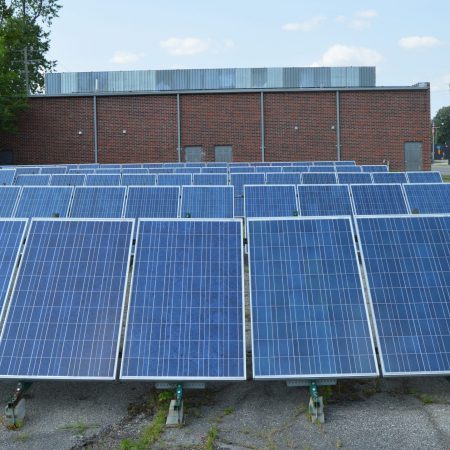
A second bill would also limit distributed energy sources, such as rooftop solar, to just 1% of a utility’s total energy sales. Democrats say that amounts to a ban on community solar programs like Ann Arbor’s Solarize, where neighbors group together to buy solar panels at bulk discounts.

Ann Arbor solar installations jumped from 17 per year to 180 after the Solarize program launched. The 1% cap could hurt that growth.

Republican Rep. Pauline Wendzel says her bill puts “reliability and affordability first.” 

On the other side of the aisle, Democratic Rep. Tonya Myers Phillips points to utilities and their frequent rate increases as the problem behind high energy bills.

Reporter Kyle Davidson from Michigan Advance joined Robyn Vincent on The Metro to discuss the battle over energy costs.

Listen to The Metro weekdays from 10 a.m. to noon ET on 101.9 FM and streaming on demand.

Subscribe to The Metro on Apple Podcasts, Spotify, NPR.org or wherever you get your podcasts.

Trusted, accurate, up-to-date.

WDET strives to make our journalism accessible to everyone. As a public media institution, we maintain our journalistic integrity through independent support from readers like you. If you value WDET as your source of news, music and conversation, please make a gift today.

Donate today »

More stories from The Metro

The post The Metro: The battle for Michigan’s clean energy future appeared first on WDET 101.9 FM.

GOP governor candidate Tom Leonard says Michigan needs a Detroit Lions-esque turnaround

Michigan elects a new governor this year and WDET is talking to the candidates vying to replace term-limited Democrat Gretchen Whitmer.

One of those in the crowded Republican field for governor is former Michigan Speaker of the House Tom Leonard. He wants to lower taxes and reduce government spending.

But Leonard says he’s also running to protect the future for Michigan’s children, including his own kids.

Listen: GOP governor candidate Tom Leonard speaks with WDET’s Quinn Klinefelter

The following interview has been edited for clarity and length.

Tom Leonard: There’s three very simple reasons why I’m doing this. And those are Hannah, Thomas, and Danny. That’s our nine-year-old, our six-year-old, and our now 20-month-old.

When you look at the state of our state right now, the unemployment, the lack of income growth, a quarter of our population right now suffers from some type of mental health issue. Half of them are not getting treatment. The list goes on.

We are doing this because the last thing that we want is for one of our kids to come to us in the next 15-20 years and say, “Dad, we’d love to stay in the greatest state in the country. But unfortunately we have to leave because there’s no opportunity for us here in Michigan.” That’s why we’re doing this.

Education serves as a foundation

Quinn Klinefelter, WDET News: If you were elected governor, how would you try to address some of that?

TL: There are so many things that we have got to get done to turn this state around. One of the biggest issues that I’m focused on right now is education. Fourth graders right now in this state cannot read at a proficient level. Quinn, that is our foundation, that is our base. And I can tell you as a former prosecutor, if somebody has to drop out of school because they’re illiterate, you have created a pipeline to a welfare check or a prison cell.

I believe we need to make Michigan a right-to-work state again. Growth states in this country are right-to-work states. I believe we need to phase out the income tax.

I hear many of these candidates out there gaslighting people across the state, saying that they’re going to eliminate the state income tax on day one. That’s despite the fact that the legislature isn’t even sworn in until nearly two weeks after the governor comes into office.

I would say look at my past track record and my history. That’s what we did when I was speaker. And when I’m the state’s next governor that’s exactly what we’re going to do. We’re going to get these big-ticket items across the finish line.

Mental health crisis

QK: You mentioned education. What other issues do you think are vitally important at the moment to Michigan?

TL: I seem to be the one candidate out there right now that’s talking about this mental health crisis. As I said, a quarter of our population suffers from some type of mental health issue. Half of them are not getting treatment.

I believe it starts with ending the stigma that comes attached when somebody is diagnosed with a mental health issue. Think about this for a moment. If you or somebody is diagnosed with something physically, what do they typically do? They go to their friends, they go to their family, they go to their place of worship, they ask for prayer, they start treatment.

Sadly, when people are diagnosed with a mental health issue, they are scared. They don’t know what to do. We’ve got to end the stigma that comes attached.

Energy policy reform

TL: Energy costs. This is a big one right now as I travel the state. I’m hearing more and more of people that can no longer afford their electricity bills. Frankly, we’ve got a broken system. We’ve got a Michigan Public Service Commission that no longer works for the people of this state. They work for two monopoly utilities. They sign off on every single rate increase that they ask for.

Enough is enough. We are the one campaign that has put forth a plan to not only bring choice and competition to the state and the utility monopolies, but also shake up the Michigan Public Service Commission.

Right now those regulators, who dictate our rates, are three unelected bureaucrats appointed by the governor. That is way too much power given to the governor. The governor should never control those appointments. Our plan calls for increasing the Michigan Public Service Commission from three to five members, only giving the governor two appointments.

The other appointments would be made by the attorney general, the speaker of the Michigan house and the senate majority leader. These are the types of bold solutions we are putting on the table to address the problems that the people of this state are facing.

Data centers feed into energy problems

QK: There’s been concerns raised by some people about the possibility of rate increases and energy or water problems from the advent of data centers across the state. From some of your past statements, it sounds like you’re not exactly a fan of data centers.

TL: The one being proposed right now that’s being built in Saline Township is 1.4 gigawatts. That is equivalent to the energy used by a million homes. There’s now one being proposed in Van Buren that’s nearly double that, with energy use equal to 2 million homes. Quinn, there are only 4.5 million homes in this entire state. Two industrial-sized data centers alone that they’re proposing would equal the energy for 3 million homes.

I don’t want these things driving-up our energy rates. We need to end the tax subsidies that come attached with these things.

The legislature a couple years ago passed legislation to give tens of millions of dollars to these big tech data centers. They should not be taking money out of our pockets and putting it in the hands of big tech to go out and buy up our farmland. So, end the subsidies.

We need to ban the use of non-disclosure agreements. You’ve got these local governments that are signing these NDA’s. The local citizens have no idea who’s going to be built in their area. They have no idea who’s going to be running these data centers.

These data centers do not create long-term jobs. Yet there is the risk that they are going to drive up our energy rates. And every time I push back on this energy issue, people say, “Well, they’re going to be regulated.” And then I ask the question, “Who’s going to regulate them?” “The Michigan Public Service Commission.” And I say, “So the same three regulators that have given us some of the highest electricity rates in the country, the same three regulators that refuse to tell DTE Energy and Consumers Energy ‘No,’ we are now going to allow to regulate these data centers?” I don’t think so.

I fear that they’re going to drive up our rates. We’ve already got the highest rates in the Midwest and some of the highest in the country. We cannot afford to pay more on our electricity bills.

What to do about political division

QK: It’s no secret how politically divided not only lawmakers but the country and the state as a whole are nowadays. Do you think it’s possible that anyone who would be governor will be able to bring people together at this point in time? Or is it just simply a matter of, “We’ve got to go forward with our policies and hope the other side comes along at some point?”

TL: I believe Democrats gave Republicans a playbook two years ago for what happens when you wake up every day and you have no vision and your only focus is hatred of one person. You lose. And I believe, as a Republican, if Republicans wake up every day and their only focus is hatred of Democrats, they will lose.

They’ve got to put forth a vision. That’s why every single day I’m focused on tackling problems, not people. I’m going to stay bold in my convictions, I’m a strong conservative. I don’t shy away from that. But there is nothing wrong with working across the aisle when it comes to accomplishing things for our state. We’ve actually labeled it the “Dan Campbell” approach.

You may recall when Coach Campbell became the coach of the Lions and he stood on that stage at the first press conference. He didn’t focus on six decades of failure. He didn’t cast blame. He didn’t point the finger. He just simply said, “We’ve got a problem here. And with a lot of grit, a lot of determination, working together with a positive vision every single day, we’re going to turn this program around.”

If Coach Campbell was able to turn the absolute worst sports franchise in the history of all mankind around with that type of vision, we can do the same thing for this state.

Trusted, accurate, up-to-date.

WDET strives to make our journalism accessible to everyone. As a public media institution, we maintain our journalistic integrity through independent support from readers like you. If you value WDET as your source of news, music and conversation, please make a gift today.

Donate today »

The post GOP governor candidate Tom Leonard says Michigan needs a Detroit Lions-esque turnaround appeared first on WDET 101.9 FM.

A tough Supreme Court hearing brings little clarity on Line 5’s fate

This story is made possible through a partnership between Interlochen Public Radio and Grist, a nonprofit environmental media organization. The U.S. Supreme Court heard arguments on Tuesday about whether state or federal court will have the final say on the future of the controversial Line 5 pipeline, which carries crude oil and natural gas liquids […]

The post A tough Supreme Court hearing brings little clarity on Line 5’s fate appeared first on Detroit Metro Times.

The Metro: Fined, profitable and raising your rates—a week of Michigan utility headlines, explained

Michigan’s bitterly cold winter has many staring down high energy bills — the highest in the Midwest. These rising costs have kept utilities on people’s minds.

Some recent headlines have, too.

Last week, a federal judge fined DTE Energy $100 million for polluting the air around Zug Island.

DTE Energy said in a prepared statement it is “extremely disappointed in the court’s ruling and its negative implications on the domestic supply of coke to the U.S. steel industry.” The company said it plans to appeal to the 6th Circuit Court and maintains it “has been operating within the limits of the valid original state permit – both today and during the time period in question.”

Two days later, state regulators approved another rate hike for DTE — a $242.4 million increase that will add roughly $4.93 to the average residential monthly bill starting March 5. DTE said the investment is delivering results, pointing to what it called its most reliable year in nearly two decades.

“Since 2021, DTE’s electric bill growth has been among the lowest in the country compared to other states,” said Matt Paul, president and chief operating officer of DTE Electric. “Our actual bills remain below the Great Lakes region and national averages.”

“A never-ending cycle”

That same week, DTE posted over $1.5 billion in operating earnings — more than $100 million higher than the year before. Michigan Attorney General Dana Nessel called the pattern “a never-ending cycle of rate hikes.” She said the system should be questioned when a utility projects record profits while asking customers to pay more.

In other energy and environmental news, the U.S. Supreme Court heard arguments Tuesday on the future of Line 5 — the 73-year-old oil pipeline running through the Straits of Mackinac. 

Meanwhile, communities across the state are in revolt over data centers that could consume more electricity than entire cities. DTE has said that data center contracts are separate and that residential customers will not subsidize their rates.

So given all this, today we’re asking: who is in charge of utility costs and safety in Michigan? And when things go wrong, who is accountable? Nick Schroek has some answers. He is dean of the University of Detroit Mercy School of Law, a leading expert in environmental law, and served as a special assistant prosecutor during the Flint Water Crisis. He joined Robyn Vincent on The Metro.

Editor’s Note: DTE Energy is a WDET sponsor.

Listen to The Metro weekdays from 10 a.m. to noon ET on 101.9 FM and streaming on demand.

Subscribe to The Metro on Apple Podcasts, Spotify, NPR.org or wherever you get your podcasts.

Trusted, accurate, up-to-date.

WDET strives to make our journalism accessible to everyone. As a public media institution, we maintain our journalistic integrity through independent support from readers like you. If you value WDET as your source of news, music and conversation, please make a gift today.

Donate today »

More stories from The Metro

The post The Metro: Fined, profitable and raising your rates—a week of Michigan utility headlines, explained appeared first on WDET 101.9 FM.

Detroit Evening Report: Southfield officials protest ICE administrative office

Oakland County leaders and residents are protesting a possible Immigration and Customs Enforcement administrative office in Southfield. Congresswoman Rashida Tlaib and State Senator Jeremy Moss were among dozens of protesters at the site Tuesday.  State Representative Jason Hoskins says residents are concerned about ICE having a larger presence in Southfield. 

 “Across the country, people have seen mass federal agents operating in ways that feel aggressive and intimidating and disconnected from the communities that they serve, and when communities of color see mass individuals exercising power, it says a historical weight that cannot be ignored.”   

The building owner, REDICO, said in a statement that the lease is with the General Services Administration, and not directly with ICE. 

Additional Headlines for February 18, 2026

 DTE Energy fined for clean air violations 

A federal judge has ordered DTE Energy to pay 100 million dollars for Clean Air Act violations in Metro Detroit. The infractions occurred at a subsidiary facility on Zug Island where coal is turned into coke for steel production. Sulfur dioxide is produced during the process. The gas can cause health problems when inhaled. The Environmental Protection Agency sued the coke plant in 2022. The judge also ordered the facility to come into compliance with clean air laws and to start a Community Quality Action Committee to work on air quality improvement projects. DTE Energy says it will appeal the ruling.  

Cardiac emergency plans for school stalls 

Michigan lawmakers required schools to adopt a cardiac emergency response plan for the current school year if the Legislature appropriated “sufficient funds.” But funding wasn’t dedicated in the education budget. A Senate proposal to include funding was removed by the House and was not included in the final budget. That means enforcement of the law is stalled. Bridge Michigan reports the state Department of Education says decisions on whether to implement emergency plans at the state’s estimated 5,000 public and nonpublic schools depend on local capacity and available resources. 

The holy month of Ramadan has begun 

Ramadan has begun. The Islamic holy month began Tuesday after sunset. Today is the first day of fasting. Muslim communities observe the event by praying intently, reading the Quran, giving to charity, and fasting from sunrise to sunset. Families gather in the evening to break their fast. Ramadan is the month when it is believed that the Quran was revealed to the prophet Muhammad. 

Ash Wednesday observed 

Today is Ash Wednesday, a solemn day of fasting and reflection that signals the start of Lent, the season of repentance, reflection and self-denial for Catholics and many other Christians. Worshippers attend church today and receive ashes, commonly spread in the shape of a cross on the forehead to remind them that life is short and that they should focus on things of the spirit. 

Listen to the latest episode of the “Detroit Evening Report” on Apple Podcasts, Spotify, NPR.org or wherever you get your podcasts.

Support the podcasts you love.

One-of-a-kind podcasts from WDET bring you engaging conversations, news you need to know and stories you love to hear. Keep the conversations coming. Please make a gift today.

The post Detroit Evening Report: Southfield officials protest ICE administrative office appeared first on WDET 101.9 FM.

The Metro: President Trump won’t regulate pollution. Can Michigan do that on its own?

In 2023, Governor Gretchen Whitmer signed one of the most aggressive clean energy laws in the country — requiring Michigan utilities to hit 50% renewable energy by 2030 and 100% clean electricity by 2040. That plan assumed federal policy would be moving in the same direction. Things like federal tax credits, Environmental Protection Agency regulations, and infrastructure money for electric vehicles were anticipated to follow.

But that’s not what’s happening now. Last week, the Trump administration revoked the EPA’s ability to regulate pollution.

What does that decision mean for Michigan? What does it mean for DTE and Consumers Energy, which are both tasked with transitioning to clean energy sources instead of relying on things like natural gas?

Liesl Clark is the director of climate action engagement for the University of Michigan’s School for Environment and Sustainability. She also used to run the Michigan Department of Environment, Great Lakes, and Energy. 

The Metro‘s Sam Corey spoke with the director about the president’s actions and what she would recommend the state do now.


Listen to The Metro weekdays from 10 a.m. to noon ET on 101.9 FM and streaming on demand.

Subscribe to The Metro on Apple Podcasts, Spotify, NPR.org or wherever you get your podcasts.

Trusted, accurate, up-to-date.

WDET strives to make our journalism accessible to everyone. As a public media institution, we maintain our journalistic integrity through independent support from readers like you. If you value WDET as your source of news, music and conversation, please make a gift today.

Donate today »

More stories from The Metro

The post The Metro: President Trump won’t regulate pollution. Can Michigan do that on its own? appeared first on WDET 101.9 FM.

The Metro: Ann Arbor’s bid to dump DTE and go public

If you live in southeast Michigan, chances are you have a DTE story — the kind where your food spoiled during an outage, your pipes froze while you waited for power, or the number on your energy bill last month spurred disbelief.

The data backs up that frustration. According to a report from the Citizens Utility Board of Michigan, the state ranked last in 2023 for average time to restore power after an outage, taking roughly 12 hours per incident —more than double that of any neighboring state.

Energy rates, meanwhile, continue to climb. DTE Energy has filed four rate increase requests with the Michigan Public Service Commission in five years. In 2024, the company cut power to approximately 150,000 customers for nonpayment, according to a report from the Center for Biological Diversity. That same year, DTE paid more than $607 million in dividends to shareholders while its profits surged 41%.

Now, a grassroots effort in Ann Arbor is trying to change the equation.

The group Ann Arbor for Public Power has launched a petition drive to put a question on the November 2026 ballot: whether to establish a governing board for a future city-owned electric utility. The group needs approximately 6,500 signatures to qualify for the ballot.

What happens next

If approved by voters, the measure would not immediately purchase DTE’s infrastructure. Instead, it would create a nine-member public utility board to lay the groundwork for an eventual transition away from the investor-owned utility. A separate vote would be required in the future to authorize the actual acquisition of DTE’s poles and wires.

Michigan already has roughly 40 municipal utilities in cities like Lansing, Traverse City, Holland, and Wyandotte. But none of them were formed by acquiring infrastructure from a private utility. Ann Arbor would be the first city in the state to attempt it. Organizers believe success there could open the door for other Michigan cities, including Detroit, to follow.

Sean Higgins, president of Ann Arbor for Public Power, joined Robyn Vincent on The Metro to discuss why his group believes public ownership is the path to cleaner, cheaper, and more reliable energy for Ann Arbor residents.

DTE Energy has not responded to WDET’s request for comment about this effort.

Hear the full conversation using the media player above.


Listen to The Metro weekdays from 10 a.m. to noon ET on 101.9 FM and streaming on demand.

Subscribe to The Metro on Apple Podcasts, Spotify, NPR.org or wherever you get your podcasts.

Support local journalism.

WDET strives to cover what’s happening in your community. As a public media institution, we maintain our ability to explore the music and culture of our region through independent support from readers like you. If you value WDET as your source of news, music and conversation, please make a gift today.

More stories from The Metro

The post The Metro: Ann Arbor’s bid to dump DTE and go public appeared first on WDET 101.9 FM.

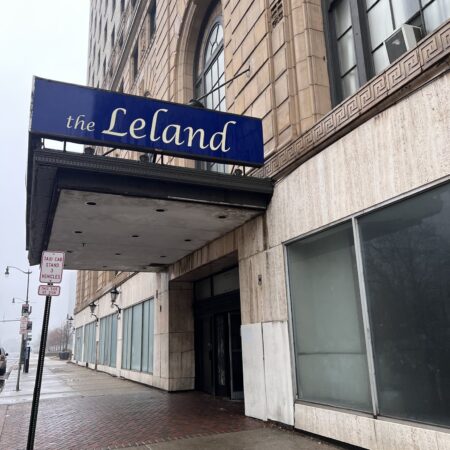
Judge halts rushed Leland House auction, intervening again in fight over Detroit’s historic building

A federal bankruptcy judge on Thursday stopped a fast-tracked auction of the historic Leland House in downtown Detroit, rejecting the building owner’s proposed sale and delivering a temporary win for displaced tenants who said the proposed sale would strip them of their rights without due process.

The post Judge halts rushed Leland House auction, intervening again in fight over Detroit’s historic building appeared first on Detroit Metro Times.

New book examines equitable degrowth as necessary to combat climate change

How does a global community provide for the needs of its citizens without destroying the planet? That’s the crux of “Anthropause: The Beauty of Degrowth,” a new book out this month.

In the early days of the Covid-19 pandemic, society shut down for a few months. As humans stayed inside, animals returned to their old habitats and pollution eased as industry slowed.

Stan Cox, author of “Anthropause: The Beauty of Degrowth”

Retired researcher—and new metro Detroit resident—Stan Cox looks at how that “anthropause” could be a preview of the necessary societal changes to save lives and the planet.

He spoke with All Things Considered – Detroit host Russ McNamara last month. Click on the media player to listen or read selected transcripts below.

Listen: New book examines equitable degrowth as necessary to combat climate change

Russ McNamara, WDET: Why did you write this book?

Stan Cox, Author: The main point I’m making in the book is imagining that we as a society, if we were to rapidly phase out fossil fuels and get by just on the energy that could be generated other ways; and if we stopped plundering the earth for minerals and cutting down forest and causing ecological damage; and we had less energy and materials, and had to allocate them carefully: people know that’s going to mean sacrifice. What am I going to have to give up and so forth?

And what I’m saying in the book is okay, yeah, there are certain things, obviously that will have to be given up. But let’s consider all of the dangers and nuisances, terrible stuff that we put up with an advanced industrial society that has all this energy and materials running through it.

We would be saying goodbye to a lot of those harms and ills by simply not doing a lot of the stuff that requires so much energy input. So the rest of the book, then, is going through specific technologies and activities and so forth that are really harmful to people and the environment, of course, that we would not have the fuel to undertake them, or we would be using resources for meeting people’s basic needs, and we wouldn’t be spending a lot of energy on these other things.

RM: You discuss this and I’m reminded of data centers to run artificial intelligence. People certainly don’t seem to want them and definitely don’t want these in their backyard because there is this concern about the high cost of electricity, and the amount of groundwater that is needed.

SC: That’s absolutely right. One of the big reasons these communities don’t want them is that they create this horrific noise at very high decibel levels and low low frequency noise, which is especially dangerous to human health. When I started writing the book, there wasn’t as much being said about A.I. and the data centers at that time, so I did eventually incorporated them, but the beginning of the second chapter is about noise pollution and and I just used it. It’s seemingly a very small thing, but it really brings out other issues. The leaf blower, especially the gas powered leaf blower, also produces this low frequency and very high volume sound—about eight times the decibel level that the World Health Organization says is safe – and they’re producing a wind about the speed of an EF five tornado. The low frequency sound can travel like three football fields. It’s still above the safe limit.

RM: So what are the societal impacts? Let’s say we start degrowth right now. What are the benefits?

SC: We can’t go on like we’re on the trajectory that we’re on now, because. A degrowth is going to happen. Either a chaotic, brutal degrowth where it’s a Mad Max kind of future, because we’ve tried to force growth to continue and have destroyed ecosystems

Or we can have a planned, rational degrowth that ensures that there’s enough for everybody and that we’re not causing ecological collapse. But there’s no way that growth can continue at this rate.

Sometime in the past three years, we passed a milestone. The quantity of human made stuff—that is everything that human society has manufactured or built or produced—if you weigh all of it up, the mass of all of that exceeds the total mass of all living things on Earth, all plants, animals, microbes, et cetera, and that quantity of stuff being produced is is doubling every 20 years. And clearly that can’t go on.

Herb Stein, an economist from the 70s or 80s was kind of the Yogi Berra of economists. He had a line: “if something can’t go on forever, it won’t” and that’s where growth cannot go on forever. So we have to pull back, create what I called in the book an “anthropause” of our own, and try to have a rational, safe and just reduction in the amount of economic activity for the good of everybody.


Support local journalism.

WDET strives to cover what’s happening in your community. As a public media institution, we maintain our ability to explore the music and culture of our region through independent support from readers like you. If you value WDET as your source of news, music and conversation, please make a gift today.

The post New book examines equitable degrowth as necessary to combat climate change appeared first on WDET 101.9 FM.

Leland building residents continue fight to return home

Detroit residents forced out from the Leland apartment building remain in temporary housing as questions grow about what happens next.  

The downtown high-rise was evacuated in November after a power failure, just days after a court-approved payment agreement was reached on an overdue DTE Energy bill tied to the property’s ongoing bankruptcy case.  

The Detroit Fire Department issued a vacate order, and about 25 to 30 residents are staying in a city-paid hotel through mid-January. Many say they’ve received no clear timeline for returning home.  

Advocates say residents were not included in decisions about the building’s future and are now pushing for access to belongings and a right to return. 

Steven Rimmer is director of the Detroit Tenants Union, an advocacy group for renters. 

“I think this is just another situation where there’s been a lot of decisions made about our community without the voice of the community,” he says. “…residents have not been brought into the conversation once about what’s going on, the future of Leland, their future… I think this is just another example of why we need to organize across the country for better rights in our community,” Rimmer says. 

He says the Detroit Tenants Union plans to intervene in the building owner’s bankruptcy case to protect Leland residents’ rights.

Trusted, accurate, up-to-date.

WDET strives to make our journalism accessible to everyone. As a public media institution, we maintain our journalistic integrity through independent support from readers like you. If you value WDET as your source of news, music and conversation, please make a gift today.

Donate today »

The post Leland building residents continue fight to return home appeared first on WDET 101.9 FM.

Nessel challenges fast-tracked DTE data center deal, citing risks to ratepayers and lack of public scrutiny

Michigan Attorney General Dana Nessel is urging state utility regulators to reconsider their approval of special power contracts for a massive data center planned in Washtenaw County, warning the fast-tracked decision could leave electric customers exposed to higher costs.

The post Nessel challenges fast-tracked DTE data center deal, citing risks to ratepayers and lack of public scrutiny appeared first on Detroit Metro Times.

Detroit Evening Report: Flu cases on the rise

Flu cases are on the rise across Michigan.  The U.S. Centers for Disease Control say the state has a “very high” level of doctors’ visits for respiratory illnesses.  That’s the top category in the country.  

Doctors recommend children and adults over 65 get a flu vaccine to prevent serious illness and limit the risk of hospitalization.  Officials say only about a quarter of Michigan residents have received a flu vaccine this season.   

The state says 8% of emergency room visits last week were because of flu-related illnesses.

Additional headlines for Jan. 7, 2026

Homicides fall

The number of homicides in Detroit continues to fall.  

The city had 165 murders last year.  That’s the lowest number since 1964.

The police department says other crimes, such as non-fatal shootings and carjackings also fell last year. 

DTE introduces new fee 

DTE Energy will soon begin charging a fee for customers who pay their bills by credit or  debit card.  That’s according to the Detroit Free Press.  Residential customers will pay $2.99 per transaction.  Business customers will be charged $9.99 per transaction when they pay by debit or credit.  The Detroit utility says the fee will go directly to third party vendors who  process those payments.  The change is set to take effect on March 2nd

Gas prices 

Gas prices have risen slightly in metro Detroit over the past week, but they remain below $3 per gallon.  Triple A Michigan says the average price of a gallon of self-serve unleaded is $2.83.  That’s up about five cents from a week ago.  Last year at this time, Detroiters were paying an average of $3.!0 per gallon. 

Temperature rising

Detroiters can expect a bit of a weather warm-up in the next couple of days.  The National Weather Service says temperatures will rise into the upper 40s tomorrow and we might even break a record with a high forecast to be in the upper 50s on Friday.  

The reality of winter returns on Sunday and Monday though, with highs in the 30s. 

Morton fired

The Detroit Lions have fired offensive coordinator John Morton after a disappointing season.  The team failed to make the playoffs this year with a record of nine wins and eight losses.  

Morton called plays for the offense in the first 10 games of the year, but head coach Dan Campbell was not pleased with the team’s inconsistent performance.  Campbell took over offensive play-calling duties in game 11.  

Morton became offensive coordinator last year after the departure of Ben Johnson, who left the Lions to become the head coach of the Chicago Bears.  Chicago won the NFC north division this season and is headed to the playoffs.  The Lions finished last in the division this season. 

Listen to the latest episode of the “Detroit Evening Report” on Apple Podcasts, Spotify, NPR.org or wherever you get your podcasts.

Support local journalism.

WDET strives to cover what’s happening in your community. As a public media institution, we maintain our ability to explore the music and culture of our region through independent support from readers like you. If you value WDET as your source of news, music and conversation, please make a gift today.

The post Detroit Evening Report: Flu cases on the rise appeared first on WDET 101.9 FM.

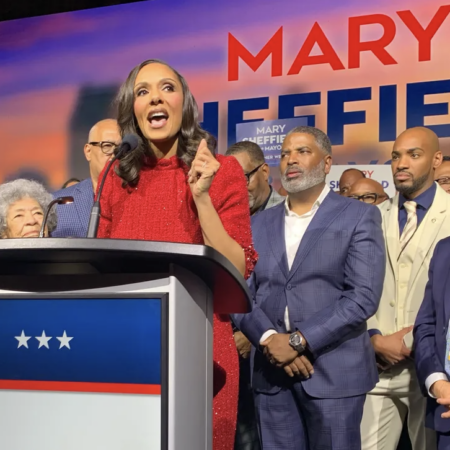
Detroit Evening Report: Sheffield takes office

Detroit Mayor Mary Sheffield took office on New Year’s Day. But she’s celebrating her achievement with a public swearing-in ceremony this week.

Detroit City Council members, police commissioners and the City Clerk will also take part. The ceremony at the Detroit Opera House features poetry and music performances as well.

Sheffield is the first woman ever elected mayor of Detroit. She says her team is developing an action plan for her first 100 days with input from the community. But she’s also retaining several key officials from the past mayoral administration including the corporation counsel—the city’s top lawyer—and Detroit’s fire commissioner.

Sheffield also announced today that the city will join a program that gives financial support to pregnant women and infants. The city has already raised 9 million dollars to participate in RX Kids. It’s looking for $2 million to fund the program for 3 years.

Sheffield says she hopes to secure the funding to launch the program within her first 100 days.

Additional headlines for Monday, Jan. 5, 2026

State utility regulators demand more transparency

DTE Energy, Consumers Energy, and other regulated utilities in Michigan must do more to inform customers about potential rate hikes. This is because of a new order by state utility regulators.

The Michigan Public Service Commission wants to increase customer participation in utility issues, including cases that set new rates. After March, regulated electric utilities must inform customers when they asked for higher rates, and how much their bills would go up if that amount is approved.

There’s concern that this could confuse people, since rarely do utilities get their full requested amount. But supporters of the change say advance notice will let more people find out about and comment on potential rate hikes before the cases are resolved.

Gas prices

Michigan gas prices have dropped 11 cents since last week. According to the auto group AAA, you can get regular unleaded for $2.70. This new price is 18 cents less than a month ago and 44 cents less than this time last year, making this new price the lowest since February of 2021.

The US strikes in Venezuela this weekend don’t seem to have impacted oil prices just yet, according to AAA. The organization also says Venezuela crude oil exports have been limited due to the sanctions in the last couple of years.

Sports updates

NFL

The Lions beat the Chicago Bears 19-16 yesterday with a walk off field goal kick from Jake Bates, ending the season with a winning record. Now all eyes are on the off season, the NFL draft and seeing how they will bounce back for the 2026 season.

NBA

The Pistons beat the Cleveland Cavaliers yesterday 114-110 and remain on top of the Eastern Conference. Their next game is today at Little Caesars against the New York Knicks and again at Little Caesars on Wednesday against the Chicago Bulls.

Tip off for both is at 7:00 p.m.

NHL

The Red Wings play against the Ottawa Senators tonight at 7:30 p.m. at the Canadian Tire Centre. The Red Wings are currently third in the Atlantic Division.

Carl Thomas performs

And R&B singer Carl Thomas known for his smash 2000 hit “I Wish” will be performing at Sound Board on Sunday Jan. 11, 2026 at 7:30 p.m.

The artist from Illinois hit the Billboard Top Hot 100 and peaked at 20. And this year marks the 26th anniversary of his debut studio album “Emotional.”

To hear Thomas live, go to soundboarddetroit.com for tickets and more information.

Listen to the latest episode of the “Detroit Evening Report” on Apple Podcasts, Spotify, NPR.org or wherever you get your podcasts.

Support local journalism.

WDET strives to cover what’s happening in your community. As a public media institution, we maintain our ability to explore the music and culture of our region through independent support from readers like you. If you value WDET as your source of news, music and conversation, please make a gift today.

The post Detroit Evening Report: Sheffield takes office appeared first on WDET 101.9 FM.

Tenants plan rally over alleged ‘hostile takeover’ of Detroit’s historic Leland House

Tenants of Detroit’s historic Leland House plan to rally Saturday afternoon, accusing city officials of blocking them from retrieving their belongings after a sudden evacuation earlier this month and raising alarms about what they call a “hostile takeover” of the troubled and storied downtown building.

The post Tenants plan rally over alleged ‘hostile takeover’ of Detroit’s historic Leland House appeared first on Detroit Metro Times.

❌