Reading view

There are new articles available, click to refresh the page.

Crossing the Lines: Automakers fueled growth in Highland Park then left it running on financial fumes

In the early 20th Century Ford and Chrysler operated extensive facilities in Highland Park, helping its population grow to more than 50,000 people by the 1930s.

But both car companies moved away from Highland Park decades ago. Now its population hovers between 8,000 and 9,000.

Automotive historian Robert Tate writes for the website MotorCities and worked with the Chrysler museum.

Tate says Ford mass-produced its Model T in Highland Park, creating the moving assembly line that forever changed manufacturing.

Tate says even the Highland Park plant’s architecture was inspiring.

Listen: Robert Tate on Highland Park’s automotive history

The following interview edited for length and clarity.

Robert Tate: The building was designed by Albert Kahn. He and Henry Ford had a great relationship. The doors opened January 1, 1910, on Woodward Ave. It became one of the largest factories in the world because they manufactured the Model T. The factory was about 865 feet and ran parallel to Woodward Ave. This was one of the most historic sites in the United States and the world, to be honest with you. And it also attracted a lot of people from European countries and other cultures to finally get a job and become an American citizen. So, the factory itself created a lot of things for a lot of people, not just the Model T, but for people to live a good life.

Quinn Klinefelter, WDET News: Why did it attract people from Europe and elsewhere?

RT: Henry Ford began using the moving assembly line. And in 1914, the average wage was $2.30. But he raised it to $5 a day. That attracted a lot of people from all over the world to come here, including my ancestors. My family came here from the South to get jobs like that. The only problem was that the hours were long, 10 hours a day and then five hours on Saturday for the workers. And that created a lot of health issues for a lot of individuals because they were so regimented in putting together parts at the assembly plant.

QK: How much did the Ford factory actually mean to the city of Highland Park?

RT: It meant a lot because you’re talking about taxes and people coming in. The Highland Park Hotel was there, they had a racetrack as well at the time. That generated a lot of income.

Site of the old Ford plant in Highland Park.

QK: Why did Ford move it out eventually? Why did it leave Highland Park?

RT: My belief is that things began to change when the 1927 Ford came out and the company had the model assembled at the River Rouge plant. The Model T was produced from 1908 to 1926. And then Ford introduced the 1927 Model A, which was very, very popular. Ford sold millions of those cars. Also, and people don’t like to talk about this, unfortunately there were a lot of workers who got killed at the Highland Park plant. Because at that time they didn’t have things enclosed for safety. So, a lot of men, unfortunately, lost their lives. But I think that Ford wanted to get out of Highland Park and move it closer to River Rouge because you had more goods coming into that particular facility for models to be assembled.

QK: In regards to Chrysler, how did they get into Highland Park?

RT: It was their major headquarters until they moved to a larger facility in Auburn Hills. I used to hear a lot of Chrysler employees say that the Chrysler Highland Park site was just too archaic.

QK: I’ve heard some experts say that when Chrysler in particular moved out, it truly devastated Highland Park’s economy. And that the enclave has struggled to really replace that revenue since. Do you agree?

RT: Yes, I do. The same thing happened with American Motors when they moved out. Unfortunately, the neighborhoods and the communities suffered when both of those companies moved to Auburn Hills. The neighborhoods were devastated.

QK: There must have been a lot of tax revenue and other money coming into Highland Park that suddenly vanished. But you say that from what you heard people who were working for Chrysler were happy to vacate and to go to a newer facility.

RT: My God, yes. I would hear that all the time because it was a new facility. It created a new way of thinking, using the new things that they were not accustomed to having at Highland Park. I remember walking through the hallways at the Chrysler facility in Auburn Hills and it was a showcase. It was a very beautiful building.

Designed by Albert Kahn, the old Ford plant in Highland Park stands as a symbol of automotive history.

QK: After all that has happened since Ford opened the Model T assembly line, when you look at Highland Park now, what do you think is the legacy that automakers have left there?

RT: As a historian, I look at the 1950’s in Highland Park. Virgil Exner, who was the chief designer in charge, came out with the 1957 Chrysler line. And I’m a big fan of the 1957 Chrysler line. So, whenever I think of Highland Park, I think of the good days that launched a lot of cars that were popular, the 1964 Dodge, the 1957 Chrysler. Those cars changed America.

Support local journalism.

WDET strives to cover what’s happening in your community. As a public media institution, we maintain our ability to explore the music and culture of our region through independent support from readers like you. If you value WDET as your source of news, music and conversation, please make a gift today.

Read more Crossing the Lines: Highland Park

Highland Park City Hall

Crossing the Lines: Highland Park values enclave status

Pat Batcheller May 4, 2026

Detroit surrounds Highland Park on three sides, sharing the fourth side with Hamtramck. Being a city within a city is a source of pride for many Highland Park residents. As part of WDET’s Crossing the Lines Highland Park series, Morning Edition Detroit host Pat Batcheller looks at how the city became an enclave and how it has stayed that way for more than a century.

Read More »

The post Crossing the Lines: Automakers fueled growth in Highland Park then left it running on financial fumes appeared first on WDET 101.9 FM.

Crossing the Lines: Highland Park values enclave status

Highland Park is an odd shape—a trapezoid to be exact. Its borders include West McNichols Road on the north side, railroad tracks along the eastern edge, alleys behind Tennyson and Tuxedo streets to the south, and the Lodge freeway forming part of its western boundary.

Highland Park is a trapezoid with an area of less than 3 square miles

These have been Highland Park’s city limits since officials incorporated it 1918.

That’s how it managed to avoid becoming part of Detroit, which had already annexed most of the surrounding land.

Leaders and residents wanted autonomy

Jeff Horner is a professor at Wayne State University‘s Department of Urban Studies and Planning. He says Detroit wanted to absorb Highland Park even before the latter became a city.

“Highland Park was not open to the idea of being absorbed,” Horner says. “They wanted to have some local autonomy.”

Jeff Horner is a professor in Wayne State University’s Department of Urban Studies and Planning

Michigan’s Home Rule law in 1909 made it difficult for one city to annex another. That same year, Henry Ford finished building his Model T factory in Highland Park. It was the first Ford plant to use an assembly line. Horner says the city’s population exploded.

“From the 1910 U.S. census to the 1920 census, the population of the city grew by over 1,000% from about 4,500 to about 45,000,” Horner says. “That is remarkable growth.”

Auto industry drove growth

Highland Park kept growing until 1930, peaking at almost 53,000 people. Marsha Battle Philpot grew up in the city and has written about its history. She says Henry Ford’s offer of $5 a day to work on his assembly line drew thousands of people from across the country.

“This was an astronomical sum in those days,” she says. “Maybe an average person might make $5 a month”.

The city’s population steadily declined through the 1930s and 1940s. But it was still relatively prosperous. Philpot says the schools were among Michigan’s best in the 1950s and 1960s.

“Even our elementary schools had swimming pools,” Philpot says. “It was really an extraordinary place to live.”

But good schools were not enough to keep people from leaving the city decade after decade. Ford eventually closed its Highland Park factory, which is now a Michigan historical landmark. Chrysler moved its headquarters, established in 1925, from Highland Park to Auburn Hills. The city’s tax base evaporated. It had so much trouble paying its bills its streetlights were repossessed. State-appointed emergency managers ran the city and the school district for much of the early 2000s, closing the McGregor Library and the high school. Glenda McDonald, Highland Park’s mayor since 2022, says those decisions hit young people especially hard.

“Children need a place to go, and literacy is a very important part of our children’s learning,” the mayor says. “It kind of put a very bad taste in people’s mouths.”

Lansing takes over

McDonald says emergency management didn’t solve Highland Park’s long-term financial problems. One was literally bubbling under the surface: leaky water pipes, some more than 100 years old. The city incurred tens of millions of dollars in debt to the Great Lakes Water Authority. Each side sued the other with the city accusing GLWA of overcharging residents who were too poor to pay for water. The legal dispute pushed Highland Park to the brink of financial ruin.

Glenda McDonald is the mayor of Highland Park

In 2023, the state intervened again, this time giving the city $100 million to pay its debt and fix its water infrastructure. McDonald says workers are now replacing every lead water line in town.

“We’re working with the state, we’re working with GLWA, and hopefully we’ll continue moving forward that way,” McDonald says.

Had the state not thrown Highland Park that lifeline, the city likely would have filed for bankruptcy. The financial crisis raised a question: would Highland Park be better off becoming part of Detroit? The mayor demurred.

“Blasphemy,” she says.

Legal hurdles, local pride make merging difficult

For one local government to absorb another, state law requires residents of both communities to vote in favor of it after weighing the pros and cons. Stephanie Leiser directs the Center for Local, State, and Urban Policy at the University of Michigan’s Ford School of Public Policy. She says uniting Detroit and Highland Park could reduce bureaucracy.

“You can eliminate some layer of management there,” she says. “They don’t need to have an additional mayor and a clerk and all of those things.”

Stephanie Leiser directs the Center for Local, State, and Urban Policy at the University of Michigan.

But Leiser says there’s not a ton of evidence that it would help Highland Park financially.

“They’re not going to save money necessarily on like plowing the roads, picking up trash, or maintaining the infrastructure,” she says.

Leiser says Highland Park’s finances are in better shape than they were when officials were considering bankruptcy in 2023. But it still has challenges, such as high property taxes.

Highland Park has some of Wayne County’s highest millage rates

In 2025, the city’s millage rate for principal residences was 63.221. That’s $63.22 for every $1,000 of a home’s taxable value. The non-homestead rate as over 79 mills. Rates for industrial and commercial personal property were over 57 mills and 67 mills respectively.

Former Highland Park Councilman Ken Bates says the city’s millage rates and pervasive poverty make it hard to attract new investment.

“We have to look into the future as to what will help Highland Park become sustainable,” he says. “What kind of industry should we count on?”

Ken Bates has lived in Highland Park since 2000. He served on the city council from 2018-22.

Bates says city leaders need a plan and the expertise to implement it.

“If not, it’s just you maintaining the status quo year after year,” he says. “You’re just one disaster away from financial calamity.”

More than just lines on a map

Bates says Highland Parkers are fiercely loyal to their community and that most want to remain a city within a city. Resident Michael Williams, Sr. admits he wouldn’t rule out becoming part of Detroit.

“We would get more popularity, probably more services,” Williams says.

But other residents, like Kim McDade, don’t see the benefit of giving up Highland Park’s identity.

“Highland Park needs to be given a chance to continue to build,” McDade says. “Our mayor is doing a great job in doing some things and making connections with the right people.”

Mayor Glenda McDonald says the city’s greatest strength is its people.

“They’re resilient, they’re loving, they’re kind, and we take care of each other,” she says. “I know a person on every single street.”

The mayor says that resilience defines Highland Park more than its shape on a map.

Support local journalism.

WDET strives to cover what’s happening in your community. As a public media institution, we maintain our ability to explore the music and culture of our region through independent support from readers like you. If you value WDET as your source of news, music and conversation, please make a gift today.

The post Crossing the Lines: Highland Park values enclave status appeared first on WDET 101.9 FM.

Detroit Evening Report: DTE requests another rate increase

DTE Energy is requesting another large rate increase, just weeks after its last increase was approved.  The Detroit utility is asking for another $474 million to pay for infrastructure improvements.  The Michigan Public Service Commission approved a DTE rate increase of $242 million dollars in February.  

If granted, the new proposed hike would add roughly 10% to the average resident’s utility bills.   DTE filed the new request on Tuesday. Michigan Attorney General Dana Nessel says she will intervene in the case. 

Additional headlines for Wednesday, April 29, 2026

Detroit Regional Chamber releases poll 

The Detroit Regional Chamber has released a new poll showing the current state of primary races in the state.  

The survey, conducted by the Glengariff Group, shows Congressman John James leading all other Republican candidates running for governor in Michigan.  Perry Johnson and Mike Cox are second and third, respectively.  In the Democratic primary for the U.S. Senate, Congresswoman Haley Stevens leads the race, with Abdul El-Sayed and Mallory McMorrow following.  

And just a reminder: a poll shows a snapshot in time.  It does not indicate future events.  Michigan’s primary elections take place on August 4.  

Highland Park CSO charges examined  

The city of Highland Park says it’s calling for a closer examination of its combined sewage overflow costs.  The city says it’s joining with other suburbs and the Great Lakes Water Authority to form a task force.  The purpose will be to find out why overflow rates are 10 times more than expected.  Highland Park is requesting an adjustment of $1.5 million for this year’s combined sewage overflow charges.  The task force is scheduled to meet in Dearborn on May 8th. 

No word on Gordie opening  

Metro Detroiters are still waiting for the Gordie Howe International Bridge to open – and there’s no word on when that might happen.  

U.S. Ambassador to Canada Pete Hoekstra tells the Detroit News that there are still issues that need to be worked out in the agreement between the two countries before the new span can begin operations.  

President Trump threatened months ago to stall the opening of the bridge.  Canada paid the full cost of construction.  Michigan is set to get a share of revenue generated by the bridge, once Canada’s costs are covered.   

Gas prices jump (again) 

Gas prices in metro Detroit continue to rise quickly.  The average for a gallon of regular gas is now $4.25.  That’s up 6 cents from Tuesday.  

The price is 45 cents per gallon more than just a week ago.  Analysts say crude oil prices remain high because of the war in Iran, but refinery problems here in the Midwest are adding to the steep price increases.   

Pistons try to stave off playoff elimination 

The Detroit Pistons face playoff elimination if they don’t win tonight.  The team plays the Orlando Magic in game five of a best of seven series tonight.  Orlando leads the series three games to one.  

The Pistons finished the regular season with the best record in the NBA’s Eastern Conference, but they’ve failed to carry that dominance into the playoffs.  

Game five takes place tonight at 7 p.m. at Little Caesars Arena.  The game will not be televised.  You can watch it on Prime Video or listen to it on WWJ radio. 

Listen to the latest episode of the “Detroit Evening Report” on Apple Podcasts, Spotify, NPR.org or wherever you get your podcasts.

Support local journalism.

WDET strives to cover what’s happening in your community. As a public media institution, we maintain our ability to explore the music and culture of our region through independent support from readers like you. If you value WDET as your source of news, music and conversation, please make a gift today.

The post Detroit Evening Report: DTE requests another rate increase appeared first on WDET 101.9 FM.

Detroit Evening Report: Highland Park increases surveillance around senior housing

The City of Highland Park is expanding its camera surveillance coverage of senior housing complexes. 

Police Chief James McMahon says seniors have complained about an increase in drug activity at the facilities. The city is looking to add more live cameras in five locations. 

McMahon says he anticipates new surveillance will be up and running within 60 days. 

-Reporting by Bre’Anna Tinsley

Additional headlines for Tuesday, Aprill 28, 2026

Highland Park adds to summer youth programming

Highland Park is also looking at how to serve its youngest residents better. Mayor Glenda McDonald announced extended programming for kids in the city this summer in an effort to keep them off the street. The city is partnering with local churches and the rec center to provide sports, mentorship and education programs. 

McDonald recalled a recent incident where a child was killed in Highland Park. She says she wants to keep kids safe. 

“I started out on a mission to try to put together a group of people with like mind, and wanted to save our children, give them something positive to do, make sure that they are engaged, encouraged and respected by the people in this city,” says McDonald.

Highland Park’s Ernest T Ford Recreational Center will provide sports, open gyms and meals all summer long. Local churches are offering mentorship and structured programming daily. All food and programing are free. 

-Reporting by Bre’Anna Tinsley

History of hats

Former hat designer and author Linda Hannah invites fashion and history buffs to explore the history of hats at the Detroit Public Library’s Main Branch Friday.

The event is open to all ages and starts at 4 p.m. 

Learn to cook with Konjo Me

Konjo Me serves Ethiopian food at the Detroit Shipping Company Tuesdays through Sunday. But this month it’s also offering a cooking class.

Attendees will learn to make one authentic vegan dish and a meat dish before sitting down to enjoy that meal.

The class is May 28, but registration is required. Find more info and purchase tickets at konjome.com.

Free Comic Book Day

Saturday is Free Comic Book Day and several shops in Southeast Michigan have in-store events. Vault of Midnight in Detroit will be offering 5 free comic books to each visitor from 11a.m. to 5 p.m. There are 40 comic books to choose from.

The store will also have sales tents outside with comics starting at $1 board games, manga and graphic novels. Vault of Midnight is located at 2857 East Grand Boulevard in Detroit.

Green Brain Comics in Dearborn will celebrate Free Comic Book Day with 3 free comics for visitors and an opportunity to earn more with non-perishable food donations to Gleaners Food Bank, donations to Friends for the Animals Metro Detroit or by wearing a costume.

Green Brain’s festivities begin at 10 a.m. with a special proclamation from Dearborn Mayor Abdullah Hammoud and end at 6pm. The shop will host several guest creators throughout the day. 

Green Brain is located at 13936 Michigan Avenue in Dearborn.

Listen to the latest episode of the “Detroit Evening Report” on Apple Podcasts, Spotify, NPR.org or wherever you get your podcasts.

Support local journalism.

WDET strives to cover what’s happening in your community. As a public media institution, we maintain our ability to explore the music and culture of our region through independent support from readers like you. If you value WDET as your source of news, music and conversation, please make a gift today.

The post Detroit Evening Report: Highland Park increases surveillance around senior housing appeared first on WDET 101.9 FM.

Crossing the Lines: Highland Park resident wants to see more schools open in the city

As part of Crossing the Lines WDET is speaking to Highland Park residents about the city and upcoming state elections.

Highland Park has only two K-8 charter schools and has not had its own high school since 2015. The city also has many transient residents, which makes it hard for the schools to retain students.

Angela Fleming is a born and raised Highland Park resident. She says quality education for children is her top concern for the city.

Fleming spoke with WDET’s Bre’Anna Tinsley.

Listen: Highland Park resident wants to see more schools open in the city

This interview has been edited for clarity and length.

Angela Fleming: Well, I’m a long-time homeowner in Highland Park, and my main concerns are our school systems. You know, when I was raised and brought up in the school system, we had very beautiful school systems. Now that I see, you know, the children going to schools now they’re being very deprived of education. And I say that because we have one school. I’m a tax paying citizen. I would like to see more schools open in the city of Highland Park.

Bre’Anna Tinsley, WDET:  Do you feel that the current state administration is providing enough resources to the city?

AF:  I think they could do better, or even if they are providing the money, where is he going? Why don’t we as taxpayers see what they’re actually really doing in Highland Park? Rather than fixing the roads – which the roads need to be fixed also— but what about the kids education? Can our kids get educated on levels that will allow them to be competitive in the world we live in or the times we live in? So that’s what I would love to see change.

Let our kids get some education, let them have the opportunity of living healthy, normal lives, which I’m sure we all as parents would like to see our kids go to good school systems, our kids getting the education that we got when we came up. And then, not only that, being in healthy, normal environments.

BT: Do you have someone in mind for governor the governor’s races coming up this year?

AF:  I can’t really say, because there’s a lot of competition, and it also has some good people, but I’m not going to pass judgment on that. The voters will decide who they think the best contender is.

BT: You mentioned education, do you have any specific ideas or things that you will like the next governor to do towards education that might help the city of Highland Park?

AF:  Well, I think when it comes to education, that is one of the most areas that we need to focus on, as it relates to your you know, your crime level. Also, I think if kids get more education, get into the right areas as it relates to your recreation centers, after school programs that they have a better opportunity at being better citizens. In order to be a better citizen, you have to do things that require for you to be brought up in a way that would show a direction as to how you getting trained, or how you getting taught, or how you even getting educated. You know what I’m saying?

BT: Okay, well, I have one more question. Is there anything about Highland Park that you would like the next representative or the next governor to know.

AF:  I think the next governor should understand that Highland Park is just a small community, and we as homeowners or residents of the city of Highland Park should possibly have more meetings that will allow the government to be able to make making better decisions that would be more beneficial to the residents and the children, or even just the residents of that city.

This piece is also a part of WDET’s on-going series, Citizen Vox, where reporters ask residents about their priorities ahead of local elections.

Support local journalism.

WDET strives to cover what’s happening in your community. As a public media institution, we maintain our ability to explore the music and culture of our region through independent support from readers like you. If you value WDET as your source of news, music and conversation, please make a gift today.

The post Crossing the Lines: Highland Park resident wants to see more schools open in the city appeared first on WDET 101.9 FM.

Crossing the Lines: Highland Park resident says smart planning can reduce poverty

Highland Park is a small city that once had a relatively large population for its size. At the height of Detroit’s automotive boom, more than 50,000 people lived within Highland Park’s 2.9 square miles. Today, the population is less than 9,000.

WDET’s Crossing the Lines series features conversations with and stories about Highland Park’s people, culture, and history.

Detroit Public Radio’s Citizen Vox project gives residents a chance to express how they feel about their communities and the issues that matter to them.

WDET’s Pat Batcheller spoke with Highland Park resident Ken Bates at a coffee shop on Woodward Ave. on April 10, 2026.

Listen: Highland Park resident says smart planning can reduce poverty

Bates was born in Detroit but moved to Highland Park with his wife more than 25 years ago. They bought a Craftsman-style bungalow in a historic district of the city. Voters elected Bates to the city council in 2018, where he served until 2022. He chairs the board of an energy nonprofit called Soulardarity. Its mission includes installing solar-powered streetlights in Highland Park’s neighborhoods.

Bates shares his thoughts on housing, poverty, community pride, and development.

Ken Bates: We know that there’s a housing crisis, a housing shortage nationally, affordable housing. Highland Park has an abundance of land that is underutilized, that really could be put forth in terms of development. So, we could look at land trusts. We could look at affordable housing, low-income housing, market rate housing, duplexes to grow the population because that’s what we have in abundance.

Manufacturing? I doubt that will ever come back to the extent that Henry Ford and Chrysler and some of the other manufacturers had here. That’s a bygone era.

And so, we have to look into the future as to what will help Highland Park become sustainable. What kind of industries should we count on?

You have to get education on board. You have to get private development. You have to get your government funding all in order, and you have to have a plan and a vision and the expertise in order to do it.

If not, you’re just maintaining the status quo. And year after year, you’re just one disaster away from some financial calamity, whether it be a natural disaster or something like the Great Lakes Water Authority suing us for $19 million and threatening to put it on our tax rolls.

Pat Batcheller: What do you like about being in Highland Park?

KB: Highland Park is centrally located. It’s convenient. There’s a sense of—like with my block, I never expected it to be so diverse. And yet you’ve got immigrants, you’ve got people of different faiths. You’ve got people who are ascribed to different lifestyles. I mean, it just it goes on and on, different political beliefs, and we all live together in the same community, and we’re able to communicate and talk and look out after each other.”

PB: From the conversations I’ve had with you and some of the other folks I’ve talked to, it isn’t really the borders that define Highland Park, it’s the people. Would you agree with that?

KB: Well, yeah, I would say the people do define Highland Park because, because again, they’ve been here. Most have been here quite a long time. And even if you travel outside of Highland Park and talk to people that formerly lived here, many people will tell you, ‘Yeah, my grandparents lived here.’ They remember it as a great city. They’ve had fond memories.

The historical district is obviously something that has gained attention. People are looking at those homes and, if they have the means to renovate them, are coming in and deciding, “well, let’s renovate this home.” Because you can’t rebuild those anywhere for anything that I would consider reasonable.

Highland Park has just had its own identity for a long, long time. And so, I can’t see that changing because it would be so difficult to incorporate us into the Detroit culture. We’re not Detroit. We’re not Hamtramck. We’re Highland Park.

PB: What’s the most pressing issue facing Highland Park right now?

KB: It’s poverty. You’ve got to figure out how to raise people’s incomes up, so to speak, their standard of living. So, whether it be through employment, homeownership, because poverty impacts everything around us. For example, ALDI is usually out of shopping carts because people abscond with them. If you’re running a business, that’s not helpful. We were fortunate in that Foot Locker moved into the old CVS building because CVS, Rite-Aid, and another drugstore left.

Convincing businesses to come here is a real challenge because the landscape has changed. Brick and mortar stores aren’t necessarily how people are going about retail experiences. You would think that we would have a thrift shop or something of that nature in a community like that. We don’t.

So, trying to look at trends that will allow people to be gainfully employed, increase home ownership, educate their children are things that should be made priority.

The appearance of the city has to change because we have a lot of blight. We had a press conference celebrating the announcement of Highland Towers on Woodward being torn down. We’ve got to have news that is uplifting, that is showing progress now. Yes, the building should be torn down because it’s caught on fire sixteen years ago. But we need to be announcing opportunities for growth projects that will bring about change.

Support local journalism.

WDET strives to cover what’s happening in your community. As a public media institution, we maintain our ability to explore the music and culture of our region through independent support from readers like you. If you value WDET as your source of news, music and conversation, please make a gift today.

The post Crossing the Lines: Highland Park resident says smart planning can reduce poverty appeared first on WDET 101.9 FM.

Crossing the Lines: Highland Park pastor says he serves in an ‘enclave of love’

WDET is examining the highlights and history of Highland Park as part of our Crossing the Lines series.

The roughly three-square mile enclave, completely surrounded by Detroit, has many of the same issues as the Motor City. Some Highland Parkers say it’s often hard for visitors to know when they have left one city and traveled into the other.

Those residents include Pastor Leon Morehead, who leads the New Grace Missionary Baptist Church in Highland Park.

He’s a native of Detroit who has lived in Highland Park for about four years.

Morehead says the enclave is taking steps to reverse decades of decline.

Listen: Highland Park pastor says he serves in an ‘enclave of love’

The following interview was edited for length and clarity

Leon Morehead: It is becoming more of a walkable community. Many things are within walking distance right now. I love the tradition. I love the family atmosphere of Highland Park. I can talk to any of my local politicians and it’s just like we’re family. Even if I disagree with what they’re saying, they make themselves easily accessible.

Quinn Klinefelter, WDET News: Do you get the same sense from your parishioners? Does they seem pretty happy with the area?

LM: Yes, we love Highland Park. We even discussed one time about moving and everybody said, “Absolutely not, we will not move from Highland Park.” It’s centrally-located. And there’s so many things that Highland Park is on the brink of doing. There’s some great developments that are on the way. There’s some housing developments, there’s more jobs that are coming online and more community partnerships, which are helping us a lot.

QK: As a native Detroiter, when you come to Highland Park, did you notice much difference between the two?

LM: With Highland Park being inside of Detroit, it’s almost like you’re just riding through one city. Highland Park was built to be a suburb, I was told. I actually grew up in the north end area of Detroit. As a child, we would ride through and we would see the Chrysler plant and the Ford workers that were working in Highland Park. So it’s not really much of a difference for me because I’ve already experienced it.

My children grow up now in an area where everybody knows them. It’s like the old school days. They don’t want my children to get in trouble. They’ll say, “Hey, he came in at eight o’clock at night instead of six o’clock.” Things like that. I love that part of the Highland Park community. It is an enclave. But it’s an enclave of love.

QK: If you suddenly were granted the power to change things to whatever you would like, is there anything you see around Highland Park that you would like to address?

LM: Just like many other places, I wish we could have the roads together. Our roads are not bad. But there are some street roads that I just wish were a little bit better. Especially with the hot and cold temperatures, we all deal with the potholes. We have a good [Department of Public Works] that fixes them. But I just wish we had a way to have self-sustaining roads.

QK: For people who maybe have not been through Highland Park, what would you tell them? What would you like people to know about the area if they haven’t been here before?

LM: Stop at some of our local shops. One of the greatest things we have is our recreation department. We got a really nice park. They have concerts every Wednesday in the summertime. And when you go there, everything is safe. Everybody’s having a good time. Everybody’s just looking at each other enjoying the family atmosphere. So it’s a great thing.

Support local journalism.

WDET strives to cover what’s happening in your community. As a public media institution, we maintain our ability to explore the music and culture of our region through independent support from readers like you. If you value WDET as your source of news, music and conversation, please make a gift today.

The post Crossing the Lines: Highland Park pastor says he serves in an ‘enclave of love’ appeared first on WDET 101.9 FM.

Crossing the Lines: A conversation with Highland Park’s mayor

What do you know about Highland Park?

WDET reporters have been visiting the city since March, getting to know Highland Park, its history, and its people. These conversations are part of our Crossing the Lines series, which explores what unites and divides metro Detroit as a region.

Highland Park is a city within a city, an enclave of Detroit. At its peak, more than 45,000 people lived in Highland Park, mostly auto workers. Ford and Chrysler called the city home for years. When they moved out, people left in droves. Today, the population is less than 9,000.

One person who stayed is Glenda McDonald. She came to Highland Park as a child in the 1970s and still lives in the city. Voters elected her mayor in 2022.

WDET’s Pat Batcheller spoke with the mayor about her life in Highland Park and her efforts to make the city better.

Listen: A conversation with Highland Park’s mayor

People, not borders, define the city.

Pat Batcheller: How has Highland Park managed to survive as a city despite enormous financial challenges?

Mayor Glenda McDonald: It’s a place where you come and you’re in a neighborhood, but it’s also a city, so everybody in the city rallies around each other, supports each other. We get our support from our partners, Wayne County, the state of Michigan, and others. And they continue to believe in the city, just like I know that right now, I’m believing in this city, and we’re going to move forward, and it’s going to continue to grow.

PB: What makes you believe in it?

GM: I believe because I’ve been here, I saw what the possibilities are, and I know the endless possibilities for Highland Park. You don’t find a place like this, like the housing stock is 100 years old and it’s still standing and they are beautiful. You don’t find neighbors and community the way you do here. This is one community, and that’s what I use as one of my models, is we are one community, even though it’s 2.9 square miles. I know a person on every single street here. You can’t find it in Detroit because it’s so large.

PB: So, it’s not just the borders that define the city, that make it unique?

GM: It’s the people. The people make it unique. It’s hard to explain that we love each other. We take care of each other when it when it’s necessary, and then also we can disagree with each other and move forward and continue to move forward.

Grow the tax base

PB: No city can survive long without a stable tax base at a stable population. As mayor, what are you doing to keep businesses and residents that you already have here and then attract new ones?

GM: One is to make sure that everybody knows that they’re loved and needed here. That’s one thing we have to do is to make sure that people in those businesses and in this community understand we are a people of unity. And you know, we have to make sure that they all already know, that they’re doing a service for folks that some other people are not willing to do.

And a lot of people stay here because they just love the space, they love the area. They love the fact that Highland Park is just a small community.

Yes, our budget is low right now, but it’s not going to always be that way, and that’s the hope for the future. And people that stay here know that there’s a future.

Fix the infrastructure

PB: Tell me about some of the work that’s going on in Highland Park.

GM: We’re replacing every lead line in this city. We were blessed to get some appropriations from the State of Michigan, and they are having us replace every single lead line in the city. Some of them were over 100 years old. Some were wood. There was, at one time, a lead problem, but there’s not anymore. We have our testing, and our testing show that there’s not lead in the water so. But it’s inevitable that [the lead lines] need to come up, because there’s popping going on.

You know, we have water main breaks, like every other city. And so, at this moment, it’s a great thing to be able to change. And that will help businesses come here, because they didn’t want to come to a failing infrastructure that they would have to replace on their own. Right now, it’s being replaced.

It’s a good opportunity for everyone to come now and start the developments that they would like to see, to start the growth of Highland Park again, get in on the ground floor and be the beacon of light for Highland Park.

A sign breaks down the city of Highland Parks water main replacement project.

PB:  This was something that you’d been going back and forth with the Great Lakes Water Authority (GLWA) for years. You were looking, as I recall, at the prospect of maybe having to go through bankruptcy if you couldn’t work all that out.

You did make a deal. As you mentioned, the state came in with $100 million to help pay off not only the debt [to GLWA], but to fix the root cause of the problems. If you had not been able to secure that money, would Highland Park still exist?

GM: I think it would. I mean, we’re resilient. If we couldn’t go in directions that we needed to go, we could always find another direction. We have been surviving now with this water situation for 20 years. It’s been ongoing and ongoing, and I decided, and along with my team, we’re going to put an end to it right here in some kind of way. And so we got that tentative agreement taken care of.

We’re working with the state. We’re working with GLWA, and hopefully we’ll continue that moving forward. I would say that I would have used whatever was necessary for us to do, to survive in Highland Park, to stay alive.

The state took over in 2001

PB: Going back the beginning of the century, the state appointed an emergency manager for the city that lasted about eight years and then state returned control. That fixed some of the immediate problems, but it didn’t really fix all of the financial difficulties. What did the state get wrong?

GM: Emergency management! I mean, I think the biggest issue we had was that eliminating the things that brought people to the city or kept people here caused a flight. And that would be a reason for the decline of revenues.

So, I think if it should have been a different plan of, how do we keep people in the city? What do we do to make sure that the children, the working-class people, the seniors, and everyone else benefit from what we’re about to do? And I didn’t see a benefit in that. I think that especially closing our library, that has been a devastating point for the city of Highland Park.

PB: What kind of shape is the [McGregor Library] in after being closed this long?

GM: Well, we did have an evaluation done, and there are some things that need to be done to it, to get it back in place. And it will take some doing. But it’s not impossible to do.

Attract business

PB: Do you have any businesses coming in in the near future?

GM: Yes, we have, I think, three that’s going to be opening up by the summer. One, there’s a coffee shop coming. Two, there’s going to be a restaurant, and three, there’s going to be a juicing bar, all coming in the same building. One of our developers has a building that has a mixed use at the bottom, and he’s starting to rent it out. So there will be spaces there for them and other businesses that are in the queue.

Here to stay

PB: You say you’ve been here since you were 11. Why did you stay when so many other people left?

GM: Why should I leave? That’s the question. I mean, I own my home. I raised my children here. They were born here in Highland Park. Well, they were born in hospitals, but they grew up here, and it’s beautiful place to me.

It’s the people. You can’t match the people here that stay in Highland Park. They’re resilient, they’re loving, they’re kind, and we take care of each other. Like I said, we have our issues sometimes, but all in all, we love Highland Park, and I love Highland Park.

My children have started to convince me to leave for years, and I will not. I don’t want to go to Atlanta. I don’t want to go to North Carolina. I don’t want to go to where they are. I want to stay right here in the city that raised me and bring it back to where it should be so future generations can feel the same way I feel when they’ve been here 54 years.

Highland Park City Hall sits on Woodward Ave.

PB: What gives you pride in Highland Park?

GM: Everything. The people, the places, the possibility. I have a connection to every aspect of the city, the industry, the auto industry, everything like that, is something that has been a part of my life since I’ve been here. The schools, bringing back the school system, Highland Park Public School System, and we’re still working with the charter system that we have.

We are people who believe in in good things. We are people who believe that things are possible. And I’m one of those people that believes that things are possible if you just put your mind to it. It’s a challenge, but it’s a good challenge. As long as I live here, I’m going to do whatever I have to do to try to make sure that the city survives.

What happens in Detroit affects Highland Park

PB: Even though Highland Park and Detroit are different cities, their fates seem to be intertwined. The things that happen in Detroit have an effect here. We do now see some things, some progress in Detroit. Do you hope that Highland Park will benefit from that?

GM: I know it will. We’re the next leg of the development chain they have developed from Woodward downtown all the way up to the north end in Detroit. And when you’re the nucleus of a large city—and we call ourselves the capital of Detroit because we sit right in the middle—everything affects us. Because you can’t go to Pontiac without coming through Highland Park, leaving from downtown. Even coming through a freeway, you’re going to enter Highland Park off of Chrysler. You’re going to enter Highland Park off the Lodge. You’re going to be connected to the Davidson, which was the first freeway.

We have a connection that is like a bond. What affects them affect us, and that’s why we need to be working together to make sure that every aspect of this is healed, and Highland Park needs to be healed, and that’s what I see for it. I see a healing coming.

PB: Why wouldn’t being physically part of Detroit foster that healing.

GM: Blasphemy! I had to clutch my pearls. I’m sorry [laughs]. Because then it wouldn’t be Highland Park. Most people in Highland Park do not claim Detroit.

I love Detroit. Don’t get me wrong, I go to visit there. But if it’s just looking at Detroit, then you’re missing out on the opportunity to see what Highland Park has to offer, what Hamtramck has to offer. And I’m not advocate. You know, I love Hamtramck too, but my city has a lot to offer, and you miss out on that.

Everywhere I travel, the first thing they say is, “where are you from?” I said, “Highland Park.” “Oh, you’re from Detroit?” “No, I’m from Highland Park. And you need to look that up.”

PB: So, sell me. If I’m looking for a place, either to open a business or perhaps buy a home, what does Highland Park have to offer?

GM: Highland Park has a lot to offer. We have two corridors that are ripe for the picking right now to run a business. You have Woodward Avenue. There’s over 100,000 people who travel up and down Woodward Avenue every single day. And then you have Hamilton Avenue, which is what we used to call the antique row. We had all of these small businesses, and we’re building back that. We have a lot of people ready to build up on Hamilton.

Our housing stock here is one of the best in the country. We have had people travel from across the country to come buy houses. When we’re selling in the auction, we get people from California, from everywhere, who has done the research about Highland Park and the stock here, and why you can’t beat this. For the price of a house that you get here, you’re going to take that house and pick it up and put it in California, and it’s going to be $500,000 to almost $1 million.

So yes, you have to come here. You have to check out what we have. As far as housing stock, it’s amazing. It’s beautiful. We have Craftsmen houses. I live in a Craftsman bungalow. Those houses are very unique. We have Tudors, we have Colonials, we have a variety of housing here. We even have ranches and smaller ones, but they are here. So that’s the uniqueness of Highland Park. There’s every type of house that you imagine.

Support local journalism.

WDET strives to cover what’s happening in your community. As a public media institution, we maintain our ability to explore the music and culture of our region through independent support from readers like you. If you value WDET as your source of news, music and conversation, please make a gift today.

The post Crossing the Lines: A conversation with Highland Park’s mayor appeared first on WDET 101.9 FM.

WDET reporters focus on Highland Park in latest Crossing the Lines

WDET is starting a new series of Crossing the Lines reports Monday centering Highland Park.  The small city of about 8,500 residents has made a good deal of U.S. history through the decades.  It’s also seen hard financial times in recent years.  

WDET journalists have been out in the community for weeks—and will be out there for several more—talking to residents about what they want the rest of metro Detroit to know about their city.

WDET news director Jerome Vaughn is leading Crossing The Lines – Highland Park.  He says he decided to examine the city more deeply because of its central location.

“It’s a place a lot of people in metro Detroit travel through each and every day, but the majority don’t stop in Highland Park to shop or to get a bite to eat.”

Vaughn started researching the city, looking at census records, Highland Park history, and businesses, before heading out to tour the city over a number of weeks.

WDET will air stories on Highland Park through mid-May.  If there’s something about the city you think we should know, drop us a line at news@wdet.org.

Support local journalism.

WDET strives to cover what’s happening in your community. As a public media institution, we maintain our ability to explore the music and culture of our region through independent support from readers like you. If you value WDET as your source of news, music and conversation, please make a gift today.

The post WDET reporters focus on Highland Park in latest Crossing the Lines appeared first on WDET 101.9 FM.

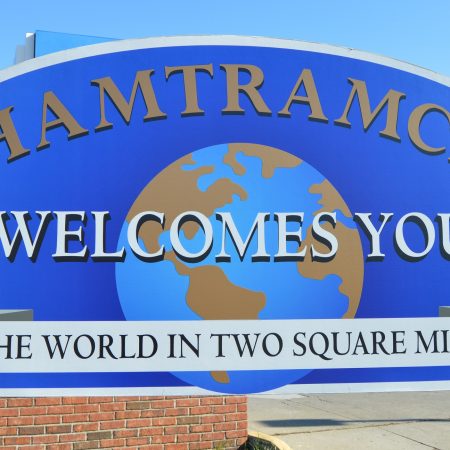
Detroit Evening Report: Hamtramck joins Michigan Main Street program

The City of Hamtramck is now a part of the Michigan Main Street program as a Select Level city. 

The program is run by the Michigan Economic Development Corporation, which aims to bolster technical support for the city’s main downtown area on Joseph Campau between Holbrook and Caniff Streets.  

Milo Madole is the chair for the Hamtramck Downtown Development Authority (DDA). He says the partnership will build on the momentum of recent projects such as the Discover Hamtramck social media campaign and Hamtramck Night Bazaars.   

“…I think people recognize that, and it’s wonderful to be connected now with the resources that exist through the Michigan Economic Development Corporation.”  

Madole says Hamtramck is attractive to visitors because it’s filled with 1920s historical buildings, cultural attractions and restaurants from every cuisine.  

Additional headlines for Thursday, March  5, 2026

Whitmer campaigns for free student lunches

Governor Gretchen Whitmer served lunch to middle schoolers in Troy yesterday as she seeks support for free meals for K-12 students in Michigan. Whitmer wants to keep funding for universal school breakfast and lunch in her final budget. She also wants lawmakers to keep funding them after she leaves office.  

“We’ve put in the budget the last couple of years. It’s been a game changer, and I love getting the chance to talk to students and all the people here at the school to find out what it’s really meant for kids, and its really remarkable, so I think we need to make this permanent.”   

Republicans want an income test to ensure free school meals go to families that need help. Studies show means testing often leaves more kids hungry. GOP lawmakers also say schools should be allowed to use the money for other purposes.  

-Reporting by Rick Pluta

Free naloxone kits available at local MDHHS offices 

The Michigan Department of Health and Human Services is providing free naloxone, a medication that reverses overdoses, at MDHHS offices across the state. MDHHS says the funding comes from opioid settlements and as part of prevention, treatment and recovery efforts. 

Michigan is set to receive $1.8 billion from opioid settlements by 2040. Half of that funding is allocated toward the State of Michigan Healing and Recovery Fund while the other half goes to counties, cities and governments across the state.  

People can visit a local MDHHS office to request the free naloxone kits. More than 1.7 million kits have been distributed, with a recorded 34,000 overdose reversals since the program launched in 2020.

Michigan residents can also pick up a kit from harm reducing agencies, vending machines such as ones in Dearborn at the train station, local pharmacies and through mail order. 

Highland Park mayoral candidates

Highland Park Mayor Glenda McDonald will have at least two challengers in this year’s election.

Community activists Shamayim Harris and Joshua Lamere submitted paperwork to the Wayne County Clerk’s office. Candidates have until April 21 to file.

McDonald announced her re-election campaign this week. Voters elected her in 2022. 

-Reporting by Pat Batcheller

Listen to the latest episode of the “Detroit Evening Report” on Apple Podcasts, Spotify, NPR.org or wherever you get your podcasts.

Support local journalism.

WDET strives to cover what’s happening in your community. As a public media institution, we maintain our ability to explore the music and culture of our region through independent support from readers like you. If you value WDET as your source of news, music and conversation, please make a gift today.

The post Detroit Evening Report: Hamtramck joins Michigan Main Street program appeared first on WDET 101.9 FM.

❌