Reading view

There are new articles available, click to refresh the page.

Crossing the Lines: Automakers fueled growth in Highland Park then left it running on financial fumes

In the early 20th Century Ford and Chrysler operated extensive facilities in Highland Park, helping its population grow to more than 50,000 people by the 1930s.

But both car companies moved away from Highland Park decades ago. Now its population hovers between 8,000 and 9,000.

Automotive historian Robert Tate writes for the website MotorCities and worked with the Chrysler museum.

Tate says Ford mass-produced its Model T in Highland Park, creating the moving assembly line that forever changed manufacturing.

Tate says even the Highland Park plant’s architecture was inspiring.

Listen: Robert Tate on Highland Park’s automotive history

The following interview edited for length and clarity.

Robert Tate: The building was designed by Albert Kahn. He and Henry Ford had a great relationship. The doors opened January 1, 1910, on Woodward Ave. It became one of the largest factories in the world because they manufactured the Model T. The factory was about 865 feet and ran parallel to Woodward Ave. This was one of the most historic sites in the United States and the world, to be honest with you. And it also attracted a lot of people from European countries and other cultures to finally get a job and become an American citizen. So, the factory itself created a lot of things for a lot of people, not just the Model T, but for people to live a good life.

Quinn Klinefelter, WDET News: Why did it attract people from Europe and elsewhere?

RT: Henry Ford began using the moving assembly line. And in 1914, the average wage was $2.30. But he raised it to $5 a day. That attracted a lot of people from all over the world to come here, including my ancestors. My family came here from the South to get jobs like that. The only problem was that the hours were long, 10 hours a day and then five hours on Saturday for the workers. And that created a lot of health issues for a lot of individuals because they were so regimented in putting together parts at the assembly plant.

QK: How much did the Ford factory actually mean to the city of Highland Park?

RT: It meant a lot because you’re talking about taxes and people coming in. The Highland Park Hotel was there, they had a racetrack as well at the time. That generated a lot of income.

Site of the old Ford plant in Highland Park.

QK: Why did Ford move it out eventually? Why did it leave Highland Park?

RT: My belief is that things began to change when the 1927 Ford came out and the company had the model assembled at the River Rouge plant. The Model T was produced from 1908 to 1926. And then Ford introduced the 1927 Model A, which was very, very popular. Ford sold millions of those cars. Also, and people don’t like to talk about this, unfortunately there were a lot of workers who got killed at the Highland Park plant. Because at that time they didn’t have things enclosed for safety. So, a lot of men, unfortunately, lost their lives. But I think that Ford wanted to get out of Highland Park and move it closer to River Rouge because you had more goods coming into that particular facility for models to be assembled.

QK: In regards to Chrysler, how did they get into Highland Park?

RT: It was their major headquarters until they moved to a larger facility in Auburn Hills. I used to hear a lot of Chrysler employees say that the Chrysler Highland Park site was just too archaic.

QK: I’ve heard some experts say that when Chrysler in particular moved out, it truly devastated Highland Park’s economy. And that the enclave has struggled to really replace that revenue since. Do you agree?

RT: Yes, I do. The same thing happened with American Motors when they moved out. Unfortunately, the neighborhoods and the communities suffered when both of those companies moved to Auburn Hills. The neighborhoods were devastated.

QK: There must have been a lot of tax revenue and other money coming into Highland Park that suddenly vanished. But you say that from what you heard people who were working for Chrysler were happy to vacate and to go to a newer facility.

RT: My God, yes. I would hear that all the time because it was a new facility. It created a new way of thinking, using the new things that they were not accustomed to having at Highland Park. I remember walking through the hallways at the Chrysler facility in Auburn Hills and it was a showcase. It was a very beautiful building.

Designed by Albert Kahn, the old Ford plant in Highland Park stands as a symbol of automotive history.

QK: After all that has happened since Ford opened the Model T assembly line, when you look at Highland Park now, what do you think is the legacy that automakers have left there?

RT: As a historian, I look at the 1950’s in Highland Park. Virgil Exner, who was the chief designer in charge, came out with the 1957 Chrysler line. And I’m a big fan of the 1957 Chrysler line. So, whenever I think of Highland Park, I think of the good days that launched a lot of cars that were popular, the 1964 Dodge, the 1957 Chrysler. Those cars changed America.

Support local journalism.

WDET strives to cover what’s happening in your community. As a public media institution, we maintain our ability to explore the music and culture of our region through independent support from readers like you. If you value WDET as your source of news, music and conversation, please make a gift today.

Read more Crossing the Lines: Highland Park

Highland Park City Hall

Crossing the Lines: Highland Park values enclave status

Pat Batcheller May 4, 2026

Detroit surrounds Highland Park on three sides, sharing the fourth side with Hamtramck. Being a city within a city is a source of pride for many Highland Park residents. As part of WDET’s Crossing the Lines Highland Park series, Morning Edition Detroit host Pat Batcheller looks at how the city became an enclave and how it has stayed that way for more than a century.

Read More »

The post Crossing the Lines: Automakers fueled growth in Highland Park then left it running on financial fumes appeared first on WDET 101.9 FM.

Crossing the Lines: Highland Park values enclave status

Highland Park is an odd shape—a trapezoid to be exact. Its borders include West McNichols Road on the north side, railroad tracks along the eastern edge, alleys behind Tennyson and Tuxedo streets to the south, and the Lodge freeway forming part of its western boundary.

Highland Park is a trapezoid with an area of less than 3 square miles

These have been Highland Park’s city limits since officials incorporated it 1918.

That’s how it managed to avoid becoming part of Detroit, which had already annexed most of the surrounding land.

Leaders and residents wanted autonomy

Jeff Horner is a professor at Wayne State University‘s Department of Urban Studies and Planning. He says Detroit wanted to absorb Highland Park even before the latter became a city.

“Highland Park was not open to the idea of being absorbed,” Horner says. “They wanted to have some local autonomy.”

Jeff Horner is a professor in Wayne State University’s Department of Urban Studies and Planning

Michigan’s Home Rule law in 1909 made it difficult for one city to annex another. That same year, Henry Ford finished building his Model T factory in Highland Park. It was the first Ford plant to use an assembly line. Horner says the city’s population exploded.

“From the 1910 U.S. census to the 1920 census, the population of the city grew by over 1,000% from about 4,500 to about 45,000,” Horner says. “That is remarkable growth.”

Auto industry drove growth

Highland Park kept growing until 1930, peaking at almost 53,000 people. Marsha Battle Philpot grew up in the city and has written about its history. She says Henry Ford’s offer of $5 a day to work on his assembly line drew thousands of people from across the country.

“This was an astronomical sum in those days,” she says. “Maybe an average person might make $5 a month”.

The city’s population steadily declined through the 1930s and 1940s. But it was still relatively prosperous. Philpot says the schools were among Michigan’s best in the 1950s and 1960s.

“Even our elementary schools had swimming pools,” Philpot says. “It was really an extraordinary place to live.”

But good schools were not enough to keep people from leaving the city decade after decade. Ford eventually closed its Highland Park factory, which is now a Michigan historical landmark. Chrysler moved its headquarters, established in 1925, from Highland Park to Auburn Hills. The city’s tax base evaporated. It had so much trouble paying its bills its streetlights were repossessed. State-appointed emergency managers ran the city and the school district for much of the early 2000s, closing the McGregor Library and the high school. Glenda McDonald, Highland Park’s mayor since 2022, says those decisions hit young people especially hard.

“Children need a place to go, and literacy is a very important part of our children’s learning,” the mayor says. “It kind of put a very bad taste in people’s mouths.”

Lansing takes over

McDonald says emergency management didn’t solve Highland Park’s long-term financial problems. One was literally bubbling under the surface: leaky water pipes, some more than 100 years old. The city incurred tens of millions of dollars in debt to the Great Lakes Water Authority. Each side sued the other with the city accusing GLWA of overcharging residents who were too poor to pay for water. The legal dispute pushed Highland Park to the brink of financial ruin.

Glenda McDonald is the mayor of Highland Park

In 2023, the state intervened again, this time giving the city $100 million to pay its debt and fix its water infrastructure. McDonald says workers are now replacing every lead water line in town.

“We’re working with the state, we’re working with GLWA, and hopefully we’ll continue moving forward that way,” McDonald says.

Had the state not thrown Highland Park that lifeline, the city likely would have filed for bankruptcy. The financial crisis raised a question: would Highland Park be better off becoming part of Detroit? The mayor demurred.

“Blasphemy,” she says.

Legal hurdles, local pride make merging difficult

For one local government to absorb another, state law requires residents of both communities to vote in favor of it after weighing the pros and cons. Stephanie Leiser directs the Center for Local, State, and Urban Policy at the University of Michigan’s Ford School of Public Policy. She says uniting Detroit and Highland Park could reduce bureaucracy.

“You can eliminate some layer of management there,” she says. “They don’t need to have an additional mayor and a clerk and all of those things.”

Stephanie Leiser directs the Center for Local, State, and Urban Policy at the University of Michigan.

But Leiser says there’s not a ton of evidence that it would help Highland Park financially.

“They’re not going to save money necessarily on like plowing the roads, picking up trash, or maintaining the infrastructure,” she says.

Leiser says Highland Park’s finances are in better shape than they were when officials were considering bankruptcy in 2023. But it still has challenges, such as high property taxes.

Highland Park has some of Wayne County’s highest millage rates

In 2025, the city’s millage rate for principal residences was 63.221. That’s $63.22 for every $1,000 of a home’s taxable value. The non-homestead rate as over 79 mills. Rates for industrial and commercial personal property were over 57 mills and 67 mills respectively.

Former Highland Park Councilman Ken Bates says the city’s millage rates and pervasive poverty make it hard to attract new investment.

“We have to look into the future as to what will help Highland Park become sustainable,” he says. “What kind of industry should we count on?”

Ken Bates has lived in Highland Park since 2000. He served on the city council from 2018-22.

Bates says city leaders need a plan and the expertise to implement it.

“If not, it’s just you maintaining the status quo year after year,” he says. “You’re just one disaster away from financial calamity.”

More than just lines on a map

Bates says Highland Parkers are fiercely loyal to their community and that most want to remain a city within a city. Resident Michael Williams, Sr. admits he wouldn’t rule out becoming part of Detroit.

“We would get more popularity, probably more services,” Williams says.

But other residents, like Kim McDade, don’t see the benefit of giving up Highland Park’s identity.

“Highland Park needs to be given a chance to continue to build,” McDade says. “Our mayor is doing a great job in doing some things and making connections with the right people.”

Mayor Glenda McDonald says the city’s greatest strength is its people.

“They’re resilient, they’re loving, they’re kind, and we take care of each other,” she says. “I know a person on every single street.”

The mayor says that resilience defines Highland Park more than its shape on a map.

Support local journalism.

WDET strives to cover what’s happening in your community. As a public media institution, we maintain our ability to explore the music and culture of our region through independent support from readers like you. If you value WDET as your source of news, music and conversation, please make a gift today.

The post Crossing the Lines: Highland Park values enclave status appeared first on WDET 101.9 FM.

Crossing the Lines: Highland Park resident says smart planning can reduce poverty

Highland Park is a small city that once had a relatively large population for its size. At the height of Detroit’s automotive boom, more than 50,000 people lived within Highland Park’s 2.9 square miles. Today, the population is less than 9,000.

WDET’s Crossing the Lines series features conversations with and stories about Highland Park’s people, culture, and history.

Detroit Public Radio’s Citizen Vox project gives residents a chance to express how they feel about their communities and the issues that matter to them.

WDET’s Pat Batcheller spoke with Highland Park resident Ken Bates at a coffee shop on Woodward Ave. on April 10, 2026.

Listen: Highland Park resident says smart planning can reduce poverty

Bates was born in Detroit but moved to Highland Park with his wife more than 25 years ago. They bought a Craftsman-style bungalow in a historic district of the city. Voters elected Bates to the city council in 2018, where he served until 2022. He chairs the board of an energy nonprofit called Soulardarity. Its mission includes installing solar-powered streetlights in Highland Park’s neighborhoods.

Bates shares his thoughts on housing, poverty, community pride, and development.

Ken Bates: We know that there’s a housing crisis, a housing shortage nationally, affordable housing. Highland Park has an abundance of land that is underutilized, that really could be put forth in terms of development. So, we could look at land trusts. We could look at affordable housing, low-income housing, market rate housing, duplexes to grow the population because that’s what we have in abundance.

Manufacturing? I doubt that will ever come back to the extent that Henry Ford and Chrysler and some of the other manufacturers had here. That’s a bygone era.

And so, we have to look into the future as to what will help Highland Park become sustainable. What kind of industries should we count on?

You have to get education on board. You have to get private development. You have to get your government funding all in order, and you have to have a plan and a vision and the expertise in order to do it.

If not, you’re just maintaining the status quo. And year after year, you’re just one disaster away from some financial calamity, whether it be a natural disaster or something like the Great Lakes Water Authority suing us for $19 million and threatening to put it on our tax rolls.

Pat Batcheller: What do you like about being in Highland Park?

KB: Highland Park is centrally located. It’s convenient. There’s a sense of—like with my block, I never expected it to be so diverse. And yet you’ve got immigrants, you’ve got people of different faiths. You’ve got people who are ascribed to different lifestyles. I mean, it just it goes on and on, different political beliefs, and we all live together in the same community, and we’re able to communicate and talk and look out after each other.”

PB: From the conversations I’ve had with you and some of the other folks I’ve talked to, it isn’t really the borders that define Highland Park, it’s the people. Would you agree with that?

KB: Well, yeah, I would say the people do define Highland Park because, because again, they’ve been here. Most have been here quite a long time. And even if you travel outside of Highland Park and talk to people that formerly lived here, many people will tell you, ‘Yeah, my grandparents lived here.’ They remember it as a great city. They’ve had fond memories.

The historical district is obviously something that has gained attention. People are looking at those homes and, if they have the means to renovate them, are coming in and deciding, “well, let’s renovate this home.” Because you can’t rebuild those anywhere for anything that I would consider reasonable.

Highland Park has just had its own identity for a long, long time. And so, I can’t see that changing because it would be so difficult to incorporate us into the Detroit culture. We’re not Detroit. We’re not Hamtramck. We’re Highland Park.

PB: What’s the most pressing issue facing Highland Park right now?

KB: It’s poverty. You’ve got to figure out how to raise people’s incomes up, so to speak, their standard of living. So, whether it be through employment, homeownership, because poverty impacts everything around us. For example, ALDI is usually out of shopping carts because people abscond with them. If you’re running a business, that’s not helpful. We were fortunate in that Foot Locker moved into the old CVS building because CVS, Rite-Aid, and another drugstore left.

Convincing businesses to come here is a real challenge because the landscape has changed. Brick and mortar stores aren’t necessarily how people are going about retail experiences. You would think that we would have a thrift shop or something of that nature in a community like that. We don’t.

So, trying to look at trends that will allow people to be gainfully employed, increase home ownership, educate their children are things that should be made priority.

The appearance of the city has to change because we have a lot of blight. We had a press conference celebrating the announcement of Highland Towers on Woodward being torn down. We’ve got to have news that is uplifting, that is showing progress now. Yes, the building should be torn down because it’s caught on fire sixteen years ago. But we need to be announcing opportunities for growth projects that will bring about change.

Support local journalism.

WDET strives to cover what’s happening in your community. As a public media institution, we maintain our ability to explore the music and culture of our region through independent support from readers like you. If you value WDET as your source of news, music and conversation, please make a gift today.

The post Crossing the Lines: Highland Park resident says smart planning can reduce poverty appeared first on WDET 101.9 FM.

The Metro: The Trump administration hit the brakes on EVs. But EV charging stations are accelerating in the state

Inquiries for new electric vehicles has risen more than a quarter since America and Israel’s war in Iran began. But EVs need to be charged — and that’s easier to do in some places.

If you’re in China, you can charge an EV in just a few minutes. In Michigan, we’re way behind that reality.

But despite the Trump administration’s distaste for EVs, the infrastructure for electricity is improving. The number of charging ports in the state grew by about 1,800 last year — the most significant uptick in one year. 

So, if you’re thinking about buying or leasing an EV, what does all this mean for you?

Sophia Schuster is the policy principal for the Michigan Energy Innovation Business Council. She spoke with Host Robyn Vincent.

Listen to The Metro weekdays from 10 a.m. to noon ET on 101.9 FM and streaming on demand.

Subscribe to The Metro on Apple Podcasts, Spotify, NPR.org or wherever you get your podcasts.

Support the podcasts you love.

One-of-a-kind podcasts from WDET bring you engaging conversations, news you need to know and stories you love to hear. Keep the conversations coming. Please make a gift today.

More stories from The Metro

The post The Metro: The Trump administration hit the brakes on EVs. But EV charging stations are accelerating in the state appeared first on WDET 101.9 FM.

Detroit Axle looking for answers on tariff case

Last month, the Supreme Court ruled against the Trump Administration’s tariff policy. But there are still unresolved challenges out there.

That includes one filled by Michigan-based auto parts company, Detroit Axle. It filed a case against the Trump Administration’s tariff policy last spring.

Listen: Mike Musheinesh discusses the impact of tariffs on Detroit Axle


Detroit Axle CEO Mike Musheinesh says their case was put on stay until the one the Supreme Court recently ruled on concluded.

“So now we’re going back to the court of international trade and saying ‘okay here we are again. They won, so did we win?’ And if we win, we’re able to keep reducing the price for the consumer,” says Musheinesh.

Detroit Axle’s case takes aim at Trump’s elimination of the so-called “de minimis exemption.” That rule had allowed small packages valued at less than $800 to avoid tariffs.

Musheinesh says revenue was up 35% last year, compared to 2024. But profitability was down more than 80%.

“During the first Trump Administration, we used to pay the government $25,000 in tariffs for a million-dollars-worth of products imported,” says Musheinesh. “Now for that same million-dollars-worth of products imported, we pay the government $725,000.”

Musheinesh adds that tariffs have forced him to raise prices on consumers.

Trusted, accurate, up-to-date.

WDET strives to make our journalism accessible to everyone. As a public media institution, we maintain our journalistic integrity through independent support from readers like you. If you value WDET as your source of news, music and conversation, please make a gift today.

Donate today »

The post Detroit Axle looking for answers on tariff case appeared first on WDET 101.9 FM.

Detroit Evening Report: Stellantis fails to provide profit-sharing checks to workers this year, reports annual loss

UAW Stellantis workers are reportedly disappointed because they are not getting profit sharing checks from 2025. This follows the company facing a multibillion dollar deficit last year. It’s also the first time Stellantis hasn’t provided a profit-sharing bonus since the recession.

The Big Three has faced obstacles because of tariff uncertainty, Electric vehicle whiplash, interest rates and more, but Ford and GM still provided a profit-sharing checks to their employees. Stellantis says that it expects 2026 and its expanding product wave to bring profitable growth in North America.

Additional headlines for Friday, Feb. 27, 2016

Personnel shortage in behavioral health field

A new report from the Michigan Health Council shows that Michigan doesn’t have enough opportunities for students to become behavioral health care workers. This is contributing to a shortage of certified school-based mental health professionals across the state, according to the council.

This shortage puts a large workload on the personnel in this field. In the 2023-2024 school year Michigan had about 600 students per school counselor, over a thousand students per school psychologists, and almost 500 students per social worker. The report goes on to share that improving vocational programs could introduce thousands of high school students to fulfilling careers in behavioral health.

Sports updates

NBA

The Detroit Pistons face the Cleveland Cavaliers today at Little Ceasars Arena but—like their game against the Thunder—the opposing team is without their best players, with both Donovan Mitchall out with groin injuries and James Harden questionable with a thumb injury.

The Pistons are playing without their full strength with Isaiah Stweart out again because of his involvement in the fight with the Charlotte Hornets on Feb. 9. This is his sixth game of his seven game suspension.

Tonight’s game tip off is at 7 p.m. with a following away game against the Magic on Sunday, March 1.

NHL

The Red Wings face the Carolina Hurricanes tomorrow Feb. 28 at the Lenovo Center. The Red Wings are currently second in the Atlantic Divison with 34 wins and 19 losses. Game starts at 7 p.m.

Blueberry recall

More than 55,000 pounds of frozen blueberries, some of which were shipped to Michigan, have been recalled because of possible listeria contamination.

The Oregon Potato Company was the distributor of the recalled berries. This shipment was also sent to Oregon, Washington, Wisconsin and Canada.

The FDA recalled it initially on Feb. 12 and classified the recall as a Class 1 recall on Feb. 24, which means there is a reasonable probability that the use of or exposure to a violative product will cause serious adverse health consequences or death.

Go to your local grocery store to see if your purchase of frozen blueberries was in the mix.

Handmaid’s Tale in Detroit

And the dystopian world of the Handmaid’s Tale comes to the Detroit Opera House. The play, once a hit television series and novel, is a chilling look into a future where America’s democracy morphs into a religious tyranny.

There are showings on Sunday March 1, Thursday March 5 and Saturday March 7.

Listen to the latest episode of the “Detroit Evening Report” on Apple Podcasts, Spotify, NPR.org or wherever you get your podcasts.

Support local journalism.

WDET strives to cover what’s happening in your community. As a public media institution, we maintain our ability to explore the music and culture of our region through independent support from readers like you. If you value WDET as your source of news, music and conversation, please make a gift today.

The post Detroit Evening Report: Stellantis fails to provide profit-sharing checks to workers this year, reports annual loss appeared first on WDET 101.9 FM.

SCOTUS tariff ruling extends uncertainty for Detroit automakers

President Trump lashed out at the U.S. Supreme Court after it ruled his use of certain tariffs was illegal.

Trump noted he had other options, including blocking all trade with other nations.

“I can destroy the trade. I can destroy the country,” the president said. “I’m even allowed to impose a foreign country-destroying embargo. I can embargo. I can do anything I want. But I can’t charge $1.”

Trump later said he would impose a new global 15% tariff, though it initially began at 10%.

Congress would have to extend the tariff in about five months. The president could potentially get around that provision by announcing a new round of levies at that time.

Many businesses are weighing the impact of the tariff upheaval, including Detroit’s Big 3 automakers.

The head of the trade association MichAuto, Glenn Stevens, Jr., says car companies had anticipated the High Court’s decision.

Listen: SCOTUS tariff ruling extends uncertainty for Detroit automakers

The following interview has been edited for clarity and length. 

Glenn Stevens, Jr.: It was pretty much assumed that the justices would rule this way based on some of the preliminary arguments. We also felt that there would be a response from the administration that they might use additional or new tools if the Supreme Court ruled this way. And we have seen the president state that. I think it does reaffirm the power of Congress according to the U.S. Constitution, in the case of this particular act. But it leaves a lot of uncertainty with our industries and in our economy.

Quinn Klinefelter, WDET News: The High Court ruled on the reciprocal tariffs on other countries. But they’re still allowing levies imposed ostensibly to protect national security. The 25% tariffs on imported vehicles and auto parts still stands, except for imports covered under the North American trade deal. So, how do you see the Supreme Court decision affecting the auto industry in particular?

GS: It affects a portion of it. But not by any stretch all of the tariffs and trade deals that have been put in place since Jan. 20 of last year when the America First Trade Policy Act was issued. Yes, the national security tariffs remain in place. The unfair trade practice tariffs remain in place. Those are very tied heavily to China. Those are significant. But anything that did deal with this Emergency Powers Act has been struck down now.

What happens from here, we don’t know. There will be court challenges. The question of whether companies will be able to get a rebate, so to speak, on what they paid, there was no direction from the court on that. So, again, we have a lot of uncertainty moving forward. And then we have a new wild card, which we anticipated, where the president said that he’d use fair trade and anti-dumping subsidy tariffs. And there’s a whole process for that.

QK: And how would that affect the auto industry?

GS: It’s such a complex supply chain. It depends on where the vehicles are assembled. It depends on what is the country of origin where the components come from. For example, a lot of the parts and the components are still exempt on this continent under the current USMCA agreement. But if you’re importing parts from other countries outside of that agreement, it does impact you, the 25% on imported vehicles does apply. So it’s actually quite complex and has been for some time. And this may muddle it up a little bit more.

QK: The trade deal between the US, Mexico, and Canada was coming up for review this year. It’s vital for automakers in particular, considering the cross-pollination of parts and vehicles between the three countries. But with this new Supreme Court decision, do you think the president may have a lot less leverage to push for a new USMCA deal that he would like?

GS: I’m not so sure about the less leverage. What I do know is our organization and many others that are related to the industry, we remain steadfast that we need to get to a renewed and strengthened USMCA agreement. We are stronger together with Canada and Mexico in the current supply chain.

Are modifications and some things needed to be adjusted? Yes. Where that goes, we’re not sure. Discussions are at a bit of a stalemate. But we have quite a bit of runway yet up to July 1st with regards to that.

QK: Canada reached a deal recently with China to sell some Chinese vehicles in that country. The Ford Motor Company has talked about perhaps trying to set up their own deal with Chinese automakers. General Motors has said they did not want that type of a thing. In light of what’s happened with tariffs now, how do you think all that might play out?

GS: Let’s look at the Canada situation first. Prime Minister Carney has a tentative agreement with China to import a small quantity, a very controlled number, of electric vehicles. That was a significant development that has drawn some criticism from the White House. It may complicate things. Again, I underscore that it’s tentative. There are a lot of other things going on with regards to trade and we’re not really certain where this is going right now.

QK: Some automotive analysts have forecast that the impact of tariffs would force car companies to raise prices on new vehicles this year. Now we have this Supreme Court decision. Even if it only affects the auto industry to an extent, as you said, it does not totally rid it of any of the difficulties companies might suffer from having tariffs. So where do you see it going now in terms of potential price increases?

GS: That’s hard to say. It’s probably not going to impact things too directly. At this point, most of the companies have absorbed as much of the increases they can within their supply chains. Affordability of vehicles is an issue. The average in our country is about $50,000 for a new vehicle. That’s a high number. Anyone who sells, distributes, or makes vehicles in this country is very hesitant to raise those prices any further. We have seen some creep.

We’ve seen some certain charges increase, like destination charges on the delivery of a vehicle, and that’s been one way the extra cost has been passed through. But there haven’t been significant increases. Most of the time in any type of consumer product, when prices go up, they don’t tend to come down too quickly. So that’s not good for the consumer.

QK: One of the things you’ve mentioned several times is the uncertainty of the situation. I’ve heard many business executives over the last year or so complain that one of the hardest things about tariffs is the uncertainty they create for people trying to make a business plan. Now we also have this Supreme Court ruling. In your view, is this making it even more uncertain now?

GS: It could, yes. The key words the in last year have been instability and uncertainty. If you apply those two words to just about anything, they’re not good. Especially if you apply them to the automotive industry. It is a long lead time, complex supply chain business that requires stability and certainty to make capital decisions, to look at its workforce, to look at supply chains. We do have new tariffs now. That doesn’t give stability and certainty.

Trusted, accurate, up-to-date.

WDET strives to make our journalism accessible to everyone. As a public media institution, we maintain our journalistic integrity through independent support from readers like you. If you value WDET as your source of news, music and conversation, please make a gift today.

Donate today »

The post SCOTUS tariff ruling extends uncertainty for Detroit automakers appeared first on WDET 101.9 FM.
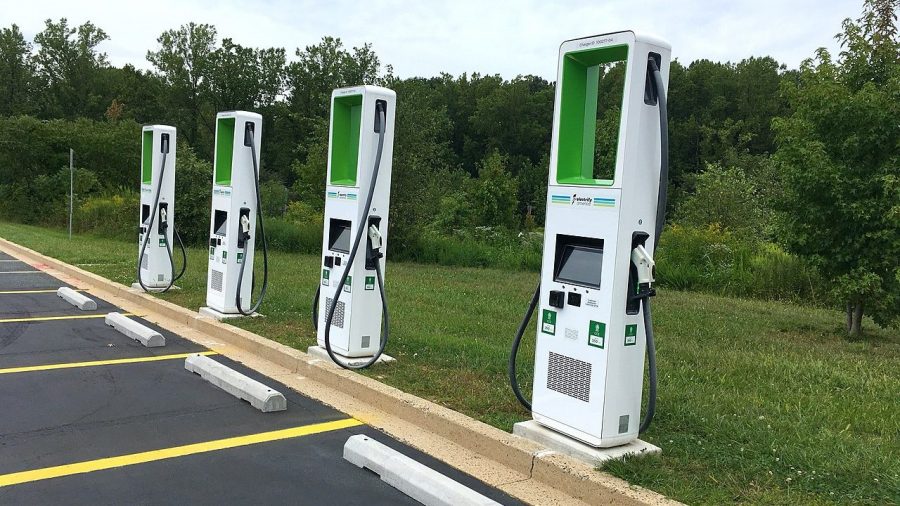
Detroit Auto Show rolls on despite changing industry

This year’s Detroit Auto Show marks the second time the event has been held since returning to its traditional winter date. While it isn’t as large as it once was, there are still plenty of new vehicles to kick the tires on.

One way the show has changed is that there aren’t the same level of high-profile vehicle launches as there once were. In fact, Ford opted to hold some of its major unveils at an alternate event across town.

Ford Racing’s season preview saw the company take the covers off two new F1 cars. The Dearborn automaker also used the occasion to debut its latest version of Ford Mustang, the Dark Horse SC.

The Racing Bulls VCARB03 sits on stage at Ford Racing’s 2026 season launch event at Michigan Central.

Mark Rushbrook is global director of Ford Racing. He says taking the festivities to Michigan Central, a place Ford is heavily invested in, was a logical move.

“I mean, I think this is a symbol of the City of Detroit,” says Rushbrook. “To be able to come here, with racing as we have it, with Formula 1 at the top…it made sense.”

Despite being unveiled somewhere else, the Mustang Dark Horse SC has made its way over to the Detroit Auto Show. Attendees can find it on display in the Ford exhibit throughout the week.

Listen to The Metro to hear the full feature and further conversation on the 2026 Detroit Auto Show. 

Chevrolet’s Chad Lyons says the way car companies unveil products is evolving.

“I think it’s trying to find out the strategy that helps us reach the most number of people that we can,” says Lyons.

And that can mean finding new methods for utilizing big events.

“Certainly, auto shows [are] still a place where we try to make news,” says Lyons. “So for instance, earlier this week we talked about Hudson’s, which is our new global headquarters. We also unveiled our test livery for F1 — Cadillac team did.”

In that way, manufacturers say they still find value in auto shows, even if they aren’t quite the spectacle they once were. This year’s Detroit Auto Show is open to the public through Jan. 25.

Support local journalism.

WDET strives to cover what’s happening in your community. As a public media institution, we maintain our ability to explore the music and culture of our region through independent support from readers like you. If you value WDET as your source of news, music and conversation, please make a gift today.

The post Detroit Auto Show rolls on despite changing industry appeared first on WDET 101.9 FM.

EV advocates remain optimistic about the future

Detroit’s automakers have scaled back electric vehicle production due to sluggish sales and other factors.

Benchmark Mineral Intelligence says overall EV sales in the U.S. grew by 1% in 2025. That includes plug-in hybrids.

Political pressure hasn’t helped. President Donald Trump favors internal combustion engines and rolled back his predecessor’s push to build more EVs. He rescinded higher fuel economy standards and tried to block federal funding for EV charging stations.

Congress eliminated the $7,500 tax credit for EV buyers, giving consumers less incentive to purchase one.

Despite that, EV advocates see better days ahead.

EVs enjoy high customer satisfaction

Jennifer Mefford is the director of business development for Powering Michigan’s Future. It’s a partnership between the National Electrical Contractors Association and International Brotherhood of Electrical Workers Local 58.

Mefford says customer satisfaction gives her hope.

“EV owners love their EVs,” she says. “And the technology is very sound and developed.”

Mefford notes that the market has already survived some ups and downs.

“We had a big resurgence when GM launched the Volt, and then the market kind of went flat,” she says.  “I think we’re poised very well because the technology is there, the battery development is there, and the charging infrastructure is there.”

EVs are still visible

Powering Michigan’s Future has a display at the 2026 Detroit Auto Show. Mefford says it’s there to answer people’s questions about electric vehicles. She says the questions most people have are about charging them.

“80% of your charging is going to be done at home,” she says. “What are the cost considerations for that? Do they want to hook into DTE Energy’s charging rates? How does it work when they’re out in public spaces?”

Mefford says Michigan has done a good job building out its EV charging infrastructure.

“It’s all new equipment,” she says. “It’s very reliable and it’s really quite user-friendly.”

In the early days, EVs suffered from limited range. Mefford says that, too, has gotten better.

“You have a group of vehicles in the 240 to 320-mile range,” she says. “I think ranges are always going to get better, batteries are much more efficient, and costs are coming down.”

But Mefford admits Michigan and the U.S. have a long way to go to catch China, where EV sales grew 17% in 2025.

Trusted, accurate, up-to-date.

WDET strives to make our journalism accessible to everyone. As a public media institution, we maintain our journalistic integrity through independent support from readers like you. If you value WDET as your source of news, music and conversation, please make a gift today.

Donate today »

The post EV advocates remain optimistic about the future appeared first on WDET 101.9 FM.

Detroit Auto Show steers towards hands-on content

The Detroit Auto Show roars into Huntington Place this week for media previews and other events before opening to the public this weekend.

Organizers say this year’s car extravaganza differs from the others in its more-than-a-century history.

Executive Director Sam Klemet says the auto show is filled with the kinds of hands-on activities customers simply cannot duplicate using the internet.

Listen: Detroit Auto Show steers towards hands-on content

The following interview has been edited for clarity.

Sam Klemet: It’s something for everyone. We’ve talked about the various iterations of what the show has been over the last number of years. And I think it was originally considered more of a media show and then it’s been identified as a consumer show. And I’m really looking at it now as more of a content show.

We’re still going to have some special reveals from some of our OEM partners and some other specialty vehicles. We’re going to have some great news conferences as part of our Mobility Global Forum with newsmakers from all over the world. Of course, we have the charity preview where we’ll raise millions of dollars for local children’s charities. And then we open to the public.

It’s a chance for everyone to come under one roof and see kind of what the auto industry is about, where it’s going, and also what the city of Detroit is about.

Quinn Klinefelter, WDET News: You have a section this year that deals with off-road vehicles and experiences connected with them. What is that all about?

SK: It’s called our Michigan Overland Adventure. Obviously in the state of Michigan there’s a great culture, particularly in the northern part of the state, where people want to do off-roading. There’s a lot of camping. There’s a lot of trails. And we want to tap into that heritage and show off the modern vehicles that really are tapping into that type of lifestyle.

The Michigan Overland adventure has all kinds of support from OEMs like Ford, General Motors and Toyota, among others. We also have a group called the AEV, which has these incredible modified vehicles that go off-road. It’s a really exciting space. It’ll be a cool setup in terms of the display. It really showcases that outdoor culture.

QK: Back in the day people would come to the auto show, look at the vehicles and see if maybe there was one they wanted to buy. Is there more of a thrust now to give people these “experiences” as opposed to them just looking and going, “Man, that’s a cool car?”

SK: Absolutely. I think that’s how people’s relationships with cars are now. They want to see every intricacy of it. They want to see the technology and the dashboard. They want to get under the hood, they wanna see the tires, they wanna see every bit of the vehicle. And our show offers them that access. Not only to see the ones that are being displayed on the floor, but to get into them on our test tracks and feel what they’re like to a degree. The show is very much more hands-on than think what it’s traditionally been, a lot more activations and engagement.

QK: You yourself were a bit hands-on recently, riding along with a caravan of custom cars coming to the Detroit Auto Show from California.

SK: This is the centennial of Route 66 and we kicked off the auto show in Santa Monica. We have nine historic vehicles, Detroit-based vehicles, that made the drive all the way along Route 66. They’re ending the trip in Detroit, which isn’t a part of Route 66. But we’re the Motor City and we’ve got a great partnership with the group that’s doing the drive, America’s Automotive Trust.

Those vehicles that are coming across country will be on display in our concourse at the auto show. We’ll have videos from the entire ride. If you follow us on social media, you can see the day-to-day recaps of what that experience has been like.

And I think that’s been great because it connects our auto show across the country. And along the way, we’re telling these incredible stories of people’s relationships with vehicles, their relationship with driving and how it all connects back to Detroit. It’s been an exciting way to kick off the auto show this year.

QK: It’s no secret that the automotive industry has faced some uncertainty over the past year with President Trump’s use of tariffs and rolling back some regulations. Some consumers used to say that they thought of the auto show as kind of a one-stop gigantic dealer showroom. They would actually buy vehicles after they saw them there. In this current climate, do you see those kinds of sales continuing now at the auto show? Or is there a different purpose for such an event?

SK: I think this is a place first and foremost where people can come and see the cars that are on the market and see what’s coming in 2026 and beyond. Having an event like our Mobility Global Forum is a perfect stage to get a pulse on the industry, where people from all over the world come and talk about the direction automakers are going. And consumers get to interact with these vehicles, whether they’re in the market to buy one or they just want to see how the technology is evolving. I think that’s what an auto show is all about.

But as we evolve, we also want to be a place where people can come down even if they’re not in a market for a car, to learn about the vehicles and also have some fun. That’s why we added so much more entertainment, so much more arts and culture to the show, just kind of on the periphery of what we have on the main floor with our vehicles.

One of the new elements we have this year is our Visit Detroit interactive experience. That’s intended to engage young people with the auto industry. We’ve had people like Ford’s CEO talk about the need to have more auto technicians across the country. And we see this as an opportunity to engage young people in the science, technology, engineering, and math skills that are needed for those careers. So we serve a multipurpose, not only to showcase vehicles, but hopefully to uplift the industry at large through workforce development and other things.

QK: Some people I’ve spoken with say the auto show sounds nice, but they can look up all the details about the vehicles on the internet. So, they say, why even have an auto show? What’s your response to that?

SK: You can get all the information in the world online, there’s no doubt about that. But to actually interact and see the vehicles in person, I think, really does change a perspective. So I think the more that people can engage with these vehicles, the better. And actually I would encourage people to do some research about them before they come down to the auto show. It’ll give them a fuller picture and then they can most closely identify the vehicles that they want to key-in on when they get there. So I think that you can blend all of those things.

I know there’s a big push for nostalgia nowadays. But I would tell people that the 2026 auto show is not a show like we’ve had before. It’ll be very unique, a very different positive engagement experience that we haven’t had in a number of years. I think it’ll be a show that really resets the tone of what a Detroit Auto Show is all about.

We’ve paid attention to every single detail. From the minute people walk into the concourse to the minute they get to the back of the hall, everything is much more immersive. We have more brands on the floor. We have more vehicles. We have more opportunities for people to engage with content. I just think it’s bigger. It’s more robust. There’s more to do. There’s more to see. And there’s more information to be gathered.

Support local journalism.

WDET strives to cover what’s happening in your community. As a public media institution, we maintain our ability to explore the music and culture of our region through independent support from readers like you. If you value WDET as your source of news, music and conversation, please make a gift today.

The post Detroit Auto Show steers towards hands-on content appeared first on WDET 101.9 FM.

❌