
Reading view

There are new articles available, click to refresh the page.

Don Was receives honorary degree from Wayne State University

Celebrated producer, musician and WDET host Don Was is being honored with a Doctor of Humane Letters by Wayne State University in recognition of his profound contributions to Detroit’s sound and art as a whole.

Was has earned six Grammys for producing and musicianship. He’s also been recognized for his work as a filmmaker, composer and more with a British Academy Award, Emmy and other honors. Was has lead the jazz label Blue Notes Records as company president since 2011.

Don Was in front of a crowd of Wayne State University graduates, all in full regalia.
Don Was at Wayne State University’s commencement on May 8, 2026. The College of Fine, Performing and Communication Arts honored him with Doctor of Humane Letters.

With his many international accomplishments, Was keeps Detroit front and center, invigorating the cultural scene with his yearly performances at the Concert of Colors and his work with the talented Pan-Detroit Ensemble.

WDET is grateful to have him behind the mic every Friday night on The Don Was Motor City Playlist alongside Ann Delisi, where he shares insights, stories about the city’s music scene and expertly selected songs with a rapt audience. The show recently celebrated five years on air.

The honorary degree from the College of Fine, Performing and Communication Arts at Wayne State University further highlights his extraordinary accomplishments in the arts and his lifelong commitment to Detroit. Join us in congratulating Don Was on this well-deserved honor.

Hear from Don himself, talking about his career and insights about the arts today on The Metro.

Support local journalism.

WDET strives to cover what’s happening in your community. As a public media institution, we maintain our ability to explore the music and culture of our region through independent support from readers like you. If you value WDET as your source of news, music and conversation, please make a gift today.

The post Don Was receives honorary degree from Wayne State University appeared first on WDET 101.9 FM.

The Metro: The silence around Sudan, and a poet trying to break it

Four years in, the war in Sudan has produced the largest displacement crisis in the world. Nearly 14 million people have been forced from their homes. Both the United States government and a United Nations fact-finding mission have called the violence a genocide, citing a coordinated campaign by the paramilitary Rapid Support Forces against the Zaghawa and Fur communities of Darfur.

In the United States, the response has been quiet.

Khadega Mohammed has spent much of her life trying to say something about that silence — through poetry, community organizing, and her work at the Arab American National Museum in Dearborn, where she is the only Sudanese person and the only Black person on staff.

Born in Sudan, raised in Saudi Arabia, and resettled in the United States with her family in 2007, Mohammed is a spoken word artist whose signature poem, “Between,” opens the PBS AfroPoP documentary “Revolution from Afar.”

She joined Robyn Vincent on The Metro to talk about the Sudan she remembers, the America she lives in, and the in-between where her poetry was born.

Hear the full conversation using the media player above.

Listen to The Metro weekdays from 10 a.m. to noon ET on 101.9 FM and streaming on demand.

Subscribe to The Metro on Apple Podcasts, Spotify, NPR.org or wherever you get your podcasts.

Support the podcasts you love.

One-of-a-kind podcasts from WDET bring you engaging conversations, news you need to know and stories you love to hear. Keep the conversations coming. Please make a gift today.

More stories from The Metro

The post The Metro: The silence around Sudan, and a poet trying to break it appeared first on WDET 101.9 FM.
The Metro: A former Detroit police chief spent his career building trust. He says ICE is dismantling it

Federal immigration agents have been involved in at least 30 shootings since President Trump returned to office — eight of them fatal. In almost every case, the administration declared the agents’ actions justified before any investigation was complete.

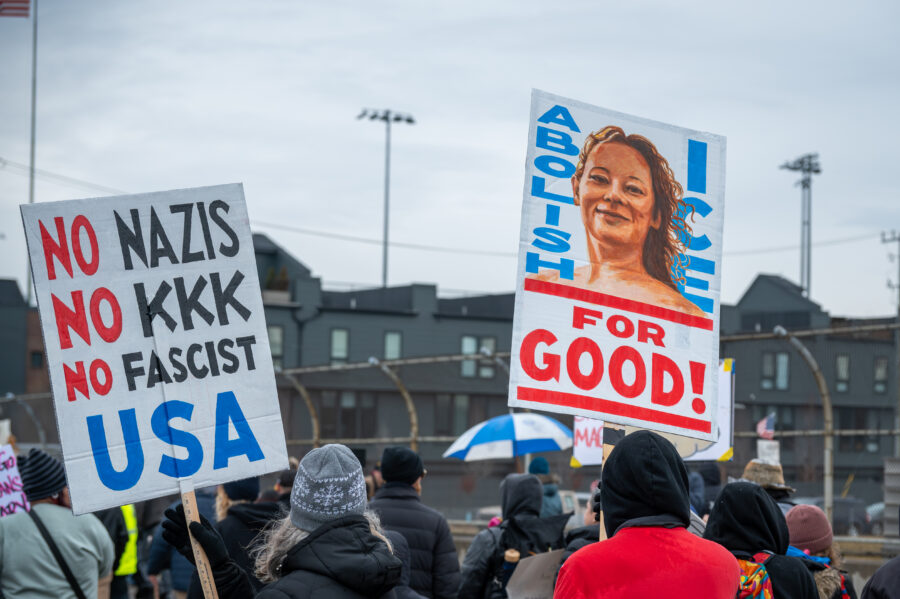
Two of those killings happened in Minneapolis within three weeks of each other: Renee Good on January 7 and Alex Pretti on January 24. Both were U.S. citizens, age 37, and in both cases, masked federal officers opened fire, and the Trump administration’s initial accounts were later contradicted by video evidence.

Their deaths spurred protests across the country and accelerated a growing push by local and state governments to impose limits on federal immigration agents.

Local Pushback

In Detroit, City Council member Mary Waters has introduced the Alex Pretti Detroit No Masks Ordinance, which would prohibit any law enforcement officer — local, state, or federal — from concealing their face while performing their duties in the city. The proposal has been referred to committee but has not yet received a vote.

At the state level, the Michigan Senate held hearings last month on a package of bills aimed at how federal immigration enforcement operates in the state. They would ban law enforcement masks, bar ICE from operating in schools, hospitals, and houses of worship, and prevent state agencies from sharing data with federal immigration authorities.

Former chief warns about anonymity in law enforcement

Ike McKinnon led the Detroit Police Department in the mid-90s, laying the foundation for the community policing model in place today.

Former Detroit Police Chief Isaiah “Ike” McKinnon was among those who testified in support of the bills.

McKinnon joined the Detroit Police Department in 1965. Two years later, during the 1967 Detroit uprising, fellow white officers pulled him over while he was in full uniform, put a gun to his head, and shot at him. During that same period, officers across the department were removing their badges to avoid being identified. McKinnon survived — and stayed on the force. In 1993, Mayor Dennis Archer appointed him Detroit’s second Black police chief. Over five years, he overhauled the department’s approach to community trust.

Now 82, McKinnon told Michigan senators he sees the same pattern repeating: officers who conceal their identities operate without accountability.

He spoke with The Metro’s Robyn Vincent about how local police should respond to this moment.

Use the media player above to hear the conversation.

Listen to The Metro weekdays from 10 a.m. to noon ET on 101.9 FM and streaming on demand.

Subscribe to The Metro on Apple Podcasts, Spotify, NPR.org or wherever you get your podcasts.

Support local journalism.

WDET strives to cover what’s happening in your community. As a public media institution, we maintain our ability to explore the music and culture of our region through independent support from readers like you. If you value WDET as your source of news, music and conversation, please make a gift today.

More stories from The Metro

The post The Metro: A former Detroit police chief spent his career building trust. He says ICE is dismantling it appeared first on WDET 101.9 FM.
❌