Reading view

There are new articles available, click to refresh the page.

CuriosiD: What is Detroit ballroom and hustle style dancing?

In this episode of CuriosiD, listener Katie Byerly asks the question:

What is Detroit ballroom and hustle dancing?

The short answer

Detroit ballroom and hustling are two distinct dance styles. Ballroom is a partnered dance traced back to the 70s that was loosely based on the Cha-Cha and accompanied by R&B or Soul Music. Detroit, or “urban ballroom”, is a smoother, more fluid dance style, as opposed to more structured and formal standard or Latin ballroom dances.

Hustling is another name for line dancing. It’s a group dance often set to specific songs. You might have heard the songs “Wobble” by V.I.C, or “Cupid Shuffle” by Cupid played at parties to get people on the dance floor.

Detroit Hustles

The most famous line Dance would be the Electric Slide, popularized in the 1970s. It’s done to many songs. But in Detroit, it most famously was danced to the song “My Eyes Don’t Cry” by Stevie Wonder.

There are hundreds of variations of line dances that go along with specific songs across different cultures.

And Detroit has popularized a few of its own, such as the Tamia Hustle danced to the song “Can’t Get Enough” by Tamia.  Or the In the Line of Duty hustle created by a former Detroit police officer and danced to the song “Feels So Right” by Janet Jackson.

And then there is the Turbo Hustle created by Detroit’s own legend, Frederick “Fast Freddy” Anderson.

“Right, right, right, left, left, left. That’s mine… I created that,” said Freddy. “But what they did, after a while, somebody took my name off of it. They had the same music. It started with me.”

In the original version, you can hear him saying “Freddy’s on the move” at the beginning of the song.

Fast Freddy leading a hustle at The Office Lounge

Freddy says he created the Turbo Hustle in the now closed Northland Shopping Center.

“We had a contest inviting groups to come in, and we all migrated and put this together, but I was the one who put the foundation to it, and we put it together, and that’s how it became the Turbo,” said Freddy.

Creating this line dance is only one of Freddy’s accolades. He’s had an extensive career in dancing, DJ-ing and modeling, since appearing on Detroit’s popular TV show The Scene in the 1970s and 80s. Now, at nearly 80 years old, Freddy can be found still emceeing parties across the city.

“This means an awful lot to me. You see, I take it seriously. People that generally don’t dance, they get up and dance for me,” Freddy said.

Freddy also teaches classes at rec centers in Detroit. On multiple days he can be found in senior homes for his class, “Getting Down While You Sit Around.”

Freddy says ballroom and hustling are easy ways to get people on the dance floor comfortably and without any social stakes.

“It’s an exceptional thing, because, you know, a guy takes a girl out, they don’t have to go on one side of the room, and you dance by yourself. This is thing that we all, we all do together, and to see a room full of people do it is truly exceptional.”

Hustle Classes

Finding a place to learn the steps to these dances isn’t difficult. Freddy is only one of dozens of instructors across the city teaching hustle and ballroom classes.

On Wednesday’s at Shield’s Pizza in Southfield Steven “Silk” Sturkey can be found teaching hustle classes from 6-8 p.m.

Silk says there are simple basic steps that make up a hustle.

“Like a cha, cha box, square, tick, walk, easy, reverse, full, turn, half, turn, pivot. There’s tons of names for each. Most of the moves are recycled. It’s just the choreography of the moves, where they go, how they go, the timing,” Silk said.

Steven “Silk” Sturkey leading a hustle at Shield’s Pizza in Southfield.

Silk has been teaching classes since 2012. He says in his time, there were more restrictions to becoming an instructor and an instructor certificate was required.

“Nowadays, it’s not so stringent. But from where I came from, there is a deep history the instructors that instructed me were instructed by instructors, and it was kind of passed down from generation to generation, so to speak,” Silk said. 

It’s a community

Detroit’s community of hustlers and ballroom dancers is tight knit, but still welcoming to newcomers and beginners.

Ask Maurice Franklin, better known as DJ RocWitMoe. He hosts the city’s Dancing in the D event in Downtown Detroit’s Spirit Plaza.

RocWitMoe says the hustle community feels like family.

“Because it gives a community feel. Because there’s a certain amount of people that do hustling and ballroom, not that it’s a community that’s closed off, you know?” RocWitMoe said.

“I mean, it’s a community where other people could come in, but it’s a community style to where everyone pretty much knows, you know everyone else. So we looked at more like as a family, rather than, you know, just people out partying.”

DJ RocWitMoe at WDET studios.

RocWitMoe says while hustling and line dances are seem more prevalent as they are done at almost every party, ballroom is also still very popular among Detroiters.

He’s been hosting several ballroom events called the Ballroom Bash at the Norwood on Woodward. The next one will be on May 1.

RocWitMoe says events like these are good for the city because they give people a fun, safe outlet.

“You know, people working day in and day out, you know, doing what they got to do to feed their families and everything you need that outlet. And it can’t be the head banging club scene,” RocWitMoe said.

“But you may still want to go somewhere and you know, maybe have a cocktail or two and then go home. And that in between part where you can have a release and a getaway from regular life is what you know ballroom is.”

WDET’s CuriosiD series answers your questions about everything Detroit. Subscribe to CuriosiD on Apple PodcastsSpotifyNPR.org or wherever you get your podcasts.

We want to hear from you!

Have a question about Southeast Michigan’s history or culture? Send it our way at wdet.org/curious or fill out the form below. You ask, we answer.

Support the podcasts you love.

One-of-a-kind podcasts from WDET bring you engaging conversations, news you need to know and stories you love to hear. Keep the conversations coming. Please make a gift today.

More CuriosiD

The post CuriosiD: What is Detroit ballroom and hustle style dancing? appeared first on WDET 101.9 FM.

CuriosiD: Why is there a boat club and a yacht club on Belle Isle?

In this episode of CuriosiD, listener Max Spayde asks the question:

Why is there a boat club and a yacht club on Belle Isle?

The short answer

The two clubs were each founded for different boat-centered sports. The Detroit Boat Club was founded as a rowing club—although many decades ago it developed a “pure” sailing program that’s motorless. And the Detroit Yacht Club was developed as a sailing organization that continued to build on its motor-powered sailing programs.

Belle Isle was an ideal setting for both because of its location on the Detroit River and its connection to the Great Lakes system.

Detroit Boat Club

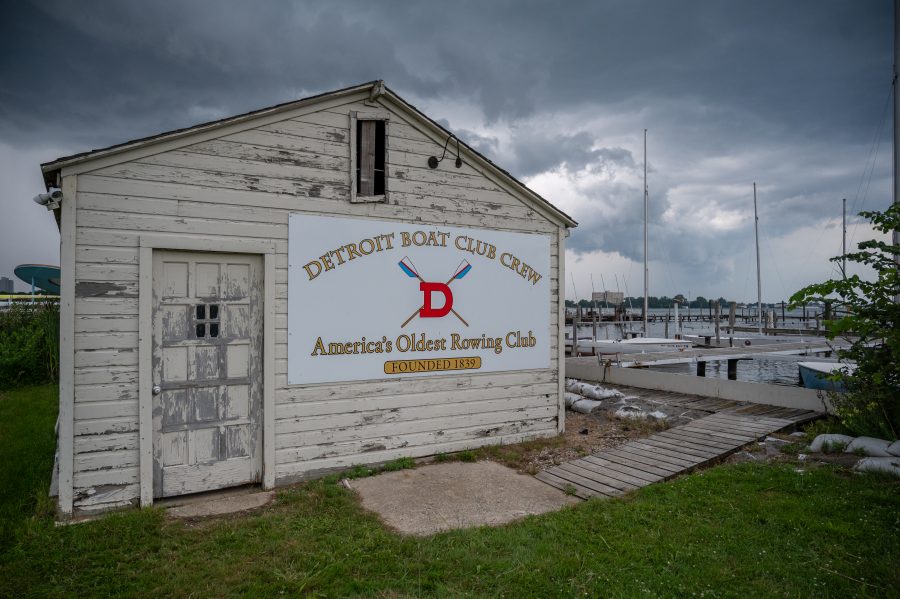
The Detroit Boat Club was founded in 1839 after Detroit developer Edward Brush fell in love with rowing on a visit to the East Coast. It is the fifth oldest non-academic rowing clubs in the world and the second oldest in the country.

Rowing was the most popular sport in Detroit after the Civil War. There were more than 1,000 rowers in the city by the late 1870s with a boat house district that stretched from St. Aubin to McDougall. Hundreds of thousands of people would come to the river to watch rowing competitions.

Stephen Malboeuf is a rower at the Boat Club, its official archivist and its unofficial historian. He says at that time the sport wasn’t just for the wealthy.

“Both of the stove works—both the Detroit Stove Works and the Michigan Stove Works had boat clubs that were organized by their iron workers,” Malbouef said. “The railroads would have their employees…form boat clubs…and they’d compete in regular regattas.”

But that level of enthusiasm for rowing didn’t actually last that long, Malboeuf said.

“By the 1880s and as early as 1881 the rowers noticed that most of their spectators had abandoned the sport in favor of watching baseball.”

 The first professional baseball team was organized in Detroit in 1881. 

 “In 1879 You’ve got 30 clubs, and by 1893 you’re down to just two,” Malbouef said.

Detroit Yacht Club

The Detroit Yacht Club sets its founding in 1868 and its focus has always been sailing. Its early members are among the most notable names in the city’s history, including the Fords, Dodges, Scripps and Fishers.

Mike Alberts has been a member of the Detroit Yacht Club for over 45 years.

The Yacht Club’s Mike Alberts says the DYC had two or three buildings before its current clubhouse. He says inventor Gar Wood was the commodore when the club built it in 1922 after Wood’s win at the Harmsworth Challenge Regatta in 1920 made him a rock star.  

Alberts says even though the Detroit Yacht Club was built by some of the automotive industry’s heavy hitters, boat racing was bigger than car racing in those days. And, he says the DYC was and still is a pioneer in freshwater sailing, power boat racing and competitive swimming.

But why Belle Isle?

In the mid-1880s, when clubs were looking for better positions on the river as it became more industrial, the Detroit Park Commission gave the Detroit Boat Club and the Detroit Yacht Club permission to build on the island. 

The clubs are actually not technically on the island. They built the foundations for the buildings next to Belle Isle. And gave them a pretty sweet deal.

“When the Park Commission originally approved the clubs to move to Belle Isle, each club had to furnish a $5,000 bond,” Malbouef said. He said that’s like $125,000 today.

“Then they’d pay an annual lease of $1 a year for property in Belle Isle.”

The one hundred year, one dollar a year leases ended in 1992. Malbouef says the Boat Club went from paying $1 to be on the island to 100,000 dollars overnight. 

The Detroit Boat Club is one of the oldest boat clubs in America, and one of the oldest social organizations in Michigan.

Hitting rough waters

The boat club’s membership was around 250 by the 1990s– down from around 1400 in the 60s. It was leasing its building from the city on a month-to-month basis until 2014. When the state took over Belle Isle, the Boat Club got a 30 year lease. 

It hosted about 50 weddings a year before COVID – that money went into trying to keep the building in shape. But just after COVID part of a porch collapsed and the building was condemned. 

Now, a developer is working to restore the building so rowers, sailors and the community can use it.

That’s just a little bit of the histories of the Detroit Boat Club and the Detroit Yacht Club. We didn’t get into the part where they were sued to let Black members in. And Mike Alberts has a great story about the King of Norway.

But we answered Max Spayde’s question: There are two clubs because they were originally focused on different sports – and they made a deal with the city that made it possible for them to stay on Belle Isle for at least 100 years.

WDET’s CuriosiD series answers your questions about everything Detroit. Subscribe to CuriosiD on Apple PodcastsSpotifyNPR.org or wherever you get your podcasts.

We want to hear from you!

Have a question about Southeast Michigan’s history or culture? Send it our way at wdet.org/curious or fill out the form below. You ask, we answer.

Support the podcasts you love.

One-of-a-kind podcasts from WDET bring you engaging conversations, news you need to know and stories you love to hear. Keep the conversations coming. Please make a gift today.

More CuriosiD

The post CuriosiD: Why is there a boat club and a yacht club on Belle Isle? appeared first on WDET 101.9 FM.
CuriosiD: Do the Detroit Red Wings and Red Wing Shoes have anything in common?

The Detroit Red Wings are celebrating their 100th anniversary this season. Over the last century the team’s winged wheel logo has become iconic.

But Detroit’s hockey team isn’t the only group using the Red Wing identity. Red Wing Shoes, known for making boots, sports a logo that features similar styling cues.

Scott Deaner, from Petersburg, Michigan, asked CuriosiD if there’s any connection between the two.

“I’ve looked at the Red Wing shoe company logo several times,” says Deaner, “and I’m like, that is very similar to the Red Wings logo. Just add the wheel and it looks very similar.”

The answer to that question is no.

Red Wing Shoes was founded in 1905 in Red Wing, Minnesota. The famous boot maker takes its name from its hometown.

The Detroit Red Wings were founded in 1926, but they weren’t originally from Detroit.

Detroit hockey before the Red Wings name

They were known as the Victoria Cougars. Helene St. James covers the Wings for the Detroit Free Press.  She says the franchise moved to Detroit from British Colombia when the old Western Hockey League fell apart.

The thinking was ‘keep the name the same,” says St. James. “Let them be known as the Detroit Cougars.”

The team played under the Cougars moniker for four seasons with little success.

“They decided in 1930, they were renamed the Falcons,” she says. “But that wasn’t any better.”

The Red Wings didn’t become the “Red Wings” until 1932, after being purchased by Canadian-American businessman James Norris.

Origins of the “winged wheel”

Jeremy Dimick is director of collections and curatorial for the Detroit Historical Society. He put together an exhibit celebrating the Red Wings’ 100th anniversary that’s on display at the Detroit Historical Museum through November.

A selection of Detroit Red Wings logos on display at the Detroit Historical Museum

Dimick says it was Norris who came up with the now famous Winged Wheel. He says the amateur athletic club Norris played hockey for growing up in Montreal had at one point been known for bicycle racing.

“And so their club emblem became this bicycle wheel with wings on it,” says Dimick, “as like a shorthand for speed.”

That imagery stuck with Norris but the Red Wings logo isn’t exactly the same what he wore growing up.

The Montreal Amateur Athletic Associations logo featured two wings oriented vertical against the wheel. The orientation of the wing changed and the bicycle wheel was replaced with one that was a little more representative of the Motor City.

“The wheel that’s chosen is pretty darn close to a Model T wheel,” Dimick says. “And what better car to kind of represent Detroit’s auto industry.”

The color red

As for why red was selected for the Wings, that is believed to have been influenced by Norris’ business interests. Dimick says the color was associated with the Upper Lakes Shipping Company — a fleet of Great Lakes freighters that Norris owned.

“Their kind of club flag that they flew on all their ships and had on the smokestacks of all their ships,” Dimick explains, “was this bright red kind of crimson pennant with a black diamond in the middle. And that red is eerily similar to the red that ends up being the Red Wings’ red.”

Thus, the Detroit Red Wings name and emblem were born. The imagery remains pretty much the same as it is today.

While the Red Wings hockey team and the Red Wing shoe company brands share some styling cues, they arrived independently from one another.

WDET’s CuriosiD series answers your questions about everything Detroit. Subscribe to CuriosiD on Apple PodcastsSpotifyNPR.org or wherever you get your podcasts.

Want more stories like this? Sign up for WDET’s weekly newsletter and never miss a curiosity uncovered.

Support the podcasts you love.

One-of-a-kind podcasts from WDET bring you engaging conversations, news you need to know and stories you love to hear. Keep the conversations coming. Please make a gift today.

More CuriosiD

The post CuriosiD: Do the Detroit Red Wings and Red Wing Shoes have anything in common? appeared first on WDET 101.9 FM.

CuriosiD: Why is it called The Old Miami?


In this episode of CuriosiD, listener Leah Warshaw asks the question:

“How did The Old Miami get its name?”

The short answer

The first Miami on Cass was the Miami Lounge, which opened in 1947. As the neighborhood took a turn for the worse in the 60s, the bar became the site of murder, prostitution, and other crimes that marred its reputation. 

The bar switched owners several times but kept “Miami” in the name, for the most part. Shortly after The New Miami was burned down, veteran Danny Overstreet opened The Old Miami, with “Miami” standing for “missing in action Michigan”. Though it started as a place to serve veterans, it’s an inviting dive for everyone in the neighborhood today, with gems like a koi pond in its expansive backyard.

Danny’s wife, Julie, credits the use of “old” to Danny’s sense of humor. She runs the bar today. 

Manager Dena Walker adds, “I mean what would you call it—the New New Miami?”

For more details on the history of The Old Miami and what to expect from today’s laid-back atmosphere, listen to the podcast above.

WDET’s CuriosiD series answers your questions about everything Detroit. Subscribe to CuriosiD on Apple PodcastsSpotifyNPR.org or wherever you get your podcasts.


We want to hear from you!

Have a question about Southeast Michigan’s history or culture? Send it our way at wdet.org/curious or fill out the form below. You ask, we answer.

Support the podcasts you love.

One-of-a-kind podcasts from WDET bring you engaging conversations, news you need to know and stories you love to hear. Keep the conversations coming. Please make a gift today.

More CuriosiD

The post CuriosiD: Why is it called The Old Miami? appeared first on WDET 101.9 FM.

❌