Reading view

There are new articles available, click to refresh the page.

Congressman Thanedar talks record, issues heading into midterm election

Democratic Congressman Shri Thanedar is running for re-election. He represents the 13th Congressional District which encompasses much of Detroit as well as Wyandotte, Allen Park, Taylor and Romulus.

Thanedar has long been the target of criticism for being a newcomer to the city of Detroit, and for being mostly self-financed. He’s independently wealthy, and the 71-year-old has been able to easily out-spend his competitors.

This year, Thanedar is facing a difficult primary opponent, State Representative Donavan McKinney. The progressive Democrat has already been endorsed by Black leaders in Detroit and other lefties like Congresswoman Rashida Tlaib and U.S. Senator Bernie Sanders.

The seat is safely controlled by Democrats, so whoever wins the primary will be the next Representative.

Recently, Thanedar sat down with WDET’s Russ McNamara and discussed many topics that could separate he and McKinney in the primary.

Listen: Shri Thanedar says he’s ready for 13th Congressional District primary

The following interview has been edited for clarity.

Russ McNamara, WDET: You’ve been running ads critical of Immigration and Customs Enforcement.

U.S. Rep. Shri Thanedar: What happened in Minnesota in killing of two American citizens Renee Good, a mother of three, was murdered on the streets of America. Alex Pretti an ICU nurse at [the] VA was murdered. This agency is out of control. They are going to Home Depots, daycare centers, schools to round up people that look different.

This is not a way to run our immigration enforcement, so I, last year, introduced a bill in Congress to end immunity for ICE agents, because ICE agents cannot stand behind this immunity to go do atrocities on our streets and create fear among our communities and community members. People, even U.S. citizens, are afraid to come out of their homes being afraid.

ICE agents talking to people. ‘Hey, you speak with an accent, you look different. You You must not be an US citizen.’ … They are entering homes without a judicial warrant. So I introduced a bill last year, anticipating all of this, to eliminate the immunity for these ICE agents. And this year, I am the first member of Congress to introduce a bill in Congress to abolish ice.

RM: It should be noted that because of Republican House Speaker Mike Johnson, this bill is unlikely to go anywhere at all. Have you had any person experience with racial profiling?

ST: Yeah, you know, at times. I have seen the type of questioning that I get, or sometime, I do get singled out a lot more for interrogation and questioning. But I am not so sure it is how different that is compared to their interrogation of other people.

Medicare for All

RM: What is your plan to fix health care?

ST: Well look, with a nation as rich as ours, it is unfortunate that United States does not cover health care for all of its citizens. We are the only developed nation that does not cover health care for its citizens. I am a big proponent of Medicare for All.

I would like to see a single-payer healthcare system that covers healthcare, because I believe healthcare is a fundamental human rights issue. No one, no family, should have to make those difficult decisions, whether to buy medicine, go to a doctor or buy food to feed the family.

So we saw the condition of healthcare in Detroit, especially in the Covid times. We had disproportionate number of deaths during Covid, because Detroit does not have the health care.

So I think given the poverty in my district—26% of the people in my district are at or below poverty—they are struggling as such, and cannot afford health care. Now, the loss of subsidies, the Obamacare subsidies, has doubled and tripled insurance premiums for independent workers, small business owners, and that’s causing a lot of hardship for people as well. So a single payer healthcare like a Medicare for All is the ultimate solution.

We will have a better leverage to negotiate with pharmaceutical companies to ensure because prescription medication is most expensive in United States compared to everywhere else in the world and whatever. Under Biden, we dropped the insulin rates to $35 a month. There is some progress made under the current administration, but it is too little and does not cover a lot of the life saving medications. So we need to have a comprehensive health care reform, such as a single-payer health care system.

Wealth gap

RM: You mentioned that 26% of your district lives in poverty. It has one of the lowest median household income rates in the country. You are independently wealthy. I’m sure you’ve seen the how the wealth gap has increased. What is your plan to address that wealth gap?

ST: We need to create skills jobs. We need to raise the minimum wage to a living wage. The current federal minimum wage is nowhere close to a living wage, so it is important that we raise the minimum wage, but it’s very, very important that we give people the skill set that they need.

Look, I wasn’t born wealthy. I grew up in India. My father lost his job when I was 16 years old, and while going to college, I worked as a janitor, and made a little bit of money. I didn’t get the living wages, I didn’t get the benefits, but I worked as a janitor. I worked in restaurants, serving tables. That’s how I got a little supplemental income that I gave it to my mom so she could put food on the table, you know. So I grew up in dire poverty, like no running water in my home. I had to go with my mother a block away to get drinking water for the whole day.

So I have gone through dire poverty. There are times where I’ve gone to bed hungry, but I got education. I came to the United States. I got education. After that, I got a job, and then I started a business, and that business became very successful, and that’s how I made my money.

Then I realized I achieved my American dream and I need to go help others, and that’s why I sold my business, took some of that money, gave it to all of my employees, because they helped me make that business successful.

So to close the wealth gap, we need to promote entrepreneurship. We need to give the skillsets people need.

Education costs way too much. No one should be graduating from college with 50,000, $70,000 loan. So we need to make education affordable, because like in my case, it was the education that helped me overcome poverty to be able to succeed and achieve my American dream. Every child, no matter what zip code he or she lives, every child, no matter what financial background the child comes from, must get good quality education.

Billionaires

RM: Should billionaires exist?

ST: I don’t think so. Some 80 or so billionaires have so much wealth compared to rest of the people, and that doesn’t seem like a fair system. We have billionaires who have a different set of rules that they live under. So no, I don’t think billionaires should exist, because often they exist because of because of their unethical practices, because of their monopolies. And we need to break those monopolies. We need to have a level playing field.

RM: Where has the Democratic Party gone wrong? What can they do to fix the disconnect between the base and party leadership?

ST: I can tell you just what I am doing as a Democrat, and my focus has been to fight for democracy. When this administration does illegal things when they do activities that are against the Constitution. I have stood up. I was the first member of Congress to bring articles of impeachment against this president, outlining some of the things that he did that were unconstitutional.

RM: But that wasn’t well-received by Democratic House Minority Leader Hakeem Jeffries though.

ST: It wasn’t. I don’t work for Hakeem Jeffries. I don’t work for Donald Trump. I work for my constituents. And my constituents felt that what Mr. Trump is doing in terms of the Trump meme coin or his families making these business deals with Middle East countries this Trump and his family have amassed $1.5 billion personal wealth using their office.

I’m doing what my constituents want me to do. Because, look, I have had more town halls than anybody else that I know of. I must have had almost 18 or so in person town halls. I have had tele-town halls where 18,000 people join in—I do this almost every month. So I am very much in touch with my constituents.

I hear them, and I’m doing what my constituents want, which is to fight with this administration and resist this administration when they do when they take law in their own hands, when they do unconstitutional activities.

Campaign finance

RM: How has it been raising money this time around? You’ve put a lot of your own money into your campaigns, but you’ve also taken a lot of money from AIPAC.

ST: I don’t do much fundraising. You know, most members of Congress spend anywhere from 20-60 hours per week on fundraising. I have put my own money when I ran for governor, I put my own money when I ran for Congress. I put my own money when I ran for state rep, so I don’t depend on anybody else’s money.

RM: But are you taking money from a PAC or one of their offshoots in this particular election cycle?

ST: I will take money from anybody who wants to support my campaign, but that is a insignificant part of my total funds that I use. 90, 95% 99% of the money is coming from my own pocket. So I am not beholden to any donor. I am not beholden to any one contributing to my campaign. I spend my own money.

War in Gaza

RM: So a lot of what went wrong for Democrats in 2024 was the failure to acknowledge people who were unhappy with Israel’s war and attacks on Palestinians in Gaza—

ST: I think it was the economy. I think Trump made a case that he alone can fix the economy. He identified the affordability struggles average Americans have, and he talked about the rising prices—and he said, Mr. Trump said, he alone can fix the economy. And people believed it. People believed that he can fix the economy, and I think that was the number one reason why Mr. Trump got elected.

RM: But I do want to suss out your personal feelings on Israel’s attacks on Palestinians in Gaza. Scholars and vocal people on the left have characterized those attacks as genocide. Would you agree with that assessment?

ST: I feel that we need to fight terrorism all across the world. Terrorism needs to be fought. What happened? We suffered at the hands of terrorists on 9/11 and we just need to continue to fight and we need to fight terrorism anywhere, whether it’s Middle East, whether it is in any other part of the world.

War in Iran

RM: Iran has been a large state sponsor of terrorism across the globe. Are you in support of this current military action with Iran?

ST: I am totally opposed to the current war that Trump has started in Iran. It was ill conceived. I have seen no imminent threat to the United States from Iran. Iran has the capability of these missiles and drones all along. So there is nothing new that happened, that needed United States to go spend billions of dollars on this war and get our men and women—hard working men and women from the service—to be in harm’s way. So this was an ill conceived plan of war done by one man, and he did not consult Congress.

Congress, by constitution, is the sole authority in terms of declaring war, and this President started this illegal war for reasons known only to him, because every member of his cabinet has given us different reasons why they started the war. It seems like… none of them have one cohesive reason why they started this war.

Trump has said different things. Secretary Rubio has said different things. Vice President, J, D, Vance said some other things. So it almost like they’re making up reasons why they went into war, and I have my own thinking why they went into the war.

I feel that Trump needs every distraction he can get to distract Americans from the rising affordability crisis. Trump needs a distraction because people are mad at the operation of Department of Homeland Security and ICE particularly. And people are upset with the Epstein files and all of the attorney general who, as you know, has attempted to cover up. This is the largest cover up since Watergate, and it is something that Trump needed a distraction for, and they went into this Iran war without full preparation.

Transgender rights

RM: What do you plan to do to protect the rights of transgender people since Republicans continue to attack their existence?

ST: This cultural war by Republicans is another way of distraction from the current affordability crisis. The culture war that they have done to please their own base is unnecessary.

This is not the issue we need to feed people. They’re cutting Medicaid through the trillion dollars of cuts in health care. They are cutting snap the supplemental food benefits to the tune of $300 billion taking away, you know, Supplemental Nutritional food away from hungry and poor, and we’re talking about these culture wars. That is quite a distraction. We need to really focus on what really matters, and that’s feeding the hungry. That’s getting good health care for all, focusing on skills and closing the wealth gap.

Trusted, accurate, up-to-date.

WDET strives to make our journalism accessible to everyone. As a public media institution, we maintain our journalistic integrity through independent support from readers like you. If you value WDET as your source of news, music and conversation, please make a gift today.

Donate today »

The post Congressman Thanedar talks record, issues heading into midterm election appeared first on WDET 101.9 FM.

National Weather Service says Detroit area office has what it needs to warn people before storms

State and federal officials want to know why the National Weather Service (NWS) didn’t issue a tornado watch before deadly twisters hit southwest Michigan on March 6, 2026.

A supercell thunderstorm developed rapidly over Cass County, spawning four tornadoes. The strongest tornado, with winds up to 160 mph, killed three people in Union City, MI in Branch County. 

Michigan senators Gary Peters and Elissa Slotkin wrote a letter to NWS Director Ken Graham demanding answers.

“Was a lack of staff and/or resources a contributing factor to NWS’s ability to issue a tornado watch alert ahead of the March 6 tornadoes,” the senators asked. “What, if anything, would have allowed the responsible NWS offices to identify the supercell that produced these tornadoes?”

The Trump administration cut funding for the National Oceanic and Atmospheric Administration in 2025. NOAA oversees the weather service.

Who issues watches and warnings?

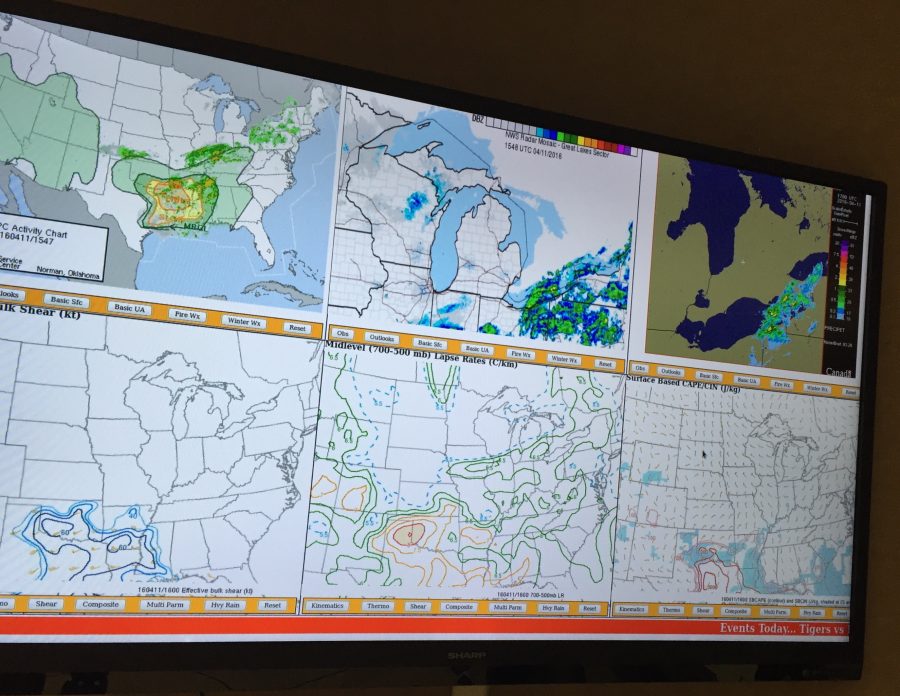
Jackie Anderson is the warning coordination meteorologist at the NWS Detroit-Pontiac bureau in White Lake Township. She says it’s up to NOAA’s Storm Prediction Center in Norman, Oklahoma to issue tornado watches. 

A watch means conditions are favorable for the development of tornadoes in a given area. A warning means a tornado has been detected on radar or by people on the ground.

Anderson says when the SPC issues a watch, local NWS offices work with the folks in Norman to determine when and where tornadoes could form. Then, it’s up to the local bureaus to issue warnings.

“NWS offices across the country are looking at the radar, they’re looking at the environment, they’re looking at storm reports coming in,” Anderson says. “And when we start to see concerning signs of rotation on radar in a certain area in a certain environment that we know is conducive for tornadoes, then we’ll start looking at do we need a tornado warning or not.”

Meteorologists track weather around the clock at the NWS office in White Lake

Anderson says her team has the staff and the tools they need to issue timely warnings.

“Our mission is the protection of life and property when it comes to hazardous weather,” she says. “We’re here keeping an eye on the weather 24/7, 365 days a year.”

Tornadoes can strike without warning

The challenge forecasters face is that tornadoes are, by nature, unpredictable. They can form at any time of day or year. And they sometimes spin up even when conditions aren’t necessarily favorable for them.

“Last year, we had a couple of that happened in environments where you wouldn’t say, ‘hey, I’m going to get a tornado out of this type of setup,'” she says. “So, there are some days that are really sneaky.”

Several hours before the twisters on March 6, the Storm Prediction Center posted maps on its website indicating a risk of tornadoes over southern lower Michigan. 

“Even on those days when we don’t have a line of storms coming through, we may have a few areas of storms that are a bit more isolated, but still may have a big impact,” she says.

When the weather service issues any watches or warnings, they go out to local television and radio stations, which broadcast them as soon as possible. Anderson says people can also receive alerts if they have a weather radio or a cell phone. She recommends turning on mobile devices to receive emergency alerts. Anderson says they’re very useful when tornadoes form after midnight.

“It’s really loud and it will wake you up in the middle of the night,” she says.

Spring brings other dangerous weather

Tornadoes are not the only severe weather hazard NWS monitors. Anderson says thunderstorms produce lightning that can strike from miles away. She says people who have plans outdoors should check the weather forecast for thunderstorms first.

“If you can hear thunder, if you can see lightning, you’re at risk for being struck,” she says. “Know where you’re going before those storms strike.”

March 15 to 21 is Severe Weather Awareness Week in Michigan. The weather service has information on its website to help people prepare.

The post National Weather Service says Detroit area office has what it needs to warn people before storms appeared first on WDET 101.9 FM.

The Metro: Michigan’s Senate primary has become a proxy war for the Democratic Party’s soul

The Metro is closely watching the race for Michigan’s open U.S. Senate seat.

The Republican side is settled. Former Congressman Mike Rogers, who lost to Elissa Slotkin by less than half a point in 2024, is running again. This time, he wants the seat Gary Peters is leaving behind.

The Democratic side is more complicated. Three serious candidates are competing for the nomination, and the distance between them tells you something about where the party is right now.

Congresswoman Haley Stevens has Chuck Schumer’s endorsement and millions in support from AIPAC. She is running on expanding the Affordable Care Act and working within existing institutions. State Senator Mallory McMorrow wants generational change inside the party — new leadership, new tactics — but within the current system. Physician Abdul El-Sayed is running to the left of both. He wants Medicare for All, the abolition of ICE, and says Democratic leadership has lost touch with its own voters.

They disagree on healthcare. They disagree on immigration enforcement. They disagree on Israel and Gaza, on whether billionaires should exist, and on who should be leading their own party.

WDET’s Russ McNamara sat down with all three — same questions, same mic — and the answers lay out a party in the middle of an argument with itself. The Metro listened back to that story, then Russ joined Robyn Vincent for some analysis about this moment.

Hear the full conversation using the media player above.

Listen to The Metro weekdays from 10 a.m. to noon ET on 101.9 FM and streaming on demand.

Subscribe to The Metro on Apple PodcastsSpotifyNPR.org or wherever you get your podcasts.

Support the podcasts you love.

One-of-a-kind podcasts from WDET bring you engaging conversations, news you need to know and stories you love to hear. Keep the conversations coming. Please make a gift today.

More stories from The Metro

The post The Metro: Michigan’s Senate primary has become a proxy war for the Democratic Party’s soul appeared first on WDET 101.9 FM.

The Metro: Drones are coming to a police department near you. Is the privacy tradeoff worth it?

The cities of Dearborn and Warren, MI have launched Drone-as-a-First-Responder programs. In Dearborn, a drone can now reach a 911 call in about two and a half minutes, often before a patrol car leaves the station.

Police and fire departments in Warren are sharing a fleet of these drones to scout house fires, crime scenes, and missing-person searches before officers arrive on the ground.

It’s fast and efficient. Police chiefs call it a game-changer. But more surveillance and more data come with increased risks and erode privacy and anonymity in public spaces.

Are the tradeoffs worth it? Drone researcher and author Arthur Holland Michel joined The Metro to discuss.

Arthur Holland Michel is a surveillance technology writer and researcher. He founded the Center for the Study of the Drone at Bard College and wrote the book “Eyes In the Sky: The Secret Rise of Gorgon Stare and How it Will Watch Us All.”

Subscribe to The Metro on Apple Podcasts, Spotify, NPR.org or wherever you get your podcasts.

Listen to The Metro weekdays from 10 a.m. to noon ET on 101.9 FM and streaming on demand.

Trusted, accurate, up-to-date.

WDET strives to make our journalism accessible to everyone. As a public media institution, we maintain our journalistic integrity through independent support from readers like you. If you value WDET as your source of news, music and conversation, please make a gift today.

Donate today »

More stories from The Metro

The post The Metro: Drones are coming to a police department near you. Is the privacy tradeoff worth it? appeared first on WDET 101.9 FM.

Wayne County judge grants new trial to man imprisoned nearly nine years in Westland arson case

A Wayne County judge has granted a new trial to a man who has spent nearly nine years in prison for a Westland mobile home fire after attorneys argued his conviction relied on outdated and unreliable fire science.

The post Wayne County judge grants new trial to man imprisoned nearly nine years in Westland arson case appeared first on Detroit Metro Times.

Breaking: Attack on Temple Israel in West Bloomfield

Alerts of an active shooter situation around Temple Israel in West Bloomfield were issued Thursday afternoon after a man armed with a rifle rammed his truck into the building.

Listen: 6:30 press conference on Temple Israel attack

Oakland County Sheriff Michael Bouchard said at a short briefing that security engaged the shooter on the scene. A source told the Detroit News that the attacker was killed, though they cannot verify how he died at this time.

Shortly before 1 p.m., the attacker drove into the synagogue and down a hallway before exchanging fire with Temple Israel security. The truck ignited, creating plumes of smoke that could be seen from the road. Law enforcement is searching for potential explosives.

One security officer was knocked unconscious by the attack, but everyone else on the premise is unharmed—including teachers and students attending the early childhood center.

In a statement posted to Facebook Temple Israel thanked teachers, staff, officers, families, and neighbors for their quick action and care. 

The FBI is now leading the investigation into the attacker and motive.

Located at 5725 Walnut Lake Road, Temple Israel is one of the largest reform synagogues in the U.S.

State police said in a statement on X that troopers will be increasing patrols surrounding other places of worship in the area.

Sheriff Bouchard noted that he had been coordinating with local law enforcement and faith centers frequently over the last two weeks in preparation for such an attack after the U.S. and Israel began striking Iran.

This is a developing story. Check in at wdet.org for more updates.

Last updated: 8:38 p.m.

Trusted, accurate, up-to-date.

WDET strives to make our journalism accessible to everyone. As a public media institution, we maintain our journalistic integrity through independent support from readers like you. If you value WDET as your source of news, music and conversation, please make a gift today.

Donate today »

The post Breaking: Attack on Temple Israel in West Bloomfield appeared first on WDET 101.9 FM.

The Metro: ICE’s media machine and the voices going quiet

The Metro team has been noticing a chilling effect as we dig for answers and information: some sources who used to talk to us are not picking up. Community members, advocates, and elected officials are going quiet. But silence is only one side of the story. The other side is a deliberate wall of noise.

Washington Post reporters obtained thousands of internal Department of Homeland Security messages and found a taxpayer-funded media operation embedded in immigration raids. Producers were told to flag “cinematic scenes” for the camera. When someone arrested had no criminal record — and nearly 74% in ICE detention don’t, according to government data — officials were told to find something else “newsworthy.”

At the same time, DHS has sent hundreds of administrative subpoenas to Google, Meta, Reddit, and Discord demanding the identities of people who criticize ICE online. 

Maria Hinojosa has spent decades fighting against the silence and the noise. The Pulitzer Prize-winning host of Latino USA and founder of Futuro Media joined Robyn Vincent to talk about the federal government’s information war on immigration.

Hear the full conversation using the media player above.

Listen to The Metro weekdays from 10 a.m. to noon ET on 101.9 FM and streaming on demand.

Subscribe to The Metro on Apple PodcastsSpotifyNPR.org or wherever you get your podcasts.

Support the podcasts you love.

One-of-a-kind podcasts from WDET bring you engaging conversations, news you need to know and stories you love to hear. Keep the conversations coming. Please make a gift today.

More stories from The Metro

The post The Metro: ICE’s media machine and the voices going quiet appeared first on WDET 101.9 FM.

Murder conviction linked to disgraced Detroit homicide detective tossed because of ‘coercive’ confession  

A former Detroit homicide detective whose interrogation tactics have led to exonerations and multimillion-dollar settlements is now connected to another vacated conviction.

The post Murder conviction linked to disgraced Detroit homicide detective tossed because of ‘coercive’ confession   appeared first on Detroit Metro Times.

Detroit Evening Report: Protestors, midterm candidates gather outside Romulus city hall to denounce ICE detention center

About a thousand protesters showed up to city hall in Romulus to protest a planned Immigration and Customs Enforcement detention center in the city. 

Lieutenant Governor Garlin Gilchrist, who is hoping to win the Democratic nomination for Secretary of State was also there. “I make sure that people have the power to vote against those who would want to sign off on a budget that would approve these kind of expenditures… that would approve this kind of ICE personnel deployment,” said Gilchrist. “That is unacceptable, and we need ICE out of Michigan.” 

Romulus City Council voted unanimously to condemn the proposed detention center, but admitted they still have not received formal confirmation of the building’s sale to the federal government.

-Reporting by Russ McNamara 

Additional headlines for Tuesday, Feb. 24, 2026

Whitmer will use State of the State to talk affordable housing

Governor Gretchen Whitmer will use her State of the State address Wednesday to call for more programs to address a shortage of affordable housing in Michigan.

Her plans include an affordable housing tax credit to spur development, cuts to regulations and faster approval of building permits. The governor has expressed concerns that President Donald Trump’s sweeping tariffs will add thousands of dollars to the costs of home-building materials. The governor delivers her State of the State address the evening following the president’s State of the Union address tonight. (MPRN) 

New office of Community Safety

Detroit Mayor Mary Sheffield has established a new office of Neighborhood and Community Safety. Its goal is to help prevent domestic violence and promote conflict resolution.

Teferi Brent will lead the office. He says domestic abuse is a major source of violence that the city needs to address. Brent says that effort would further lower the number of homicides, which hit a 60-year low in 2025. 

-Reporting by Pat Batcheller

Detroit Historical Society celebrates Women’s History Month

The Detroit Historical Society is kicking off Women’s History Month with ‘Love and Flowers: A tribute to Detroit’s Black Matriarchs’ Sunday. 

 The event is a celebration of caregivers past and present and an opportunity to reflect on the question of what it looks like to honor the Black women who “built… nurtured and fought for a better Detroit.”

Registration is through the Black Bottom Archives as a part of its Bottom Up series of community programs exploring memory, storytelling and Black Detroit’s living history.

A museum membership is required for admission, but the Detroit Historical Museum offers a free membership to Detroiters and individual memberships starting at $60 on its website.

Literacy fundraiser

The Flint Unity Farming Project is having a popcorn fundraiser to support is literacy and learning programs.


Listen to the latest episode of the “Detroit Evening Report” on Apple Podcasts, Spotify, NPR.org or wherever you get your podcasts.

Support local journalism.

WDET strives to cover what’s happening in your community. As a public media institution, we maintain our ability to explore the music and culture of our region through independent support from readers like you. If you value WDET as your source of news, music and conversation, please make a gift today.

The post Detroit Evening Report: Protestors, midterm candidates gather outside Romulus city hall to denounce ICE detention center appeared first on WDET 101.9 FM.

Detroit police chief backs down from firing cops who called Border Patrol

Detroit Police Chief Todd Bettison said Friday he will no longer seek to fire two cops who called U.S. Border Patrol during separate traffic stops, supporting instead a 30-day unpaid suspension imposed by the Detroit Board of Police Commissioners.

The post Detroit police chief backs down from firing cops who called Border Patrol appeared first on Detroit Metro Times.

The Metro: Detroit police chief said the line was clear. His officers crossed it anyway

Communities across Michigan are asking how, exactly, local law enforcement is working with federal immigration agents as the Trump administration steps up aggressive enforcement, including the killing of two Americans in Minneapolis. In Detroit, that question is playing out on the pages of two police personnel files. 

Detroit Police Chief Todd Bettison vowed to fire two officers who broke department rules by calling U.S. Border Patrol during traffic stops, handing people over to federal immigration agents. Then he dropped the terminations.

In one stop, an officer called Border Patrol, believing the person was undocumented. In the other, a sergeant called for help communicating with a driver who didn’t speak English, though the department runs a 24-hour translation hotline.

DPD policy — stemming from a 2007 anti-profiling ordinance and a 2020 internal directive — bars officers from contacting Border Patrol, ICE, or any federal agency for translation or immigration enforcement. 

Outlier Media’s public records requests turned up at least two more incidents the chief did not disclose.

Ahead of the Board of Police Commissioners’ vote on the suspensions, The Metro’s Robyn Vincent spoke with Noah Kincade, who runs the Documenters program at Outlier Media

The Detroit Documenters helped surface these cases at police commission meetings. 

ICE and CBP did not respond to WDET’s requests for comment about this story.

Hear the full conversation using the media player above.

Editor’s Note: After this interview aired, the Board of Police Commissioners voted 10–0 to suspend both officers without pay for 30 days. Bettison, who said he would terminate them, backed off the next morning. His reversal comes after one officer sued in federal court, claiming her lieutenant ordered the call, and Michigan Republican House Speaker Matt Hall threatened to review Detroit’s state funding in response to the case.

Listen to The Metro weekdays from 10 a.m. to noon ET on 101.9 FM and streaming on demand.

Subscribe to The Metro on Apple PodcastsSpotifyNPR.org or wherever you get your podcasts.

Support the podcasts you love.

One-of-a-kind podcasts from WDET bring you engaging conversations, news you need to know and stories you love to hear. Keep the conversations coming. Please make a gift today.

More stories from The Metro

The post The Metro: Detroit police chief said the line was clear. His officers crossed it anyway appeared first on WDET 101.9 FM.

Detroit Evening Report: City council questions Detroit Police about ICE collaboration

The Detroit Police Department told city council Tuesday that the department does not participate in immigration enforcement. 

City Council questioned the department about how and if it provides any support to ICE after reports of officers working alongside Customs and Border Patrol. First Assistant Chief Charles Fitzgerald told the council the department is not in the immigration business. 

“We have, obviously, a city ordinance for bias-based policing. We have our own policy for bias-based policing. We have special orders that we do not unless there is an absolute nexus to a violent crime. We’re not in the immigration business, and even then, I’ll tell you, if it’s connected to a violent crime, we shouldn’t care.” 

Police Chief Todd Bettison has said recently he plans to fire two officers who used Customs and Border Protection for assistance during traffic stops, which is against DPD policy. 

Council Member Santiago Romero says she is speaking with the mayor about establishing a hotline for residents to call if they are concerned about DPD working with ICE 

Additional headlines for Thursday, Feb. 19, 2026

Green Grocer ribbon cutting

The Detroit Economic Growth Corporation’s Green Grocer Program had its first ribbon cutting this week since the program relaunched in 2024. Kandies sandwich shop will now feature a mini mart that will sell fresh produce, dairy, baked goods, and other grocery items.

Owner Jacquisha Blackwell received a $25 Green Grocer grant to purchase refrigeration, shelving, and upgrade electrical systems. The Green Grocer program has generated more than $50 million in investment during its first phase between 2010 and 2017, supporting more than 40 grocery stores. 

DOJ investigates sex-ed classes

The Justice Department is investigating the Detroit Public Schools and two other Michigan districts. Prosecutors want to know if the schools teach sexual orientation and gender-related topics in their classes without giving parents the choice to remove their kids from such lessons.

The DOJ says that would violate federal law and subject the districts to lawsuits and a loss of federal funding. The department has also sent warning letters to the Lansing School District and the Wyoming Godfrey-Lee public schools in west Michigan. 

I-94 construction begins

Construction on I-94 near Detroit Metro Airport has begun between Romulus and Dearborn. Traffic will be reduced to one or two lanes in each direction beginning this summer. The $353 million rebuild is expected to wrap up in mid-2029. 


Listen to the latest episode of the “Detroit Evening Report” on Apple Podcasts, Spotify, NPR.org or wherever you get your podcasts.

Support local journalism.

WDET strives to cover what’s happening in your community. As a public media institution, we maintain our ability to explore the music and culture of our region through independent support from readers like you. If you value WDET as your source of news, music and conversation, please make a gift today.

The post Detroit Evening Report: City council questions Detroit Police about ICE collaboration appeared first on WDET 101.9 FM.

The Metro: Oakland County’s top legal official says ICE agents are not above the law

Across metro Detroit, some leaders’ stances against ICE have gotten firmer. 

The Detroit police chief is not allowing his officers to work with ICE. Last week, Sterling Heights Mayor Michael Taylor spoke with The Metro about his criticisms of the institution.

Now, in Southfield, federal and state lawmakers are trying to stop ICE from opening an administrative office. 

Oakland County Prosecutor Karen McDonald, who is running to be Michigan’s Attorney General, has expressed concerns about ICE enforcement, and the presence of ICE agents in her jurisdiction. She spoke with The Metro‘s Robyn Vincent about that and more.

The Metro contacted US Immigration and Customs Enforcement prior to this conversation. They did not respond with a comment by the time this aired.


Listen to The Metro weekdays from 10 a.m. to noon ET on 101.9 FM and streaming on demand.

Subscribe to The Metro on Apple Podcasts, Spotify, NPR.org or wherever you get your podcasts.

Trusted, accurate, up-to-date.

WDET strives to make our journalism accessible to everyone. As a public media institution, we maintain our journalistic integrity through independent support from readers like you. If you value WDET as your source of news, music and conversation, please make a gift today.

Donate today »

More stories from The Metro

The post The Metro: Oakland County’s top legal official says ICE agents are not above the law appeared first on WDET 101.9 FM.

Haley Stevens runs for Michigan’s open US Senate seat

In 2026, voters in Michigan will cast ballots for races involving the office of Governor, Attorney General, and Secretary of State. Gary Peters (D-MI) is opting to retire, so there’s an open U.S. Senate seat.

Democrats have three strong candidates: Mallory McMorrow, Haley Stevens, and Abdul El-Sayed. All three have raised millions of dollars for their campaigns ahead of the August primary.

Throughout the primary, Detroit Public Radio will be checking in with the candidates so our listeners can make an informed decision. The focus of this first round of interviews is to set a baseline for the candidates views on policy and what separates them from their competitors.

Having talked with Dr. Abdul El-Sayed and Michigan State Senator Mallory McMorrow, this first round of conversations concludes with Congresswoman Haley Stevens.

She talked with All Things Considered Detroit Host Russ McNamara on Feb. 18, 2026.

Listen: Haley Stevens runs for Michigan’s open US Senate seat

ICE overhaul

Russ McNamara: This week, you went to the largest detention center for migrants in the Midwest- the North Lake Processing Center in Baldwin. You’ve called for the impeachment of homeland security secretary Kristi Noem. Should Immigration and Customs Enforcement (ICE) exist as an agency?

U.S. Representative Haley Stevens: Well, ICE needs to be overhauled. I will tell you that we need to start seeing accountability, and we need a complete overhaul of ICE. There has been mismanagement from the very top, and that’s Kristi Noem. That’s why I’m signed on to the articles of impeachment.

It’s also why I have signed on to legislation to redirect the $75 billion plus up that came from the Big Beautiful Bill championed by Donald Trump that went to ICE. That $75 billion needs to go to local law enforcement and for training and for safety and protocol measures that are really going to keep our neighborhoods safe.

What ICE is doing right now is so out of control, it is so damaging, and it’s chaotic. Michiganders are seeing what unfolded in Minneapolis, and they are worried about that coming here.

RM: In Baldwin, you told reporters, “There is female leadership here, and there are women who walked with us today…and explained how important it is to treat people with humanity.” I’m kind of curious about this quote, because taken as it is, it almost seems like you’re saying what’s happening there is okay as long as women have a seat at the table.

HS: Well, what’s happening with ICE is not okay at all. And what was very astonishing, and the reason I made that point, is because these are supposed to be the most “dangerous criminals” that ICE is taking into these detention facilities, and yet there are guards and people in that facility who don’t carry any weapons.

There’s no weapons, there’s no tasers, and yet we are supposedly dealing with the most dangerous criminals. So what ICE is doing is certainly not okay, and that’s why I’m pushing very hard for these reforms and accountability. I mean, we need to see accountability, particularly for crimes that have been committed, and we need to see prosecutions out of what happened in Minneapolis.

Affordable health care

RM: What is your plan to fix health care? Your opponents have endorsed a public option or Medicare for All. Where do you stand in all that?

HS: I’m writing legislation and fighting for Michigan’s affordable health care each and every single day, and I have throughout my time in Congress. I deeply believe that we need to expand the Affordable Care Act. We need to protect that and we we also need to make the tax subsidies permanent. We’ve seen before our very eyes time and time again how Republicans do not believe in the promise of affordable, quality, accessible health care.

I worked in the Obama administration. I want to protect Obamacare. I also want to address the cuts to Medicaid that have come down. We need to keep expanding Medicaid.

And then lastly, we need to tackle the cost of prescription drugs. We’ve made some headway on that in previous times. Right now, it feels as though our prescription drug efforts are falling on deaf ears. I believe in benchmarking prescription drug costs to the cost of Medicare.

Abortion rights and government reform

RM: Being in the U.S. House, you know better than anyone that Congress has largely been in gridlock these past few years. If elected to the Senate, do you support the elimination of the filibuster?

HS: I’ll tell you that I do for a variety of matters, particularly women’s health protection. That’s legislation that I have championed in the house, that I’ve seen pass the House and then fall flat in the Senate. Republicans like Mike Rogers (U.S. Senate candidate) are going to vote for a national abortion ban, and they are going to stand in the way of codifying abortion rights in this country. We have those rights here in Michigan, we had a tremendous victory at the ballot box a handful of years ago, and yet those rights are still vulnerable. There are lawmakers on the other side of the aisle who are not going to stand up for people’s health, not going to stand up for women’s abortions rights, and addressing the filibuster will get us out of that mess.

RM: Do you support reforms to the U.S. Supreme Court—packing, term limits or otherwise?

HS: Look, all three branches of government have some real need for reforms and some ethics. I deeply support ethics reform. For the Supreme Court, what seems to look like pay-to-play, the fact that they have a different set of ethics rules, I think it would be more than appropriate, given that the Supreme Court doesn’t have elections, and it’s a lifetime appointment to look at the term limits and age limits and the like.

Focus on Michigan

RM: Approval ratings for Democratic leadership right now are around 25%. Do you think Congress needs a fresh look or move on from the current leadership of Chuck Schumer and Hakeem Jeffries?

HS: Well, I’ll tell you what, Congress and this open U.S. Senate seat that we have here in Michigan needs its best champion in the United States Senate, and that’s me. Someone with a track record of results for our state when we’re in moments of uncertainty, I put up my hand to run at it. I did that as chief of staff in the administration of Barack Obama on the U.S. auto rescue, when General Motors and Chrysler were steering bankruptcy off the cliff and 200,000 Michigan jobs were on the line; I have stood up for our state economy and our workforce when supply chain disruptions were coming down, and helped to pass the CHIPS and Science Act. That’s a track record of delivery and speaking directly to what drives our economy, which keeps people employed, and also a plan to lower costs. And so I’m ready to hit the ground running in the United States Senate. And I believe my run for United States Senate is about the future of Michigan.

RM: But that wasn’t the question. I was asking you if there should be a change in Democratic leadership.

HS: You’re asking me about the future of the Democratic Party. And there are some people who are running who assume that’s what this race is all about, and I don’t think that’s fair to the people of Michigan. I believe that this race is about the future of Michigan and our workforce, and who’s going to get points on the scoreboard for organized labor.

I’m sitting before you here today as the only candidate in this race who’s been endorsed by organized labor, and in terms of, you know, the inside baseball conversations, because I understand what you were specifically asking me. Of course, we can make those decisions. You know, Elissa Slotkin and I will absolutely hone in on what’s best for Michigan and what’s best for the Senate operations. That’s what’s got to happen. You know, in terms of some of those inside baseball, who’s in leadership and whatnot? What Michigan needs, and what I am focused on, is Michigan leadership.

AI data centers

RM: Michiganders seem to hate data centers. The growing A.I. boom, if it comes to fruition, will eat up a lot of resources. How do you weigh the need to address climate change with the constant need for business growth and more jobs in Michigan?

HS: Well, look at what we accomplished with the Inflation Reduction Act—something that I was proud to champion in the House of Representatives alongside leaders from our environmental movement, like the League of Conservation Voters. And that was the first time in history where the industry leaders, automotive companies in particular, also endorsed that legislation. And when we look at the large challenges that we are facing in terms of climate change, it is an all hands on deck approach.

We have got to take climate changes and energy needs very seriously, and this is something that I have fought for in the United States House of Representatives on the science committee, right? I held the first hearing on recycling technology in a decade when I got to Congress.

And so in some respects, you know, the table setting and the way in which we can look at creating jobs, winning the future and ensuring that we are not polluting, that we’ve shown that that can be done, you know, in terms of data centers and winning innovation races, I have been rigorous in conversations around the environmental protections and the consumer protections and the cost needs.

Wealth gap

RM: Money in this country seems to be going upwards. We’re creating lots of new billionaires. How do you address the growing wealth gap?

HS: We need someone who’s gonna fight for our organized labor and our middle class, and get the protecting the right to organize legislation done, as well as ensuring that the National Labor Relations Board actually has people with a labor background on the board. This administration has gone after people’s rights to organize, they have been trying to squash the voice of organized labor, and that is one of the best keys to addressing the wealth gap: the negotiating power of the workforce. I’m not running for Senate to do billionaire bidding.

I believe that this race is about the future of Michigan and our workforce, and who’s going to get points on the scoreboard for organized labor.


You know, I didn’t vote for the Big, Beautiful Bill because for a variety of reasons, and one, very starkly, was that that bill was a billionaire giveaway. We we have to have a fair marginal tax rate. Billionaires have got to pay their fair share. And lastly, we need a plan to lower costs for hard working Michiganders and retirees. I’ve got legislation to do that, tackling the cost of food and tackling the prices of everyday goods.

RM: When people in this country are going hungry, ethically, should billionaires exist?

HS: Well, we’re not going to be seeing someone like myself do billionaire bidding in the United States Senate, I’ll tell you that much. Tackling where and how billionaires are not paying their fair share needs to get done. We need a fair marginal tax rate. That is something that I feel very strongly about, and I feel so frustrated because we have seen this administration trample over our middle class put into place reckless tariffs that have created job insecurity and job loss.

Parts of Michigan have some of the fastest growing unemployment in the country right now because of these tariffs and the cuts to clean energy investments going into our manufacturing sector, and now we have a president who doesn’t want to open the Gordie Howe bridge—another slap in the face to our workers. We can’t be in the business of these billionaire giveaways, and we also can’t be in the business of not adjusting our tax code and fighting for labor rights.

PAC funding

RM: You say you’re not doing billionaire bidding, but you are taking corporate PAC money. That separates you from your competitors in the primary. Why?

HS: I’m deeply proud to have a campaign that has got 95% of donations that are $200 or less and those are coming from nurses and factory workers and grocery workers. I’m deeply proud to have the endorsements of the Michigan Democratic Party Black Caucus, former Speaker Joe Tate, the mayors of Livonia and Lansing and Grand Rapids in my campaign. And it’s it’s a grassroots endeavor. And look, you’ve got someone like Mike Rogers, who is going to continue to rubber stamp Donald Trump and stand in the way of comprehensive campaign finance reform. I have an “A” grading from the leading anti-corruption campaign finance reform organization because of my record.

RM: AIPAC, the American Israel Public Affairs Committee, has raised millions on your behalf for this Senate run, and in past campaigns. Since the October 7 Hamas terror attacks, Israel has been accused of war crimes and genocide against the Palestinian people. How do you reconcile voting for military support for Israel when you know exactly how the Israeli military has been using it?

HS: Well, I’d say this, that the goal has always been long term peace. We have needed to see the hostages come home, which they did, and that was an incredible day. We are in the second phase of a ceasefire, and the goal is a lasting ceasefire that will mean that Hamas has to put down its weapons, and also the calls that I have made for Israel and the United States to work together on rebuilding efforts and on humanitarian aid. We need people in Gaza, Palestinian people, to have dignity and peace, just as we need people in Israel to do so.

RM: So there’s been no hesitation in taking money from AIPAC?

HS: I’m running my campaign in a grassroots way, with individual donors who participate in the democratic process in the way that our country allows. I’m proud of my record of standing up alongside democracy and freedom and humanitarian needs. You know, here in the United States and and certainly abroad.

Note: A planned question about the rights of trans people in the U.S. was withheld because Congresswoman Stevens needed to leave for another appointment.

Trusted, accurate, up-to-date.

WDET strives to make our journalism accessible to everyone. As a public media institution, we maintain our journalistic integrity through independent support from readers like you. If you value WDET as your source of news, music and conversation, please make a gift today.

Donate today »

The post Haley Stevens runs for Michigan’s open US Senate seat appeared first on WDET 101.9 FM.

Detroit Evening Report: Southfield officials protest ICE administrative office

Oakland County leaders and residents are protesting a possible Immigration and Customs Enforcement administrative office in Southfield. Congresswoman Rashida Tlaib and State Senator Jeremy Moss were among dozens of protesters at the site Tuesday.  State Representative Jason Hoskins says residents are concerned about ICE having a larger presence in Southfield. 

 “Across the country, people have seen mass federal agents operating in ways that feel aggressive and intimidating and disconnected from the communities that they serve, and when communities of color see mass individuals exercising power, it says a historical weight that cannot be ignored.”   

The building owner, REDICO, said in a statement that the lease is with the General Services Administration, and not directly with ICE. 

Additional Headlines for February 18, 2026

 DTE Energy fined for clean air violations 

A federal judge has ordered DTE Energy to pay 100 million dollars for Clean Air Act violations in Metro Detroit. The infractions occurred at a subsidiary facility on Zug Island where coal is turned into coke for steel production. Sulfur dioxide is produced during the process. The gas can cause health problems when inhaled. The Environmental Protection Agency sued the coke plant in 2022. The judge also ordered the facility to come into compliance with clean air laws and to start a Community Quality Action Committee to work on air quality improvement projects. DTE Energy says it will appeal the ruling.  

Cardiac emergency plans for school stalls 

Michigan lawmakers required schools to adopt a cardiac emergency response plan for the current school year if the Legislature appropriated “sufficient funds.” But funding wasn’t dedicated in the education budget. A Senate proposal to include funding was removed by the House and was not included in the final budget. That means enforcement of the law is stalled. Bridge Michigan reports the state Department of Education says decisions on whether to implement emergency plans at the state’s estimated 5,000 public and nonpublic schools depend on local capacity and available resources. 

The holy month of Ramadan has begun 

Ramadan has begun. The Islamic holy month began Tuesday after sunset. Today is the first day of fasting. Muslim communities observe the event by praying intently, reading the Quran, giving to charity, and fasting from sunrise to sunset. Families gather in the evening to break their fast. Ramadan is the month when it is believed that the Quran was revealed to the prophet Muhammad. 

Ash Wednesday observed 

Today is Ash Wednesday, a solemn day of fasting and reflection that signals the start of Lent, the season of repentance, reflection and self-denial for Catholics and many other Christians. Worshippers attend church today and receive ashes, commonly spread in the shape of a cross on the forehead to remind them that life is short and that they should focus on things of the spirit. 

Listen to the latest episode of the “Detroit Evening Report” on Apple Podcasts, Spotify, NPR.org or wherever you get your podcasts.

Support the podcasts you love.

One-of-a-kind podcasts from WDET bring you engaging conversations, news you need to know and stories you love to hear. Keep the conversations coming. Please make a gift today.

The post Detroit Evening Report: Southfield officials protest ICE administrative office appeared first on WDET 101.9 FM.

Oakland County prosecutor vows to hold ICE accountable as agency prepares to open Southfield office 

Oakland County Prosecutor Karen McDonald said Tuesday she is prepared to investigate and prosecute federal immigration officers if they violate the law after news surfaced that U.S. Immigration and Customs Enforcement is opening an office in Southfield.

The post Oakland County prosecutor vows to hold ICE accountable as agency prepares to open Southfield office  appeared first on Detroit Metro Times.

Detroit Evening Report: DHS ends Temporary Protected Status for Yemen

The Department of Homeland Security Secretary Kristi Noem announced the end of Temporary Protected Status for Yemen. The designation was first granted to Yemeni nationals in September 2015 due to war in the country. TPS designation was renewed several times between 2017 and 2024.

Noem says the conditions in the country have improved, no longer warranting TPS. She says the designation was meant to be temporary.   

According to the U.S. Citizenship and Immigration Services about 1,400 Yemeni nationals had TPS status as of last year.  

Secretary Noem says TPS beneficiaries who have exhausted their lawful basis for staying in the U.S. have 60 days to self-deport—that’s April 14. People are encouraged to use the U.S. Customs and Border Protection CBP Home app to report their departure for self-deportation, which includes a complimentary plane ticket and a $2,600 dollar bonus, which Noem says leaves the possibility of legal opportunities for future immigration. Those who do not leave may be arrested and deported and cannot return to the U.S.  

TPS recipients can seek out legal residency through asylum or work visas. 

Additional headlines from Monday, Feb. 16, 2026

Detroit police officers suspended 

Two Detroit police officers have been suspended for coordinating with U.S. Customs and Border Protection. The Detroit Free Press reports that led to two people being possibly deported.

Detroit Police Chief Todd Bettison requested the officers’ pay be suspended. Previously, Bettison told Detroit City Council members the police department does not do immigration enforcement.

On Feb. 9, a Detroit sergeant called Border Patrol when an officer requested translation services for a non-English speaker during a traffic stop, prompting an investigation by CBP who then took the person into custody. Another incident occurred in December, when an officer called Border Patrol while investigating a felony warrant.

The Board of Police Commissioners will decide this week whether to suspend the officers’ pay. Bettinson says officers have been discouraged from working with Customs and Border unless a detainer is issued and signed by a judge.  

US Immigration Customs Enforcement purchases Romulus facility

A spokesperson for U.S. Immigration and Customs Enforcement told CBS News Detroit on Sunday the federal agency has purchased a facility in Romulus.  

The facility is expected to bring nearly 1,500 jobs to the area, just under $150 million in economic activity and more than $33 million in tax revenue. 

Last week, Romulus Mayor Robert McCraight said in a Facebook post that the Department of Homeland Security secured a building about 6 miles northwest of Detroit Metro Airport. 

McCraight said that the detention center would be opposed by the city at all levels and he is working with legal counsel to determine what authority the city has to stop it. 

-Reporting by Bre’Anna Tinsley  

College Fair

The Williams Recreation Center is hosting a college fair next week. It will feature admissions and scholarship information, financial aid guidance and student and alumni engagement. Light refreshments will be provided, and it’s free and open to the public.

Call 313-628-2039 or email taylor.small@detroitmi.gov for more info. The college fair takes place on Feb. 28 from 10 a.m. to 2 p.m.  

If there is something happening in your neighborhood that you think we should know about, drop us a line at DetroitEveningReport@wdet.org. And don’t forget to subscribe to the Detroit Evening Report podcast, available wherever you get your podcasts. 

Listen to the latest episode of the “Detroit Evening Report” on Apple Podcasts, Spotify, NPR.org or wherever you get your podcasts.

Support the podcasts you love.

One-of-a-kind podcasts from WDET bring you engaging conversations, news you need to know and stories you love to hear. Keep the conversations coming. Please make a gift today.

The post Detroit Evening Report: DHS ends Temporary Protected Status for Yemen appeared first on WDET 101.9 FM.

The Metro: Fear is the new recession. How immigration enforcement is affecting small businesses

Across the country, small businesses in immigrant communities are reporting the same pattern: customers are disappearing, workers aren’t showing up, and revenue is in decline.

Federal immigration enforcement has reshaped daily life in these neighborhoods, and some business owners say it’s hitting them harder than COVID, in part because there’s no PPP loan or government lifeline this time around.

In Los Angeles County, the vast majority of surveyed businesses reported negative impacts, with nearly 50% losing more than half their revenue. In Chicago’s Little Village, business sales have dropped an estimated 50 to 70%. And the Brookings Institution estimates that 2025 may have been the first year in over half a century that net migration to the U.S. went negative.

That same predicament is playing out in metro Detroit. In Southwest Detroit, Dearborn, and Hamtramck, the small businesses that anchor entire neighborhoods are under growing pressure. Business owners along Vernor Highway describe empty storefronts, canceled appointments, and streets that used to bustle with foot traffic now eerily quiet. Community networks — WhatsApp alert groups, volunteer patrols, whistle distribution — have emerged to help residents maintain their daily routines.

Mark Lee is the president and CEO of The Lee Group, a consulting firm that works with small businesses on strategy, marketing, and growth across Southeast Michigan. He joined Robyn Vincent on The Metro to talk about what he’s hearing from owners on the ground.

Listen to the full conversation using the media player above.

Listen to The Metro weekdays from 10 a.m. to noon ET on 101.9 FM and streaming on demand.

Subscribe to The Metro on Apple Podcasts, Spotify, NPR.org or wherever you get your podcasts.

Support local journalism.

WDET strives to cover what’s happening in your community. As a public media institution, we maintain our ability to explore the music and culture of our region through independent support from readers like you. If you value WDET as your source of news, music and conversation, please make a gift today.

More stories from The Metro

The post The Metro: Fear is the new recession. How immigration enforcement is affecting small businesses appeared first on WDET 101.9 FM.

❌