Reading view

There are new articles available, click to refresh the page.

The Progressive Underground: Detroit’s Erogenous produces sonic truth

On today’s 5-on-5, we spotlight a duo carrying the torch of Detroit’s electronic musical imagination. We’re talking about Erogenous, the creative partnership of producer and multi-instrumentalist Tim Ellerbe and vocalist, writer, and multimedia artist Tamika “Diamond” Davis-Shelton. 

Erogenous sits at the nexus of Detroit house, electronic soul, and the narrative clarity of Black creative tradition. Ellerbe spent decades touring with the legendary R&B group Enchantment, observing band leadership, stagecraft, artistic discipline, and the mechanics of audience communication.  

That experience sharpened his ear as a producer, shaping him into the kind of arranger who hears the emotional architecture of a song before a note is even recorded. Davis-Shelton, a media professional, educator, entrepreneur, and creator steeped in Detroit’s cultural circuits, brings a commanding presence and conceptual depth. Her voice and writing extend what Detroit’s great frontwomen have always done: translate lived experience into sonic truth. 

Together, they formed Erogenous as a pure statement of electronic identity. Their work blends neo soul vibes, deep house textures, ambient warmth, and narrative songwriting, earning them an expanding audience and frequent rotation on this show. Let’s trace their journey in five tracks.   

5 essential tracks by Erogenous

1. “Sensual City” (2017)

That was “Sensual City” from The Encounters Project, released in 2017 by Erogenous.

Their next chapter would appear several years later with their 2023 release “Ebb & Flow.” Co-produced by Ellerbe and Davis-Shelton, the album reflects their growth as collaborators and the maturation of their sound. The project is more personal, more architecturally detailed, and more attentive to lyrical nuance. Its tracks move between deep house, downtempo reflection, and electronic soul, anchored by Davis-Shelton’s expressive delivery and Ellerbe’s refined production approach. 

2. “Your First Time” (2023)

That was “Your First Time” from Erogenous’ 2023 album “Ebb & Flow.”

The track highlighted the duo’s commitment to dynamic pacing, layered pads, steady low-end movement, and Davis-Shelton’s vocal phrasing that brings emotional contour without sacrificing groove.

The album itself represents a turning point for the duo, created during a period in which both artists were expanding their creative identities: Ellerbe forging a path through global meditation music on the Insight Timer platform, and Davis-Shelton through multimedia production, educational work, and community-centered artistry. 

The middle section of “Ebb & Flow” contains some of their most resonant compositions, including a tune that captures the pair’s understanding of belonging and interior grounding. Built with a strong melodic motif and vocal clarity, this next cut widens the album’s emotional frame.

3. “Home” (2023)

Ellerbe’s production foregrounds atmosphere without losing rhythmic precision, while Davis-Shelton brings directness to the lyrical line.

Ebb & Flow” as an album-work demonstrated their skill in pairing emotional narrative with Detroit’s club lineage, tapping into the long tradition of electronic music as a vehicle for dance and introspection. 

4. “More Pronounced Shenanigans / Lomyl” (2025)

Their next creative leap came through “Erogenous: The Movie,” an audiovisual project that merges storytelling with electronic composition. It expands the duo’s aesthetic into cinematic territory with more experimental structures, thematic sequences, and arrangements that function as both standalone tracks and part of a narrative arc.

One of the project’s most notable pieces is a two-part composition built around tonal shifts and conceptual interplay.

The track reflects the duo’s interest in hybrid forms: part soundtrack movement, part electronic suite, part conceptual commentary. Their willingness to experiment while maintaining emotional coherence is a core reason their audience continues to grow. 

5. “Is it Okay?” (2025)

Across their catalog, Erogenous work honors the city’s history while crafting their own lane, guided by musicianship, intention, and an understanding that electronic music can be a site of healing, movement, and storytelling. 

 If you dig artists who embody the spirit of electronic music, keep listening to The Progressive Underground every Saturday evening at 6 p.m. on WDET 101.9 FM and wdet.org.  

For The Progressive Underground, my name is Chris Campbell. See you next time. 

Support the shows you love.

WDET’s unique music programs are dedicated to exploring the music and culture of our region and the world. Keep the music going. Please make a gift today. Give now »

The post The Progressive Underground: Detroit’s Erogenous produces sonic truth appeared first on WDET 101.9 FM.


The Progressive Underground: Solomon Fox goes from bedroom studio to soul vanguard

On today’s 5-on-5 we dig into the world of Solomon Fox, a North Carolina-born singer, songwriter, multi-instrumentalist, and producer who has quietly become one of the defining architects of the new soul wave.

Before he ever stepped to the mic as a solo artist, Fox was helping to shape the sound of others, co-creating the gospel-infused anthem “Stand Up” for the film Harriet and earning Grammy, Oscar, and Golden Globe nominations as a producer in the process.

His story runs straight through Durham, North Carolina, where he cut his teeth in the hip hop and R&B collective Young Bull, touring and helping revive a local scene while still in high school. From there he went to Harvard, studying Religion and Music under heavyweights like Cornel West, Vijay Iyer, and Esperanza Spalding.

That mix of church-bred harmony, producer discipline, and intellectual rigor would show up in his own records, where left-of-center soul arrangements, intimate vocals, and off-kilter lyrics sit comfortably next to funk-leaning grooves. Tonight, we trace that journey in five songs.

5 Essential Tracks by Solomon Fox

1: “Body’s An Ocean” (2021) 

Critics noted how Solomon leaned on stacked gospel harmonies, sparse keys and guitar, and heavy, unhurried bass lines that left plenty of space for his voice to sit front and center.

2: “Dreamcatcher” (2021)

Staying with the same album, we move to another cut that shows how he threads dreams, memory, and melody together. Across that project, Fox drew on R&B, soul, and gospel to build a slick, lovesick collection of coming-of-age musical snapshots that effortlessly glide into one another, showing an artist with a high ceiling of potential. That blueprint would carry forward as he moved from Bandcamp and word-of-mouth circles into a wider digital spotlight. 

3: “Weird” (2024) 

By 2024, his sound had jumped from local outlets to global timelines, thanks in part to a single that lived on Instagram and TikTok as much as in playlists. Along with its companion single “You Don’t Cook,” “Weird” racked up millions of views across Instagram and TikTok, putting his off-center R&B on the radar of listeners and legends alike, including Queen Latifah, Ty Dolla Sign, and T-Pain, who lauded his work.

This would set the table for his latest work, the 13-track fully self-produced album “Sweettooth.”

4: “Fallin’ Back (feat. Amaria)” (2025)

“Sweettooth” is a a five-year diary about one relationship and all the back and forth that came from it. One of the clearest windows into that story is a duet that unfolds like a 2 a.m. confession, written and produced in his bedroom and built around a hypnotic beatscape and dreamy chord structure. Solomon trades verses with songstress Amaria on a track that he pares down to warm synth washes, a relaxed groove, and two voices orbiting the same bad habit.

Compared to the boundary-pushing work he has done for artists like Smino and Thundercat, “Fallin’ Back” was less about him flexing his producer toolkit and more about letting vulnerability sit in the foreground. From there, Sweettooth opens out into a full emotional map: gut-punch breakups, sugar-rush infatuations, and the slow recognition that some connections are beautiful precisely because they cannot last.

5: “Blind Date Town” (2025)

Another cut that demonstrates Fox’s understanding of the music and cultural lineage of modern soul is “Blind Date Town.” It merges influences ranging from gospel choirs to D’Angelo to the contemporary soul renaissance. The result is music that feels familiar enough to hold you, and strange enough to keep you listening.

If you dig artists who embody the spirit of new-school soul and future-funk, keep listening to The Progressive Underground every Saturday evening at 6 p.m. on WDET 101.9 FM and wdet.org. For The Progressive Underground, my name is Chris Campbell. See you next time.

Support the shows you love.

WDET’s unique music programs are dedicated to exploring the music and culture of our region and the world. Keep the music going. Please make a gift today. Give now »

The post The Progressive Underground: Solomon Fox goes from bedroom studio to soul vanguard appeared first on WDET 101.9 FM.

The Progressive Underground: The Mystique of Helen Folasade Adu and the band Sade

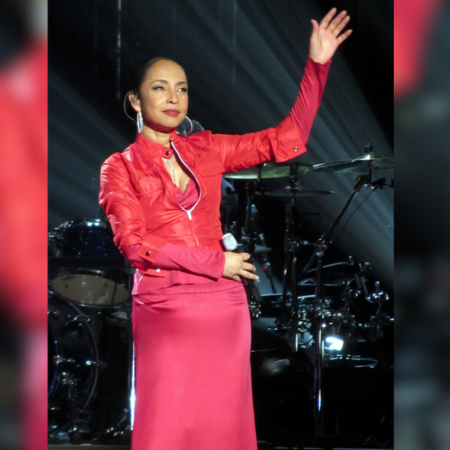
Today marks the 67th birthday of Sade Adu, the voice and frontwoman of Sade, and we are marking it by honoring the full body of work behind her name. While her presence is unmistakable, Sade has always been a band first. A collective built on shared restraint, patience, and long-term vision. What you hear is not just a singer out front, but a unified musical philosophy carried by bass, keys, guitar, rhythm, and silence working together.

Sade Adu’s mystique has never come from disappearance or distance. It comes from musical discipline; knowing when to sing, knowing when not to. That discipline only works because the band around her is equally committed to economy and control.

This is why today’s dive is not a 5-on-5. It is a 6-on-6. Six b-sides and deep cuts that reveal how the band shaped an identity by resisting excess, trusting space, and letting atmosphere do the heavy lifting.

6 Essential Tracks by Sade

1. “Cherry Pie” (Diamond Life , 1984)

Before Sade Adu became shorthand for late-night radio and adult elegance, Sade the band entered the early 1980s British music landscape as a quiet counterforce.

“Diamond Life” arrived during an era of stylistic maximalism, and the group responded with precision. This first cut sets the blueprint. Paul Denman’s bass stays measured. Andrew Hale’s keys leave room to breathe. Stuart Matthewman builds a restrained framework, and Sade Adu sings with observation rather than accusation.

Clarity over spectacle.

2. “War of the Hearts” (Promise, 1985)

If “Diamond Life” was arrival, their sophomore 1985 album release “Promise” was confirmation. The band deepened its commitment to mood as method and authenticated it with a rhythmic musicality that added a layer of sonic sheen to their jazzy and ethereal sound.

Recorded largely at Power Plant Studios in London and produced by the band themselves, “Promise” signaled Sade’s early insistence on creative control and cohesion, privileging atmosphere and emotional tension over radio immediacy. This is where Sade separated themselves from their peers with tracks that presented a complex urgency set amidst love as conflict.

3. “Keep Looking” (Stronger Than Pride, 1988)

By the late 1980s, success was no longer the question. Longevity was. Their next album “Stronger Than Pride” marked a deliberate shift in Sade’s trajectory.

Released in 1988 and largely recorded at Compass Point Studios in the Bahamas, the album resisted the polish and immediacy that had driven the success of “Diamond Life” and “Promise.” The band leaned into more of an exotic sound built more for mood than momentum. It was their most inward-looking record to that point and a clear statement that Sade was uninterested in chasing radio comfort.

This next track sits squarely at the center of that evolution. The lyrics acknowledge uncertainty as a constant rather than a problem to be solved. Musically, Paul Denman’s bass anchors the track, while Andrew Hale’s keys remain submerged and atmospheric.

4. “Like a Tattoo” (Love Deluxe, 1992)

When the band released “Love Deluxe” in 1992, they had fully stepped outside the prevailing direction of contemporary R&B. As the genre leaned toward New Jack Swing and hip-hop-driven production, Sade slowed everything down, thinning their arrangements and widening their thematic scope. Love Deluxe became their most critically revered album and eventually sold more than four million copies worldwide, distinguished by its restraint, emotional weight, and refusal to chase trends.

This next cut sits at the center of that evolution. Influenced by stories Sade Adu encountered from people shaped by war and displacement, the band shifted toward narrative distance and acoustic minimalism. This song unfolds as testimony rather than performance, with sparse instrumentation and no emotional cueing. Sade does not resolve or dramatize the story. She bears witness, trusting the listener to carry the meaning. In that restraint, the band reached a new level of artistic authority. 

5. “Skin” (Soldier of Love, 2010)

The group would release a commercially well-received album “Lovers Rock” in 2000 and would then step away at the height of their influence. Sade Adu would withdraw from public life to focus on family, and the band overall resisted industry pressure to produce quickly, resulting in a full decade without a studio release.

When they returned in 2010 with “Soldier of Love,” the absence gave the music added gravity. The album debuted at No. 1 on the Billboard 200 and reaffirmed the band’s authority. This track reflects that passage of time, confronting desire, regret, and emotional exposure with uncommon directness. Its restrained production places the focus squarely on Sade Adu’s vocal, shaped by experience rather than nostalgia.

6. “Should I Love You” (Unreleased)

To understand Sade fully, you have to look not only at what they released, but at what they chose to hold back. From the beginning, the band operated with collective discipline, treating restraint as part of the art itself. Songs were not issued simply because they were finished. They were released only when they aligned with the band’s emotional economy and long-term vision. That approach is why Sade’s catalog feels curated rather than accumulated, and why absence became a form of authorship rather than retreat.

We’ll end with a song from the early “Diamond Life” era, recorded while the band was still defining its identity and standards. Even at that stage, the song reveals a principle that would carry through their entire career. Love is not assumed. It is questioned.

And there you have it, six songs, six eras and one quiet revolution, on the birthday of Helen Folosade Adu, the lead singer of the band Sade.

If you dig artists who treat soul music as a discipline rather than a trend, who understand restraint as power and atmosphere as language, you are listening to the right place. Keep it locked to The Progressive Underground every Saturday evening at 6 p.m. on WDET 101.9 FM and anytime at wdet.org.

Support the shows you love.

WDET’s unique music programs are dedicated to exploring the music and culture of our region and the world. Keep the music going. Please make a gift today. Give now »

More from The Progressive Underground

The post The Progressive Underground: The Mystique of Helen Folasade Adu and the band Sade appeared first on WDET 101.9 FM.

❌