Reading view

There are new articles available, click to refresh the page.

The Metro: Michigan’s Senate primary has become a proxy war for the Democratic Party’s soul

The Metro is closely watching the race for Michigan’s open U.S. Senate seat.

The Republican side is settled. Former Congressman Mike Rogers, who lost to Elissa Slotkin by less than half a point in 2024, is running again. This time, he wants the seat Gary Peters is leaving behind.

The Democratic side is more complicated. Three serious candidates are competing for the nomination, and the distance between them tells you something about where the party is right now.

Congresswoman Haley Stevens has Chuck Schumer’s endorsement and millions in support from AIPAC. She is running on expanding the Affordable Care Act and working within existing institutions. State Senator Mallory McMorrow wants generational change inside the party — new leadership, new tactics — but within the current system. Physician Abdul El-Sayed is running to the left of both. He wants Medicare for All, the abolition of ICE, and says Democratic leadership has lost touch with its own voters.

They disagree on healthcare. They disagree on immigration enforcement. They disagree on Israel and Gaza, on whether billionaires should exist, and on who should be leading their own party.

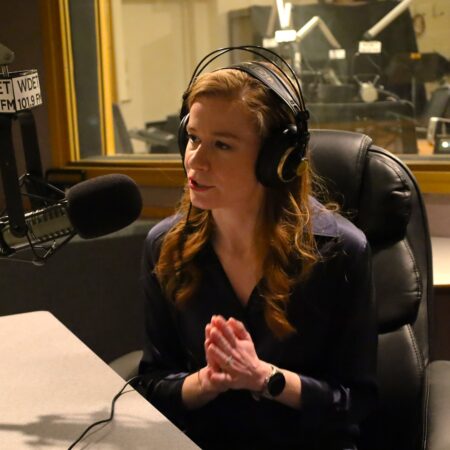
WDET’s Russ McNamara sat down with all three — same questions, same mic — and the answers lay out a party in the middle of an argument with itself. The Metro listened back to that story, then Russ joined Robyn Vincent for some analysis about this moment.

Hear the full conversation using the media player above.

Listen to The Metro weekdays from 10 a.m. to noon ET on 101.9 FM and streaming on demand.

Subscribe to The Metro on Apple PodcastsSpotifyNPR.org or wherever you get your podcasts.

Support the podcasts you love.

One-of-a-kind podcasts from WDET bring you engaging conversations, news you need to know and stories you love to hear. Keep the conversations coming. Please make a gift today.

More stories from The Metro

The post The Metro: Michigan’s Senate primary has become a proxy war for the Democratic Party’s soul appeared first on WDET 101.9 FM.

Differences within Democratic Party separate US Senate candidates

One of the most watched and most expensive U.S. Senate races in the country is happening here in Michigan. Republicans are seemingly running it back with Mike Rogers – who lost to Democrat Elissa Slotkin two years ago.

However, in the race to replace Gary Peters, there’s a trio of Democrats vying for the party’s nomination. Congresswoman Haley Stevens, State Senator Mallory McMorrow, and physician Abdul El-Sayed are all serious contenders.

WDET’s Russ McNamara has talked with the three candidates about issues that separate themselves within the Democratic Party.

Listen: Differences within Democratic Party separate candidates for US Senate

There is a certain ideological split within the Democratic Party that does not exist currently within the GOP. Republicans are either pro-Donald Trump or they lose elections. Democrats are split with more nuance on some policies – but even if it’s just a wiggle, there’s still room. 

Listen to the full individual interviews 

Starting with healthcare

Dr. Abdul El-Sayed has been so vocal about his perspective on healthcare that he wrote a book on it.

“Medicare for All is government health insurance guaranteed for everyone, regardless of what circumstances you’re in,” El-Sayed says.  

“If you like your insurance through your employer or through your union, I hope that will be there for you. But if you lose your job, if your factory shuts down, you shouldn’t be destitute without the health care that you need and deserve so.”

Instead of the government taking on the entire burden of the health care system, Mallory McMorrow prefers a public option. Private insurers stick around, but a government-backed option exists. For her, Medicare For All is a no-go.

“I think it’s too big of a challenge. Admittedly, we are a country of more than 360 million people. When I talk to people all across the state, they don’t say that they want one single system. They say, I want the insurance that works for me,” McMorrow said.  

“I want to be able to see my doctor. I want to be able to go to my pediatrician, and I want it to be affordable. That, to me, requires more options, not fewer.”

For Congresswoman Haley Stevens,  she wants everyone who can be covered under the Affordable Care Act to get covered.  

“I deeply believe that we need to expand the Affordable Care Act,” Stevens said. “We need to protect that and we also need to make the tax subsidies permanent.”

The Republican-led Congress did not renew those tax subsidies. Rates went up and an estimated 1,200,000 fewer people did not enroll in Obamacare this year.

Will you be a good ally?

Since the last election cycle, Republicans have worked to strip transgender Americans of their rights to seek the healthcare they need.

It became a line of attack not only against trans youth, but against Democrats.

For many within the Democratic Party, the steadfast support of the LGBTQ community has shown cracks when it comes to trans rights.

McMorrow says part of the reason why trans folks are a target is that people are looking for someone to blame for a bad economy.

“I fundamentally believe the way forward is that we have to be the party that solves those fundamental problems for people,” McMorrow said. “If we can restore the American Dream and ensure that in Michigan and in the United States, if you work hard, you play by the rules, you can achieve that life that you wanted, then there won’t be this appetite to target and hurt vulnerable kids.”

Congresswoman Stevens has been supportive of the LGBTQ community and has tweeted support saying every American, regardless of their gender identity should feel safe to be their authentic selves. She voted against the anti-trans Protection of Women and Girls in Sports Act earlier this year.

Dr. El-Sayed says Democrats need to be a good ally.

“I believe that rights are rights are rights. And when you assent to somebody taking away somebody else’s rights, you are at some point assenting to somebody coming for yours,” El-Sayed said.

“We have to stand together to fight for our collective rights, even when those rights are rights we may never see ourselves using.”

The fight for trans rights will come up again, with President Trump’s Save America Act attempting to tie restrictions to healthcare for trans people to a bill about adding strict voter ID laws.

Should ICE exist?

Immigration and Customs Enforcement will be a hot topic this year for the midterm elections. ICE agents have killed at least three American citizens in the past year. The government has deported or jailed tens of thousands of immigrants, most with no criminal records.

Before she was fired, Congresswoman Stevens advocated for the removal of Homeland Security Secretary Kristi Noem. “Well, ICE needs to be overhauled. I will tell you that we need to start seeing accountability, and we need a complete overhaul of ICE. And there has been mismanagement from the very top.”

Mallory McMorrow was asked if ICE should exist as an agency.  

 “Yes, and it needs to be vastly reformed. Michigan is a border state. We need immigration and customs enforcement to do the work of what and who comes across the border. That should be its job,” McMorrow said. “Its job should not be to be unleashed on communities, to terrorize people, to go after people whose skin color isn’t exactly right, or who have an accent.”

Abdul El-Sayed believes ICE should be abolished.

 “We can have a safe and secure southern border. We can enforce immigration law, but ICE is not about that. What ICE is about is about a paramilitary force normalizing the use of government power on peaceful streets, in thrall to one man,” El-Sayed said.

Should billionaires exist?

The concentration of wealth at the top has been a growing concern since the Reaganomics era of the mid-to-late 1980s. Now tax rates for corporations and the wealthy have been slashed – while the federal government – and many states – have defunded social programs.

The number of billionaires has tripled in the past 15 years. I asked the candidates if billionaires – from an ethical standpoint – should exist.

McMorrow was unequivocal.

“Yes, I think they can and should exist, and I look at somebody like Mark Cuban as an example. You can be a billionaire without being a jerk,” McMorrow said.

It should be noted that Cuban wrote a blurb praising the State Senator’s book that came out last year.

 El-Sayed says billionaires should be the exception, not the norm.

“I don’t think that our system should be in the business of creating billionaires. I think our system should be in the business of empowering everyday folks to be able to live a life with access to the basic dignities that they need and deserve, good housing, good health care, affordable food,” El-Sayed said.

Haley Stevens says the wealthiest need to pay higher taxes, but didn’t outright say they should be taxed out of existence.  

“Well, we’re not going to be seeing someone like myself do billionaire bidding in the United States Senate. I’ll tell you that much. And tackling where and how billionaires are not paying their fair share needs to get done.”

That’s a good lead into:

Campaign contributions

When it comes to campaign cash, El-Sayed and McMorrow aren’t taking corporate money for the senate run.

McMorrow has taken corporate money in the past. but not this round. The filings with the Federal Elections Commission bear that out.

 “More than half of our donations are from people donating $200 or less,” McMorrow said.

El-Sayed avoided taking corporate dollars in a failed run for Michigan governor in 2018.

“I’m the only person running for US Senate who’s never taken a dime of corporate money to fund a campaign, and that shows up in the ways that I stand up to corporations.”

Congresswoman Stevens has no such hangups and says she will use all avenues to raise campaign money.

 “Well, look, I’m running my campaign in a grassroots way, with individual donors who participate in the democratic process and the way that our country allows,” Stevens said.

Some of that money is coming from AIPAC – the American Israel Public Affairs Committee. Stevens has taken millions from the controversial organization that aides pro-Israel Republicans and Democrats. Earlier this month, as Israel and the U.S. continued to bomb Iran, Stevens appeared in a video for AIPAC.

The war in Gaza

Stevens supports a two state solution for Israel and Palestine.  

 “We need people in Gaza Palestinian people to have dignity and peace, just as we need people in Israel to do so.”

Mallory McMorrow was initially reluctant to criticize Israel’s attacks, but this fall when asked if the tens of thousands of dead Palestinians was tantamount to genocide, McMorrow said “yes,” even if she doesn’t seem comfortable using the term.

 “I am somebody who looks at the videos, the photos, the amount of pain that has been caused in the Middle East, and you can’t not be heartbroken,” McMorrow said. “But I also feel like we are getting lost in this conversation, and it feels like a political purity test on a word—a word that, by the way, to people who lost family members in the Holocaust, does mean something very different and very visceral.”

Abdul El-Sayed has unequivocally said that Israel’s assault on Palestinians – and the role the U.S. has played in supporting it – is genocide.

“I believe in international law,” El-Sayed said. “I want our tax dollars to stop killing children.”

Do Democrats need a change at the top?

Support for the Democratic Party and its leadership are at an all-time low. The party is polling behind artificial intelligence and ahead of Iran.

The biggest complaint is House Minority Leader Hakeem Jeffries and Senate Minority Leader Chuck Schumer aren’t doing enough to push back against the Trump Administration.

Mallory McMorrow says a change at the top is needed and a youth movement needs to happen among Congressional Democrats.

“We need leaders who understand how to engage with people, not as just a number, not as a voter or a donor, but as part of the team,” McMorrow said.

Abdul El-Sayed says stunning defeats in 2024 mean there’s a disconnect between party leadership and its base.

 “I think right now, we are in a place where there is so much profound frustration about the chasm between the Democratic Party writ large and its voters,” El-Sayed said. “And I think any democratic leader who wants to win elections in the future should be less worried about who holds the luxury suite on the top of the Titanic and more worried about getting in the engine room and saving the Titanic, which is where we are.”

Congresswoman Haley Stevens – who has Schumer’s support – sidestepped the question. 

“You’re asking me about the future of the Democratic Party. And there are some people who are running who assume that’s what this race is all about, and I don’t think that’s fair to the people of Michigan,” Stevens said. “I believe that this race is about the future of Michigan.”

Changes to SCOTUS?

The future of the U.S. Supreme Court has come up a lot since the conservative majority overturned Roe v. Wade in 2022. Justices have been a bit inconsistent in their rulings depending on who was president.

Stevens says something needs to change.

“I deeply support ethics reform for the Supreme Court, what seems to look like pay-to-play, the fact that they have a different set of ethics rules, I think it would be more than appropriate, given that the Supreme Court doesn’t have elections and it’s a lifetime appointment,” Stevens said.

McMorrow thinks there needs to be a plan that makes sense both ethically and politically.

 “I am talking to some constitutional experts right now, some judicial experts on whether that means term limits, whether that means oversight, whether it means reforms, or whether it means more justices, I am open to anything to ensure the Supreme Court does its job,” McMorrow said.

El-Sayed has been working on a plan for SCOTUS for a while.

“I proposed a system here that says that every president should have three appointments, every Supreme Court justice should have at least ten years and a possible renewal for another ten years. But what that does is it incentivizes the selection of jurists who want to interpret the Constitution on its own terms,” El-Sayed said.

There are no shortage of issues for candidates in the upcoming elections, and more are sure to pop up along the way. Questions for the primary will be different than those in the general election this fall.

Detroit Public Radio plans to talk with these candidates multiple times over the next few months so our listeners can make an informed decision at the polls.

Trusted, accurate, up-to-date.

WDET strives to make our journalism accessible to everyone. As a public media institution, we maintain our journalistic integrity through independent support from readers like you. If you value WDET as your source of news, music and conversation, please make a gift today.

Donate today »

The post Differences within Democratic Party separate US Senate candidates appeared first on WDET 101.9 FM.

El-Sayed stands alone in Michigan’s Senate race by calling to abolish ICE

The three Democrats vying for Michigan’s open U.S. Senate seat agree that U.S. Immigration and Customs Enforcement has grown increasingly brutal under President Donald Trump, but they are sharply divided over whether the agency can be fixed at all.

The post El-Sayed stands alone in Michigan’s Senate race by calling to abolish ICE appeared first on Detroit Metro Times.

Mallory McMorrow runs for Michigan’s open U.S. Senate Seat

In 2026, voters in Michigan will cast ballots for races involving the office of Governor, Attorney General, and Secretary of State. Gary Peters (D-MI) is opting to retire, so there’s an open U.S. Senate seat.

Democrats have three strong candidates: Mallory McMorrow, Haley Stevens, and Abdul El-Sayed. All three have raised millions of dollars for their campaigns ahead of the August primary.

Over the next few months, Detroit Public Radio will be checking in with the candidates so our listeners can make an informed decision. The focus of this first round of interviews is to set a baseline for the candidates views on policy and what separates them from their competitors.

The series begins with Michigan State Senator Mallory McMorrow.

She talked with All Things Considered Detroit Host Russ McNamara on Jan. 8, 2026.

Listen: Mallory McMorrow runs for Michigan’s open U.S. Senate Seat

The following interview has been edited for length and clarity.

Healthcare access

Russ McNamara, WDET: What’s your plan to fix healthcare?

State Senator Mallory McMorrow: So I come at this from somebody who was an industrial designer, who’s solutions oriented, and our solution needs to be three fold. It needs to be universal. Everybody needs to have health care, no exceptions. It needs to be affordable. You should not be able have to break the bank or go bankrupt for a hospital visit.

So for me, that starts with a real public option, something that will force the private health insurers to compete. And I’m somebody who as a millennial, we’re around the same age, we don’t have the same job security that our parents did.

So having a real public option, there are a few states now who have implemented public options Colorado, Nevada and one other and they are starting to see real cost savings. They are starting to ensure that everybody has coverage. Vermont, on the other hand, as an example, they tried a single payer system and abandoned it 15 years ago after not being able to figure out the payment or the implementation.

RM: Just to kind of clarify on that you’re not in favor of something like Medicare for all. Vermont’s a very small sample size.

MM: I think it’s too big of a challenge. Admittedly, we are a country of more than 360 million people. When I talk to people all across the state, they don’t say that they they want one single system. They say, I want the insurance that works for me. I want to be able to see my doctor. I want to be able to go to my pediatrician, and I want it to be affordable. That, to me, requires more options, not fewer.

Abortion rights and the Supreme Court

RM: If elected as a U.S. senator, what would you do to reinstall abortion rights that were shifted back to the States by the U.S. Supreme Court?

MM: We need to codify abortion access as a fundamental right, the right that was taken away from women after 50 years of precedent with Roe [v. Wade].

I had legislation here in the state of Michigan to ensure that Medicaid covered reproductive rights abortion procedures. That was one of the things that unfortunately didn’t make it through the final version of the Reproductive Health Act. But your income should not determine whether or not you have access to the care that you need if something with your pregnancy goes wrong, and that is something that we need to fix on the federal level, and that I will fight for.

RM: Does that level of fight include eliminating the filibuster for abortion rights?

MM: Yes.

RM: Does that include packing the Court and increasing the number of justices?

MM: We have to fix the Supreme Court. I am open to any conversation on how we do that. The Supreme Court was supposed to be an independent arbiter of the Constitution. Very clearly they are not. They are now bending at the whims of this President, handing this president effectively immunity to do whatever the hell he wants. So I am talking to some constitutional experts right now, some judicial experts on whether that means term limits, whether that means oversight, whether it means reforms, or whether it means more justices. I am open to anything to ensure the Supreme Court does its job.

Affordability and wealth inequality

RM: The top one percent in this country control a third of the wealth in this country. That’s doubled since 1990. What is your plan to address the wealth gap?

MM: The average home buyer now is in their 40s. We have our population aging and declining in the state of Michigan, I talked to a lot of people who say they want to start a family. They cannot fathom how they would be able to afford to do that. So the biggest thing that we have to do is address income inequality, and one of the provisions that I just put into a piece of legislation in Lansing would prohibit companies from pursuing stock buybacks if they were to receive a state incentive. This was on the transformational brownfield legislation. We have companies continuing to pad their shareholders bottom lines instead of paying their employees. We need to raise wages. We need to create incentives so that companies are not paying their CEOs 100 times, 200 times, 300 times the average wage of their worker, and instead encourage companies to be better corporate citizens.

RM: Quick yes or no: Should billionaires exist?

MM: Yes, I think they can and should exist. And I look at somebody like Mark Cuban as an example. You can be a billionaire without being a jerk. This is somebody who goes out and says very publicly that this country, the infrastructure of this country, the educational system of this country, gave him the platform he needed to be successful. And he’s out there trying to bring medication costs down. Cost Plus drugs, I think is something that we should be taking a real hard look at it.

But you don’t need to be an Elon Musk to do it. I mean, you listen to this man who wants to become a trillionaire, trillionaire with a T, and his vision of the future is so dark and dystopian that he wants to abandon the earth and go to Mars. You should be successful in this country if you work hard, you play by the rules, but you should also be able and be forced to give back so that the next person has the same chance you did.

AI in Michigan

RM: Utilities and tech companies are pushing AI. Americans are a bit more skeptical. How do you reconcile resources required for data centers with the need to address climate change?

MM: Michigan has an opportunity to be the first state to do this right. There are some states and some companies that are getting this very wrong. And for data centers and for utility companies who are jacking up residence rates for these things to come online, they have every right to be angry.

You know, I just mentioned Elon Musk. You look at Colossus down in Memphis, that is an example of a company and a man doing everything wrong where rates are growing going up. The air quality in the surrounding neighborhood has become almost unlivable. People have asthma and they feel like they did not have a choice for what this company decided to do.

Now here in Michigan, we started by passing legislation that for a data center company to receive an incentive, they must ensure that rate payers are not subsidizing the cost of that data center. They must use at least 90% renewable energy to power that data center, and they need to be responsible with their water. That is a good start for us. I think any data center should be built with unionized labor. We need to make sure that these are good jobs. We need to make sure that it does not use Michigan’s water, that it has a closed source system that does not drain the Great Lakes or harm our water system, we need to ensure that it is bringing more renewables onto the grid.

If we do this right, we can encourage these companies and these investments to force the grid infrastructure upgrades that we have been so desperately needing for decades now in a way that can actually help create jobs and opportunity.

Finding a cure to fearmongering

RM: For the past few years, Republicans and conservative media have made it a priority to attack trans people, whether it’s trans kids playing sports, serving the military, and making their own health care decisions. What is your plan to support one of the most marginalized and at-risk segments of the population?

MM: Look for people who got to know me, maybe for the first time outside of my district and outside of Michigan, it was for a speech that I gave from the Senate floor in a moment when Republicans in our state were targeting and demonizing kids, and I am never going to run away from that. You know, whether or not a fifth grader wants to play soccer with her friends, doesn’t have any indication as to your future and your ability to start a business or raise a family.

And what the Republicans have done an incredible job of doing is by playing on people’s rightful anger and fear that they are not doing as well as they had hoped or as well as their parents did, and instead of actually solving those problems for people, they’re finding somebody to blame. First it was immigrants, then it was DEI [diversity, equity, inclusion] then it was trans kids. It is a smaller and smaller group of people.

And I fundamentally believe the way forward is that we have to be the party that solves those fundamental problems for people. If we can restore the American Dream and ensure that in Michigan and in the United States, if you work hard, you play by the rules, you can achieve that life that you wanted, then there won’t be this appetite to target and hurt vulnerable kids.

If we can restore the American Dream and ensure that in Michigan and in the United States, if you work hard, you play by the rules, you can achieve that life that you wanted, then there won’t be this appetite to target and hurt vulnerable kids.

I am really proud of the work that I’ve done in the state senate to expand Elliott Larson [Civil Rights Act] to ensure that you cannot be fired, you cannot lose housing because of who you are, how you identify or who you love. But obviously people are under attack right now, and we can’t run away from that, but we have to be very clear in telling Michiganders and Americans that this man and these Republicans don’t care about you either. They’re not doing anything to fix your problems, and you targeting a marginalized community isn’t going to make your life any better.

ICE immigration raids

RM: Immigration and Customs Enforcement has been terrorizing immigrant communities since its inception, all in the name of safety and fighting crime. That has been turned up a considerable amount since President Trump took office last year. This week, an ICE agent shot and killed a woman in Minneapolis. Bluntly, should ICE exist?

MM: Yes, and it needs to be vastly reformed. Michigan is a border state. We need Immigration and Customs Enforcement to do the work of what and who comes across the border. That should be its job. Its job should not be to be unleashed on communities to terrorize people, to go after people whose skin color isn’t exactly right, or who have an accent.

Right now, we have masked vigilantes who are being unleashed across the country, being recruited into these jobs with no experience, who are high on their own power, who are throwing American citizens in vans, deporting them. As we saw, as you mentioned, in Minneapolis this week, an American citizen is dead because she stopped her car. There is no justification for that use of force. And the U.S. Senate needs to do its job of oversight of a full investigation of what happened, not only here, but across the country, and then to reform this agency so it actually does the job of Immigrations and Customs Enforcement and not terrorizing Americans and immigrant communities.

Israel-Palestine conflict

RM: In October, you characterized the deaths of tens of thousands of Palestinians at the hands of Israeli military as genocide. Have you changed that stance at all?

MM: I am somebody who looks at the videos, the photos, the amount of pain that has been caused in the Middle East, and you can’t not be heartbroken. But I also feel like we are getting lost in this conversation, and it feels like a political purity test on a word—a word that, by the way, to people who lost family members in the Holocaust, does mean something very different and very visceral, and we’re losing sight of what I believe is a broadly shared goal among most Michiganders, that this violence needs to stop, that a temporary cease fire needs to become a permanent cease fire, that Palestinians deserve long term peace and security, that Israelis deserve long term peace and security, and that should be the role of the next U.S. senator, particularly in this primary.

We’ve got some candidates who are using this as a political weapon and fundraising off of it, and I think that that is just losing the humanity of what we’re seeing in the Middle East. And we deserve better.

RM: Should the US be giving money, weapons, military aid to Israel if they are indeed running a genocidal regime?

MM: We need to use the leverage that we have. You know, I came out in support of the Sanders resolution that would have blocked offensive weapon sales to Israel, and the more that Netanyahu pushes into Gaza, the worse this gets. And to be very clear, being in support of Israelis is not being in support of Netanyahu, in the same way that being in support of Palestinians is not the same as being in support of Hamas. And centering the humanity of what we see on the ground, and especially being sensitive to how many Michiganders are directly impacted by the impacts of the Middle East, is where we need to be.

So we need to use the leverage that we have as the United States as an ally to ensure that this war ends and that the ceasefire is a permanent ceasefire.

Campaign funding

RM: You’ve said you will not be taking campaign money from AIPAC, the powerful pro-Israel lobby. Where is the money in your campaign coming from?

MM: So far to date, we have outraised every other candidate on both sides of the aisle, and it is with zero corporate PAC dollars, and it is from people. We have raised more than $3.9 million for more than 60,000 individual donors. More than half of our donations are from people donating $200 or less. That is significantly more than any of the other candidates. In fact, I’ve got more grassroots support than my two Democratic opponents combined.

So it is by people, people who are donating $5 and $10 people who are donating what they can all across the country, and I am incredibly proud of that.

RM: So you’re turning away corporate money?

MM: Yes, no corporate PAC dollars at all.

Trusted, accurate, up-to-date.

WDET strives to make our journalism accessible to everyone. As a public media institution, we maintain our journalistic integrity through independent support from readers like you. If you value WDET as your source of news, music and conversation, please make a gift today.

Donate today »

The post Mallory McMorrow runs for Michigan’s open U.S. Senate Seat appeared first on WDET 101.9 FM.

❌