Reading view

There are new articles available, click to refresh the page.

Detroit Evening Report: MDHHS offers stipends for behavioral health interns

The Michigan Department of Health and Human Services is offering stipends for interns enrolled in a behavioral health bachelor or master’s program. MDHHS is allocating $1.25 million for the program.  

MDHHS Director Elizabeth Hertel says the funding supports mental health care workers. The Behavioral Health Internship Stipend Program is in its fourth cohort, which supported 159 students last year. The program offers money to students for unpaid internship costs such as tuition, fees, and living expenses. 

Students pursuing degrees in marriage or family therapy, behavioral analyst,  social workers and counselors are eligible to apply for the one-time stipend ranging from $5 to $15,000 each.

Applications close tonight.

Additional headlines for Monday, Jan. 26, 2026

Radon Action Month

January is Radon Action Month. Radon is an odorless, colorless, and tasteless radioactive gas that’s found in soil. It’s naturally created through the breakdown of uranium in soil around homes.

The gas can cause lung tissue damage through radiation, making it the leading cause of lung cancer in nonsmokers. 

Michigan’s Department of Environment, Great Lakes, and Energy recommends testing homes every two years for exposure. People can pick up a testing kit from their local health department.    

Al-Ikhlas Director Nadir Ahmad passes away 

Detroit’s Al-Ikhlas Training Academy’s Director and Founder, Imam Nadir Ahmad passed away on Jan. 22. His funeral was held on Saturday.

In 2020, the Dream Storytelling oral history project interviewed Ahmad. He told the archive he moved from Virginia to Detroit to study Islam at the Wayne County Community College as part of the Muslim World Studies Program in 1980.  Ahmad taught at the Clara Muhammad School in Detroit, later serving as assistant principal and then principal. Ahmad founded the Islamic school Al-Ikhlas Training Academy in Detroit in 1991.

Community members and current and former students posted several comments on Facebook, sharing memories and commemorating the educational leader as someone who defined an era in Detroit. Ahmad was also a U.S. military veteran.  

ProsperUs Detroit hosts training program

ProsperUs Detroit is hosting an Entrepreneur Training Program for the Spring of 2026. The 12-week program provides one-on-one support for businesses to learn how to register their business, create budgets and systems for bookkeeping. The group will also learn how to write a business plan.

Participants will also study business models, target markets, and finances. Applications are due by Feb. 1. 

Outlier and Detroit-ography host trivia

The Outlier Collective is hosting a trivia event next month. Test your knowledge of Detroit with Outlier Media’s Civic Life Reporter Briana Rice and Detroit-ography’s Alex B. Hill.

Editor’s note: Corrected Al-Ikhals Director Nadir Ahmad’s title, from Dr. to Imam 1/27/26. We apologize for the error.

Tickets are $5 a person. The event is being hosted by Outlier Media and Detroit-ography at the Brewery Faisan on Feb. 4 from 6:30-9 p.m. Register at outliermedia.org/our-events/.   

Listen to the latest episode of the “Detroit Evening Report” on Apple Podcasts, Spotify, NPR.org or wherever you get your podcasts.

Support local journalism.

WDET strives to cover what’s happening in your community. As a public media institution, we maintain our ability to explore the music and culture of our region through independent support from readers like you. If you value WDET as your source of news, music and conversation, please make a gift today.

The post Detroit Evening Report: MDHHS offers stipends for behavioral health interns appeared first on WDET 101.9 FM.


New book examines equitable degrowth as necessary to combat climate change

How does a global community provide for the needs of its citizens without destroying the planet? That’s the crux of “Anthropause: The Beauty of Degrowth,” a new book out this month.

In the early days of the Covid-19 pandemic, society shut down for a few months. As humans stayed inside, animals returned to their old habitats and pollution eased as industry slowed.

Stan Cox, author of “Anthropause: The Beauty of Degrowth”

Retired researcher—and new metro Detroit resident—Stan Cox looks at how that “anthropause” could be a preview of the necessary societal changes to save lives and the planet.

He spoke with All Things Considered – Detroit host Russ McNamara last month. Click on the media player to listen or read selected transcripts below.

Listen: New book examines equitable degrowth as necessary to combat climate change

Russ McNamara, WDET: Why did you write this book?

Stan Cox, Author: The main point I’m making in the book is imagining that we as a society, if we were to rapidly phase out fossil fuels and get by just on the energy that could be generated other ways; and if we stopped plundering the earth for minerals and cutting down forest and causing ecological damage; and we had less energy and materials, and had to allocate them carefully: people know that’s going to mean sacrifice. What am I going to have to give up and so forth?

And what I’m saying in the book is okay, yeah, there are certain things, obviously that will have to be given up. But let’s consider all of the dangers and nuisances, terrible stuff that we put up with an advanced industrial society that has all this energy and materials running through it.

We would be saying goodbye to a lot of those harms and ills by simply not doing a lot of the stuff that requires so much energy input. So the rest of the book, then, is going through specific technologies and activities and so forth that are really harmful to people and the environment, of course, that we would not have the fuel to undertake them, or we would be using resources for meeting people’s basic needs, and we wouldn’t be spending a lot of energy on these other things.

RM: You discuss this and I’m reminded of data centers to run artificial intelligence. People certainly don’t seem to want them and definitely don’t want these in their backyard because there is this concern about the high cost of electricity, and the amount of groundwater that is needed.

SC: That’s absolutely right. One of the big reasons these communities don’t want them is that they create this horrific noise at very high decibel levels and low low frequency noise, which is especially dangerous to human health. When I started writing the book, there wasn’t as much being said about A.I. and the data centers at that time, so I did eventually incorporated them, but the beginning of the second chapter is about noise pollution and and I just used it. It’s seemingly a very small thing, but it really brings out other issues. The leaf blower, especially the gas powered leaf blower, also produces this low frequency and very high volume sound—about eight times the decibel level that the World Health Organization says is safe – and they’re producing a wind about the speed of an EF five tornado. The low frequency sound can travel like three football fields. It’s still above the safe limit.

RM: So what are the societal impacts? Let’s say we start degrowth right now. What are the benefits?

SC: We can’t go on like we’re on the trajectory that we’re on now, because. A degrowth is going to happen. Either a chaotic, brutal degrowth where it’s a Mad Max kind of future, because we’ve tried to force growth to continue and have destroyed ecosystems

Or we can have a planned, rational degrowth that ensures that there’s enough for everybody and that we’re not causing ecological collapse. But there’s no way that growth can continue at this rate.

Sometime in the past three years, we passed a milestone. The quantity of human made stuff—that is everything that human society has manufactured or built or produced—if you weigh all of it up, the mass of all of that exceeds the total mass of all living things on Earth, all plants, animals, microbes, et cetera, and that quantity of stuff being produced is is doubling every 20 years. And clearly that can’t go on.

Herb Stein, an economist from the 70s or 80s was kind of the Yogi Berra of economists. He had a line: “if something can’t go on forever, it won’t” and that’s where growth cannot go on forever. So we have to pull back, create what I called in the book an “anthropause” of our own, and try to have a rational, safe and just reduction in the amount of economic activity for the good of everybody.


Support local journalism.

WDET strives to cover what’s happening in your community. As a public media institution, we maintain our ability to explore the music and culture of our region through independent support from readers like you. If you value WDET as your source of news, music and conversation, please make a gift today.

The post New book examines equitable degrowth as necessary to combat climate change appeared first on WDET 101.9 FM.

The Metro: A new superintendent, a long list of expectations for Michigan schools

Michigan’s schools are increasingly tasked with more than teaching.

They are expected to raise reading and math scores, address rising mental health needs, manage technology and discipline, and serve as safe, stable places for families under stress. In some communities, they’re also absorbing fear sparked by immigration enforcement actions. That includes the detention of Detroit students seeking asylum.

Academically, the picture is mixed. On national exams, Michigan’s scores remain close to the U.S. average. But since the pandemic, other states have improved more quickly, especially in early reading. Michigan has moved more slowly, and over time, that difference adds up.

Meanwhile, chronic absenteeism is improving, but many students, especially in Detroit, still miss school regularly.

The state has increased funding and continued free school meals. Educators say those steps help. They also say long-standing challenges persist in special education, staffing, and student support.

This is the landscape facing Michigan’s new top education official.

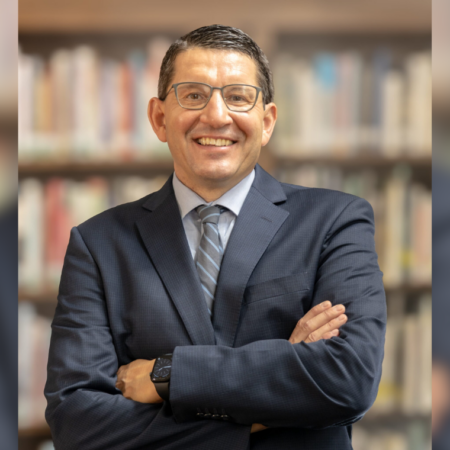
Dr. Glenn Maleyko was sworn in last month as State Superintendent of Public Instruction. He steps into the new role after nearly a decade leading Dearborn Public Schools. He has identified literacy as his priority and launched a statewide listening tour.

The Metro’s Robyn Vincent sat down with Maleyko to learn how he plans to lead a system being asked to do more than it was designed to handle.


Listen to The Metro weekdays from 10 a.m. to noon ET on 101.9 FM and streaming on demand.

Subscribe to The Metro on Apple Podcasts, Spotify, NPR.org or wherever you get your podcasts.

Trusted, accurate, up-to-date.

WDET strives to make our journalism accessible to everyone. As a public media institution, we maintain our journalistic integrity through independent support from readers like you. If you value WDET as your source of news, music and conversation, please make a gift today.

Donate today »

More stories from The Metro

The post The Metro: A new superintendent, a long list of expectations for Michigan schools appeared first on WDET 101.9 FM.

Detroit Evening Report: Dearborn receives firearm safety grant

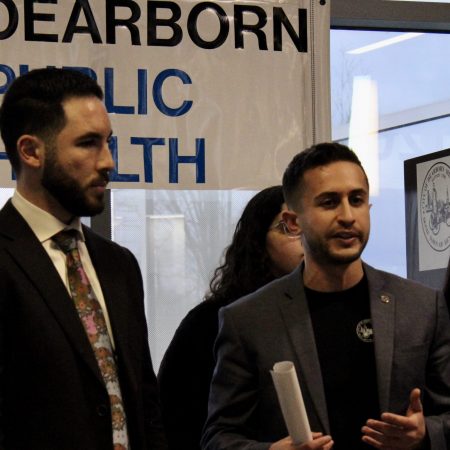
Dearborn’s Department of Public Health has been awarded a $101,000 grant to advance firearm safety. The Michigan Department of Health and Human Services funding supports collaborative efforts to educate gun owners on safe handling and storage. 

Dearborn Mayor Abdulllah Hammoud says firearm injury prevention is a public health and safety priority. 

The city’s health department will distribute firearm safety kits, including gun locks, lockboxes, and educational materials.  Dearborn Chief Public Health Officer Ali Abazeed says the grant supports evidence-based education and access to safety tools. 

Additional headlines for Monday, Dec. 22, 2025

Michigan Chief Medical Executive makes Standing Recommendation regarding children’s vaccines 

Michigan’s Chief Medical Executive, Dr. Natasha Bagdasarian, made a Standing Recommendation to continue issuing vaccinations on schedule based on recommendations by the American Academy of Pediatrics (AAP) and the American Academy of Family Physicians (AAFP). 

Bagdasarian shared that public health experts are not in agreement with new federal vaccine recommendations, prompting the announcement. One of the recent changes was dropping the Hepatitis B vaccine at birth and removing the COVID-19 vaccine recommendation for healthy children and pregnant women. 

Bagdasarian’s Standing Recommendation was made with the Michigan Department of Health and Human Services’ Division of Immunization. 

She says the recommendation does not supersede clinical judgment. She also asks health care providers to make vaccines accessible by removing barriers for patients. 

Bagdasarian says vaccines keep people safe and potentially save lives. 

EGLE renews license for hazardous waste facility 

The Michigan Department of Environment, Great Lakes, and Energy (EGLE) has renewed the license for a hazardous waste treatment and storage facility in Detroit for the next 10 years.

Hazardous Waste Management Facility Operating License to EQ Detroit Inc., which does business as US Ecology Detroit South, was issued the license after regulatory review and a public comment process. Several people strongly opposed the facility because it emits strong odors leading to health concerns like asthma. The facility also has a history of clean air violations. 

EGLE renewed the license, adding new requirements, such as expanding air and groundwater monitoring. The facility must replace six tanks beginning in January 2026 and install odor control equipment by the end of Dec 2027.

Tunnel in southwest Detroit 

The Great Lakes Water Authority has started building a sewage relief system near the Rouge River in Southwest Detroit. Crews will spend at least two years digging a tunnel to carry excess stormwater to an underused retention and treatment center. Chief Operating Officer Navid Mehram says the $87 million project should reduce the risk of flooding and sewage backups during heavy rain. 

So this is an example where we’re making an investment in our existing system by rerouting some flows, so that we can leverage an existing facility that wasn’t receiving all the flow it can treat.”

Mehram says the project will not increase customers’ sewage bills. He says state and federal funding will help pay for the tunnel. 

New tech firm in town 

Detroit is getting a new high-tech security and AI solution firm, Eccalon. The defense tech company will create 800 new jobs ranging from $25-100 per hour. 

The facility will have manufacturing operations, training programs and an innovation center. 

The company’s headquarters is moving from Maryland to become a part of the tech innovation in Detroit. Eccalon will be located at the Bedrock-owned Icon building at 200 Walker Street. 

Eccalon Chairman and CEO André Gudger says the new headquarters will develop cybersecurity and advanced manufacturing and automation. 

The company hopes to open early next year. 

Listen to the latest episode of the “Detroit Evening Report” on Apple Podcasts, Spotify, NPR.org or wherever you get your podcasts.

Support local journalism.

WDET strives to cover what’s happening in your community. As a public media institution, we maintain our ability to explore the music and culture of our region through independent support from readers like you. If you value WDET as your source of news, music and conversation, please make a gift today.

The post Detroit Evening Report: Dearborn receives firearm safety grant appeared first on WDET 101.9 FM.
Experts say Warren police broke the law in brutal beating of mentally ill man

Civil rights attorneys, former law enforcement officials, and mental health experts tell Metro Times that the Warren Police Department’s handling of 26-year-old Christopher Gibson was not only unnecessary but, according to several experts, it was illegal and should have led to charges.

The post Experts say Warren police broke the law in brutal beating of mentally ill man appeared first on Detroit Metro Times.

❌