Reading view

There are new articles available, click to refresh the page.

DNR makes progress in months-long ice storm cleanup

The Michigan Department of Natural Resources has cleaned up most of the tree damage from last winter’s historic ice storm in the northern Lower Peninsula.

But crews are not done yet.

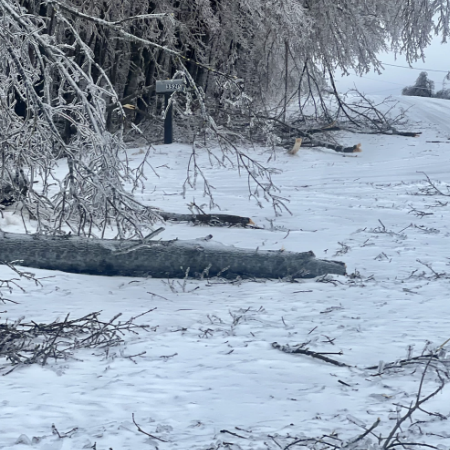
Many broken limbs still dangle from treetops, while fallen branches block backroads in many counties.

DNR fire management specialist Nate Stearns says debris shut down more than 3,000 miles of state forest roads at one point. Since then, they have fully or partially reopened most of them.

“We’re at 366 miles of impassable roads and 169 miles of partially closed roads, so we’ve made some really good progress,” he says.
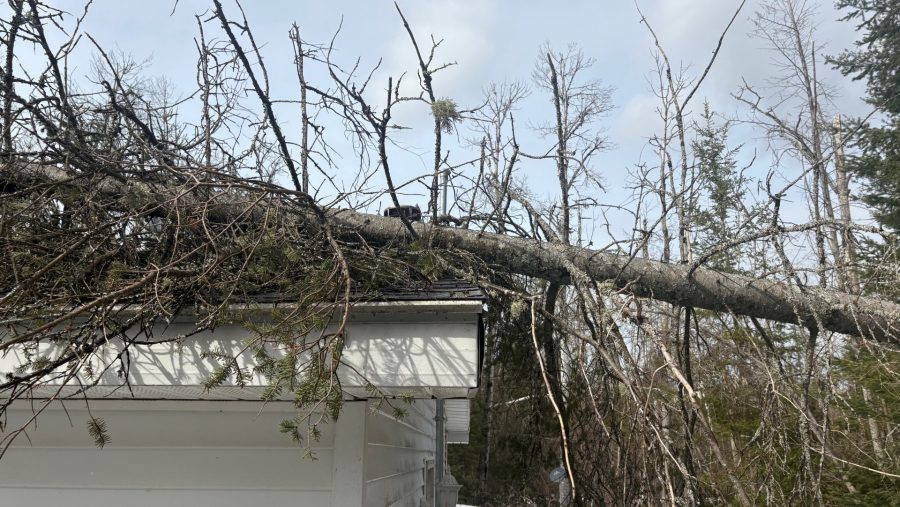
A tree rests on the roof of a house in northern Michigan.

Fire danger looms in 2026

Fallen timber remains on the ground in some hard-to-reach areas, providing potential fuel for wildfires. Stearns says that hasn’t been a problem this year, but it could cause trouble next spring.

“As that dries out and starts to decay, it’ll be like tinder for starting a campfire,” he says. “And any fire that does start on state land could give responders a more difficult time with access and fire intensity.”

Stearns says property owners in the northern Lower Peninsula and the eastern U.P. should consider composting or chipping wood debris instead of burning it. He says that will reduce the risk of wildfires.

More work to do

The DNR took a break from cleanup during Michigan’s firearms deer hunting season. But crews will try to pick up as much debris as they can before heavy snow forces them to wait until the spring to resume.

The ice storm also caused widespread power outages in 12 counties. The Federal Emergency Management Agency granted Gov. Gretchen Whitmer’s initial request for disaster aid. In October, she asked for more assistance, but FEMA rejected it.

Trusted, accurate, up-to-date.

WDET strives to make our journalism accessible to everyone. As a public media institution, we maintain our journalistic integrity through independent support from readers like you. If you value WDET as your source of news, music and conversation, please make a gift today.

Donate today »

The post DNR makes progress in months-long ice storm cleanup appeared first on WDET 101.9 FM.
Older adults should take extra precautions during extreme heat this summer

Michigan has seen some extreme weather the past few weeks, with temperatures rising recently into the upper 90s and a heat index pushing 100 degrees.

Older adults are more susceptible to heat exhaustion or heat stroke during these periods of extreme heat.

Temperatures are expected to remain high this week in metro Detroit. The National Weather Service is projecting a high of 88 degrees on the Fourth of July, and a high of 94 degrees over the holiday weekend. 

Dr. Pragnesh Patel, chief of the Division of Geriatrics at Wayne State University and the Detroit Medical Center, says older adults are some of the most vulnerable to becoming ill from extreme heat.

“With aging, there are changes, and they have multiple comorbid conditions that can put them at risk from higher temperature,” he said. “That can lead to some serious consequences if they don’t take precautions.”

Some of these illnesses include heat exhaustion, which can then lead to heat stroke, a dangerous condition where the body can no longer control its temperature’

Symptoms of heat stroke:

  • Confusion, slurred speech
  • Hot, dry skin
  • Absent or profuse sweating
  • Very high body temperature
  • Loss of consciousness 
  • Fatal if treatment delayed

Heat exhaustion symptoms include headaches, dizziness, lightheadedness, cramps and elevated body temperature. Patel says in addition to these symptoms, people with heat stroke can run a high fever of 104 degrees or more and not perspire.

“Despite the excessive high temperatures, you’re not able to dissipate that heat through the sweating mechanism. And they also become very confused, become disoriented, have rapid heartbeat, palpitations and shallow breathing — just a severe form of exhaustion,” he said.

Heat stroke is the most serious heat-related illness, according to the Centers for Disease Control and Prevention. If left untreated, it can cause permanent disability or death.

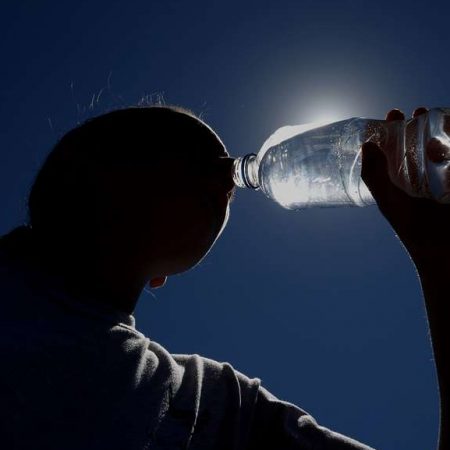
Staying hydrated is among the best ways to prevent heat-related illnesses. Patel says older adults should stay hydrated even if they may not feel thirsty. He also suggested that people stay indoors in cool areas, wear lighter, loose-fitting clothing, and reduce caffeine intake.

He says older adults are often hospitalized for dehydration, which is why they should take extra precautions during extreme heat events.

“They come with symptoms of heat stroke, and a lot of older folks are susceptible to this because they also have other conditions, or they may be taking medications that puts them at higher risk,” Patel said.

People can call 2-1-1 or their local health department to find a nearby cooling center.

Trusted, accurate, up-to-date.

WDET strives to make our journalism accessible to everyone. As a public media institution, we maintain our journalistic integrity through independent support from readers like you. If you value WDET as your source of news, music and conversation, please make a gift today.

Donate today »

The post Older adults should take extra precautions during extreme heat this summer appeared first on WDET 101.9 FM.

❌