Reading view

There are new articles available, click to refresh the page.

Michigan website’s live severe weather coverage gains followers

Michigan has seen 22 confirmed tornadoes 2026, including three in Metro Detroit.

The National Weather Service has issued more than 50 tornado warnings statewide this year. Joel Fritsma has tracked every one of them online.

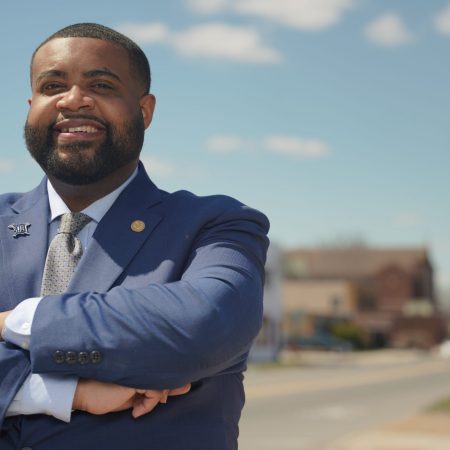
Fritsma is the chief meteorologist for Michigan Storm Chasers. The website launched in 2022 and hired Fritsma straight out of Central Michigan University, where he studied meteorology. He says their goal is to fill communication gaps between NWS and the public so people watching online have time to take shelter. 

“Every time there’s a severe thunderstorm warning or a tornado warning in the state, we’d be covering it live,” he says. “Since 2024, we haven’t missed a single warning.”

It’s “go” time

Fristma says he and his team start live streaming as soon as the weather service issues its first warnings for any severe event. And they don’t stop until the last warning comes out.

“Sometimes, it’s upwards of 10 to 11 hours,” he says. “It just depends on how long the storms want to go.”

Joel Fritsma is the chief meteorologist for Michigan Storm Chasers

And it doesn’t matter what time it is. Fritsma was live streaming when a brief tornado hit Lincoln Park between 2 and 3 a.m. on April 15. He doesn’t mind.

“I kind of like taking the night shift,” he says. “We always have at least one person on call throughout the day.”

Fristma says when the weather is fine, he’s still working full-time.

“We’re looking at the forecast multiple days in advance,” he says. “We host live streams prior to an event so that people can ask questions.”

A lot of people tune in

Fritsma says the website’s staff has grown from a handful of people to about 30 since 2022. And he says its audience has grown, too.

“We have over a million followers between all of our platforms,” he says. 

People can watch and interact with the live streams on Facebook and YouTube. And soon, they’ll be able to download a new mobile app.

Fritsma says the app will allow followers to get live streams on their phones and let them report storm damage.

“We have Messenger, we have Discord, there’s so many options,” he says. “And that information will be very crucial when we send it to the National Weather Service.”

The app is set to launch this summer.

Trusted, accurate, up-to-date.

WDET strives to make our journalism accessible to everyone. As a public media institution, we maintain our journalistic integrity through independent support from readers like you. If you value WDET as your source of news, music and conversation, please make a gift today.

Donate today »

The post Michigan website’s live severe weather coverage gains followers appeared first on WDET 101.9 FM.

The Metro: Confidence is at a record low. So why is metro Detroit launching businesses in droves?

If it feels like everyone you know is stressed about money right now, the numbers back you up. This spring, U.S. consumer confidence fell to its lowest level ever, dragged down by gas prices and tariffs. Here in metro Detroit, unemployment is running nearly a point above the national rate, and small business owners are gloomy — just 28% think the economy is in good health.

So here’s the puzzle: At the same time, Michiganders are starting businesses at a furious pace — more than 40,000 new business applications in the first three months of this year, up 25% from a year ago. People say the economy scares them, yet they are betting on themselves anyway.

Mark Lee has spent his career advising small businesses across southeast Michigan, and he started his own company in January 2008, right as the last recession hit. He joined Robyn Vincent on The Metro to discuss if these new business owners are jumping or being pushed.

Hear the full conversation using the media player above.

Listen to The Metro weekdays from 10 a.m. to noon ET on 101.9 FM and stream on-demand.

Never miss an episode — subscribe to The Metro on Apple Podcasts, Spotify, YouTube, NPR, or wherever you get your podcasts.

Support the podcasts you love.

One-of-a-kind podcasts from WDET bring you engaging conversations, news you need to know and stories you love to hear. Keep the conversations coming. Please make a gift today.

More stories from The Metro

The post The Metro: Confidence is at a record low. So why is metro Detroit launching businesses in droves? appeared first on WDET 101.9 FM.

The Metro: Why homes are built more quickly in West Michigan — and what the rest of the state can learn

Michigan is facing a serious housing shortage, with experts estimating the state needs to build nearly 100,000 homes.

Outdated zoning laws hinder the creation of diverse, mixed-use neighborhoods, and lengthy permitting processes slow new developments. Additionally, ongoing shortages of construction workers and building materials make it even harder to add new housing units. As a result, many new developments cater to wealthier residents, leaving residents struggling to find affordable options.

Joe Agostinelli, founder of Miller Johnson Growth Advisors, believes better financing and strong partnerships between local leaders and developers are key to expanding Michigan’s housing supply. His team is developing a new riverfront project in Grand Rapids featuring a mix of offices, apartments, and condos. Agostinelli says that city and the broader Kent County area have been able to develop homes faster than places in metro Detroit.

The Metro’s Sam Corey spoke with Agostinelli at the annual Mackinac Policy Conference to discuss how his group is trying to build homes quickly in an environment that often moves slow. 

Hear the full conversation using the media player above.

Listen to The Metro weekdays from 10 a.m. to noon ET on 101.9 FM and streaming on-demand. Never miss an episode — subscribe to The Metro on Apple Podcasts, Spotify, YouTube, or NPR or wherever you get your podcasts.

Support the podcasts you love.

One-of-a-kind podcasts from WDET bring you engaging conversations, news you need to know and stories you love to hear. Keep the conversations coming. Please make a gift today.

More stories from The Metro

The post The Metro: Why homes are built more quickly in West Michigan — and what the rest of the state can learn appeared first on WDET 101.9 FM.

The Metro: How government inefficiency hampers population growth in Michigan

In Michigan, we have many needs: higher-paying jobs, better educational outcomes, and more public transit. Above all, we need more people. 

A lot is at stake. Even if your neighborhood feels bustling, when Michigan’s population stops growing, the state actually shrinks in all the ways that matter. Since 1970, we’ve lost a seat in Congress after every census, and those same population counts decide how hundreds of billions in federal funding are divided. That means less money for roads, water systems, housing, and more. As baby boomers retire, our workforce is shrinking, and Michigan has lost 93,000 workers just since last spring. Fewer people here means less political power, fewer resources, and a smaller tax base to pay the bills.

Michigan’s leaders agree — we need to attract more people to our state. Yet one central question remains: how do we make it happen, and who is responsible for leading the way? Some are trying to answer that question. The state of Michigan has a growth office. The City of Detroit has an initiative to grow its population. 

Jeff Donofrio is a leader in the population growth space. He’s the president and chief executive officer of Business Leaders For Michigan. He’s written about this topic in several reports, and he’s worked for the City of Detroit and the State of Michigan to resolve the problem.

He believes we need to reform teaching.“It’s about making sure that [students are] engaged and can do stuff besides passing a standardized test,” says Donofrio.

He joined host Robyn Vincent on The Metro to explore how government culture needs to change to build more housing, create better regional transit, and to ultimately attract more people to the state.

Hear the full conversation using the media player above.

Listen to The Metro weekdays from 10 a.m. to noon ET on 101.9 FM and streaming on-demand. Never miss an episode — subscribe to The Metro on Apple Podcasts, Spotify, YouTube, or NPR or wherever you get your podcasts.

Support the podcasts you love.

One-of-a-kind podcasts from WDET bring you engaging conversations, news you need to know and stories you love to hear. Keep the conversations coming. Please make a gift today.

More stories from The Metro

The post The Metro: How government inefficiency hampers population growth in Michigan appeared first on WDET 101.9 FM.

Transportation advocates tour transit systems across the state

Transportation Riders United (TRU) is forming a statewide coalition to advocate for better transit options throughout Michigan called Move MI.

The Detroit-based group toured the state on their Around the Mitten Transit Tour, visiting and riding public transit in 16 cities.

TRU Executive Director Megan Owens spoke with WDET’s Bre’Anna Tinsley about the tour and the issues other transit systems face.

Listen: Transportation advocates tour transit systems across the state

The following interview was edited for time and clarity.

Executive Director Megan Owens: TRU has worked for 25 years now in the metro Detroit area. And we know a lot about the benefits and the challenges of public transportation in metro Detroit. But we know that there’s another 70+ transit agencies around the state of Michigan, and that there are millions of people who depend on transit. So, we wanted to get a better understanding of the strengths and challenges of public transit all across the state of Michigan.

We traveled for 14 days over 1,800 miles, went all the way up to Port Huron, Alpena, Marquette, Traverse City, Benton Harbor—all over the state, 16 different cities, all to learn how public transit works, and where there are gaps, and where it needs improvement. And to think about how the state, the next governor, and other state leaders can be better supporting opportunities for Michiganders who don’t drive or don’t want to drive to still be able to get around and visit friends, family, and all of Michigan’s beautiful locations.

Bre’Anna Tinsley, WDET: So, after seeing all of those different transportation organizations, is there some trend, maybe, that you’ve discovered across the state that’s happening among our transit systems?

MO: There were a couple of things we learned. One that I don’t think a lot of people realize is that you can, in fact, take public transportation across the state of Michigan. It’s not always as convenient or easy as it should be, but we were able to visit 16 different cities using Amtrak, using regional busses, using inner city busses, and could visit all sorts of great places. So one, it was exciting to know that you can do all of these things, but we also learned that the service is way too limited, whether you’re talking about traveling between cities or traveling within any different metropolitan area. There are options to get around, but they’re not nearly as frequent, as reliable, they don’t go as many places as many people want to go.  

So while there are transit agencies that are working extremely hard to provide the very best service that they can, they’re all limited by funding and are really torn to try to provide the very best they can with extremely limited resources.

BT: The reason for the limited resources, did you discover if that was something that’s happening at the state level, or do all of these communities have their own individual limitations?

MO: One of the reasons we did want to explore all of these different areas is that the state does fund an important component of transit in every single community. There’s something called the “local bus operating budget item” (LBO) that we’ve been fighting for years to get the state to increase to make sure that Smart and DDOT have the resources they need. But it funds every one of the 77 transit agencies across the state. At one point in time, the LBO, as it’s called, covered half the costs of running local transit service, so the state covered half the costs, and the local communities came up with half the costs.

But, as costs have gone up and the state budget allocation has not. It’s cover and the state funds are covering barely a third of the of what it costs to run local transit services across the state. And right now it’s one of those things that’s debated in the state budget every year. How much is going to go into this local bus type operating? So, we did make sure one of our last stops was at the state capitol to make sure legislators knew just how important this local bus operating budget is.

Just about every legislator and most of the people they deal with every day are people who drive, and a lot of us are used to driving everywhere. But we wanted to remind legislators that every community has thousands of people who don’t drive, whether that’s seniors, whether that’s students, whether that’s somebody who is saving up for their first car, whether that’s a person with a disability, whether they’re in a wheelchair or have epilepsy or have a developmental disability. There are thousands of people all around us who don’t drive, who deserve to have just as full and robust lives as everyone else. They should be able to see the Great Lakes, they should be able to visit, so many of these wonderful places that we have in our state, even if they don’t drive.

BT: So, are there any takeaways from this trip that you think maybe we can implement here that might help improve the systems?

MO: We learned some great things about the different transit agencies around the state and what they are doing. Flint has been working with a lot of alternative fuels. DDOT and  Smart have tested out electric buses that have had mixed success. But Flint is working with compressed national natural gas and with hydrogen, and so even as diesel prices shoot up, several of the systems, like Flint and Port Huron, have not had to deal with those skyrocketing costs. So, exploring different types of fuels for the buses.

There are a number of the systems around the around the state, you can just use any old credit card and tap as you enter the bus, and use that as a way to pay. So that’s something I know that our local agencies are looking into, but it was neat to see just how quick and easy it was. You didn’t need any special app, you didn’t need any official pass…if you got a credit card, you tap it, and you enter. So, I think that’s something that could make it again even easier to ride transit in our areas as well.

Support local journalism.

WDET strives to cover what’s happening in your community. As a public media institution, we maintain our ability to explore the music and culture of our region through independent support from readers like you. If you value WDET as your source of news, music and conversation, please make a gift today.

The post Transportation advocates tour transit systems across the state appeared first on WDET 101.9 FM.

MichMash: Michigan primary voters could pick nominees for secretary of state and attorney general

Michigan is one of three states that nominates candidates for secretary of state and attorney general at party conventions. There is currently a push to put those nominations to the statewide primary ballot instead.
 
This week on WDET’s MichMash, Gongwer News Service’s Zach Gorchow and Alethia Kasben discuss the factors being weighed with this decision. Then Lon Johnson, former chairperson of the Michigan Democratic Party, stops by and explains why he supports this proposal.

Subscribe to MichMash on Apple Podcasts, Spotify, NPR.org or wherever you get your podcasts.

In this episode

  • How do we currently nominate secretary of state and attorney general?
  • Reactions to this new proposal

Johnson says that having voters choose secretary of state and attorney general nominees allows for better representation for both the Democratic and Republican parties, as opposed to party conventions which are dominated by “insiders and special interests.”

“Anytime you have more people involved, you get a better reflection of society,” said Johnson. “It’s time to move forward and present this choice to the people of Michigan.”

The other two states that don’t use voters to nominate these roles are South Dakota and Indiana.

Johnson said roles that he and his group may focus on next includes Michigan Supreme Court seats and university trustees.

More from WDET

Support the podcasts you love.

One-of-a-kind podcasts from WDET bring you engaging conversations, news you need to know and stories you love to hear. Keep the conversations coming. Please make a gift today.

The post MichMash: Michigan primary voters could pick nominees for secretary of state and attorney general appeared first on WDET 101.9 FM.

Detroit Evening Report: Gordie Howe Bridge ribbon cutting cancelled

The Windsor-Detroit Bridge Authority abruptly canceled festivities planned for the Gordie Howe Bridge ribbon cutting tomorrow.

Windsor Detroit Bridge officials said that the US and Canada have agreed to push back the opening of the span in order to take, “the necessary time to resolve outstanding issues”. The statement did not say what those issues are.

President Trump has planned to block the opening of the Gordie Howe Bridge saying that he wants the bridge crossing to be a better deal for the US. Bridge officials haven’t clarified whether the construction of the span is complete.  

Additional headlines for Thursday, June 11, 2026

Charity car show

Local nonprofit Healing Choices is hosting a charity event on Sunday June 14 to support domestic violence survivors. It’s the Healing Choices Charity Car Show at Metro Beach featuring classic cars, hotrods, muscle cars and more.

The Detroit Police Department will be at the event to showcase some of their vehicles. And The organization will also provide resources to survivors.  

The event will run from 9 a.m. to 3 p.m. Admission is $10 per ticket and can be purchased at the park entrance.  

Sports updates

FIFA 
Detroit City FC AND the El Paso Locomotive FC tied yesterday 1-1. Before the game the rain was non stop at the Keyworth Stadium but they were still able to have their match. Their next game is Saturday June 13 at 7 p.m. 

Also the Fifa World Cup starts today with co-host Mexico playing the opener in Mexico City against South Africa.

The United States plays their first game against Paraguay tomorrow at 9 p.m. EST at the Los Angeles stadium in Inglewood. 

MLB 
The Tigers lost against the Minnesota Twins yesterday 6-4. We’ll have the results of today’s tie breaker game of this three game series on tomorrow’s DER. 
 
NBA  
Last night, NBA history was made. The New Knicks had the largest finals comeback in history after erasing a 29 point deficit yesterday against the San Antonio Spurs.

Final score was 107-106.  

Henry Ford exhibits to recognize 250 years of the US

And last but not least, to celebrate America’s 250th year the Henry Ford Museum is showcasing 250 acres of special programming, new exhibitions, exciting events and more to highlight the history of American innovation. 
 
Some of the exhibits will be: 

  • Handmade: The Crafting of America  -This exhibit explores how fabrics helped shape American history.
  • Freedom Plane National Tour: Documents That Forged a Nation – This exhibit looks at the important key documents of this nation. The Henry Ford is one of eight institutions across the U.S. where nine original founding-era documents and it will be on display.
  • Artemis Adventure with LEGO® Bricks – This exhibit looks at American space exploration to the wonder of legos.  

Listen to the latest episode of the “Detroit Evening Report” on Apple Podcasts, Spotify, NPR.org or wherever you get your podcasts.

Support local journalism.

WDET strives to cover what’s happening in your community. As a public media institution, we maintain our ability to explore the music and culture of our region through independent support from readers like you. If you value WDET as your source of news, music and conversation, please make a gift today.

The post Detroit Evening Report: Gordie Howe Bridge ribbon cutting cancelled appeared first on WDET 101.9 FM.

The Metro: A new bridge, an old connection. What the Gordie Howe Bridge means for Detroit and Windsor

Detroit and Windsor sit across a narrow river from each other, close enough to see the lights on the other side. For decades, they existed like one town in two countries. Auto parts crossed the water again and again before a single car was finished. Families, music, and Saturday nights moved back and forth with a constant rhythm.

Then, after 9/11, crossing got harder with longer waits and tougher searches.

Soon, the two cities will cut the ribbon on something new between them: the Gordie Howe International Bridge. That ribbon cutting, scheduled for June 12, has been postponed, and officials aren’t saying exactly why. 

Canadian Prime Minister Mark Carney has called the bridge a symbol, but also a fact of cooperation. Yet it comes at a tense moment. President Donald Trump has threatened to block it, wrongly claiming the U.S. would get nothing from a bridge that Michigan actually co-owns.

So what does this bridge, the first publicly-owned one at this border, do for Windsor and Detroit — and for the people who have spent their lives crossing between them? 

On The Metro, host Robyn Vincent spoke with Lee Rodney, a border-culture scholar at the University of Windsor and creator of the Border Bookmobile, about what a new bridge actually does for a region the border has divided.

Hear the full conversation using the media player above.

Listen to The Metro weekdays from 10 a.m. to noon ET on 101.9 FM and stream on-demand.

Never miss an episode — subscribe to The Metro on Apple Podcasts, Spotify, YouTube, NPR, or wherever you get your podcasts.

Support the podcasts you love.

One-of-a-kind podcasts from WDET bring you engaging conversations, news you need to know and stories you love to hear. Keep the conversations coming. Please make a gift today.

More stories from The Metro

The post The Metro: A new bridge, an old connection. What the Gordie Howe Bridge means for Detroit and Windsor appeared first on WDET 101.9 FM.

Black women face obstacles to funding, recruitment in running for office

The Michigan Senate is set to lose three women of color from Detroit-area districts.

Erika Geiss, Stephanie Chang, and Sylvia Santana are all term limited.

Eboni Taylor is running in the 3rd district – and was recruited to run by Senator Chang.

There are 10 other people in the primary including: Kimberley Hill Knott, Latanya Garrett,  Adam Hollier, John Conyers III, and Korey Hall.

Taylor is also the Vice President of Programs for Higher Heights for America, a political action committee with the goal of increasing Black women’s elected representation. Taylor spoke to WDET’s Russ McNamara about the challenges Black women face in campaigns and where she finds the most support.  

Listen: Eboni Taylor on the obstacles Black women running for office face

The following interview has been edited for length and clarity. 

Taylor: All federal races, all statewide executive races, according to the state’s constitution, and the only local race that we partake in is top 100 cities for mayor. So, really excited that my organization, with me at the helm of the program and the political work, was very proud that we were able to support our now Mayor Mary Sheffield. 

McNamara: Does Mayor Sheffield endorse your campaign currently? 

Taylor: I think that Mayor Sheffield is currently staying out of it because it is an extremely crowded race. There are 11 people in the race, but I know that she does believe strongly in Black women’s leadership, and Black women stepping up and deciding to run. So, I do know that she holds that value. 

McNamara: What are the challenges that go into getting a woman of color elected? Black women specifically. 

Taylor: Women in general, it takes them four to five times to be asked to run before they say yes. A woman of color, it takes even more times for them to be asked before they decide to run, and when they do say yes, the issues that they face are numerous, but the number one issue is that it’s hard to raise funds. As the Vice President of Programs and the political work at Higher Heights, I’m in conversations with candidates all across the country, all different walks of life, and that is probably the number one thing that rises to the top, is that it’s hard to raise money in comparison to their white counterparts, to their male counterparts. It’s hard to get campaign staff that actually can put forth products and put forth a campaign that’s in their voice, because these are folks who are cookie cutting from campaign to campaign, instead of understanding that a Black woman’s voice and a Black woman’s way of running a campaign might be different, not always, but it might be different, and for us to not have just across the board, campaign managers, finance directors, who don’t understand the importance and the uniqueness of a Black woman or a woman of color running, we need more of that, and so those are probably the top two issues that we’re seeing.  

McNamara: Does that surprise you? Since one of the key pillars of the Democratic base are Black women. 

Taylor: Yeah, and Black women, we have been key to the Democratic party. We have been a very strong voting block. We have been essentially the architects, the purveyors, if you will, of democracy, and for us to not be at the helm, at the vanguard, and the forefront, is a problem. And I think that the Democratic Party, it’s high time for them to step up—and I think that they are—to see the uniqueness that Black women bring and the community and the network that comes with Black women, because we are at the center of our communities, we help support our immediate families. I was just on the doors with a woman who was talking about making sure she got to all of her neighbors on her block, that they got out and voted, or they submitted their absentee ballot, and so this is the work that Black women have been doing to ensure that they can feed their families, to ensure that they can go to work and not worry about being treated unfairly, and that’s the only way that they can do it if they do it themselves. 

Support local journalism.

WDET strives to cover what’s happening in your community. As a public media institution, we maintain our ability to explore the music and culture of our region through independent support from readers like you. If you value WDET as your source of news, music and conversation, please make a gift today.

The post Black women face obstacles to funding, recruitment in running for office appeared first on WDET 101.9 FM.

Detroit Evening Report: Wayne State announces director for new Detroit Center for Black Studies

Wayne State University has announced the inaugural director of its Detroit Center for Black Studies. Dr. Richard D. Benson comes from the University of Pittsburgh where he was an associate professor. His work has focused on the Black radical tradition in education. The university cites Benson’s work as an examination of the intersections of Black intellectual traditions, education, activism, and social movements.

The Detroit Center for Black Studies, it says, is being established to “create an interdisciplinary… Detroit-rooted center for scholarship, teaching and public engagement that reflects both the richness of Black Studies and the unique intellectual context” of the city. 

Additional headlines for Tuesday, June 9, 2026

Company contracted for Solar Neighborhoods goes under

One of the companies contracted to build arrays for Detroit’s Solar Neighborhoods program has been sold. The city is looking to DTE Energy to take over.  

The company Lightstar was contracted to build 63 acres of solar fields in the Gratiot/Findlay and State Fair Neighborhoods for phase one of the project and 19 acres in the Houston-Whittier/Hayes neighborhood for phase two. 

Detroit Senior Director of Strategic Initiatives Trish Stein told city council that tax credits for the project are scheduled to expire by July 4, so a decision needs to be made soon. “You heard it today, the residents came and they talked to you about some have got their energy efficiency upgrades, some have not. Ninety-seven of those 209 homeowners have not had their energy efficiency. They have been waiting for over a year.” 

Stein says DTE is ready now to take over the project. Lightstar was expected to start construction early this year. 

Gordie Howe Bridge opening

Officials will cut the ribbon on the new Gordie Howe International Bridge in southwest Detroit on Friday. The Detroit News and the Free Press cited sources with knowledge of the plans who did not want to be identified.

The Windsor-Detroit Bridge Authority would not confirm the reports but said it expects to open the bridge for traffic soon.

Trump threatened to block the opening unless Canada agreed to share toll revenue with the United States. Canada paid for construction and co-owns the bridge with the state of Michigan.

Last week, Homeland Security Secretary Markwayne Mullin told a Senate panel that Customs and Border Protection agents are ready to go.

-Reporting by Pat Batcheller

Michigan ranks worst for child wellness

A new report from the Annie E. Casey Foundation ranks Michigan worst in the Midwest for overall child wellbeing. The Kids Count Data Book bases its scores on education, health, economic wellbeing and other factors. 

The data come mostly from 2024, meaning the impact of some recent steps the state has taken don’t show up. 

-Reporting Colin Jackson/MPRN

Conversation about media bias and Palestine

Arab Americans for Progress, Pluto Press and Source Booksellers are bringing a conversation about media bias and Palestine to the Arab American National Museum Thursday. Adam Johnson, author of the book “How to Sell a Genocide” will speak with moderator Bilal Baydoun.

The event starts at 6:30 p.m. Attendees are asked to register on Eventbrite.

Listen to the latest episode of the “Detroit Evening Report” on Apple Podcasts, Spotify, NPR.org or wherever you get your podcasts.

Support local journalism.

WDET strives to cover what’s happening in your community. As a public media institution, we maintain our ability to explore the music and culture of our region through independent support from readers like you. If you value WDET as your source of news, music and conversation, please make a gift today.

The post Detroit Evening Report: Wayne State announces director for new Detroit Center for Black Studies appeared first on WDET 101.9 FM.

Small Business Association of Michigan CEO says health care reckoning coming for small businesses

New tariffs and threats to annex Canada were the concerns small businesses at the last Mackinac Policy Conference. This year, those concerns persist, plus you can tack on the high cost of gas.

However, CEO of the Small Business Association of Michigan, Brian Calley, says the rising cost of employee healthcare is the looming giant for employers. He spoke to WDET about the issues surrounding small businesses and his views on how to support them.  

Listen: Brian Calley speaks to Russ McNamara at the Mackinac Policy Conference

The following interview has been edited for length and clarity

McNamara: Last year when we talked, we were absorbing a fight with Canada and tariffs. This year it’s high oil prices, high gas prices. How are small businesses doing after one year of uncertainty? 

Calley: Uncertainty is always hard for small businesses to fight through, but I would add something to that list, which I think even eclipses the collective impact, and that is the rising cost of health care. If you’re to talk to a person who has employees and provides benefits to those employees, which is most small businesses, they are buckling under this year over year over year increased costs. We just did a survey with our members to ask, what does that mean, where are they at? They tell us it’s hindering their ability to grow and to add to their team. They put all their capital growth and their margin toward paying next year’s increases. The increase is on the order of what it would cost to bring on a new employee or two, and so that’s huge. But then now we’re finding 42% of our members in our last survey said that at the current rates they’re one to three years away from being able to offer it at all, and that’s a massive, massive change, and so we’re trying to raise the alarm on this. This is the most talked about thing by small business owners, at least those with employees that gets very little attention or discussion out there in the landscape. These other issues are difficult to deal with, but this one is widespread across this across the board. 

McNamara: Two questions: What can the state do, and what do you need from the federal level? 

Calley: At the state level, which seems to be the more realistic place to make something happen, at least at the moment. Couple of things: when insurance companies file for their rate increases, you can look under the hood, you can see exactly what’s driving the cost, and we know it’s utilization and the cost per service, so we need to look upstream from there. What is driving that? We need to be able to look under the hood of upstream costs, and we’ve seen definitely more consolidation among the health systems, where you have a handful of huge conglomerates that control most of the health care system, and vertical integration, so from your local doctor all the way through to very complex surgical cases, it’s all controlled by a very small number of entities, and with that consolidation, you’ve seen costs rise a lot faster than regular inflation, and so that’s something that we really need to get a handle on.

A lot of states have transparency rules, so they can make the appropriate adjustments and policy to deal with these cost increases. We need something like that here. The other thing that could be changed is to allow small businesses of multiple industries to band together to create their own insurance risk pools, like a big company does. So, if you have a large company, they might use an insurance company to manage their claims, but their employee base is their own risk pool. Small businesses are too small to do that. And so the law could be changed to allow unrelated businesses to pool together, and at least at that point they could have more control over plan design and cost containment and wellness initiatives and negotiation power with networks. This would be an important change that we’re hoping the state will consider. 

McNamara: Will Matt Hall listen? Will Governor Whitmer listen? Are you already planting the seeds for this with the current gubernatorial candidates? 

Calley: We’ve been talking to all the leadership about these issues, and there are things that are happening. We know that on the transparency side, Speaker Hall has indicated and talked a lot about moving forward with something in this arena. With the Senate Democrats, who are in control of that part of the legislature, have introduced legislation to allow that multi-industry pooling of small businesses. So, we do think that there’s good bipartisan support for this.

Small businesses is of those constituencies that, across the political spectrum, Republicans and Democrats appreciate in their community, and I think generally and genuinely want to be successful. We’re hopeful that even during these partisan times that initiatives that can help small businesses move forward and to grow and to sustain will be embraced by all of them. 

McNamara: What kind of feedback are you getting from Michigan’s congresspeople like Moolenaar, Dingle, McClain, Huizenga? What are they telling you? They listen to you. They know you. 

Calley: And I served with some of them in the state legislature, and this is an issue that I know they care deeply about, and there is legislation that same small business pooling, they call them association health plans at the state level, would be called a MEWA, or Multiple Employer Welfare Arrangement, those bodies of work enjoy support among our delegation. In fact, Congressman Walberg from Michigan has introduced legislation to do it at the federal level. It’s not a lack of will, it’s a lack of the ability of that system to move forward to make big changes in the health care arena. It just seems to be difficult to get it off the ground with the broader group, and that’s why our main focuses are at the state level, can kind of get your arms around that, and you can visit the capital, and all of those people represent folks in Michigan, and our delegation, they do a lot of great work, and they care a lot about small businesses, but there’s such a small fraction of the entire body that makes those decisions, and so it’s much harder to move things through that. I think if we are going to make changes that, in the short term, that impact small businesses is more likely to be at the state level. 

McNamara: Is there something else on the state level that can be done, at least in the short term to help these small businesses to deal with the transportation costs and the like? 

Calley: In terms of transportation costs specifically, it’s difficult to establish a state policy to reduce gasoline prices, for example, just because we’re talking about a global marketplace of commodities. But there is also bipartisan work that’s happening in the House and the Senate to move the Michigan Strategic Fund, which is the fund that does incentives for these big deals, to move the focus of that more to support for small businesses, and we think that that’s a smart bet. It’s one thing to try to convince somebody from someplace else to come in here and save us, but what we say is we don’t need that.

What we need is for those that are already here to do well. That’s our best bet, and people that have already made their lives here, they’ve already put their name and reputation and their mortgage of their house on the line in order to make this business go, they’re fully vested, and so their success is our best bet. Our entrepreneurship scorecard report showed yet again this year that when it comes to job growth, that the most reliable and dependable and consistent job creators are small and medium-sized businesses, and it makes a lot of sense, because in a lot of cases, they don’t even have options to go other places. This is where they’re at, this where they’re known, where they have their contacts and their customer base, and it’s not easily transferable to someplace else. If they’re successful, our communities will be successful, workers will be successful, the state will be successful. 

McNamara: So, instead of swinging for the fences, maybe settling for some singles and some doubles. 

Calley: I think that the small business support is the home run, because it’s more of a sure bet when you put the support and the resources here, when you create an environment of success around the people that are already here, it’s gardening. When you go out hunting, you may or may not see something, you may or may not get something, but when you’re gardening, if at least if you know what you’re doing, that’s going to pay dividends over the long term.

And by the way, even the big companies all started out as small companies. When you think about the corporate names that are known all over the world from Michigan, we’re so thankful to have them. Companies that started here, like Dow or Meijer or Kellogg or Gerber or Ford, Striker. These are huge corporate names around the world, but to us here in Michigan, those are family names. In many cases, the family’s still around and involved, which is incredible.

And so, at the Small Business Association of Michigan, we think of those companies as part of our heritage. They didn’t start out big, they made it big, and they changed the world. If you support small businesses, then the next one that makes it big is going to be somewhere in that group, and you can’t predict who it’s going to be, so you might as well just make the environment of success around all of them, instead of trying to pick which one, which industry. The government’s never been successful in knowing where the economy is going to go. 

McNamara: Too slow to react.  

Calley: Yeah, that’s the thing. When things move, they do move fast, and it’s about being well positioned to support people as they grow and they innovate and they change, as opposed to trying to decide ahead of time which one is going to grow and innovate and change in a way that makes a big difference in the economy. There’s so much research and data around economic gardening. When you create the environment of success around the entrepreneur, you will have more economic success collectively. 


Trusted, accurate, up-to-date.

WDET strives to make our journalism accessible to everyone. As a public media institution, we maintain our journalistic integrity through independent support from readers like you. If you value WDET as your source of news, music and conversation, please make a gift today.

Donate today »

The post Small Business Association of Michigan CEO says health care reckoning coming for small businesses appeared first on WDET 101.9 FM.

Eli Savit aims to be Michigan Attorney General

Eli Savit is the Washtenaw County Prosecutor and the Democratic endorsed candidate for Michigan attorney general.

Savit spoke with WDET’s Russ McNamara about his campaign and the importance of younger voters in this year’s elections.

Listen: Eli Savit talks to Russ McNamara at the Mackinac Policy Conference

The following interview was edited for clarity and length.

McNamara: Take me through the process of the convention this year – it was a little bit wild for Democrats’ sake, but something that was pretty clear was that the people at the convention voting much prefer you over Karen McDonald, the Oakland County prosecutor. Why? And I don’t mean that as an insult.

Savit: I give a lot of credit to our team and to the organizing efforts that we did. We made a conscious effort to speak to people that have felt shut out by not just the party, but by the political process, especially younger people. We had tremendous turnout among youth, among college students. The convention was during finals season, and we didn’t just have kids from U of M come in. We had a group of kids from Northern Michigan University make the drive down in the middle of finals season to be there to cast a vote on a Sunday when you got to go back to school the next day. We had a tremendous surge in youth turnout. The youth in turn organized for us, right? They volunteered for our campaign, they called voters, they came to convention, and they worked for our campaign because they found something to believe in.

I’m tremendously honored that I was the candidate that they saw fit to support in that regard, and I think that’s what we need if we’re going to keep building our party into the future. So, it was a great convention for us, for them, but now we’re focused on moving forward to the general in November.

McNamara: Do you think that enthusiasm by the youth vote can carry over into the general?

Savit: Well, it’s certainly something that we’re hoping remains in the general, but it’s not the only thing that we need to win this race. We need to talk to everybody, we need to talk to all communities, but I will say we’ve seen drop off in youth turnout, not just in Michigan, but across the country in 2024 from even 2022. We need that vote, we need young people in the fold if we are going to win general elections, and that’s something that our campaign has, and it’s momentum that I’m hoping will carry forward, even as we talk to every group in every constituency in the state.

McNamara: Do you think part of the problem in 2024 with the youth vote staying home was the candidates, whereas there wasn’t really a candidate that this younger generation was excited about?

Savit: I think to some extent, but here’s the other thing that has really been crystallized to me over the course of this campaign: I’ve got young staff too, so we spend a lot of time in the car together and have some pretty long conversations, and they’ve emphasized to me, listen, when Donald Trump came down that stairway in 2015, if you are 18 years old, that is your entire political life. You know nothing other than a politics that has been dominated by Donald Trump. It’s baked in. So, running a campaign just on a message of we’re fighting back against the Trump administration. Young people know that what’s going on in D.C. is bad, but they want something more. They want a positive vision. They want to know that the future that they thought was promised to them is going to be secured, and we can’t just talk over and over again about how bad Trump is, because really, for young people, that’s about all they know intuitively in terms of the political landscape here.

So that’s something that’s really been important to me, and we’ve tried to go out and talk to young people and say, okay, what are the issues that concern you, and it’s things like AI. Am I going to have a job after college graduation? Things like, am I ever going to be able to afford a home and start a family? Talk to young people, they want a secured future, and we’ve got to talk about their issues and really listen to what their concerns are, not just hammer home the message over and over again about how bad this administration is.

McNamara: We’re here at Mackinac. I talked with Jim Runestad, the chair of the Michigan Republican Party, yesterday. He thinks you are a gift to Republicans because you do skew progressive, and it plays into the messaging by Republicans that everybody in the Democratic Party right now is a radical leftist. I don’t know if you’re necessarily radical, but you are a leftist.

Savit: I actually would not categorize myself as a leftist. I would not, and I actually don’t think that pinning down what I stand for ideologically makes a lot of sense. Here’s what I stand for, especially in this race. If somebody is screwing over the people of the state of Michigan, whether that’s a criminal on the street, whether it’s your boss who’s stealing from you, whether it’s a corporation who is ripping you off and price gouging you, whether it’s a corporate polluter or whether it’s the President of United States himself, the attorney general needs to be there standing for the people of the state of Michigan.

If you want to put ideological labels on that, go nuts.

But I think that the people of the state of Michigan, when you say, ‘Don’t you want an attorney general who’s going to stand up to the corporation that’s contaminating your local water supply? Don’t you want an attorney general who’s going to stand up to your boss if he’s stealing from you? Don’t you want an attorney general who’s going to actually do something about price gouging?’

They say, yeah, regardless of where they fall on the political spectrum. So, I look forward to having that conversation.

McNamara: But you have been supportive of things like bail reform; that’s not even universally adopted in traditionally Democratic spaces. So, is that something that you would like to see? You don’t have that power, but is that something you would continue to advocate for if you get the big office?

Savit: We need to move beyond, just as a policy matter, cash bail system, but that doesn’t mean—I want to be clear about that—that everybody who’s arrested for a crime gets to go free. I want to hold people if they are dangerous pending trial, right? And if you’re not, I don’t think you should be held, but money shouldn’t play a role in this, and here’s the thing that I want to ask people who say bail reform is bad. Why do you think it’s okay that Jeffrey Epstein, the first time that he was arrested, was able to bond his way out of jail and continue to harm people? It didn’t matter what you set that price at. Jeffrey Epstein was going to be able to buy his way out. I think people like Jeffrey Epstein, that are wealthy, that are dangerous, that are going to continue to harm people if they’re released, I think they should remain in jail.

And so, if you’re defending that system, you are essentially defending a two-tiered system of justice in which wealthy people are able to continue to go out and harm people simply because they’re wealthy. And I don’t know why anybody would be comfortable with that.

Trusted, accurate, up-to-date.

WDET strives to make our journalism accessible to everyone. As a public media institution, we maintain our journalistic integrity through independent support from readers like you. If you value WDET as your source of news, music and conversation, please make a gift today.

Donate today »

The post Eli Savit aims to be Michigan Attorney General appeared first on WDET 101.9 FM.

The fight to save Michigan’s hemlock trees is far from over

Michigan’s Department of Agriculture and Rural Development says the spread of hemlock woolly adelgid along Lake Michigan is increasing. Native to East Asia, hemlock woolly adelgid is an invasive insect that attacks Hemlock trees, feeding on their sap and killing them between 4 and 10 years of infestation.

According to the MDARD, it’s been detected in Allegan, Antrim, Benzie, Leelanau, Manistee, Mason, Muskegon, Oceana, Ottawa, Van Buren, and Washtenaw counties. 

Hemlock Woolly Adelgid spread in Michigan

Rob Miller is the Michigan’s Department of Agriculture and Rural Development’s (MDARD) invasive species prevention and response specialist. Miller has played a crucial role in slowing the insect’s spread across the state. 

“Hemlock woolly adelgid really became a problem… between 2015 and 2017. It was [unintentionally] brought into the state on nursery stock that was infested with hemlock woolly adelgid [and] there are no native predators or diseases to keep [their] populations in check,” Miller says. 

While infestations have been found at the University of Michigan’s Nichols Arboretum, Miller is not overly concerned for Southeast Michigan. He says Southeast Michigan’s climate isn’t suited for hemlock trees, so the area doesn’t have a large population of them to worry about.

However, Miller is very concerned for the infestations detected in the west and northern regions of Michigan’s Lower Peninsula, where there are hundreds of hemlock trees. 

Treatment for hemlock woolly adelgid 

Unfortunately, Miller says the infestation is too far along and too widespread for eradication to be an option for MDARD. One way the state  is supporting this effort is by funding local conservation districts that have Cooperative, Invasive Species Management Area (CISMA) programs. Miller says this partnership gives local conservation districts more resources to directly treat and prevent hemlock woolly adelgid infestations. 

For property owners, there are two different insecticides to treat hemlock woolly adelgid infestations: imidacloprid and dinotefuran. 

Miller differentiates these chemicals by the speed they move through trees; imidacloprid moves slowly and protects the tree for longer, and dinotefuran moves quicker and protects the tree for a couple of years. 

Both insecticides are neonioctinoids, which are harmful among pollinators. However, Miller explains that application techniques reduces the environmental risk of these chemicals.

“You’re applying [insecticide to protect hemlock trees] either directly to the trunk of the tree or you’re actually injecting it in the tree. You’re not spraying it all over the place…shooting it out of a high pressure hose [or] using a mist system,” he says.”

“So, when it’s applied to the tree properly, it’s very targeted and that chemical is then actually inside the tree, and we don’t have any runoff.” 

This story is part of WDET’s ongoing series, The Detroit Tree Canopy Project.

Trusted, accurate, up-to-date.

WDET strives to make our journalism accessible to everyone. As a public media institution, we maintain our journalistic integrity through independent support from readers like you. If you value WDET as your source of news, music and conversation, please make a gift today.

Donate today »

The post The fight to save Michigan’s hemlock trees is far from over appeared first on WDET 101.9 FM.

Detroit Evening Report: Voters can now opt out of automatic registration

The Michigan Department of State (MDOS) automatically registers eligible people to vote if they apply for or renew a state ID or license as of 2019. Now voters can opt out of registration if they choose.  

In 2018, Michigan voters approved a constitutional amendment to automatically register those applying for a state ID and drivers license. Now they will also receive mail notifying them of the registration. Only U.S. citizens are eligible for preregistration or registration.

The new changes add an option to opt out by mail with a pre-stamped, pre-addressed envelope from the MDOS. Voters can also send a written request to their city or township clerk to cancel their registration.  

Additional headlines from Monday, June 1, 2026

Detroit Community Conversation

The City of Detroit is hosting a community conversation to improve access to services for people who are deaf, blind or hard of hearing. The “Building Barriers & Building Bridges” event will focus on improving access and inclusion in the city.

Presenters include Sherry Gay-Dagnogo, the Ombudsman for the City of Detroit; Jade E. Matthis, the Director of Civil Rights, Inclusion & Opportunity; and Christopher Samp, the Director of the Office of Disability Affairs.  

The event takes place Tuesday, June 2 from 5-7 p.m. at the Wayne County Community College District NW Campus. That’s 8200 W. Outer Drive, Detroit, Michigan.  

An American Sign Language Interpreter will be available.  Light refreshments will be served.  

Men’s mental health with the Michigan Chronicle

The Michigan Chronicle is hosting an event on mental health for Men’s Mental Health Awareness Month. The Safe Space: How to Support Black Men’s Mental Health panel will feature Black community leaders. Practitioners will also share resources and lead a guided meditation. Joseph Williams, Head of Content at Word in Black, will moderate the event.

Speakers include Dr. Jason Phillips, a therapist and life coach; Brian Sims, a healthcare entrepreneur and community organizer; and Senbi Akau Spruill, a meditation leader. The event will be held virtually on June 3 from 6-7:15 p.m.  

Homeownership classes 

Gesher Human Services is hosting free homeownership classes next week. It’s part of National Homeownership Month. The Homeownership Empowerment Week is a series of classes from June 8-12 to guide potential and current homeowners on purchasing and managing homeownership.

The first class is in person at the Gesher headquarters building at 29699 Southfield Road in Southfield, Michigan. People can sign up for a 30 minute slot to get a free credit report with a financial education counselor between 9:30 a.m. and 3:30 p.m. The rest of the classes will be held on Zoom between June 9-12 at noon. 

Detroit has a 54% homeownership rate, which is 9% less than the national average. Gesher Financial Education Manager Laltsha Cunnigham says June is a great time to access homeowner resources. She says the courses are aimed to quote, “make home ownership a reality for more families.”  

The City of Detroit offers up to $25,000 in down payment for pre-paid or closing cost assistance when people purchase a home through $9 million in funds from the Community Development Block Grant and the Community Development Block Grant Disaster Relief. 

Gesher courses will cover debt management, the path to ownership, and what to do if homeowners default on their mortgage. Classes will be taught by Housing and Urban Development (HUD) certified homebuyer education counselors. 

To register, visit geshermi.org/events or call 248-233-4299. 

Editor’s note: Corrections were made on the timeline of automatic registration, the mandated notification of automatic registration and opt-out process but are not reflected in the broadcast version of this podcast. We apologize for the error. 

Listen to the latest episode of the “Detroit Evening Report” on Apple Podcasts, Spotify, NPR.org or wherever you get your podcasts.

Support local journalism.

WDET strives to cover what’s happening in your community. As a public media institution, we maintain our ability to explore the music and culture of our region through independent support from readers like you. If you value WDET as your source of news, music and conversation, please make a gift today.

The post Detroit Evening Report: Voters can now opt out of automatic registration appeared first on WDET 101.9 FM.

State Sen. Mallory McMorrow says she’s working to win over undecided voters, find path back to bipartisan cooperation

Democrats are locked in a three-way primary battle in the race for US Senate. The candidates are Abdul El-Sayed, Congresswoman Haley Stevens and Senator Mallory McMorrow.  

McMorrow spoke to WDET about how she is campaigning across Michigan, talking with voters about their frustration with the current administration. 

Listen: State Sen. Mallory McMorrow talks with Russ McNamara at the Mackinac Policy Conference

McMorrow: The campaign is going great. I feel really excited about all of the events that we’re doing. We stopped in Saginaw and Bay City on the way up here, and people are really starting to tune into this race. Once you get past the politicos and the people who’ve been paying attention for the last year, the only thing that’s been consistent in this race is the number of people who are undecided. So, we are reaching out to those people every single day. The response is amazing, and it is our ninth oil change on the campaign, so we’re putting in a lot of miles, meeting a lot of people, and it feels awesome.  

McNamara: You’re a car lady, so are we doing the 3,000 mile oil change or the 5,000 mile? 

McMorrow: Oh gosh, we’re probably somewhere in between, we’re not trying to burn it out. 

McNamara: Earlier today, I talked with Jim Runestad, the Michigan GOP chair. I asked him who he wanted to face in the general election. He brought up Abdul Elsayed. He brought up Haley Stevens. You did not get mentioned. How do you receive that news? 

McMorrow: Well, Jim knows me better than anybody else as his colleague every day, and I take that as a compliment. 

McNamara: So, you’ve seen the latest round of polling. There’s always new polls coming out. I hate polls, honestly, because they’re just a snapshot of that particular day, right? What are you seeing, and what are you hearing from the community when it comes to this polling? Is it matching up with what you’ve been getting back from the people you’ve been talking to? 

McMorrow: Like I said, the only thing that’s been consistent is the number of voters who are undecided. So, we have been out on doors all across the state, we have been doing dozens of events. Our brewery tour is still ongoing, and what we hear from voters is people are nervous, they are scared, they are pissed off at this president, who apparently can just tell us that the war with Iran is over, when it isn’t. That’s not how it works, and they want somebody who’s going to fight for them. So, once I’m able to have a conversation and say, “I get it, I Googled how to run for office in 2018 on my very first try, I defeated a Republican incumbent helped build real power, and look at what we’ve been able to get done in Michigan.” Once they hear that, they’re excited, and they’re in. 

McNamara: What’s your base? Because I was talking with Congresswoman Stevens, she’s drawn quite a bit of support from the Black community. Abdul El-Sayed has the built-in Arab American and Muslim community, but what’s your community? 

McMorrow: Michiganders. As many people as possible who want a good life for their family, and the one thing that is a good note in the polling is I am up with independent voters against Mike Rogers by 12 points. 

McNamara: Mike Rogers, he doesn’t have the benefit of a primary. So, how do you go after somebody like that? Because you have to take aim at him, and you have to take some aim at your opponents. 

McMorrow: You do, and it’s a good point on how we frame all of this, because it is a Democratic primary to decide who will face Mike Rogers in November. All eyes are on this race. The Republicans know that control of the U.S. Senate runs through Michigan. If they can get Mike Rogers into the Senate, they block any path that Democrats have of flipping the Senate, and there is a real path. So, they are dumping tens of millions of dollars into this race.

And this is a moment where any Republican in the Congress or the Senate who has decided to stand up to Donald Trump has now lost their seat. Donald Trump has taken on retribution to primary any Republican who doesn’t bend the knee, and that’s how we’re going to go against Mike Rogers, because he’s making a bet right now. He’s got Donald Trump’s full backing. Is he going to stand up for Trump, or is he going to stand up for Michiganders? 

McNamara: The overall theme of the Mackinac Policy Conference is about unity, it’s about two sides coming together, bipartisanship. When you have a president that asks nothing but fealty from the people that are members of his party, how do you do that? Do you buy into slogans like that? Is bipartisanship always necessary?  

McMorrow: It has to be the goal. I sat down with seven Trump voters in Macomb County a few weeks ago and wanted to just get to know them as people first. Everybody wants to put everybody in boxes. You just asked me who’s your base, and I think it is true. It’s Michiganders. I went around the table and I asked, tell me in one word, how you feel about this moment. One woman said great. The others said scared, angry, anxious, pissed, and they are pointing at the president as a lot of the reason why. That he promised to end wars, he has started a number of wars and keeps us in wars, while telling us we can’t afford daycare, we can’t afford Medicare, we can’t afford Medicaid, and to your point has completely remade the Republican Party in his image, and if you don’t have loyalty to Trump, you’re out of the party. 

For us, I think it is critical that Michigan starts to show the way forward. I talk all the time about relationships that I have on the other side of the aisle that I really admire, whether it’s John Damoose or Roger Victory, Senator Bumstead in the Appropriations Committee. We’ve shown that we don’t have to agree on every issue, and we will debate each other passionately, but on areas where we can and want to work together, we do, and we do for the benefit of Michiganders.

Now, that is a rebuke in and of itself of what Trump is selling. Trump is selling a burn it all down, build up a party that is power above anything else to do what he wants to do, and what he wants to do is enrich himself and his family, and “who cares what it does to regular people?” So, yeah, I do believe in bipartisanship, and we have to get there with a Republican party that is not loyal to Donald Trump, and that means anybody who is bending the knee to Trump, we got to defeat. So hopefully we start to get Republicans who recognize that their constituents are the ones that matter and not this president. 

McNamara: To make it to the general election, there’s been some mudslinging. It comes with the territory. How comfortable are you with that? Because your opponent, Haley Stevens completely avoided the question, and, she says she wasn’t overly comfortable with it, essentially when pressed. So, I’m just wondering, does it come with the territory, and you get to move on, you guys can all be friends? Because as I was talking with somebody who follows Michigan politics quite a bit, there’s not a huge gap between yourself and your opponents. 

McMorrow: That’s exactly right. We’re going to have a debate tomorrow, and when you have three Democrats on stage, the policy differences are pretty minimal. Every single one of us wants Michiganders to have health care and wants that to be a guarantee, every single one of us wants to get out of the war with Iran. We have differences of opinions in how we do those things, but there is a stark contrast between the three people on stage and Mike Rogers, who is praising everything Donald Trump does, whether Trump attacks the Gordie Howe Bridge and threatens it to open, and Mike Rogers said, “Good, the President needs that for leverage against Canada.” When he threatened to annihilate all of the people of Iran, Mike Rogers said, “Good, peace through strength.” And that is the thing that I make want to make sure none of us lose sight of. I think that the primary does come with the territory. We should expect that the Republicans are going to unleash everything they have on any of us, so we’re all being put through our paces right now. Every detail about our lives, how we present ourselves, is going to be criticized. The voters will decide, and I believe that makes any of us much better positioned to win in November, because we will have been put through our paces, and the most important thing is that no matter what happens on August 4, we all come together on August 5 to defeat Mike Rogers. 

Trusted, accurate, up-to-date.

WDET strives to make our journalism accessible to everyone. As a public media institution, we maintain our journalistic integrity through independent support from readers like you. If you value WDET as your source of news, music and conversation, please make a gift today.

Donate today »

‘No!’ Whitmer shoots down presidential run, looks back at career at Mackinac Policy Conference

There’s a lot going on in the state of Michigan, and compounding that there’s a big election that assures new leadership in the top three offices. At the helm is Governor Gretchen Whitmer, who has led the state over seven uneven years. 

Whitmer spoke to WDET about her plans after she leaves office and reflected on her time as governor. 

Listen: Gretchen Whitmer speaks to Russ McNamara about time as governor

McNamara: I don’t want to focus on looking back but what was the weirdest thing you had to navigate?

Whitmer: A pandemic, we’ve had incredible weather challenges from floods to tornadoes that have taken the lives of Michiganders and taken their homes. We’ve had a plot to kidnap and to kill me. We have had to navigate righteous demonstrations for racial justice that played out and a number of communities across Michigan during the George Floyd year, and I think we’ve had incredible challenges that that we’ve had to navigate, and yet, I’m always reminding myself, my oath is to the people of Michigan. I’ve got to show up and fight to make sure that we deliver for people and stay focused on fixing things like roads and helping people keep money in their pockets, and that’s always kind of centered me, even with all the chaos in our environment right now. 

McNamara: And you know, providing for the people of Michigan. To that end, I have to give you some credit. You might not remember this, but last year at this time, people were talking about you holding the blue folder over your face in the Oval Office. You cracked the code, because in Trump’s second term, flattery will get you everywhere, I guess. So, is there more milk to be gotten from that bell cow? Can you bring more money to the state? What can we do to get more federal money flowing into the state of Michigan via the federal government? 

Whitmer: Well, I’m going to continue to work at it. The Trump administration, we’ve got a litany of differences, right? But at the end of the day, my job is to show up for the people of Michigan. And while that was a moment in the Oval Office, I was there to advocate for a new fighter mission at Selfridge, and yesterday I signed a bill that ensured that Michigan’s aerospace and defense sector is solid and is growing, but the linchpin is this fighter mission.

So the fact that we got this done with Donald Trump in the White House and me as the governor I think is a testament to the fact that if I stay focused on delivering for Michigan, I can find common ground with just about anybody on some really important things for our state, and that’s what this job is all about.

McNamara: Last year it was difficult finding common ground with Matt Hall, House Speaker, getting a budget deal done. It’s an election year this year, somehow the budget process is moving more smoothly. From your perspective, how is it shaping up? 

Whitmer: Well, it’s not unusual in an election year for the legislature to want to get home and campaign, so budgets sometimes do move faster in election years. I think there are lots of things that are difficult for Michiganders in the Michigan economy right now—the tariff chaos, and coupled with the Iran war, it’s tough—and so I think it’s very important that we deliver a budget on time that actually helps people keep money in their pockets and makes the critical investments in our workforce and our infrastructure, the things that impact Michiganders every day, and help them get ahead. So I can’t open up the Strait of Hormuz unilaterally, but I can deliver a budget on time that helps Michiganders get ahead and defray some of the costs that we’re all bearing, because of the chaos coming out of DC right now.

Michigan Governor Gretchen Whitmer talks with WDET’s Russ McNamara at the 2026 Mackinac Policy Conference

McNamara: Because of that chaos, there are federal cuts looming for your time out of office. Does Michigan need more revenue, aka taxes? 

Whitmer: I don’t think that there’s really a great hope of getting anything on that front done with a split legislature in an election year. That will be a question for the next set of leaders that come in January 1. 

McNamara: You tried. 

Whitmer: Yeah, and we were successful. We raised $2 billion for our road infrastructure, so I ran on fixing the damn roads. We can say yes, we actually got the biggest investment in that infrastructure in 40 years in the state. But I do think that it is going to be incumbent on the next set of leaders to deal with all the cuts that are coming from the Trump administration and the Republicans in DC, with that house bill one, the Big Beautiful Bill, whatever the hell you want to call it, we know that there is more stress coming on all those fronts because of the actions that they took last year. 

McNamara: You spent a lot of time and effort trying to build the state’s population and build the economic base for people to come here. How are you feeling about that? 

Whitmer: We have seen more people move into Michigan than out for the first time in decades. We see Detroit’s population growing three years in a row. There are a lot of good things happening. Yes, there’s more to do. There’s always more to do, but to make Michigan a place where our young people want to stay, where businesses can find the workforce that they need, where we have a growth mentality, is going to be a continuing effort, needs to be a continuing effort, no matter who follows me in this role. 

McNamara: Two years ago, at the Democratic National Convention, you told me, kind of talking post plans, you wanted to go visit some national parks. Are those plans made?  

Whitmer: They’re not made yet. I leave office January 1, so I’m gonna take a little break, but yeah, I think maybe next spring, summer, my husband and I and our two dogs will hit the road, and I’m looking forward to that. Although I have not driven in eight years, so state police are gonna have to take me out to the state police drag and teach me how to drive again. 

McNamara: There are no national parks in Iowa. Will you visit anyway? 

Whitmer: No! 

Editor’s Note: Iowa is the traditional first stop for any potential presidential candidate. The early nature of the Iowa caucuses make an early success there a springboard to a successful run.

Trusted, accurate, up-to-date.

WDET strives to make our journalism accessible to everyone. As a public media institution, we maintain our journalistic integrity through independent support from readers like you. If you value WDET as your source of news, music and conversation, please make a gift today.

Donate today »

The post ‘No!’ Whitmer shoots down presidential run, looks back at career at Mackinac Policy Conference appeared first on WDET 101.9 FM.

The Metro: Senator Elissa Slotkin says ‘economic basket of issues’ unites Democrats against Trump

Democratic Senator Elissa Slotkin is one of the most closely watched politicians in her party right now.

A former CIA analyst, she took three tours in Iraq alongside the military, and spent years in national security under both Republican and Democratic administrations before she ran for office. Then she won a House seat in a Trump-led district, followed by a Senate seat in a state President Trump carried. When her party needed someone to deliver the Democratic response to President Trump’s address to Congress, they picked her.

She’s been called a centrist. A pragmatist. A rising star. She’s also been called too cautious — not progressive enough, not tough enough — at a moment when many Democrats argue the party must get louder. The Metro‘s Robyn Vincent spoke with her at the Mackinac Policy Conference.

Listen to The Metro weekdays from 10 a.m. to noon ET on 101.9 FM and streaming on-demand.


Subscribe to The Metro on Apple Podcasts, Spotify, YouTube, or NPR or wherever you get your podcasts.

Support the podcasts you love.

One-of-a-kind podcasts from WDET bring you engaging conversations, news you need to know and stories you love to hear. Keep the conversations coming. Please make a gift today.

More stories from The Metro

The post The Metro: Senator Elissa Slotkin says ‘economic basket of issues’ unites Democrats against Trump appeared first on WDET 101.9 FM.

Mackinac Policy Conference: Sen. Peters comments on Iran, state Rep. Puri on budgeting and DTE announces battery storage for data centers

With the 2026 Mackinac Policy Conference underway, politicians, policymakers and journalists are gathering on Mackinac Island this week to discuss major issues facing Michigan and metro Detroit. 

WDET’s Russ McNamara heard about how Michigan’s leadership is handling big issues like gridlock in the state congress, data centers and international conflict. Read some of the key takeaways from today’s interviews and press conferences. 

Gary Peters on the war in Iran 

Sen. Gary Peters speaks with WDET’s Russ McNamara at the Mackinaw Policy Conference on May 27, 2026.

The ongoing war with Iran has led to a substantial rise in the cost of living. Oil prices rose sharply after Iran closed the Strait of Hormuz 

Michigan U.S. Senator Gary Peters says higher diesel prices are only one part of the problem. 

“You’ve got a third of the fertilizer that goes through the Strait of Hormuz. That’s why food prices are going up dramatically,” Peters said. “Farmers are scrambling to try to get fertilizer, and it’s a whole lot more expensive.” 

Peters says the U.S. will be dealing with economic fall out for a long time, and that the attack on Iran was poorly thought out and hastily executed.  

Governor Gretchen Whitmer signed a bill today that provides $150 million in state money to support upgrades to Selfridge Air National Guard Base in Southeast Michigan. 

According to Peters, the money will help support a new mission for the base and unlock federal funding for further improvements.  

“The really important, exciting thing about it is that because of this seed money… we’re going to bring in nearly $800 million from the federal government,” says Peters. “So we’re going to have the best Air National Guard base in the country.” 

The base is set to get a new fighter jet and air tanker mission. The defense industry adds more than $30 billion to the state economy each year, according to the Michigan Economic Development Corporation. 

Ranjeev Puri wants to see programs continue under next state budget


State Rep. Ranjeev Puri is the House Minority Leader. He represents Michigan’s 24th district.

The budget process in the Michigan House is on a much better track than last year. 

House Minority Leader Ranjeev Puri says the political will is there to get the budget done on time this year.  

“Last year, noticeably, the speaker dragged the budget out well past the constitutional deadline into September, October,” Puri says. “This year, I think there is a motivation to try to get it done on time.” 

Republican Matt Hall held up a lot of the process during his first year as speaker of the House, hoping to send a political message and drive cuts. The deadline to present budget bills to the governor is July 1. 

Representative Puri says Hall is motivated to get a budget done this year so legislators can hit the campaign trail. 

Democrats have a two-seat advantage in the Michigan Senate and Republicans have a six-seat advantage in the House, so a drawn out budget fight is unlikely. 

Democrats are ready to fight to keep things like the RX Kids program for infants and new moms, states Puri. “If we’ve gotten to a place in our political discourse that’s saying that newborns are waste, fraud and abuse, we’re just not going to agree.” 

Puri says another program Democrats see as a sticking point is universal free school meals. 

He praises the state for setting a standard by guaranteeing breakfast and lunch to public school students. “I think that’s something we should take a lot of pride in, just being able to make sure that kids are learning on a full belly.” 

Hall has been critical of the free meal program, and tried to have it cut last year. He targeted mostly social programs for cuts while championing a rollback of the state’s property tax and education tax as a broader drawdown of state spending. 

DTE Energy plans energy storage for data centers 

DTE President Joi Harris and vice chairman Trevor Lauer announce partnership with LG to build battery storage facilities.

DTE Energy is using battery energy storage to help provide power for planned data centers – including one in Saline Township.  

LG Energy Solution Vertech will provide energy storage with batteries manufactured in Holland, Michigan. DTE Energy CEO Joi Harris says they’re hoping to get the project completed by the end of next year.  

“It’s not a matter of if these projects will come to fruition – it’s when,” says Harris. “And when the first data center project we’re supporting comes online, expected by the end of 2027, our intention is to pause rate increase for at least two years.” 

Harris said the battery storage facilities will be located near the data center. 

“It’s not going to be on the Saline footprint. It will be built outside the Saline area. And this is clean generation,” Harris said. “What this does is allow us to take excess electrons off the grid and dispatch them as needed.” 

Residents in Saline Township and nearby areas have largely been against the data center despite potential economic benefits. The project was approved by the Michigan Public Service Commission and has moved forward with construction after Saline settled in a lawsuit.

DTE Energy says the battery energy storage represents a $1.6 billion investment. 

Trusted, accurate, up-to-date.

WDET strives to make our journalism accessible to everyone. As a public media institution, we maintain our journalistic integrity through independent support from readers like you. If you value WDET as your source of news, music and conversation, please make a gift today.

Donate today »

The post Mackinac Policy Conference: Sen. Peters comments on Iran, state Rep. Puri on budgeting and DTE announces battery storage for data centers appeared first on WDET 101.9 FM.

The Metro: Why Rx Kids has bipartisan support from all corners of Michigan

Money is getting tighter.

The cost of life can be even more daunting if you have a kids. Children are expensive — diapers, food, clothing, and so much more. 

We don’t have paid family leave in Michigan, but a public-private partnership has tried to ease the cost burden. Rx Kids provides unrestricted cash to mothers who are at least 16 weeks pregnant or to guardians who have a child who is six months or younger. 

It began in Flint two years ago. Now, Rx Kids has expanded to dozens of communities across Michigan. 

What have the impacts been for moms and kids? And, why is Rx Kids popular among people and places across the political spectrum?

Nushrat Rahman is the Economic Mobility Reporter at the Detroit Free Press and BridgeDetroit. She spoke with The Metro‘s Robyn Vincent.

Listen to The Metro weekdays from 10 a.m. to noon ET on 101.9 FM and streaming on demand.

Subscribe to The Metro on Apple Podcasts, Spotify, NPR.org or wherever you get your podcasts.

Support the podcasts you love.

One-of-a-kind podcasts from WDET bring you engaging conversations, news you need to know and stories you love to hear. Keep the conversations coming. Please make a gift today.

More stories from The Metro

The post The Metro: Why Rx Kids has bipartisan support from all corners of Michigan appeared first on WDET 101.9 FM.

❌