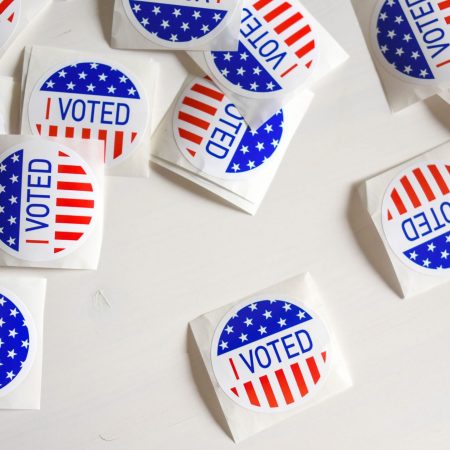
The midterms are less than a month away, and there is one race that hasn’t received as much attention as the others. This week on MichMash, WDET’s Cheyna Roth and Gongwer News Service’s Alethia Kasben discuss the race and talk to the candidates running in it.
With such a high-profile midterm election, the race for attorney general has flown under the radar for much of the campaign season. Republican Doug Lloyd, the Eaton County prosecutor, is running against Democrat Eli Savit, the current Washtenaw County prosecutor. Both candidates are facing questions from critics. Lloyd is being questioned about whether he would be beholden to the Trump administration. He says he has never even met the president.
“I made it clear from day one, when I got into this race, that the attorney general’s responsibility is to protect Michigan’s sovereignty. I’ve never met Donald Trump. You know, I’ve never spoken to Donald Trump. I’ve only seen Donald Trump, you know, on TV like him, most of America.”
Savit is being questioned about whether he would push Washtenaw County’s policies on the whole state. He says he wouldn’t.
“I believe that these types of decisions are appropriately made by local prosecutors, you know, and I’m not running to take Washtenaw County’s policies, statewide. Nor could I, even if I wanted to.”
Michigan’s secretary of state oversees license renewals, car registrations and elections — the voter rolls, the rules clerks follow, and the certification of results. Jocelyn Benson is term-limited. Two candidates are running to replace her.
The Metro’s Robyn Vincent spoke with Forlini about how rare noncitizen voting is and what he’d do as secretary of state.
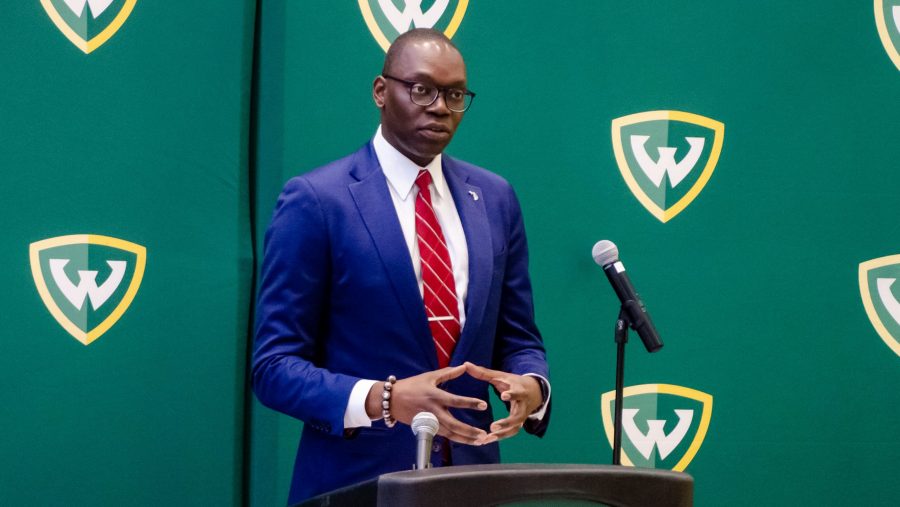
Lieutenant Governor Garlin Gilchrist II, the Democrat in the race, joins The Metro next week.
Editor’s note: Forlini said noncitizens are turning up for jury duty in Macomb County. People there have claimed not to be citizens to get excused — but whether they are in fact noncitizens is not established.
He also said 96% of Republicans and Democrats voted for his bills in the Legislature. The Metro has not verified that.
Hear the full conversation using the media player above.
Listen to The Metro weekdays from 10 a.m. to noon ET on 101.9 FM and stream on-demand. Never miss an episode — subscribe to The Metro onApple Podcasts,Spotify,YouTube,NPR, or wherever you get your podcasts
Support the podcasts you love.
One-of-a-kind podcasts from WDET bring you engaging conversations, news you need to know and stories you love to hear. Keep the conversations coming. Please make a gift today.
In Michigan, it’s never a bad idea to boost your relationship with auto workers — or ties to the auto industry.
Republican Mike Rogers spent 14 years in Congress, but before that he was an FBI agent and worked on cars.
“I started out in a car factory building Chrysler LeBaron convertibles. It’s a really good car. I love that car,” Rogers told reporters in Madison Heights this week.
Republican U.S. Senate Candidate Mike Rogers campaigns in Michigan in September 2026
Rogers worked in a non-union shop in the early 1980s making modifications to already-assembled cars.
His opponent, Abdul El-Sayed, is more white collar. He holds medical and public health degrees. However, he has blue collar backing — specifically, the United Auto Workers union.
In an interview with Michigan Public Radio, UAW President Shawn Fain explained why El-Sayed is the choice for the union’s nearly 1 million current and retired members.
“We’ve got to elect people that give a damn about workers, and not billionaires and corporate-class people,” Fain said. “I mean, and unfortunately, our political system has been hijacked by the richest people in the world.”
Michigan’s U.S. Senate race could help decide the balance of power in Washington D.C. next year. The ongoing trade war between the U.S. and Canada is just simmering under the surface.
Tariffs aren’t always the bad guy
Fain doesn’t outwardly dislike certain taxes on imports.
“We support strategic targeted tariffs. Blanket tariffs on everything under the sun, or tariffs just to force a country to do something for political reasons? That makes no sense whatsoever,” Fain said.
“And the 50% on Canada, we don’t agree with that. Like Canada is not the problem.”
The Trump administration has placed 50% tariffs on $27.6 billion in Canadian goods and materials. The Canadian government has responded with equal levies.
A strained relationship
Marchers at this month’s Labor Day Parade in Detroit weren’t happy about the tariffs or how we’re treating our closest trade partner. Retired tool and dye man Stan Geis was one of many who carried a sign emblazoned with images of an American flag and the Canadian maple leaf.
The message: “Solidarity. We stand with our neighbor.”
“I liked when we had the trade across the border … with men working in our country from Canada (going) back and forth. It was good. Now it just stinks.”
Sign at the Labor Day Parade.
That’s not to say the relationship between the UAW and the workers of UNIFOR — the Canadian auto workers union — hasn’t hit some potholes.
John D’Agnolo is the president of UNIFOR Local 200 across the border in Windsor. Southern Ontario is home to factories of several major automakers.
He says American autoworkers sometimes have the wrong idea.
“They think that we’re taking from them when we’re not.”
D’Agnolo has just wrapped up a grueling two weeks in contract negotiations with automaker Stellantis.
They’re not going well. Stellantis aims to sell an idled Jeep plant in Brampton, Ontario, to an armored car company.
D’Agnolo said the inconsistent tariffs are making the bargaining process more difficult.
“The challenge with these tariffs and not knowing what you’re going to get from day to day,” D’Agnolo said. “Companies are not going to invest in new programs.”
Uncertainty in Canada
Windsorites get all the Michigan political ads from Detroit-area TV stations. D’Agnolo said the current political climate is only fueling anxiety.
“You have to turn off the TV because you don’t want to hear it because it becomes your life. It becomes now you got mental issues because you’re worried,” D’Agnolo said.
“So yeah, it’s horrible right now.”
Opposite sides
In the U.S. Senate race, the two main party candidates are on opposite sides of the trade war.
El-Sayed doesn’t like that President Trump picked a fight with Canada.
“There’s a way that tariffs could be used to actually protect jobs. This ain’t it. Like all things Donald Trump, it is chaotic, ham-fisted, self-serving,” El-Sayed said.
El-Sayed points out that his Republican opponent was an advocate for free trade until this latest round of tariffs.
For his part, Rogers told C-SPAN this week he plans to collaborate with Trump in a way El-Sayed will not.
“I will go back to work with the president on tariffs that are working and work with the president on tariffs that are not working,” Rogers said.
“You know, my opponent, all he wants to do is fight with Trump.”
Cost of tariffs
A conservative free market organization, the National Taxpayers Union Foundation — says President Trump’s tariffs are costing Michigan households an extra $5,600 per year.
That’s the third-highest in the nation behind California and Texas.
Steve Grigorian heads the influential Detroit Economic Club. He thinks that could play a role in the election.
“We’re business people, but we go to the grocery store, we go to fill up our gas tank. So it’s definitely top of mind. I think it will definitely be top of mind as people go to the polls”
Ballots for the November election were sent out this week. Election Day is less than six weeks away.
Control of the Michigan Legislature is on the line in this year’s midterm elections. As part of WDET’s weekly series, Gongwer News Service’s Zach Gorchow and Alethia Kasben discuss 10 races they believe could flip from one party to another. They are joined by Gongwer Assistant Editor Elena Durnbaugh, who covers the state House.
One of the topics heading into this election is whether the national political environment will affect local results. Durnbaugh says that if it does, local politicians will need to respond accordingly.
“…the national environment, where we have a situation where we have a Republican president who is deeply unpopular. It’s a midterm. People are looking for change that means that if you’re a Republican in a seat, you’re going to have to work harder to keep it.”
Durnbaugh said politicians’ voting records and what they have done while in control of the Legislature could also push voters one way or another.
One-of-a-kind podcasts from WDET bring you engaging conversations, news you need to know and stories you love to hear. Keep the conversations coming. Please make a gift today.
With only a couple of months left until the midterms, Michigan’s gubernatorial candidates are trying to build support in their bids to become the state’s next governor. This week on WDET’s MichMash, Gongwer News Service’s Zach Gorchow and Alethia Kasben discuss how this race for governor differs from previous ones.
They are joined by Andrea Bitely, founder of the public relations firm Bitely Communications.
The race drawing the most attention in Michigan so far is the U.S. Senate race between Dr. Abdul El-Sayed and Mike Rogers. As for the gubernatorial race between Secretary of State Jocelyn Benson and U.S. Rep. John James, Bitely says it isn’t garnering the same level of attention.
“The gubernatorial race is potentially the most boring gubernatorial race in the history of gubernatorial races.”
Bitely continued by saying that after Mayor Mike Duggan dropped out, the race lost some of its interest for her.
“I think it got a lot more boring on May 21st [2026]. But maybe that’s just the the Duggan campaign staffer in me coming out.”
May 21 was the day Duggan dropped out of the race for governor.
Bitely concluded that to draw more attention to the gubernatorial race and their respective campaigns, the candidates need more rallies and events, along with a resounding message that sticks with voters.
One-of-a-kind podcasts from WDET bring you engaging conversations, news you need to know and stories you love to hear. Keep the conversations coming. Please make a gift today. Give now »
According to a Politico poll, 72% of Americans say there’s too much money in politics. Respondents said special interest spending leads to corruption that should be restricted.
In Michigan, a local campaign believes residents can have a stronger, more representative democracy if political spending by some big-time actors is limited.
The Michiganders for Money Out of Politics measure, which is now on the November ballot, would change some aspects of how money gets into the hands of politicians and political candidates.
Voters decide Nov. 3, though opponents have asked the Michigan Supreme Court to block it.
Sean McBrearty is the executive committee co-chair for the Michiganders for Money out of Politics campaign. He spoke with producer and host Robyn Vincent about what happens if the ballot measure passes.
Hear the full conversation using the media player above.
Listen to The Metro weekdays from 10 a.m. to noon ET on 101.9 FM and stream on-demand.
One-of-a-kind podcasts from WDET bring you engaging conversations, news you need to know and stories you love to hear. Keep the conversations coming. Please make a gift today.
The progressive wing of the Democratic party made some noise in the recent primaries. What has been the key to their success so far? This week on MichMash, WDET’s Cheyna Roth and Gongwer News Service’s Zach Gorchow chat with Chris Gilmer-Hill, one of the progressives who won his race.
Gilmer-Hill shares why he feels like he was able to win.
Gilmer-Hill attributes his win against incumbent Democratic state Rep. Helena Scott greatly to the Democratic Socialist of America and the engine they put behind his campaign. Especially being that without them he lost by a large margin two years ago.
“DSA is the biggest difference. Two years ago I filed because I disagreed with a lot of what our incumbent was doing and I didn’t think it was right for her to run unopposed but I didn’t have DSA or a whole movement of folks behind me. I wasn’t expecting to win. Actually at the time 27% was a lot more than what I was expecting so I saw an opening for the future. But that opening wouldn’t have been something we could’ve use to win without an army of DSA members”
Gilmer-Hill is running for the 8th state House District.
One-of-a-kind podcasts from WDET bring you engaging conversations, news you need to know and stories you love to hear. Keep the conversations coming. Please make a gift today.
The 2026 Michigan primaries not only affected the state but may also have national implications. This week on MichMash, WDET’s Cheyna Roth and Gongwer News Service’s Alethia Kasben break down the results and what they may forecast for the midterm elections. They are joined by Associated Press reporter Joey Cappelletti.
The biggest story coming out of the primaries is Abdul El-Sayed defeating U.S. Rep. Haley Stevens for the Democratic nomination for an open U.S. Senate seat. After winning by less than 1 percentage point, El-Sayed will face Republican Mike Rogers in the general election. El-Sayed represents the progressive, Democratic Socialists of America wing of the party. Cappelletti says the results in November could make or break the momentum the DSA has gained with El-Sayed’s victory.
“We’ve seen the progressive wing have victories in deep-blue cities before. But this is really the first time that we saw it on this level in a swing state like Michigan. Michigan does prefer, at least in the past, more moderate, pragmatic candidates. What happened [during the primaries] was big for the movement, but it will not matter if they don’t win in November.”
One-of-a-kind podcasts from WDET bring you engaging conversations, news you need to know and stories you love to hear. Keep the conversations coming. Please make a gift today.
Ever since President Donald Trump won a second term, Democrats have been arguing with each other about the same two questions: What is this party for, and who gets to lead it?
The insurgents have been winning across the country. But the big question is whether economic populist candidates, who run on platforms aimed at minimizing the influence of big money, can win in Michigan. Progressive candidate Abdul El-Sayed won the Senate Democratic primary, and Donovan McKinney beat sitting Congressmember Shri Thanedar. But important races still haven’t been called, and the general election may not be easy for all the progressive candidates.
Branden Snyder is the state director of the Working Families Party. His group endorsed economic populist candidates up and down the ballot. He spoke with The Metro‘s Robyn Vincent.
Hear the full conversation using the media player above.
Listen to The Metro weekdays from 10 a.m. to noon ET on 101.9 FM and stream on-demand.
One-of-a-kind podcasts from WDET bring you engaging conversations, news you need to know and stories you love to hear. Keep the conversations coming. Please make a gift today.
Michigan voters went to the polls Tuesday to select candidates who will meet in the general election in November.
Congressman John James won the Republican primary for governor. He had a tough competitor in businessman Perry Johnson. Johnson ran a steady flight of television commercials, at times portraying James as a “DEI candidate.” During the course of the Republican primary, James made few appearances in the city of Detroit.
During his victory speech Tuesday night, James laid out his plans if he’s elected Senator. “We’re going to cut taxes. We’re going to lower your energy bills. We’re going to protect Medicaid for those who need it, while stopping fraud and abuse from those who would steal from it.”
James will face Michigan Secretary of State Jocelyn Benson in the November general election. Benson easily beat Genesee County Sheriff Chris Swanson in the Democratic primary.
During a speech to supporters in Detroit Tuesday night, she said she’ll work for Michigan voters if she’s elected governor in November. “Who do you want Michigan’s leaders to work for? The people or the powerful? Well, you all know who I work for. I will work for all of you and every Michigander in this state. Not the highest bidder. Not corporate interests. Not Donald Trump. You.”
Benson is a Detroit resident.
El-Sayed beats out Stevens for U.S. Senate race
In the most watched contest of the night, Dr. Abdul El-Sayed defeated Congresswoman Haley Stevens in the Democratic primary for Michigan’s open U.S. Senate seat.
In a speech to supporters in Detroit Wednesday morning, El-Sayed took aim at Republican Mike Rogers – who El-Sayed will face in the general election: “And so, Mike, and I know you’re listening, Mike. We are coming for you.”
With more than 60-million dollars in outside spending, the race is the most expensive U.S. Senate primary in history. El-Sayed beat Stevens by less than a percentage point.
-Reporting by Russ McNamara
Congressional primaries
Detroiters watched two Democratic primaries for Congress yesterday. Representative Rashida Tlaib easily defeated former state representative Shanelle Jackson and Inkster Mayor Byron Nolan in the 12th Congressional District.
State Representative Donavan McKinney defeated incumbent Congressman Shri Thanedar in Michigan’s 13th District primary. Results show Mckinney won just over half the vote.
McKinney says its time for a new style of politics, because it’s impossible for representatives to serve two masters. “You can’t serve the working people and the corporations at the same time. You have to pick one, and so I think the people are calling for petter and I thing they’re calling our legislators and our Congress to do things for them and not on behalf of the few, but on behalf of the many.”
McKinney also supported ending federal aid to Israel. He says Congress should focus more on domestic needs. Thanedar was seeking his third term in the U.S. House.
-Reporting by Bre’Anna Tinsley
Other results
Incumbent Wayne County Executive Warren Evans easily won his primary race to win the right to run for another term as the Democratic candidate in November.
Proposal S, which provides additional revenue for the Detroit Public Schools Community District passed overwhelmingly, as did the Wayne County Public Transportation Millage. That measure will keep communities from being able to opt OUT of the SMART bus system.
Listen to the latest episode of the “Detroit Evening Report” on Apple Podcasts, Spotify, NPR.org or wherever you get your podcasts.
Support the podcasts you love.
One-of-a-kind podcasts from WDET bring you engaging conversations, news you need to know and stories you love to hear. Keep the conversations coming. Please make a gift today.
DETROIT (AP) — Abdul El-Sayed has won Michigan’s Democratic nomination for U.S. Senate, defeating U.S. Rep. Haley Stevens in a massive victory for the party’s progressive wing in a battleground state.
The real test of El-Sayed’s and progressives’ strength will now come in a November matchup against Republican Mike Rogers, a former congressman who ran unopposed for the GOP nomination. The seat is pivotal to Democrats’ chances of flipping the Senate and El-Sayed will face the challenge of uniting a divided Democratic base after a bruising primary.
The race remained tight throughout Tuesday night, with a winner not declared until early Wednesday. In his final remarks at a primary night party before the race was called, El-Sayed said “tomorrow we begin to mend fences.”
El-Sayed’s campaign said Stevens called to concede Wednesday.
El-Sayed’s win represents a significant shift for the Democratic Party; in 2018 he lost the gubernatorial primary to now-Gov. Gretchen Whitmer by 21 percentage points.
El-Sayed, a former health official, campaigned on “Medicare for All,” halting military aid to Israel and campaign finance reform. He had support from progressive leaders including Sen. Bernie Sanders and U.S. Rep. Alexandria Ocasio-Cortez, who framed the race as a grassroots-focused movement and a broader fight against the establishment and big-money spending.
Stevens, a more moderate candidate, was backed by Senate Minority Leader Chuck Schumer and tens of millions in outside spending, including the American Israel Public Affairs Committee’s largest outlay ever in a single race.
Now comes the more difficult challenge for Democrats: uniting the party to defeat Rogers, for whom Republicans have already reserved large sums of money ahead of the general election. Democrats consider the seat a must-win if they are to flip control of the Senate this year.
El-Sayed called for unity to defeat Rogers
Early Tuesday evening, El-Sayed’s supporters in Detroit’s Majestic Theatre cheered at the first batches of votes, before mellowing. Hours later Stevens’ previously subdued partygoers roared as she narrowed the margin.
“Whatever happens tonight,” El-Sayed told a thinned but still energetic crowd, “we have a responsibility to ensure that we unite, unite to make sure that Mike Rogers never sees the inside of the U.S. Senate.”
El-Sayed, a former Wayne County health director, campaigned on “Medicare for All,” campaign finance reform and ending military aid to Israel.
Stevens, a four-term congresswoman, focused on manufacturing and the economy. She stressed her past victories in tough races, saying she would be best positioned to beat Rogers.
Stevens benefited from tens of millions of dollars in outside spending, including the largest investment in a race ever from the American Israel Public Affairs Committee, which supports pro-Israel candidates.
Michigan is a must-win Senate race for Democrats
The race will help decide which party controls the chamber in the last two years of President Donald Trump’s term. Those stakes have added heat to the rivalry, with moderates arguing that El-Sayed would have a harder time than Stevens against a Republican in the general election.
Stevens won election to Congress in 2018 after serving as chief of staff to President Barack Obama’s auto task force, which helped oversee the federal rescue of General Motors and Chrysler. Her campaign and allied groups have repeatedly highlighted that experience.
El-Sayed cast himself as the anti-establishment candidate and argued that Democrats need to reject corporate influence and embrace a more progressive agenda.
While the candidate has said he is not a democratic socialist, he found support from some of the group’s members. That included Melat Kiros, who recently beat a longtime incumbent in a Democratic primary for a Denver-based House seat and was at El-Sayed’s watch party. Also there was Hasan Piker, a progressive and controversial influencer online.
The candidates’ differences were clear to some voters.
Kenneth Woodside, 87, of West Bloomfield, said he voted for El-Sayed over Stevens because “the nation is ready for someone who wants to take some more action rather than on the road we are now, which is on the road to an oligarchy and authoritarianism.”
Nessa Fuller, 51, of Birmingham, said she voted for Stevens because she will “fight to get the right things done, and she’ll work with other people, which is really important to me.”
Outside influences spent millions on the Senate race
National groups poured unprecedented sums into the race, making it one of the country’s biggest tests of outside spending.
Groups backing Stevens spent more than $50 million, led by more than $30 million from AIPAC and its affiliates.
The spending thrust Israel policy into the center of the race even though the ads never mentioned it. While El-Sayed called for ending military aid to Israel, Stevens maintained strong support for the relationship.
Israel became a contentious issue within the Democratic Party amid a war in Gaza that killed more than 73,000 Palestinians in its retaliatory offensive after about 1,200 people were killed and 251 hostages were taken in attacks by the militant group Hamas.
A Detroit US House primary also too early to call
In a heavily Democratic district representing Detroit, the 13th, Rep. Shri Thanedar looked to fend off a primary challenge from state Rep. Donavan McKinney, who argued that the city should once again have a Black representative in Congress.
After Thanedar won election in 2022, Detroit had no Black representation in Congress for the first time since the early 1950s.
So here’s the question: if you voted this morning or you dropped your ballot off at a dropbox last week, have you done your part?
Eric Liu has spent years cultivating the answer to this question. He was a White House speechwriter for Bill Clinton and later Clinton’s deputy domestic policy adviser. He co-founded Citizen University in Seattle. It runs something called Civic Saturdays, a gathering built like a church service, with singing, and readings, and a sermon.
His forthcoming book is “Live Like a Citizen: 8 Ways to Change Your Mindset and Our Country”. He joined Robyn Vincent on The Metro to discuss what it means to be a good citizen after the voting booth closes.
Hear the full conversation using the media player above.
Listen to The Metro weekdays from 10 a.m. to noon ET on 101.9 FM and streaming on-demand. Never miss an episode — subscribe to The Metro onApple Podcasts,Spotify,YouTube, orNPR, or wherever you get your podcasts. Have thoughts? Email the show at metro@wdet.org.
Support the podcasts you love.
One-of-a-kind podcasts from WDET bring you engaging conversations, news you need to know and stories you love to hear. Keep the conversations coming. Please make a gift today.
Aug. 4 is voting day for the Michigan primary. WDET will be working hard to keep you up-to-date on races and results that will determine the ballot come November.
Our journalists are monitoring local and national races, with special attention to the Democratic U.S. senate primary and the races for Michigan’s gubernatorial candidates. We’re also following U.S. House races, with a focus on districts 12 and 13.
Follow along to see election results as they are announced. Polls close at 8 p.m.
Support local journalism.
WDET strives to cover what’s happening in your community. As a public media institution, we maintain our ability to explore the music and culture of our region through independent support from readers like you. If you value WDET as your source of news, music and conversation, please make a gift today.
The Detroit Water and Sewerage Department (DWSD) celebrated the completion of a $40 million stormwater development on Detroit’s westside Thursday.
The Far West Detroit Stormwater Improvement Project is the department’s largest green stormwater infrastructure plan.
DWSD Deputy Director Sam Smalley says the new system will push more than 100 million gallons of water to the Rouge River.
“This this feature provides filtering and settling, so there are actually water quality standards for the stormwater that we discharge, so it’s cleaner water faster. So we either slow the water down or better yet get it out of the system altogether.”
The sewer network will move stormwater through to two new detention basins in Rouge Park for filtering and slow down water before discharging it into the Rouge River.
Smalley says the new infrastructure will make the 1,200 homes nearby more resilient to weather related basement flooding.
Additional headlines for Friday, July 31, 2026
Iris Taylor dies
Detroit health care and education leader Iris Taylor has died. She was 74.
A lifelong city resident, Taylor worked in health care for 45 years, serving as CEO of Detroit Receiving Hospital. She also helped shape the city’s response to the COVID-19 pandemic as the health department’s head of nursing.
Taylor was also a member and former president of the Detroit school board. Mayor Mary Sheffield calls Taylor one of the city’s most dedicated and impactful servant leaders.
Bike lanes blocked by parked cars
Residents in Detroit’s Grandmont Rosedale neighborhood are complaining about drivers parking in bike lanes on Grand River.
Bike lanes were installed on Grand River between Woodward and McNichols in 2019.
The road falls under the Michigan Department of Transportation’s jurisdiction. However, the state says the city is responsible for maintaining bike lanes.
Detroit Police say they are planning to deploy officers in the neighborhood next week to ticket anyone parked illegally.
Early election turn out
The Michigan Department of State reports a turnout rate of 11.3% of all active registered voters who have already cast their ballot a week ahead of the primary election.
More than 800,000 residents have voted with a mail in or absentee ballot and over 30,000 cast their ballot at an early voting site. Compared to the same time in 2022, the number of mail ballot requests have increased 58.8%.
Early voting will continue through Sunday. Mail in ballots must be received by clerks no later than 8 p.m. on election night, Tuesday, Aug. 4.
Listen to the latest episode of the “Detroit Evening Report” on Apple Podcasts, Spotify, NPR.org or wherever you get your podcasts.
Support the podcasts you love.
One-of-a-kind podcasts from WDET bring you engaging conversations, news you need to know and stories you love to hear. Keep the conversations coming. Please make a gift today.

 Login
Login