Reading view

There are new articles available, click to refresh the page.

Health experts use social media to push back against misinformation

The rise in measles across the U.S. coincides with falling vaccination rates. The Centers for Disease Control and Prevention has confirmed almost 2,500 cases of the disease in 2026, the highest number since the 1990s.

Measles had been virtually eliminated in America by the year 2000. The anti-vaccine movement has gained strength in recent years, especially during the COVID-19 pandemic. Health experts say social media has allowed vaccine misinformation to spread. Self-styled wellness “influencers” have built large followings online, pushing unscientific claims and promoting unregulated health products.

Mariah Wellman is studying this trend. She’s an assistant professor of advertising and public relations at Michigan State University. She says many people turn to the internet because they might not have access to health care.

“They may not see their doctor on a consistent basis,” Wellman says. “They may not have a doctor they necessarily trust.”

(Un)healthy skepticism?

Wellman says many people no longer trust the medical establishment. And they feel like they can get answers online faster than they can from a doctor or health care provider. She says wellness gurus take advantage of that.

“Wellness influencers do a great job of building relationships that make the viewer feel like the influencer really sees them, hears them, knows them, and values them,” she says.

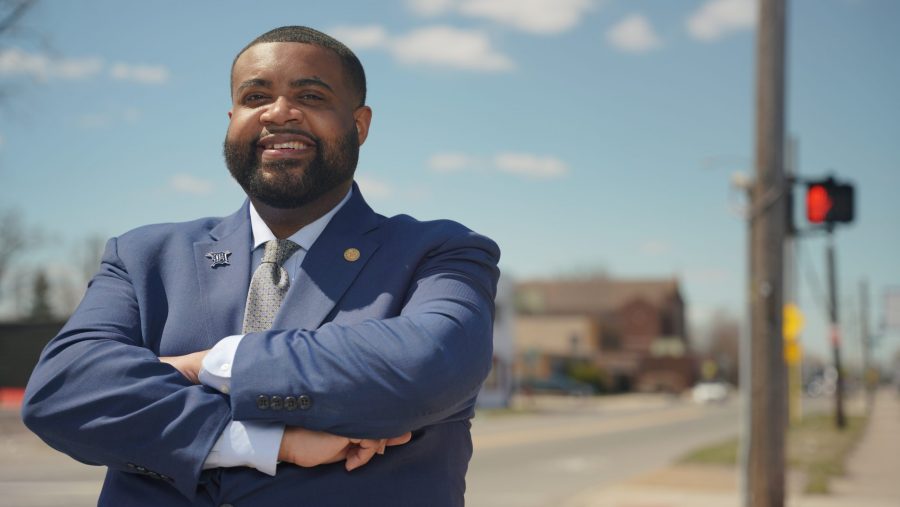
Mariah Wellman, Ph. D., is an assistant professor at of advertising and public relations at Michigan State University

Once people accept misinformation as truth, Wellman says it’s difficult to convince them otherwise.

“It’s incredibly hard to change their minds,” she says.

What’s good for the goose…

But some health experts are turning that around. Wellman says many qualified people in their fields are learning how to use social media to turn the tide.

“We’re seeing some evidence that these expert influencers are growing in their popularity online,” she says. “People are reaching out to them, saying, ‘yes, actually this content has changed my mind.'”

Wellman is writing a book on the strategies wellness influencers use to make people believe they’re authority figures. The book comes out in 2027.

Trusted, accurate, up-to-date.

WDET strives to make our journalism accessible to everyone. As a public media institution, we maintain our journalistic integrity through independent support from readers like you. If you value WDET as your source of news, music and conversation, please make a gift today.

Donate today »

The post Health experts use social media to push back against misinformation appeared first on WDET 101.9 FM.

The Metro: The past, present, and future of American genetics

The United States signed the Declaration of Independence 250 years ago, and still historians debate what metric the nation should use to define being American.

Long before genetic testing became a standard for identity, the country originally passed laws based on blood. The one-drop rule claimed that even “one drop” of known African ancestry legally made one Black under the law. It created the grounds for Virginia’s Racial Integrity Act and formed Quadroon and Octoroon communities in Louisiana, impacting the property, citizenship, inheritance, and marriages of Black people. 

America did not escape that past after the emergence of artificial intelligence, which determines ancestry using percentages and data bias. The Freedman’s Bureau indexing initiative challenges that by using technology for Black restoration rather than ranking.

Dr. Carolyn Haliburton Carter is a Detroit historian, professional genealogist, and founder of Storykeepers Heritage Network. She also authors articles on the Michigan Chronicle and oversees seven federal Underground Railroad historic designations as the chair of Detroit’s Historic Designation Advisory Board.

During a period where information is manipulated by the government—as seen last year from Interior Secretary Doug Burgum, who ordered national parks to remove negative content about America—histories like the Underground Railroad are fragile. “Those who control the narrative cannot simply control the history,” Carter says.

She joins The Metro to discuss the relationship between identity, U.S. history and modern genetic testing. As more people use DNA tests as a doorway to their heritage, Dr. Carter outlines what could be missed if we stop at data instead of entering a realm of living history and memory.

Hear the full conversation using the media player above.

Listen to The Metro weekdays from 10 a.m. to noon ET on 101.9 FM and stream on-demand. Never miss an episode. Subscribe to The Metro on Apple Podcasts, Spotify, YouTube, NPR, or wherever you get your podcasts.

Support the podcasts you love.

One-of-a-kind podcasts from WDET bring you engaging conversations, news you need to know and stories you love to hear. Keep the conversations coming. Please make a gift today.

More stories from The Metro

The post The Metro: The past, present, and future of American genetics appeared first on WDET 101.9 FM.

❌