Reading view

There are new articles available, click to refresh the page.

Political commentator Hasan Piker explains endorsement of El-Sayed for US Senate

The race for the Democratic nomination in Michigan’s U.S. Senate race has been one of the most fascinating in the country. It drew national attention when controversial political commentator Hasan Piker rallied with Abdul El-Sayed on college campuses.

Piker has millions of followers on social media, largely made up of people under the age of 30.

The move was immediately met with condemnation from El-Sayed’s opponents – Congresswoman Haley Stevens, and State Senator Mallory McMorrow.

Since then, El-Sayed has steadily risen in the polls.

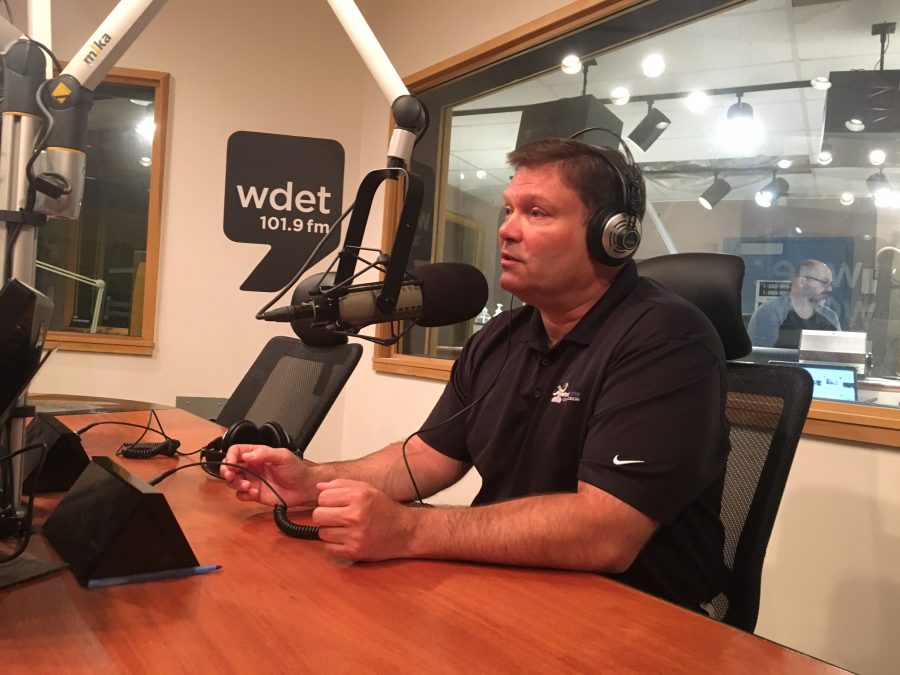
In a conversation this week, WDET’s Russ McNamara asked Piker what he seeks in an ideal candidate.

The following interview has been edited for length and clarity.

Hasan Piker: A candidate self-identifying as a socialist would be great, but in the absence of that, I care about where their primary focus is. Are they going to center the needs of the working class in their agenda, or are they malleable to corporate interests? And those are the things that I pay attention to.

I think some of the telltale markers of a candidate’s responsiveness to the masses is oftentimes their attitude on the issue of Israel, which is a 90-10 issue on the side of the voters within the Democratic Party, but a 10-90 issue seemingly when it comes to Congress.

Another one is Medicare for all. The private healthcare provider industry is a multi-billion-dollar industry, and they spend a great deal of money to ensure that Medicare for all is not implemented, and I think that’s another great litmus test to see if a candidate will actually put the needs and the interests of the working class first over their interest in farming campaign contributions from these moneyed interests.

Ed. Note – Piker recorded this interview while in New York City to support the Democratic Socialist candidates in their primary election. All won.

Russ McNamara, WDET: Then it sounds like Abdul El-Sayed checks a lot of those boxes.

Piker: Yes, absolutely.

McNamara: Was it all part of that that got you to come out onto the campaign trail for him earlier this year?

Piker: Yeah, Abdul El-Sayed doesn’t call himself a socialist, but I still like him quite a bit because I think he’s a fighter, and that’s what Americans need right now. Americans need fighters in the Senate, they need fighters in the House of Representatives, fighters that will put their interests first, fighters that won’t even shy away from sometimes telling the rest of the Democratic Party—not just the Republicans—that the path that they’re heading down is wrong.

Abdul obviously demonstrated that interest, and he has been a fighter for Medicare for all for a very long time, I mean, he wrote a book about it. His gubernatorial run was around the implementation of Medicare for all, so he has established a lot of trust in these communities, and I trust them as well.

Democratic U.S. Senate candidate Abdul El-Sayed speaks to UAW-represented public defenders during an informational picket on June 17, 2026.

McNamara: Kind of along those lines, when you came to Michigan in the spring, there was tremendous outcry in some circles. Congresswoman Haley Stevens said you were ‘divisive.’ Mallory McMorrow compared you to the white supremacist Nick Fuentes. What is your response to things like that? Because you seem to hear it a lot.

Piker: Unfortunately, this is the way that politics is conducted in this country. In most circumstances, people rely on the rest of the electorate not really knowing anything about me, and in the past this might have actually worked, because mainstream media and local institutions were capable of successfully gatekeeping outsider candidates and also outsider media figures.

Nowadays it’s a little bit different, especially because there’s so much diversity of choice in where people can get their news from, so people can come to me directly and figure out what I’m actually about, so that was one of the reasons why that smear campaign failed spectacularly, because people could just tune into my broadcast, or people were maybe somewhat familiar with what I represented, and they understood that these smears were simply being thrown in my direction, not because of any serious anti-Semitism that I’ve ever displayed.

I have not; I’ve actually combated anti-Semitism my entire professional media career and will continue to do so. I find it repugnant. It’s an odious form of bigotry, just like every other form of bigotry, including Islamophobia.

But the other reason why this smear campaign did not work is because a lot of people intrinsically now understand in the aftermath of three years of genocide, and a lot of establishment Democrats, and certainly the entirety of the Republicans, criticizing those who speak out against this genocide with these heinous accusations, a lot of people understand that this is not a person that is actually bigoted in any way, shape or form. As a matter of fact, it’s quite the opposite. This is an anti-genocide advocate, and that’s part of the reason why he’s being called an anti-Semite.

Now, that dangerous conflation actually foments more anti-Semitism, which is, ironically, something that I’ve discussed quite a bit as well, for many, many years prior to October 7, and continue to do so now. But that’s why it didn’t work. It demonstrably failed, right? It fell flat on its face.

People started looking at Abdul’s campaign, people started hearing what he was saying, and they liked it… He was in third place before this smear campaign started, and now he’s comfortably in first place.

Abdul El-Sayed is a wonderful candidate. He has solid fundamentals. He’s probably one of the best candidates in the Democratic primary cycle this midterm season. Rhodes scholar, doctor, worked for Detroit Public Health, spent his entire professional life trying to heal people, and on top of that, he is against the genocide that Israel has committed, and that’s consistent with his values, consistent with my values as well, and yet he was not receiving a lot of media attention, that race in and of itself was not receiving a lot of media attention… and I guess Haley Stevens and Mallory McMorrow stepped on a landmine there and accidentally nationalized and publicized this (Michigan Senate) primary, and people actually started tuning in.

People started looking at Abdul’s campaign, people started hearing what he was saying, and they liked it. And lo and behold, he was in third place before this smear campaign started, and now he’s comfortably in first place.

McNamara: It seems like many within the Democratic Party still haven’t fully accepted the role Israel’s genocide in Gaza played in the 2024 election. I recently talked with pollster Adam Carlson about a recent Zenith research survey he did, and it had showed that Haley Stevens would lose a significant portion of people who identify as progressives in the general election, should she make it through the primary, less so for El-Sayed and McMorrow. Do you think this country’s views have shifted enough, and now unconditional support for Israel is seen as a political liability?

Piker: Absolutely, and that’s precisely the reason why AIPAC and AIPAC subsidiaries never actually reveal that the candidates that they’re fundraising for are pro-Israel. None of those ads, whether they be attack ads against their opponents or the ads in favor of their hand-selected candidates, ever mention this candidate’s point of view on Israel. If Israel was such a popular position, then they would proudly declare it. AIPAC wouldn’t need to use this opaque funding structure and find shell corporations to funnel money into by way of their donor network under the guise of United Democracy Fund, or Elect Women Fund, that was the one they used in Illinois in the Chicago primaries.

They do that because I think everyone understands that pro-Israel politics is demonstrably unpopular, and it’s only going to get less popular from this point on. I often throughout the genocide would say: going forward, today is the most popular Israel will be. Tomorrow, Israel will be less popular than it was today, and yesterday Israel was more popular than it is today. And that has been resilient.

There are constant demands for censorship against prominent critics of Israel.

That (pro Israel) attitude has shifted, and it will continue to shift as more and more people not only come to terms with Israel playing a destabilizing role in the region, but also the unbelievable amount of arrogance in display by those who are defenders of Israel and defenders of Israeli foreign policy.

I think that is oftentimes a less discussed aspect of the reason as to why Americans are frustrated with Israel, and it’s because there are constant demands for censorship against prominent critics of Israel. Some of those censorship attempts are actually successful, de-platforming initiatives that take place. I myself was banned from traveling to the United Kingdom only last month, and it was directly a consequence of my criticisms of Israel.

This kind of censorious attitude, especially when it’s the overwhelming majority’s position, is going to be unbelievably frustrating, and it’s only going to breed more enmity and hostility against the State of Israel. And outside of that there is this level of entitlement to unlimited funds coming from the United States of America, funds and weapons that Israel deploys on Palestinian civilians, on Lebanese civilians, as they’re doing currently, as they’re in the process of trying to disrupt the memorandum of understanding in a longstanding ceasefire negotiation that we might actually finally implement with Iran.

These kinds of destabilizing initiatives paired up with hubris, unbelievable entitlement and arrogance come across as very frustrating to the average American who is maybe uninitiated with the actions of Israel.

McNamara: Influencers are often brought up as a way for people to connect with younger voters. As you know, Democrats tried to do this to very mixed success at the DNC two years ago, but to you, what is the best way to gain the attention and the vote of the mythical younger voter?

Piker: I think it’s policies, ironically enough. In the post 2024 autopsy that was being conducted in public, a lot of Democrats went to mainstream media and decided the reason why Donald Trump won was because of Joe Rogan—and Joe Rogan was obviously the catch-all term for the podcast circuit, the manosphere.

Now, is the podcast circuit of the manosphere influential, especially in terms of converting young men to voters? Certainly, but ironically enough, they chose me as the left version of Joe Rogan because of my audience, because of the success I’ve seen in the independent sphere as the largest left content creator in these spaces that are inundated with far right and right-wing messaging.

The most significant issue is that the Democratic Party is not defined by a policy prescription for the problems that the working class faces in this country.

I told them over and over again, this is not an issue that you can podcast your way out of, that I myself am not the Joe Rogan of the left, and that Joe Rogan could potentially be the Joe Rogan of the left, and was the Joe Rogan of the left at some point when he endorsed Bernie Sanders. And that ultimately the problems that the Democratic Party are facing do not revolve around their lack of funding in messaging initiatives. That’s one element of the issue, but it’s not the most significant one.

The most significant issue is that the Democratic Party is not defined by a policy prescription for the problems that the working class faces in this country, and when they’re not defining themselves on those terms with left populous economic solutions: Medicare for all, an initiative in the direction of publicly funded housing, federal jobs guarantee, free college, these bold and somewhat radical agenda items that I think a lot of Americans are on board with.

Instead of doing that, the Democratic Party is constantly finding itself in a defensive posture against Republican culture war agenda items, and by not having a vision in the affirmative, they are allowing the Republican party to define the Democratic party, and that’s the reason why they keep losing. So it comes back to policies at the end of the day, because that’s the fundamental principle of theoretical democracy. We are going to vote an elected representative to represent our interests.

“What will you offer me?” This is the question that I think a lot of people understandably ask their elected representatives in the Democratic party, and their  answers have so far been insufficient. I hope that this sequence of electoral defeats will light a fire under the Democratic Party, so that they don’t shy away from a more bold agenda, a more bold vision for change, especially because there’s tremendous appetite in the base of support for said bold agenda of change that centers the needs of the working class first and does not get bogged down with unnecessary culture war distractions.

Support local journalism.

WDET strives to cover what’s happening in your community. As a public media institution, we maintain our ability to explore the music and culture of our region through independent support from readers like you. If you value WDET as your source of news, music and conversation, please make a gift today.

The post Political commentator Hasan Piker explains endorsement of El-Sayed for US Senate appeared first on WDET 101.9 FM.

Anatomy of an endorsement: Why the UAW chose El-Sayed, Benson

The United Auto Workers (UAW) endorsed Abdul El-Sayed for Michigan’s open U.S. senate seat and Jocelyn Benson for Governor.  

For UAW Region 1A Director Mark DePaoli, this move puts the union “back at the forefront” in terms of political influence.  

To determine which candidate receives their endorsement, DePaoli said the UAW Community Action Program (CAP) Board schedules meetings with candidates to ask questions and vote on who best reflects their values.  

“They ask a lot of tough questions because they want to be able to hold the candidates accountable for their answers,” DePaoli said.  

UAW rules require a two-thirds majority of CAP board member to agree in order for an endorsement to be made. 

“The best part about it is whether you’re one of the CAP reps from the plant, you’re one of the three Michigan directors, or you’re the president of the UAW, everybody’s vote weighs the same,” DePaoli said.  

Selecting a senate candidate

The CAP representatives came from each plant and facility represented by UAW, DePaoli said, and ended up voting in favor of El-Sayed.

Another way UAW members learn more about the candidates and their beliefs is through a public debate in which the candidates discuss their values.  

“It was live stream for all of our members, and the consensus at the end of that debate amongst everybody that was talking was that Abdul was the clear-cut winner,” DePaoli said. 

UAW Region 1A Director Mark DePaoli

The vote was a surprise in some circles since the other two candidates—Congresswoman Haley Stevens and State Senator Mallory McMorrow—both have some background in the auto industry.

Stevens worked on the 2009 auto bailout in the Obama Administration. McMorrow trained as car designer. In autoworker-heavy Michigan, both candidates have leaned into drawing the interest of organized labor.

DePaoli said he was “dreading” the endorsement decision because each candidate had values that the UAW supported, but he decided that El-Sayed would be best suited to tackle the issue of healthcare, which DePaoli  referred to as “the biggest problem” for the majority of Americans.   

“We seem to be the only country where it’s acceptable for big business to make profit off of our illnesses,” DePaoli said. “Why not a health care expert in the U.S. Senate to help try and fix some of these problems?” 

El-Sayed said he was “deeply honored” to receive the endorsement from UAW. El-Sayed makes it a point that his campaign is built from union members instead of “corporate PAC money, AIPAC and Washington insiders.” 

“Together, we’re going to take on corporate greed, rebuild an economy that works for working people, strengthen collective bargaining and ensure that the future of Michigan manufacturing is built right here by union workers,” El-Sayed said.  

In the past, the UAW has almost exclusively endorsed Democratic candidates. According to DePaoli, UAW leadership invited all candidates for the U.S. Senate seat, and only three Democrats attended. Republican Mike Rogers did not attend.

“It makes it hard to endorse somebody that doesn’t even bother to come out and listen to the questions and hear the concerns of your membership, let alone give an answer,” DePaoli said. “I don’t think they even try to get Labor’s endorsement because they know they’re not going to vote any policies in favor of Labor.” 

Why Jocelyn Benson?

In the race for Michigan Governor, Jocelyn Benson has a financial advantage over Genesee County Sheriff Chris Swanson. She also has a lead in the polls.

According to DePaoli both candidates were worthy of backing and recently discussed their positions for the CAP board at UAW Local 600.

“Two great candidates coming from completely different backgrounds,” DePaoli said. “At the end of the day, we don’t completely trust in polls, but we were comfortable that Jocelyn Benson was the correct decision.”

None of the Republican candidates for governor showed up.

At the time, former Detroit Mayor Mike Duggan was in the race and in the forum.

“I think a lot of people were surprised at how well he did,” DePaoli said. “But I think everybody had gotten to a point to say, well, even if we don’t endorse him—if he does win— we’re comfortable that we can work with him and get things done for labor.”

Duggan dropped out citing concerns over money and no path to victory given a recent surge for democrats. 

Trusted, accurate, up-to-date.

WDET strives to make our journalism accessible to everyone. As a public media institution, we maintain our journalistic integrity through independent support from readers like you. If you value WDET as your source of news, music and conversation, please make a gift today.

Donate today »

The post Anatomy of an endorsement: Why the UAW chose El-Sayed, Benson appeared first on WDET 101.9 FM.

Black women face obstacles to funding, recruitment in running for office

The Michigan Senate is set to lose three women of color from Detroit-area districts.

Erika Geiss, Stephanie Chang, and Sylvia Santana are all term limited.

Eboni Taylor is running in the 3rd district – and was recruited to run by Senator Chang.

There are 10 other people in the primary including: Kimberley Hill Knott, Latanya Garrett,  Adam Hollier, John Conyers III, and Korey Hall.

Taylor is also the Vice President of Programs for Higher Heights for America, a political action committee with the goal of increasing Black women’s elected representation. Taylor spoke to WDET’s Russ McNamara about the challenges Black women face in campaigns and where she finds the most support.  

Listen: Eboni Taylor on the obstacles Black women running for office face

The following interview has been edited for length and clarity. 

Taylor: All federal races, all statewide executive races, according to the state’s constitution, and the only local race that we partake in is top 100 cities for mayor. So, really excited that my organization, with me at the helm of the program and the political work, was very proud that we were able to support our now Mayor Mary Sheffield. 

McNamara: Does Mayor Sheffield endorse your campaign currently? 

Taylor: I think that Mayor Sheffield is currently staying out of it because it is an extremely crowded race. There are 11 people in the race, but I know that she does believe strongly in Black women’s leadership, and Black women stepping up and deciding to run. So, I do know that she holds that value. 

McNamara: What are the challenges that go into getting a woman of color elected? Black women specifically. 

Taylor: Women in general, it takes them four to five times to be asked to run before they say yes. A woman of color, it takes even more times for them to be asked before they decide to run, and when they do say yes, the issues that they face are numerous, but the number one issue is that it’s hard to raise funds. As the Vice President of Programs and the political work at Higher Heights, I’m in conversations with candidates all across the country, all different walks of life, and that is probably the number one thing that rises to the top, is that it’s hard to raise money in comparison to their white counterparts, to their male counterparts. It’s hard to get campaign staff that actually can put forth products and put forth a campaign that’s in their voice, because these are folks who are cookie cutting from campaign to campaign, instead of understanding that a Black woman’s voice and a Black woman’s way of running a campaign might be different, not always, but it might be different, and for us to not have just across the board, campaign managers, finance directors, who don’t understand the importance and the uniqueness of a Black woman or a woman of color running, we need more of that, and so those are probably the top two issues that we’re seeing.  

McNamara: Does that surprise you? Since one of the key pillars of the Democratic base are Black women. 

Taylor: Yeah, and Black women, we have been key to the Democratic party. We have been a very strong voting block. We have been essentially the architects, the purveyors, if you will, of democracy, and for us to not be at the helm, at the vanguard, and the forefront, is a problem. And I think that the Democratic Party, it’s high time for them to step up—and I think that they are—to see the uniqueness that Black women bring and the community and the network that comes with Black women, because we are at the center of our communities, we help support our immediate families. I was just on the doors with a woman who was talking about making sure she got to all of her neighbors on her block, that they got out and voted, or they submitted their absentee ballot, and so this is the work that Black women have been doing to ensure that they can feed their families, to ensure that they can go to work and not worry about being treated unfairly, and that’s the only way that they can do it if they do it themselves. 

Support local journalism.

WDET strives to cover what’s happening in your community. As a public media institution, we maintain our ability to explore the music and culture of our region through independent support from readers like you. If you value WDET as your source of news, music and conversation, please make a gift today.

The post Black women face obstacles to funding, recruitment in running for office appeared first on WDET 101.9 FM.

UAW endorses Abdul El-Sayed in major boost for Michigan Senate bid

The United Auto Workers endorsed Abdul El-Sayed in Michigan’s closely watched U.S. Senate race Friday, giving the progressive former Wayne County health director one of the most coveted labor endorsements in the state less than two months before the Democratic primary.

The post UAW endorses Abdul El-Sayed in major boost for Michigan Senate bid appeared first on Detroit Metro Times.

The Metro: How Abraham Aiyash plans to lower costs if he’s elected to the state Senate

Partisanship isn’t just a Washington problem. 

This year, Michigan’s Legislature has been one of the slowest in recent memory as only a few bills passed since January. This is happening as costs keep climbing and families keep stretching. Life is getting really expensive and people want their leaders to take action.

With state Senator Erika Geiss, who is overseeing parts of Detroit and Downriver, unable to run for re-election, two Democrats are now vying to fix the problem of rising costs.

One of them is former state House representative Abraham Aiyash. He spoke about his campaign and his plans with The Metro‘s Robyn Vincent.

Editor’s note: this conversation discussed the possibility of data centers recycling water. Water sprayed or circulated in evaporative cooling systems can be recycled at data centers. But the recycling process requires significant on-site treatment to manage high concentrations of salts and other contaminants.


Subscribe to The Metro on Apple Podcasts, Spotify, NPR.org or wherever you get your podcasts.

Listen to The Metro weekdays from 10 a.m. to noon ET on 101.9 FM and streaming on demand.

Support the podcasts you love.

One-of-a-kind podcasts from WDET bring you engaging conversations, news you need to know and stories you love to hear. Keep the conversations coming. Please make a gift today.

More stories from The Metro

The post The Metro: How Abraham Aiyash plans to lower costs if he’s elected to the state Senate appeared first on WDET 101.9 FM.

The Metro: Why Cecil George is running for state Senate

The 13th district state Senate seat is open as Democrat Rosemary Bayer is stepping down after one term. There are several people running to represent the district that spans Northville, Plymouth, and West Bloomfield.

One of those individuals is Cecil George. The owner of a landscaping company, George has never before held public office. 

The Metro’s Sam Corey spoke to him about why he’s running.

Listen to The Metro weekdays from 10 a.m. to noon ET on 101.9 FM and streaming on demand.

Subscribe to The Metro on Apple Podcasts, Spotify, NPR.org or wherever you get your podcasts.

Support local journalism.

WDET strives to cover what’s happening in your community. As a public media institution, we maintain our ability to explore the music and culture of our region through independent support from readers like you. If you value WDET as your source of news, music and conversation, please make a gift today.

More stories from The Metro

The post The Metro: Why Cecil George is running for state Senate appeared first on WDET 101.9 FM.

Mysterious pro-Israel-linked group spends $5.3M to boost Haley Stevens

A mysterious political group using a media-buying firm tied to pro-Israel spending is pouring more than $5.3 million into ads boosting U.S. Rep. Haley Stevens in Michigan’s Democratic primary for U.S. Senate, raising fresh questions about whether Zionist donors are trying to shape the race from the shadows.

The post Mysterious pro-Israel-linked group spends $5.3M to boost Haley Stevens appeared first on Detroit Metro Times.

MichMash: Democrat victory in special election may show where 2026 midterms are headed

An important state senate race for Michigan’s 35th Senate District was decided Tuesday, and it could have huge implications for the November midterm elections. This week on WDET’s weekly series, MichMash, Gongwer News Service’s Zach Gorchow and Alethia Kasben discuss what how the race was decided. They are joined by Alvin “AJ” Jones from WCMU Public Radio to break it all down.

Subscribe to MichMash on Apple Podcasts, Spotify, NPR.org or wherever you get your podcasts.

In this episode

  • What were the campaign strategies for Democrat Chedrick Greene and Republican Jason Tunney?
  • Why did it take so long to call this special election?
  • What could this race signal for the 2026 midterm elections?

Democrat Chedrick Greene and Republican Jason Tunney are vying for the 35th state Senate district seat left vacant in January 2025. In a special election to fill the seat ahead of the November elections, Greene won by a large margin. This is the same district that President Trump had a strong presence in the 2024 elections.

Despite this being a Democratic leaning area, Jones said that this election is still significant. “There are also a lot of conservatives that live in this area. When you look at the guts of some of the cities, Chedrick did well in areas that are broadly conservative.” said Jones. 

Jones also pointed to the focus on the race being a reason why Greene won this special election. “The two candidates had very different strategies. Tunny’s campaign really hammered in local issues—talking about reading levels and tax cuts. Greene’s focused on national issues of affordability.” 

Both Greene and Tunney will face off again in the 2026 November midterm elections. 

More from WDET

Support the podcasts you love.

One-of-a-kind podcasts from WDET bring you engaging conversations, news you need to know and stories you love to hear. Keep the conversations coming. Please make a gift today.

The post MichMash: Democrat victory in special election may show where 2026 midterms are headed appeared first on WDET 101.9 FM.

Detroit Evening Report: US Rep. Haley Stevens calls for RFK Jr.’s impeachment again

Rep. Haley Stevens continued her call for articles of impeachment against Health and Human Services Secretary Robert F. Kennedy Jr. in a house committee meeting on Friday.

During a contentious set of questions, Stevens says that the secretary abused his office and gutted America’s health.

She said she did it for Michigan. “I had a moment to push for accountability for Michiganders whose healthcare and safety is on the line with conspiracy theories running rampant. I wanted to push today for the transparency and accountability Michiganders deserve. That’s who I take my cues from.”

After Stevens’ questioning, U.S. Rep. Bob Onder of Missouri accused Stevens—who is currently running for U.S. senate—of using the moment to get a viral clip.

With a Republican led house, it is unlikely that the articles of impeachment will go further or get a vote.

Additional headlines for Friday, April 17, 2026

Michigan Senate takes up bill to slow utility rate hikes

A state Senate committee took up a bill to stop utility rates from going up more than once every three years.

Right now, energy companies can ask the Michigan Public Service Commission for higher rates every 12 months—a source of public frustration when approvals of rate increase requests are soon followed by requests for even higher rates.

Commission char Dan Scripps says a three year system could help address that. He adds that tying increases to performance would also improve the system. “The details are important and I think there are a number of places where multi-year rate plans provide for continued investment. If you add in performance-based mechanisms, you can, I think, realize some shared savings.”

The commission doesn’t have to approve the full amount, but if it does act within 10 months, the increase becomes automatic.

Sports

NBA

The playoffs start this weekend and No. 1 seed Pistons will play Sunday, April 19 against whoever wins the Charlotte Hornets and Orlando Magic game tonight at 7:30 p.m.

MLB

The Detroit Tigers have a three game affair against the Red Sox at Fenway Park. The first pitch for tonight’s game is at 7:15 p.m. The Tigers are currently third in the American League Central.

Soccer

Detroit City FC face off against the Pittsburg Riverhounds SC on April 18 at Highmark Stadium. Game starts at 7 p.m.

Speakeasy fundraiser

This weekend, check out The Speakeasy at the Guardian Building. On Saturday, April 18 at 7 p.m. the Detroit Historical Society will host a fundraiser to support their efforts to share the rich history of the Motor City.

Tickets will cover live music by the Rhythm Society Orchestra, Charleston and East Coast Swing lessons, open bar, Detroit Distillery tastings, complimentary valet and more. Go to detroithistorical.org for more information.

Listen to the latest episode of the “Detroit Evening Report” on Apple Podcasts, Spotify, NPR.org or wherever you get your podcasts.

Support local journalism.

WDET strives to cover what’s happening in your community. As a public media institution, we maintain our ability to explore the music and culture of our region through independent support from readers like you. If you value WDET as your source of news, music and conversation, please make a gift today.

The post Detroit Evening Report: US Rep. Haley Stevens calls for RFK Jr.’s impeachment again appeared first on WDET 101.9 FM.

New poll shows dead heat in Michigan Democratic Senate race as voters lean left of party establishment

A new poll of likely Democratic primary voters in Michigan shows the race for U.S. Senate remains wide open, with Abdul El-Sayed, Haley Stevens, and Mallory McMorrow effectively tied and a large share of voters still undecided.

The post New poll shows dead heat in Michigan Democratic Senate race as voters lean left of party establishment appeared first on Detroit Metro Times.

U.S. Senate candidate Rogers taps students who defended Hitler group chat and spread misogynistic comments

U.S. Senate candidate Mike Rogers’s newly announced student outreach team includes a member who complained about women in politics and another who defended a leaked Young Republicans group chat filled with praise for Hitler, gas chamber jokes, racial slurs, and rape comments.

The post U.S. Senate candidate Rogers taps students who defended Hitler group chat and spread misogynistic comments appeared first on Detroit Metro Times.

Michigan Democrats launch ad tying Mike Rogers to Moroun family, opposition to Gordie Howe Bridge

Michigan Democrats are launching their first digital ad of the 2026 U.S. Senate race, targeting Republican candidate Mike Rogers for supporting efforts to block the Gordie Howe International Bridge

The post Michigan Democrats launch ad tying Mike Rogers to Moroun family, opposition to Gordie Howe Bridge appeared first on Detroit Metro Times.

❌