Reading view

There are new articles available, click to refresh the page.

The Metro: Devastation from afar feels close for many in Michigan’s Lebanese community

Many residents in metro Detroit — home to the nation’s largest Lebanese community — are mourning as the war between Israel and Hezbollah brings devastation to Lebanon.

Since March, relentless fighting has left southern towns and villages in ruins. By May, at least 62,000 buildings were destroyed, more than 1 million people were displaced, and over 4,000 have been killed.

In Israel, four civilians have died and 32 soldiers have been killed in the conflict.

There’s a shaky ceasefire now, but it’s only days old, and Israeli forces still occupy parts of southern Lebanon.

For many in metro Detroit, the pain is personal.

What does it look like to be forced from home, only to return to rubble? How does all the violence and instability ricochet among friends and loved ones here in metro Detroit, where many have family and community ties to Lebanon?

Mirvet Makki is the owner of Divine Dine Detroit, a catering business in Dearborn. She immigrated to Michigan from Lebanon in 1990, and she’s been using earnings from her business to make donations to folks in Lebanon. She says she’s constantly reflecting on the devastation in the country where she was born. 

“Seeing the rubble on the side of the road, I was thinking to myself, ‘whose son was lost here, whose father was here, whose child died on this road?’” she says. 

Makki joined host Robyn Vincent on The Metro to reflect on the heartbreak unfolding in Lebanon and how it reverberates through metro Detroit’s Lebanese community.

Hear the full conversation using the media player above.

Listen to The Metro weekdays from 10 a.m. to noon ET on 101.9 FM and streaming on-demand. Never miss an episode — subscribe to The Metro on Apple Podcasts, Spotify, YouTube, or NPR or wherever you get your podcasts.

Support the podcasts you love.

One-of-a-kind podcasts from WDET bring you engaging conversations, news you need to know and stories you love to hear. Keep the conversations coming. Please make a gift today.

More stories from The Metro

The post The Metro: Devastation from afar feels close for many in Michigan’s Lebanese community appeared first on WDET 101.9 FM.

Political commentator Hasan Piker explains endorsement of El-Sayed for US Senate

The race for the Democratic nomination in Michigan’s U.S. Senate race has been one of the most fascinating in the country. It drew national attention when controversial political commentator Hasan Piker rallied with Abdul El-Sayed on college campuses.

Piker has millions of followers on social media, largely made up of people under the age of 30.

The move was immediately met with condemnation from El-Sayed’s opponents – Congresswoman Haley Stevens, and State Senator Mallory McMorrow.

Since then, El-Sayed has steadily risen in the polls.

In a conversation this week, WDET’s Russ McNamara asked Piker what he seeks in an ideal candidate.

The following interview has been edited for length and clarity.

Hasan Piker: A candidate self-identifying as a socialist would be great, but in the absence of that, I care about where their primary focus is. Are they going to center the needs of the working class in their agenda, or are they malleable to corporate interests? And those are the things that I pay attention to.

I think some of the telltale markers of a candidate’s responsiveness to the masses is oftentimes their attitude on the issue of Israel, which is a 90-10 issue on the side of the voters within the Democratic Party, but a 10-90 issue seemingly when it comes to Congress.

Another one is Medicare for all. The private healthcare provider industry is a multi-billion-dollar industry, and they spend a great deal of money to ensure that Medicare for all is not implemented, and I think that’s another great litmus test to see if a candidate will actually put the needs and the interests of the working class first over their interest in farming campaign contributions from these moneyed interests.

Ed. Note – Piker recorded this interview while in New York City to support the Democratic Socialist candidates in their primary election. All won.

Russ McNamara, WDET: Then it sounds like Abdul El-Sayed checks a lot of those boxes.

Piker: Yes, absolutely.

McNamara: Was it all part of that that got you to come out onto the campaign trail for him earlier this year?

Piker: Yeah, Abdul El-Sayed doesn’t call himself a socialist, but I still like him quite a bit because I think he’s a fighter, and that’s what Americans need right now. Americans need fighters in the Senate, they need fighters in the House of Representatives, fighters that will put their interests first, fighters that won’t even shy away from sometimes telling the rest of the Democratic Party—not just the Republicans—that the path that they’re heading down is wrong.

Abdul obviously demonstrated that interest, and he has been a fighter for Medicare for all for a very long time, I mean, he wrote a book about it. His gubernatorial run was around the implementation of Medicare for all, so he has established a lot of trust in these communities, and I trust them as well.

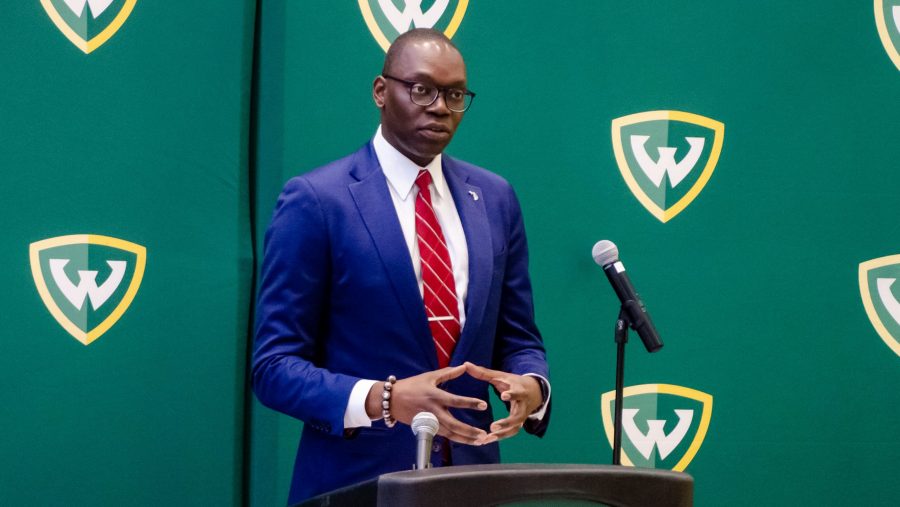
Democratic U.S. Senate candidate Abdul El-Sayed speaks to UAW-represented public defenders during an informational picket on June 17, 2026.

McNamara: Kind of along those lines, when you came to Michigan in the spring, there was tremendous outcry in some circles. Congresswoman Haley Stevens said you were ‘divisive.’ Mallory McMorrow compared you to the white supremacist Nick Fuentes. What is your response to things like that? Because you seem to hear it a lot.

Piker: Unfortunately, this is the way that politics is conducted in this country. In most circumstances, people rely on the rest of the electorate not really knowing anything about me, and in the past this might have actually worked, because mainstream media and local institutions were capable of successfully gatekeeping outsider candidates and also outsider media figures.

Nowadays it’s a little bit different, especially because there’s so much diversity of choice in where people can get their news from, so people can come to me directly and figure out what I’m actually about, so that was one of the reasons why that smear campaign failed spectacularly, because people could just tune into my broadcast, or people were maybe somewhat familiar with what I represented, and they understood that these smears were simply being thrown in my direction, not because of any serious anti-Semitism that I’ve ever displayed.

I have not; I’ve actually combated anti-Semitism my entire professional media career and will continue to do so. I find it repugnant. It’s an odious form of bigotry, just like every other form of bigotry, including Islamophobia.

But the other reason why this smear campaign did not work is because a lot of people intrinsically now understand in the aftermath of three years of genocide, and a lot of establishment Democrats, and certainly the entirety of the Republicans, criticizing those who speak out against this genocide with these heinous accusations, a lot of people understand that this is not a person that is actually bigoted in any way, shape or form. As a matter of fact, it’s quite the opposite. This is an anti-genocide advocate, and that’s part of the reason why he’s being called an anti-Semite.

Now, that dangerous conflation actually foments more anti-Semitism, which is, ironically, something that I’ve discussed quite a bit as well, for many, many years prior to October 7, and continue to do so now. But that’s why it didn’t work. It demonstrably failed, right? It fell flat on its face.

People started looking at Abdul’s campaign, people started hearing what he was saying, and they liked it… He was in third place before this smear campaign started, and now he’s comfortably in first place.

Abdul El-Sayed is a wonderful candidate. He has solid fundamentals. He’s probably one of the best candidates in the Democratic primary cycle this midterm season. Rhodes scholar, doctor, worked for Detroit Public Health, spent his entire professional life trying to heal people, and on top of that, he is against the genocide that Israel has committed, and that’s consistent with his values, consistent with my values as well, and yet he was not receiving a lot of media attention, that race in and of itself was not receiving a lot of media attention… and I guess Haley Stevens and Mallory McMorrow stepped on a landmine there and accidentally nationalized and publicized this (Michigan Senate) primary, and people actually started tuning in.

People started looking at Abdul’s campaign, people started hearing what he was saying, and they liked it. And lo and behold, he was in third place before this smear campaign started, and now he’s comfortably in first place.

McNamara: It seems like many within the Democratic Party still haven’t fully accepted the role Israel’s genocide in Gaza played in the 2024 election. I recently talked with pollster Adam Carlson about a recent Zenith research survey he did, and it had showed that Haley Stevens would lose a significant portion of people who identify as progressives in the general election, should she make it through the primary, less so for El-Sayed and McMorrow. Do you think this country’s views have shifted enough, and now unconditional support for Israel is seen as a political liability?

Piker: Absolutely, and that’s precisely the reason why AIPAC and AIPAC subsidiaries never actually reveal that the candidates that they’re fundraising for are pro-Israel. None of those ads, whether they be attack ads against their opponents or the ads in favor of their hand-selected candidates, ever mention this candidate’s point of view on Israel. If Israel was such a popular position, then they would proudly declare it. AIPAC wouldn’t need to use this opaque funding structure and find shell corporations to funnel money into by way of their donor network under the guise of United Democracy Fund, or Elect Women Fund, that was the one they used in Illinois in the Chicago primaries.

They do that because I think everyone understands that pro-Israel politics is demonstrably unpopular, and it’s only going to get less popular from this point on. I often throughout the genocide would say: going forward, today is the most popular Israel will be. Tomorrow, Israel will be less popular than it was today, and yesterday Israel was more popular than it is today. And that has been resilient.

There are constant demands for censorship against prominent critics of Israel.

That (pro Israel) attitude has shifted, and it will continue to shift as more and more people not only come to terms with Israel playing a destabilizing role in the region, but also the unbelievable amount of arrogance in display by those who are defenders of Israel and defenders of Israeli foreign policy.

I think that is oftentimes a less discussed aspect of the reason as to why Americans are frustrated with Israel, and it’s because there are constant demands for censorship against prominent critics of Israel. Some of those censorship attempts are actually successful, de-platforming initiatives that take place. I myself was banned from traveling to the United Kingdom only last month, and it was directly a consequence of my criticisms of Israel.

This kind of censorious attitude, especially when it’s the overwhelming majority’s position, is going to be unbelievably frustrating, and it’s only going to breed more enmity and hostility against the State of Israel. And outside of that there is this level of entitlement to unlimited funds coming from the United States of America, funds and weapons that Israel deploys on Palestinian civilians, on Lebanese civilians, as they’re doing currently, as they’re in the process of trying to disrupt the memorandum of understanding in a longstanding ceasefire negotiation that we might actually finally implement with Iran.

These kinds of destabilizing initiatives paired up with hubris, unbelievable entitlement and arrogance come across as very frustrating to the average American who is maybe uninitiated with the actions of Israel.

McNamara: Influencers are often brought up as a way for people to connect with younger voters. As you know, Democrats tried to do this to very mixed success at the DNC two years ago, but to you, what is the best way to gain the attention and the vote of the mythical younger voter?

Piker: I think it’s policies, ironically enough. In the post 2024 autopsy that was being conducted in public, a lot of Democrats went to mainstream media and decided the reason why Donald Trump won was because of Joe Rogan—and Joe Rogan was obviously the catch-all term for the podcast circuit, the manosphere.

Now, is the podcast circuit of the manosphere influential, especially in terms of converting young men to voters? Certainly, but ironically enough, they chose me as the left version of Joe Rogan because of my audience, because of the success I’ve seen in the independent sphere as the largest left content creator in these spaces that are inundated with far right and right-wing messaging.

The most significant issue is that the Democratic Party is not defined by a policy prescription for the problems that the working class faces in this country.

I told them over and over again, this is not an issue that you can podcast your way out of, that I myself am not the Joe Rogan of the left, and that Joe Rogan could potentially be the Joe Rogan of the left, and was the Joe Rogan of the left at some point when he endorsed Bernie Sanders. And that ultimately the problems that the Democratic Party are facing do not revolve around their lack of funding in messaging initiatives. That’s one element of the issue, but it’s not the most significant one.

The most significant issue is that the Democratic Party is not defined by a policy prescription for the problems that the working class faces in this country, and when they’re not defining themselves on those terms with left populous economic solutions: Medicare for all, an initiative in the direction of publicly funded housing, federal jobs guarantee, free college, these bold and somewhat radical agenda items that I think a lot of Americans are on board with.

Instead of doing that, the Democratic Party is constantly finding itself in a defensive posture against Republican culture war agenda items, and by not having a vision in the affirmative, they are allowing the Republican party to define the Democratic party, and that’s the reason why they keep losing. So it comes back to policies at the end of the day, because that’s the fundamental principle of theoretical democracy. We are going to vote an elected representative to represent our interests.

“What will you offer me?” This is the question that I think a lot of people understandably ask their elected representatives in the Democratic party, and their  answers have so far been insufficient. I hope that this sequence of electoral defeats will light a fire under the Democratic Party, so that they don’t shy away from a more bold agenda, a more bold vision for change, especially because there’s tremendous appetite in the base of support for said bold agenda of change that centers the needs of the working class first and does not get bogged down with unnecessary culture war distractions.

Support local journalism.

WDET strives to cover what’s happening in your community. As a public media institution, we maintain our ability to explore the music and culture of our region through independent support from readers like you. If you value WDET as your source of news, music and conversation, please make a gift today.

The post Political commentator Hasan Piker explains endorsement of El-Sayed for US Senate appeared first on WDET 101.9 FM.

The Metro: Why homes are built more quickly in West Michigan — and what the rest of the state can learn

Michigan is facing a serious housing shortage, with experts estimating the state needs to build nearly 100,000 homes.

Outdated zoning laws hinder the creation of diverse, mixed-use neighborhoods, and lengthy permitting processes slow new developments. Additionally, ongoing shortages of construction workers and building materials make it even harder to add new housing units. As a result, many new developments cater to wealthier residents, leaving residents struggling to find affordable options.

Joe Agostinelli, founder of Miller Johnson Growth Advisors, believes better financing and strong partnerships between local leaders and developers are key to expanding Michigan’s housing supply. His team is developing a new riverfront project in Grand Rapids featuring a mix of offices, apartments, and condos. Agostinelli says that city and the broader Kent County area have been able to develop homes faster than places in metro Detroit.

The Metro’s Sam Corey spoke with Agostinelli at the annual Mackinac Policy Conference to discuss how his group is trying to build homes quickly in an environment that often moves slow. 

Hear the full conversation using the media player above.

Listen to The Metro weekdays from 10 a.m. to noon ET on 101.9 FM and streaming on-demand. Never miss an episode — subscribe to The Metro on Apple Podcasts, Spotify, YouTube, or NPR or wherever you get your podcasts.

Support the podcasts you love.

One-of-a-kind podcasts from WDET bring you engaging conversations, news you need to know and stories you love to hear. Keep the conversations coming. Please make a gift today.

More stories from The Metro

The post The Metro: Why homes are built more quickly in West Michigan — and what the rest of the state can learn appeared first on WDET 101.9 FM.

The Metro: How government inefficiency hampers population growth in Michigan

In Michigan, we have many needs: higher-paying jobs, better educational outcomes, and more public transit. Above all, we need more people. 

A lot is at stake. Even if your neighborhood feels bustling, when Michigan’s population stops growing, the state actually shrinks in all the ways that matter. Since 1970, we’ve lost a seat in Congress after every census, and those same population counts decide how hundreds of billions in federal funding are divided. That means less money for roads, water systems, housing, and more. As baby boomers retire, our workforce is shrinking, and Michigan has lost 93,000 workers just since last spring. Fewer people here means less political power, fewer resources, and a smaller tax base to pay the bills.

Michigan’s leaders agree — we need to attract more people to our state. Yet one central question remains: how do we make it happen, and who is responsible for leading the way? Some are trying to answer that question. The state of Michigan has a growth office. The City of Detroit has an initiative to grow its population. 

Jeff Donofrio is a leader in the population growth space. He’s the president and chief executive officer of Business Leaders For Michigan. He’s written about this topic in several reports, and he’s worked for the City of Detroit and the State of Michigan to resolve the problem.

He believes we need to reform teaching.“It’s about making sure that [students are] engaged and can do stuff besides passing a standardized test,” says Donofrio.

He joined host Robyn Vincent on The Metro to explore how government culture needs to change to build more housing, create better regional transit, and to ultimately attract more people to the state.

Hear the full conversation using the media player above.

Listen to The Metro weekdays from 10 a.m. to noon ET on 101.9 FM and streaming on-demand. Never miss an episode — subscribe to The Metro on Apple Podcasts, Spotify, YouTube, or NPR or wherever you get your podcasts.

Support the podcasts you love.

One-of-a-kind podcasts from WDET bring you engaging conversations, news you need to know and stories you love to hear. Keep the conversations coming. Please make a gift today.

More stories from The Metro

The post The Metro: How government inefficiency hampers population growth in Michigan appeared first on WDET 101.9 FM.

MichMash: Michigan US Senate race begins to take shape; State Senator Singh weighs in on the budget process

In this episode

  • The current status of the Michigan US Democratic Senate race.
  • Will the budget get done by the July 1st deadline?

Subscribe to MichMash on Apple Podcasts, Spotify, NPR.org or wherever you get your podcasts.

Over the past month, Michigan’s U.S. Senate race has emerged as one of the most competitive contests in the country. This week on WDET’s MichMash, Gongwer News Service’s Zach Gorchow and Alethia Kasben break down the major developments that have shaped the race.

Dr. Abdul El-Sayed and U.S. Rep. Haley Stevens appear to have pulled ahead of state Sen. Mallory McMorrow. Fellow state Sen. Sam Singh said he still hopes McMorrow can gain ground before the primary election.

“What we are seeing right now is significant investment by outside groups [supporting Dr. El-Sayed and Rep. Stevens]. My understanding is that McMorrow has some independent expenditures that are happening. Now that people are spending real money, I think you’ll begin to see a clear path.”

The Michigan primaries is on August 4th 2026.

Support the podcasts you love.

One-of-a-kind podcasts from WDET bring you engaging conversations, news you need to know and stories you love to hear. Keep the conversations coming. Please make a gift today.

The post MichMash: Michigan US Senate race begins to take shape; State Senator Singh weighs in on the budget process appeared first on WDET 101.9 FM.

McDonald Rivet says lawmakers can find common ground across party lines

A recent Gallup poll shows 86% of Americans surveyed think Congress is not doing a good job on behalf of the country. That’s not necessarily surprising in a fractious election year. But lawmakers say they can work in a bipartisan fashion.

Kristen McDonald Rivet is the U.S. representative for Michigan’s 8th Congressional District. She spoke with WDET’s Jerome Vaughn at last month’s Mackinac Policy Conference. McDonald Rivet says there’s a formula to get lawmakers from different sides of the aisle working together.

She says Ohio Congresswoman Nancy Kaptur gave her some invaluable advice along that line.

“Find the people that are close to your district in terms of median income. Seeking out other members whose districts look like mine, who are worried about the same things that I am worried about.”

McDonald Rivet says there’s a gap between many voters’ perception of Congress and how things really are.

“The reality that you don’t hear on the 24-hour news channels is that most people in Congress are there because they are serious about making things better. Not all of them. Definitely not all of them, but most people are.”

McDonald Rivet is in her first term as a congresswoman. The 8th District includes Flint, Saginaw and Midland. The Democrat is running for a second term in office.

The post McDonald Rivet says lawmakers can find common ground across party lines appeared first on WDET 101.9 FM.

MichMash: Michigan primary voters could pick nominees for secretary of state and attorney general

Michigan is one of three states that nominates candidates for secretary of state and attorney general at party conventions. There is currently a push to put those nominations to the statewide primary ballot instead.
 
This week on WDET’s MichMash, Gongwer News Service’s Zach Gorchow and Alethia Kasben discuss the factors being weighed with this decision. Then Lon Johnson, former chairperson of the Michigan Democratic Party, stops by and explains why he supports this proposal.

Subscribe to MichMash on Apple Podcasts, Spotify, NPR.org or wherever you get your podcasts.

In this episode

  • How do we currently nominate secretary of state and attorney general?
  • Reactions to this new proposal

Johnson says that having voters choose secretary of state and attorney general nominees allows for better representation for both the Democratic and Republican parties, as opposed to party conventions which are dominated by “insiders and special interests.”

“Anytime you have more people involved, you get a better reflection of society,” said Johnson. “It’s time to move forward and present this choice to the people of Michigan.”

The other two states that don’t use voters to nominate these roles are South Dakota and Indiana.

Johnson said roles that he and his group may focus on next includes Michigan Supreme Court seats and university trustees.

More from WDET

Support the podcasts you love.

One-of-a-kind podcasts from WDET bring you engaging conversations, news you need to know and stories you love to hear. Keep the conversations coming. Please make a gift today.

The post MichMash: Michigan primary voters could pick nominees for secretary of state and attorney general appeared first on WDET 101.9 FM.

The Metro: Windsor mayor says Gordie Howe Bridge ‘will transcend Donald Trump’s presidency’ when it opens

The Gordie Howe International Bridge is widely interpreted as strengthening the connection between Canada and the United States, making travel easier and cheaper. It’s seen as a win-win project that Canada paid for and jointly owns with the Michigan.

But President Donald Trump has tried to block the bridge’s opening until Canada meets certain trade-related demands with the U.S. and compensates America for it, even though Canada already paid for the bridge. 

The upcoming opening of the bridge has now been delayed. In an email statement Thursday morning, Windsor Mayor Drew Dilkens said, “Although we would all like the Gordie Howe International Bridge to open, Canada need not fall on bent knee to make it happen.”

Producer Sam Corey spoke with Dilkens yesterday before the ribbon cutting was canceled. He says the bridge is “the ultimate symbol of connection” and friendship.

Hear the full conversation using the media player above.

Listen to The Metro weekdays from 10 a.m. to noon ET on 101.9 FM and stream on-demand.

Never miss an episode — subscribe to The Metro on Apple Podcasts, Spotify, YouTube, NPR, or wherever you get your podcasts.

Support the podcasts you love.

One-of-a-kind podcasts from WDET bring you engaging conversations, news you need to know and stories you love to hear. Keep the conversations coming. Please make a gift today.

More stories from The Metro

The post The Metro: Windsor mayor says Gordie Howe Bridge ‘will transcend Donald Trump’s presidency’ when it opens appeared first on WDET 101.9 FM.

Former US attorney accuses President Trump of running the government like a mob boss

President Trump has repeatedly said the U.S. Justice Department has been “weaponized” against him.

But one former Justice official argues the president is not just weaponizing the government but running it like an organized crime syndicate.

Author and law professor Barbara McQuade served as the U.S. Attorney for the Eastern District of Michigan from 2010 to 2017.

She successfully prosecuted former Detroit Mayor Kwame Kilpatrick on corruption charges.

Now McQuade is out with a new book, “The Fix: Saving America from the Corruption of a Mob-Style Government.”

She says the book stems, in part, from what she found during the Kilpatrick trial.

Support local journalism.

WDET strives to cover what’s happening in your community. As a public media institution, we maintain our ability to explore the music and culture of our region through independent support from readers like you. If you value WDET as your source of news, music and conversation, please make a gift today.

The post Former US attorney accuses President Trump of running the government like a mob boss appeared first on WDET 101.9 FM.

Federal funding cuts test resilience of Focus: Hope nonprofit

Focus: Hope was founded in 1968 as a way to bring Black and white Detroiters together in the aftermath of the 1967 rebellion.  The organization has grown and changed in the last six decades, but still faces challenges.

Portia Roberson is the President and CEO of Focus: Hope.  She spoke with WDET’s Jerome Vaughn at the Mackinac Policy Conference last week.

Roberson says changes in federal funding priorities have made it harder for the non-profit to achieve its goals.  The organization had its federal funding slashed for Head Start.  She says those funding cuts endangered early learning opportunities for more than 200 families.

At the same time, Roberson says the Focus: Hope food program is growing because more people across the state are dealing with food insecurity.  The non-profit is feeding between 45,000 and 50,000 Michigan seniors every month.

Support local journalism.

WDET strives to cover what’s happening in your community. As a public media institution, we maintain our ability to explore the music and culture of our region through independent support from readers like you. If you value WDET as your source of news, music and conversation, please make a gift today.

The post Federal funding cuts test resilience of Focus: Hope nonprofit appeared first on WDET 101.9 FM.

MichMash: Money Out of Politics group is “very confident” that its proposal will overcome foreseeable challenges

In this episode

  • What is in the Money Out of Politics group’s proposal?
  • What are the reactions from the supporters and opponents of the bill?

Subscribe to MichMash on Apple Podcasts, Spotify, NPR.org or wherever you get your podcasts.


A ballot measure that would prohibit political spending by Michigan’s regulated utilities and large state contractors could appear on the November ballot. As part of WDET’s weekly series, MichMash, Gongwer News Service’s Zach Gorchow and Alethia Kasben discuss what’s included in the proposal and how supporters and opponents are responding.

The co-chairs of Michiganders for Money Out of Politics, Sean McBrearty and Christy McGillivray, stop by to discuss the proposal.

Opponents of the proposal say it infringes on their right to free speech. McBrearty disagrees.


“They’ll still get to play a role in the political process. The utility executives will be welcome to go out and canvass for any lawmakers they support,” he said.

McGillivray added, “They won’t be able to use money to shut the door on everyone else who wants to have a conversation with their elected officials.”

The group is confident it will gather the 356,000 valid voter signatures needed to qualify for the November ballot.

Producer’s Note:

MichMash reached out to Consumers Energy and DTE Energy, as well as Protect MI Free Speech, the committee opposing the ballot proposal, to share their perspectives. However, we were unable to schedule interviews with them. We will continue to cover this issue and hope to have them on the show in a future episode.

Support the podcasts you love.

One-of-a-kind podcasts from WDET bring you engaging conversations, news you need to know and stories you love to hear. Keep the conversations coming. Please make a gift today.

The post MichMash: Money Out of Politics group is “very confident” that its proposal will overcome foreseeable challenges appeared first on WDET 101.9 FM.

Eli Savit aims to be Michigan Attorney General

Eli Savit is the Washtenaw County Prosecutor and the Democratic endorsed candidate for Michigan attorney general.

Savit spoke with WDET’s Russ McNamara about his campaign and the importance of younger voters in this year’s elections.

Listen: Eli Savit talks to Russ McNamara at the Mackinac Policy Conference

The following interview was edited for clarity and length.

McNamara: Take me through the process of the convention this year – it was a little bit wild for Democrats’ sake, but something that was pretty clear was that the people at the convention voting much prefer you over Karen McDonald, the Oakland County prosecutor. Why? And I don’t mean that as an insult.

Savit: I give a lot of credit to our team and to the organizing efforts that we did. We made a conscious effort to speak to people that have felt shut out by not just the party, but by the political process, especially younger people. We had tremendous turnout among youth, among college students. The convention was during finals season, and we didn’t just have kids from U of M come in. We had a group of kids from Northern Michigan University make the drive down in the middle of finals season to be there to cast a vote on a Sunday when you got to go back to school the next day. We had a tremendous surge in youth turnout. The youth in turn organized for us, right? They volunteered for our campaign, they called voters, they came to convention, and they worked for our campaign because they found something to believe in.

I’m tremendously honored that I was the candidate that they saw fit to support in that regard, and I think that’s what we need if we’re going to keep building our party into the future. So, it was a great convention for us, for them, but now we’re focused on moving forward to the general in November.

McNamara: Do you think that enthusiasm by the youth vote can carry over into the general?

Savit: Well, it’s certainly something that we’re hoping remains in the general, but it’s not the only thing that we need to win this race. We need to talk to everybody, we need to talk to all communities, but I will say we’ve seen drop off in youth turnout, not just in Michigan, but across the country in 2024 from even 2022. We need that vote, we need young people in the fold if we are going to win general elections, and that’s something that our campaign has, and it’s momentum that I’m hoping will carry forward, even as we talk to every group in every constituency in the state.

McNamara: Do you think part of the problem in 2024 with the youth vote staying home was the candidates, whereas there wasn’t really a candidate that this younger generation was excited about?

Savit: I think to some extent, but here’s the other thing that has really been crystallized to me over the course of this campaign: I’ve got young staff too, so we spend a lot of time in the car together and have some pretty long conversations, and they’ve emphasized to me, listen, when Donald Trump came down that stairway in 2015, if you are 18 years old, that is your entire political life. You know nothing other than a politics that has been dominated by Donald Trump. It’s baked in. So, running a campaign just on a message of we’re fighting back against the Trump administration. Young people know that what’s going on in D.C. is bad, but they want something more. They want a positive vision. They want to know that the future that they thought was promised to them is going to be secured, and we can’t just talk over and over again about how bad Trump is, because really, for young people, that’s about all they know intuitively in terms of the political landscape here.

So that’s something that’s really been important to me, and we’ve tried to go out and talk to young people and say, okay, what are the issues that concern you, and it’s things like AI. Am I going to have a job after college graduation? Things like, am I ever going to be able to afford a home and start a family? Talk to young people, they want a secured future, and we’ve got to talk about their issues and really listen to what their concerns are, not just hammer home the message over and over again about how bad this administration is.

McNamara: We’re here at Mackinac. I talked with Jim Runestad, the chair of the Michigan Republican Party, yesterday. He thinks you are a gift to Republicans because you do skew progressive, and it plays into the messaging by Republicans that everybody in the Democratic Party right now is a radical leftist. I don’t know if you’re necessarily radical, but you are a leftist.

Savit: I actually would not categorize myself as a leftist. I would not, and I actually don’t think that pinning down what I stand for ideologically makes a lot of sense. Here’s what I stand for, especially in this race. If somebody is screwing over the people of the state of Michigan, whether that’s a criminal on the street, whether it’s your boss who’s stealing from you, whether it’s a corporation who is ripping you off and price gouging you, whether it’s a corporate polluter or whether it’s the President of United States himself, the attorney general needs to be there standing for the people of the state of Michigan.

If you want to put ideological labels on that, go nuts.

But I think that the people of the state of Michigan, when you say, ‘Don’t you want an attorney general who’s going to stand up to the corporation that’s contaminating your local water supply? Don’t you want an attorney general who’s going to stand up to your boss if he’s stealing from you? Don’t you want an attorney general who’s going to actually do something about price gouging?’

They say, yeah, regardless of where they fall on the political spectrum. So, I look forward to having that conversation.

McNamara: But you have been supportive of things like bail reform; that’s not even universally adopted in traditionally Democratic spaces. So, is that something that you would like to see? You don’t have that power, but is that something you would continue to advocate for if you get the big office?

Savit: We need to move beyond, just as a policy matter, cash bail system, but that doesn’t mean—I want to be clear about that—that everybody who’s arrested for a crime gets to go free. I want to hold people if they are dangerous pending trial, right? And if you’re not, I don’t think you should be held, but money shouldn’t play a role in this, and here’s the thing that I want to ask people who say bail reform is bad. Why do you think it’s okay that Jeffrey Epstein, the first time that he was arrested, was able to bond his way out of jail and continue to harm people? It didn’t matter what you set that price at. Jeffrey Epstein was going to be able to buy his way out. I think people like Jeffrey Epstein, that are wealthy, that are dangerous, that are going to continue to harm people if they’re released, I think they should remain in jail.

And so, if you’re defending that system, you are essentially defending a two-tiered system of justice in which wealthy people are able to continue to go out and harm people simply because they’re wealthy. And I don’t know why anybody would be comfortable with that.

Trusted, accurate, up-to-date.

WDET strives to make our journalism accessible to everyone. As a public media institution, we maintain our journalistic integrity through independent support from readers like you. If you value WDET as your source of news, music and conversation, please make a gift today.

Donate today »

The post Eli Savit aims to be Michigan Attorney General appeared first on WDET 101.9 FM.

Detroit City Council President looks forward to working with mayor on poverty and transit issues

James Tate is the latest in a long line of Detroit city council presidents as of January.  He attended the Mackinac Policy Conference on Mackinac Island last week and sat down to speak with WDET’s Jerome Vaughn.  

Listen: Detroit City Council President James Tate speaks with Jerome Vaughn at the Mackinac Policy Conference

Tate has been on the city council for years, but now he’s learning how to perform in his new role as president. He’s had conversations with current Mayor Mary Sheffield about her transition from council member to council president.

The city council president says he looks forward to working closely with Sheffield on an issue that he sees as Detroit’s biggest challenge: poverty.  Tate hopes potential opportunities posed by transit could help ease some of the effects of Detroit’s income gap.

Support local journalism.

WDET strives to cover what’s happening in your community. As a public media institution, we maintain our ability to explore the music and culture of our region through independent support from readers like you. If you value WDET as your source of news, music and conversation, please make a gift today.

The post Detroit City Council President looks forward to working with mayor on poverty and transit issues appeared first on WDET 101.9 FM.

MI GOP Chair: Democrats’ ‘woke’ policies are good for Republicans in 2026 election

For the past few years, Michigan Republicans have been fractured between the historically small government variety and the Trump fanatics who lean into conspiracy theories.

State GOP conventions have been a flashpoint for controversy and fighting.

“We have had fisticuffs, kicking in the groin—you name it, all videotaped and spread all over the nation,” said Jim Runestad, Michigan Republican Party Chair.

“When I first went to the RNC, they said ‘you’re the groin kickers’ and I was saying, ‘well, this isn’t really a good reputation for a state party to have,’ particularly when people decide where they’re going to put their donations.”

In an interview at the Mackinac Policy Conference, Runestad—who is also a state senator—tells WDET’s Russ McNamara that he feels like the in-fighting has largely stopped.

Listen: MI GOP Chair Sen. Jim Runestad talks to Russ McNamara at the Mackinac Policy Conference

The following interview has been edited for clarity and length.

Russ McNamara: What brought about this change from fighting to relative peace?

Jim Runestad: I said I’m not going to engage in (factional infighting), I won’t tolerate it. We’re going to run a unified party, and the people who want to have drama and fights are going to get thrown out or ostracized. Everybody liked that message. They’d seen what it was like in the past, and it was, it was very unifying. So I’ve been really pleased. That’s what I ran on. This is what I’ve been able to accomplish when I’ve been in front of the convention or the state committee.

McNamara: You’re fairly prolific in getting bills passed through the state legislature. Do you think you brought some of those skills of negotiation to bring everybody together within the Republican party?

Runestad: You’re the first person that I’ve talked to who mentioned that. The last year Republicans were in control (of the state legislature) with the Democrat in control (of the governor’s office), I had the second most number of bills signed into office.

Frankly, I wasn’t exactly the favorite of the majority leader Republican (Mike Shirkey) at the time. That adds to the complication, but a lot of it was reaching out to members of committees, chairs of committees and explaining why this is a good bill.

Sometimes it’d have 20 to 30 people in a meeting, all stakeholders to get them to either yes or neutral. And when a chair sees you have a very complex bill that’s a great idea, and you have no opposition, that’s how you get a bill through. And that’s what I really specialized in doing over the last 10 years in office.

McNamara: You don’t have a lot of control over what happens nationally, but the national perception of the Republican Party, of President Trump, can affect how people vote in the state of Michigan. What are you kind of doing to overcome some of that, because these are the worst poll numbers that we’ve seen for the president since his second term started.

Runestad: A lot of it comes down to the candidates you have running for these particular offices. I’ve never been more excited for what we have in terms of the candidates coming out of our convention. We have just such a great cadre of candidates. Mike Rogers is running by himself, and they’re (Democrats) beating themselves up in their primary. Our primary is going to be a tough one on the gubernatorial side, but we’re going to have a fabulous candidate come out of there.

On the national level, I think what we’re seeing is just a result of price of gas. I believe that that can be reversed relatively quickly.

So I think we’re going to be very, very good going into the November elections. We have fabulous candidates, we’ve raised way more money. If you look at the Democrats, (their) party polling is the lowest it’s ever been in its history, so it’s not like, ‘oh, they have some frustration over gas prices, therefore they love the Democrats’. Oh no. The woke policies that they ran on that were they were destroyed by in 2024 is exactly the same policies they are going run again.

McNamara: Can you explain what you mean by woke policies?

Runestad: I love their policy of having boys playing girls sports, it’s a good one for them. They need to continue running on open borders.

Their Attorney General (candidate and current Washtenaw County Prosecutor) Eli Savit was constantly speaking to the Michigan Senate Judiciary committee when the Democrats are in control. (He was in there) with the most woke leftists, ‘free the criminals’, ‘get the criminals out into society’ as anyone I’ve seen coming through the Judiciary Committee.

I think it’s wonderful that they’re doubling down on those woke policies that I just described. I don’t know how they describe them, but that’s how we describe them.

McNamara: In the race for Michigan’s open U.S. Senate seat who do you want to face Mike Rogers?

Runestad: Well, Abdul El-Sayed performs the worst in in the polling (head to head vs Rogers), but you know that’s temporary.

I know Haley Stevens was booed by 7,400 people going into the (Democratic) convention. You turn on the TV and all you see is Haley Stevens to try to overcome the negativity within the base of the party, They’re (AIPAC) pumping millions into it.

Listen to the full interview using the media player above.

Trusted, accurate, up-to-date.

WDET strives to make our journalism accessible to everyone. As a public media institution, we maintain our journalistic integrity through independent support from readers like you. If you value WDET as your source of news, music and conversation, please make a gift today.

Donate today »

The post MI GOP Chair: Democrats’ ‘woke’ policies are good for Republicans in 2026 election appeared first on WDET 101.9 FM.

The Metro: The Detroit Association of Women’s Clubs makes national list for endangered historic places

Women-led organizations marched on Washington to be heard during their historic efforts to achieve social, political and economic equality. Yet, not all women were included in the conversation. Many of the early women’s suffrage groups excluded Black women and women of color.

Discrimination in the movement led to the formation of Black-led organizations like the Detroit Association of Women’s Clubs (DAWC).

Founded in 1921 at Ferry and Brush at the height of the women’s suffrage movement, the DAWC made it their mission to fight for their own version of equality—one that included both gender and racial parity.

So what happened to the DAWC, its founders, and its mission?

Dr. Rosa Slade Gragg at the White House.

Every year, the National Trust for Historic Preservation compiles its list of the 11 Most Endangered Historic Places in America. 

This year, in honor of our nation’s 250th anniversary, the organization is centering its selections around the theme of equality—protecting and preserving spaces that have advanced the idea that all people are created equal.

The DAWC earned a place on this year’s list. Executive Director Candace Calloway joins the show to share what the designation means, and why its essential to preserve this historic space.

Repairs are needed at the Detroit Association of Women’s Clubs building.

Listen to The Metro weekdays from 10 a.m. to noon ET on 101.9 FM and streaming on demand.

Subscribe to The Metro on Apple Podcasts, Spotify, NPR.org or wherever you get your podcasts.

Support local journalism.

WDET strives to cover what’s happening in your community. As a public media institution, we maintain our ability to explore the music and culture of our region through independent support from readers like you. If you value WDET as your source of news, music and conversation, please make a gift today.

More stories from The Metro

The post The Metro: The Detroit Association of Women’s Clubs makes national list for endangered historic places appeared first on WDET 101.9 FM.

MichMash: The 2026 Mackinac Policy Conference focuses on common ground

In this episode:

  • Why did Michigan State University President Kevin Guskiewicz leave to go to Clemson?
  • What was the general theme of this year’s policy conference?
  • Who gave standout speeches during the conference?

Subscribe to MichMash on Apple Podcasts, Spotify, NPR.org or wherever you get your podcasts.


The Mackinac Policy Conference had a couple of surprising moments from lawmakers, leaders, and political candidates. This week on WDET’s MichMash, Gongwer News Service’s Zach Gorchow and Alethia Kasben give a glimpse of some of the news happening on the island. Gongwer reporter Liz Nass joins the conversation from the conference to share her coverage of the annual meeting. 

Unlike other years, the conference was focused more on where Michigan ranked in comparison to the rest of the nation. “It’s very stat heavy. Everybody is really focused on numbers, specifically Michigan’s rankings. There isn’t specific legislation being spoken about, but more so about competition with the rest of the country,” said Nass. 

The conference had its fair share of news-breaking moments. One of the biggest was Michigan State University President Kevin Guskiewicz leaving his position to become the 16th president of Clemson University. Nass said his departure points to a larger story.

“It follows what the MSU Board of Trustees have been dealing with for a while. A while ago, they had a special emergency meeting discussing [possibly] changing the code of ethics because of rogue trustees writing op-eds, which they expressed created a bad environment for our president.”

There is a conversation about changing how these positions are nominated. 

Support the podcasts you love.

One-of-a-kind podcasts from WDET bring you engaging conversations, news you need to know and stories you love to hear. Keep the conversations coming. Please make a gift today.

The post MichMash: The 2026 Mackinac Policy Conference focuses on common ground appeared first on WDET 101.9 FM.

State Sen. Mallory McMorrow says she’s working to win over undecided voters, find path back to bipartisan cooperation

Democrats are locked in a three-way primary battle in the race for US Senate. The candidates are Abdul El-Sayed, Congresswoman Haley Stevens and Senator Mallory McMorrow.  

McMorrow spoke to WDET about how she is campaigning across Michigan, talking with voters about their frustration with the current administration. 

Listen: State Sen. Mallory McMorrow talks with Russ McNamara at the Mackinac Policy Conference

McMorrow: The campaign is going great. I feel really excited about all of the events that we’re doing. We stopped in Saginaw and Bay City on the way up here, and people are really starting to tune into this race. Once you get past the politicos and the people who’ve been paying attention for the last year, the only thing that’s been consistent in this race is the number of people who are undecided. So, we are reaching out to those people every single day. The response is amazing, and it is our ninth oil change on the campaign, so we’re putting in a lot of miles, meeting a lot of people, and it feels awesome.  

McNamara: You’re a car lady, so are we doing the 3,000 mile oil change or the 5,000 mile? 

McMorrow: Oh gosh, we’re probably somewhere in between, we’re not trying to burn it out. 

McNamara: Earlier today, I talked with Jim Runestad, the Michigan GOP chair. I asked him who he wanted to face in the general election. He brought up Abdul Elsayed. He brought up Haley Stevens. You did not get mentioned. How do you receive that news? 

McMorrow: Well, Jim knows me better than anybody else as his colleague every day, and I take that as a compliment. 

McNamara: So, you’ve seen the latest round of polling. There’s always new polls coming out. I hate polls, honestly, because they’re just a snapshot of that particular day, right? What are you seeing, and what are you hearing from the community when it comes to this polling? Is it matching up with what you’ve been getting back from the people you’ve been talking to? 

McMorrow: Like I said, the only thing that’s been consistent is the number of voters who are undecided. So, we have been out on doors all across the state, we have been doing dozens of events. Our brewery tour is still ongoing, and what we hear from voters is people are nervous, they are scared, they are pissed off at this president, who apparently can just tell us that the war with Iran is over, when it isn’t. That’s not how it works, and they want somebody who’s going to fight for them. So, once I’m able to have a conversation and say, “I get it, I Googled how to run for office in 2018 on my very first try, I defeated a Republican incumbent helped build real power, and look at what we’ve been able to get done in Michigan.” Once they hear that, they’re excited, and they’re in. 

McNamara: What’s your base? Because I was talking with Congresswoman Stevens, she’s drawn quite a bit of support from the Black community. Abdul El-Sayed has the built-in Arab American and Muslim community, but what’s your community? 

McMorrow: Michiganders. As many people as possible who want a good life for their family, and the one thing that is a good note in the polling is I am up with independent voters against Mike Rogers by 12 points. 

McNamara: Mike Rogers, he doesn’t have the benefit of a primary. So, how do you go after somebody like that? Because you have to take aim at him, and you have to take some aim at your opponents. 

McMorrow: You do, and it’s a good point on how we frame all of this, because it is a Democratic primary to decide who will face Mike Rogers in November. All eyes are on this race. The Republicans know that control of the U.S. Senate runs through Michigan. If they can get Mike Rogers into the Senate, they block any path that Democrats have of flipping the Senate, and there is a real path. So, they are dumping tens of millions of dollars into this race.

And this is a moment where any Republican in the Congress or the Senate who has decided to stand up to Donald Trump has now lost their seat. Donald Trump has taken on retribution to primary any Republican who doesn’t bend the knee, and that’s how we’re going to go against Mike Rogers, because he’s making a bet right now. He’s got Donald Trump’s full backing. Is he going to stand up for Trump, or is he going to stand up for Michiganders? 

McNamara: The overall theme of the Mackinac Policy Conference is about unity, it’s about two sides coming together, bipartisanship. When you have a president that asks nothing but fealty from the people that are members of his party, how do you do that? Do you buy into slogans like that? Is bipartisanship always necessary?  

McMorrow: It has to be the goal. I sat down with seven Trump voters in Macomb County a few weeks ago and wanted to just get to know them as people first. Everybody wants to put everybody in boxes. You just asked me who’s your base, and I think it is true. It’s Michiganders. I went around the table and I asked, tell me in one word, how you feel about this moment. One woman said great. The others said scared, angry, anxious, pissed, and they are pointing at the president as a lot of the reason why. That he promised to end wars, he has started a number of wars and keeps us in wars, while telling us we can’t afford daycare, we can’t afford Medicare, we can’t afford Medicaid, and to your point has completely remade the Republican Party in his image, and if you don’t have loyalty to Trump, you’re out of the party. 

For us, I think it is critical that Michigan starts to show the way forward. I talk all the time about relationships that I have on the other side of the aisle that I really admire, whether it’s John Damoose or Roger Victory, Senator Bumstead in the Appropriations Committee. We’ve shown that we don’t have to agree on every issue, and we will debate each other passionately, but on areas where we can and want to work together, we do, and we do for the benefit of Michiganders.

Now, that is a rebuke in and of itself of what Trump is selling. Trump is selling a burn it all down, build up a party that is power above anything else to do what he wants to do, and what he wants to do is enrich himself and his family, and “who cares what it does to regular people?” So, yeah, I do believe in bipartisanship, and we have to get there with a Republican party that is not loyal to Donald Trump, and that means anybody who is bending the knee to Trump, we got to defeat. So hopefully we start to get Republicans who recognize that their constituents are the ones that matter and not this president. 

McNamara: To make it to the general election, there’s been some mudslinging. It comes with the territory. How comfortable are you with that? Because your opponent, Haley Stevens completely avoided the question, and, she says she wasn’t overly comfortable with it, essentially when pressed. So, I’m just wondering, does it come with the territory, and you get to move on, you guys can all be friends? Because as I was talking with somebody who follows Michigan politics quite a bit, there’s not a huge gap between yourself and your opponents. 

McMorrow: That’s exactly right. We’re going to have a debate tomorrow, and when you have three Democrats on stage, the policy differences are pretty minimal. Every single one of us wants Michiganders to have health care and wants that to be a guarantee, every single one of us wants to get out of the war with Iran. We have differences of opinions in how we do those things, but there is a stark contrast between the three people on stage and Mike Rogers, who is praising everything Donald Trump does, whether Trump attacks the Gordie Howe Bridge and threatens it to open, and Mike Rogers said, “Good, the President needs that for leverage against Canada.” When he threatened to annihilate all of the people of Iran, Mike Rogers said, “Good, peace through strength.” And that is the thing that I make want to make sure none of us lose sight of. I think that the primary does come with the territory. We should expect that the Republicans are going to unleash everything they have on any of us, so we’re all being put through our paces right now. Every detail about our lives, how we present ourselves, is going to be criticized. The voters will decide, and I believe that makes any of us much better positioned to win in November, because we will have been put through our paces, and the most important thing is that no matter what happens on August 4, we all come together on August 5 to defeat Mike Rogers. 

Trusted, accurate, up-to-date.

WDET strives to make our journalism accessible to everyone. As a public media institution, we maintain our journalistic integrity through independent support from readers like you. If you value WDET as your source of news, music and conversation, please make a gift today.

Donate today »

Dr. Abdul El-Sayed on reaching voters and prioritizing issues near home

Democrats are locked in a three-way primary battle in the race for US Senate. The candidates are Abdul El-Sayed, Congresswoman Haley Stevens and Senator Mallory McMorrow.   

El-Sayed spoke with WDET about how he sees himself reaching key demographics among Democratic voters. He says his experience leading health departments in Wayne County and Detroit steers his views on policy.

Listen: Dr. Abdul El-Sayed speaks to Russ McNamara at the Mackinac Policy Conference

El-Sayed: Well, you have to ask Columbia University’s College of Physicians and Surgeons about the MD they gave me. I might have have gotten duped. Maybe it was just a fake one, but I did put in the work. And then there was also the matter of the doctorate from Oxford University. But honestly, I don’t really care as much what people think about my education. I care that people in Michigan get a good education. I don’t care if you think I’m a doctor, I want you to be able to see a doctor. And those are the issues that we really ought to be talking about. 

McNamara: Stevens, yourself, McMorrow, you’re all very polite in person. Everybody’s really, really nice. It seems like there’s a lot of dirty work being done in the media right now. Every once in a while, stories will appear in Politico. Are we gonna actually take some of this mudslinging to each other, or are we just going to work through the media? 

El-Sayed: I will tell you this, I’m not here to sling mud, and when you see those stories, they’re not coming from our team. We’re a lot more focused on getting our message out to the people. I’ve been to 96 different cities now. On the way up here, we were in Cheboygan and Gaylord, and I want folks to understand what I’m about. I want to get money out of politics, put money in your pocket, pass Medicare for all. I think part of what people hate about the politics is that too many politicians run with no message at all, so instead their message is about how the other candidate is so much worse. You don’t have to do that when you actually have a message about what you want for people in our state. 

I’ve known exactly what I want for people, because I took the time to listen through my 10 years in public service, leading Detroit’s health department, running for governor back in 2018, leading Wayne County’s Department of Health, Human, and Veteran Services. People tell me it shouldn’t be this hard to afford a second bag of groceries, shouldn’t be this hard to send your kid to a dignified school, should not be this hard to see a doctor in the richest, most powerful country in the world, and I agree.

And so our politics is not about slinging mud at other people, our politics is about trying to bring ease to the 10 million people in this state who have had a bad go of things as a function—frankly, of deals that are being cut right behind us on that porch between corporations and corporate ball politicians. I don’t play that game. I don’t think anybody should. I’d like to make it illegal, and that’s a big reason why I’m running for U.S. Senate. 

McNamara: Your message has been resonating with younger voters, according to polling. What are you doing to reach out to Gen Xers, boomers who are hesitant? 

El-Sayed: Look, we’ve been talking to everyone, going everywhere, and I think what we’re seeing is overwhelming support among young people and very strong support among millennials, Gen X and baby boomers, and I think what’s always interesting to me is when I was in Cheboygan, I had this older woman come up to me. She said “You’re the first candidate about whom my granddaughter has been excited, and she turned me on to you.”

I think the most important thing any of us do every single day is care for our future that gets manifested in the in the bodies of our kids and our grandkids. We spend so much time taking care of them, and I think when young people are inspired by something, by a movement to actually bring politics back to the problems that we want to solve with them, I think what happens is you start to see older folks take note and take heed, and we’ve been seeing that up and down the state. 

McNamara: Black women make up the base of the Democratic Party, the most consistent voting bloc. What are you doing to reach out to them specifically? 

El-Sayed: I think the most important thing you can do is have listened, and as I said, we spend a lot of time in local communities, whether it’s Bible study, whether it is church on Sunday, whether it’s block clubs, whether it’s local democratic groups listening and learning. I think the most important thing is a message that is resonant. You think about the challenges facing Black women in our state, there are many of the same challenges everybody faces—the affordability of housing, the affordability of groceries, whether or not you could see a doctor, but those problems are exacerbated by structural racism in our state. The fact that too often Black women are left to Medicaid, which reimburses at half the rate, which is part and parcel why we continue to have the kind of maternal and child health epidemics that we see in our state, issues that I worked on.

My background is as health director for the city of Detroit, health director for Wayne County. Our work has been about trying to care for Black moms and babies. We led the single biggest expansion of Rx Kids in state history, built a program called Sister Friends back when I was in the City of Detroit that did things like provide free lift rides for prenatal care, so these are communities that I’ve been thinking about, listening to and delivering for for most of my career in public service, and you see that reflected in what we’re running on.

When I talk about Medicare for all, everybody focuses on the “all” part, because I want everyone in, nobody out. But ask yourself, for whom that Medicare for all is going to be the most important. Yes, it’s going to be in rural communities, very close to here, but it’s also going to be in urban communities, where too often, even if you are covered on Medicaid, your Medicaid reimbursement is so low that you can’t actually find a primary care doc, and you know that you’re going to be discriminated against at the point of care. These are all issues that come up when I’m in communities, and issues that we’re talking about and bringing to the fore in this campaign. 

McNamara: Do you have TV ads? Because the only ones I’m getting are for Haley Stevens and for Shri Thanedar. Those make up most of my TV watching experience right now. 

El-Sayed: I’m sorry to hear that, and I’ve seen those ads. They are very boring, but I will also tell you this: I don’t have AIPAC behind me, and AIPAC moves its money through a whole system of shell PACs, and those are the ads you’re seeing. So, we’ve seen what $7 (million), $8 million are spending already on behalf of Congresswoman Stevens by AIPAC–not telling you about her record on sending your tax dollars to a foreign government, but instead talking about, I don’t know what they’re talking about now, but, but that’s exactly how they work.

They flood the airwaves with ads, disinforming you about a particular record, because what they really care about is making sure that our foreign policy is driven by the interests of a foreign government, rather than for you. And I am going to be the biggest opponent that they have in the 2026 cycle, and they’ve already said I’m the single biggest danger to the U.S.-Israel relationship, and it has nothing to do with my position on any one group of people, because frankly, I don’t think we should be sending foreign military aid to Egypt either, where my family came from.

It has everything to do with the fact that I was the health director in a city, Detroit, watching kids try to go to school in classrooms with icicles hanging off of them, trying to provide kids glasses, trying to make sure that people didn’t fall into medical debt, and I happen to think that we should be using our tax dollars here to invest in health care here and education here, rather than sending it over there to buy bombs and tanks that get used to drive apartheid and genocide there. That should not be a difficult opinion to hold, but that kind of money is what gets spent on you when you say things like I just said. 

Trusted, accurate, up-to-date.

WDET strives to make our journalism accessible to everyone. As a public media institution, we maintain our journalistic integrity through independent support from readers like you. If you value WDET as your source of news, music and conversation, please make a gift today.

Donate today »

The post Dr. Abdul El-Sayed on reaching voters and prioritizing issues near home appeared first on WDET 101.9 FM.

Haley Stevens weighs in on energy costs, tariffs and Michigan jobs

Democrats are locked in a three-way primary battle in the race for U.S. Senate. The candidates are Dr. Abdul El-Sayed, Congresswoman Haley Stevens and Mallory McMorrow.

Stevens spoke to WDET about her plans for Michigan’s issues and her campaign for Senator.

Listen: Rep. Haley Stevens speaks to Russ McNamara at the Mackinac Policy Conference

Stevens: Oh my gosh, I’m writing a love letter to Michigan, and I’m having a blast, so something must be going well. But it’s obviously also a serious moment. We’re talking about the future of Michigan after kind of getting hammered these last couple years under the Trump administration, and we all know that Michigan needs a fighter and also someone who’s going to win for Michigan, and that has been me every step of the way. I’m frustrated by what I’m hearing from Michiganders, what we’re experiencing: rising gas prices, job insecurity, job loss in some instances, rising health care costs because of cuts coming down from Donald Trump. But then we can also look at how we’re going to create the economy of the future. I’ve got a vision for that, around 21st century industrial policy, things that I want to do for Michigan’s supply chain, ways in which I believe we can immediately lower costs like no tariffs on groceries and taking on the utility companies who are raising rates.

McNamara: DTE Energy had an announcement today talking about how they’re putting over a billion dollars into battery energy storage. Is that part of the clean energy future that you’re talking about? Because they’re promising to not raise rates or at least ask for a rate hike for two years.

Stevens: Well, one of my deep frustrations, and something that Mike Rogers, who’s also running for US Senate as a Republican, will go along with is the bad tax policy that is coming out of this administration. They got rid of the clean energy tax credit that left the consumers holding the bag. I’m deeply frustrated that rates continue to go up, and I don’t appreciate when Michigan taxpayers dollars are going to federal agencies that then give money to companies like DTE or consumers, and then they turn around and raise our rates. That’s actually a double tax. So I have written legislation to say, hey, if you’re going to get federal funds, then you’re going to either have to lower rates or cut executive pay, that is written legislation that I put forward as a House member that I will take to the United States Senate. I have also written legislation from the 118th session of Congress into this session of Congress focused on power outages and power outage relief, because what happens is power goes out, and consumers are again left holding the bag on the cost. There’s no insurance that’s going to bail them out. The utility company will send them maybe $35 when they’ve been out of house and home, their food has been spoiled. Small businesses have also been deeply impacted, and that’s where I started with my legislative solution, but I will just tell you that the tax bill that Trump and Co. passed last year, they called it the big beautiful bill, we called it the big ugly bill. It was voted on on party lines that didn’t work for Michigan consumers, that did not work for our energy future. In terms of battery storage, I’ve been proud to pass bipartisan legislation, actually going back to my first term in Congress as a member of the Science Committee on that front, and that was picked up by the legacy of the previous administration in terms of how we do a clean energy future.

McNamara: I want to talk about polling. You, so far, have been polling very well among African Americans in the state of Michigan. You had a couple of events in Detroit the other day. If the whole Senate thing doesn’t work out, would you consider running for Detroit mayor?

Stevens: Well, I love Detroit, and it’s been kind of going down memory lane. I was on the Avenue of Fashion on Memorial Day for the 100 men fashion event put on by the Bartells, and I was talking to my mom about it, and she’s like, your aunt, who I’m really close to, it’s my mom’s sister, she lived right off of Stoepel, and my aunt had a business for years in Detroit, and she loved the Avenue of Fashion, and there’s incredible history, obviously. There’s Motown, Motor City, the sports, all that, and I very much believe Michigan deserves a hands-on senator, and that means Detroit needs a hands-on senator.

McNamara: A couple years ago, you had a tough primary battle with Andy Levin, you’re in another tough primary battle. How does that differ from something like the general election? Because you’ve won contested general elections before, now it’s back to back tough primaries. How do you like some of the sort of mudslinging that comes along with that?

Stevens: Well, look. The deliberation of our democracy, the process of putting your name on the ballot and being out there, as you know, in our 250th year of existence as a nation, is still one of the purest forms of civilian service, right? You put up your hand to run, and I love it. I love campaigning. I’m grateful to be up there for Michigan. I’m proud of my record. I’m proud that I put up my hand to fight for Michigan, and I win for Michigan. I’ve been recognized as one of the most effective Democrats in the Congress, the most effective for Michigan, and this is something we need to think about. When Mike Rogers says that he wants to rubber stamp Donald Trump, well, then that means he’s not going to stand up to him when he’s saying that he’s going to keep the Gordie Howe Bridge permanently closed, or he’s going to put into place all these erratic tariffs, a different tariff announcement every day that has serious impacts on jobs and continuity, and of course costs, and so I’m just Michigan’s workhorse, doing the best I can to fight for us and to deliver for us, and that’s why I’m putting out my hand in this moment, and look, at the end of the day, we all know that there has been a rise and an uptick in extremes in politics, I mean, even with the senators from Minnesota, the state representatives getting ambushed, and just the governor – they were going to kidnap her—and that’s in some respects been sobering for people, and I go back to a lesson that my dad taught me, he was a small business owner, but he was also a kindergarten and first grade teacher, and his mantra, when he taught in Detroit Public Schools, was “Give out love and love comes back.” And you know, I do want to exude this love of Michigan, this love of community, something that we see all around us. I’m certainly not going to be giving a rubber stamp to an administration that’s hurting our state and hurting people who I care about, and that’s another reason why I’m standing up in this moment.

McNamara: So, as someone who likes to give love, you sound like someone who’s not overly comfortable with the whole primary process.

Stevens: Oh gosh, I knew we were going to have a tough race. I’m no stranger to them, and that’s what I’m getting at. It’s actually an amazing thing to be up there. I had a six way primary when I first ran for Congress, and I remember at the end I just thought, hey, we need to nominate the person who will get the nomination, whoever gets it, and then we got to go and win, and I’m in my heart of hearts a dedicated public servant. I will say, I do love nerding out and walking out for Michigan, and you gotta campaign too, and so I put my messages out there, just like the best of them.

Support local journalism.

WDET strives to cover what’s happening in your community. As a public media institution, we maintain our ability to explore the music and culture of our region through independent support from readers like you. If you value WDET as your source of news, music and conversation, please make a gift today.

The post Haley Stevens weighs in on energy costs, tariffs and Michigan jobs appeared first on WDET 101.9 FM.

❌