Reading view

There are new articles available, click to refresh the page.

And the award(s) go to…WDET

After another year of standout reporting, storytelling and music programming, WDET has earned more than 40 awards from some of the industry’s most respected journalism and broadcasting organizations.

“It’s a great honor for the WDET staff to receive these awards.  We work long hours to bring Detroiters the news, music and conversation that they deserve,” said News Director Jerome Vaughn. “Despite the challenges we face, we will continue providing listeners with the information they need to understand what’s going on in the region and make informed decisions in the voting booth.”

Leading the honors is a Regional Edward R. Murrow Award, one of broadcast journalism’s most prestigious recognitions. WDET also received awards from the Michigan Association of Broadcasters, the Society of Professional Journalists, Public Media Journalists Association and the National Headliner Awards.

The awards reflect the scope of WDET’s work, recognizing excellence in journalism, music programming, digital content and community storytelling.

Station Manager Mary Zatina feels that the awards WDET received reflects the importance of quality local journalism. “I am super proud of the WDET team.  These awards from external experts underscore that the station staff are truly fulfilling our mission of community service and doing so with professionalism and excellence.”

Local-interest series such as “Citizen Vox Project,” “CuriosiD” and the culture-focused “Container on The Metro” were among the recognized projects, alongside award-winning reporting from programs including “The Metro,” “All Things Considered: Detroit” and “Morning Edition Detroit.”

“These awards reflect the talent, diligence and creativity of our entire team. Whether it’s local journalism, music programming or community storytelling, our staff works every day to create content that is distinctly Detroit and deeply connected to the people we serve. It’s gratifying to see that work recognized by our peers,” said Program Director Adam Fox.

Pat Batcheller wins the Region 7 Murrow for ‘Morning Edition Detroit’ newscast

The award-winning 7 a.m. broadcast of “Morning Edition Detroit” on Oct. 16, 2025, featured coverage of Detroit’s mayoral debate and residents’ reactions, city beautification efforts and other local news from across the region.

As in all of his broadcasts, Batcheller navigates seamlessly between news, weather and traffic, demonstrating the skill and versatility of a seasoned host and trusted reporter.

“Our newscasts are a team effort. I’m grateful to work with journalists who go out and get good stories and bring people’s voices into our daily coverage of what’s happening in our community,” said Batcheller.

This marks his first Murrow Award.

Local Awards

Society of Professional Journalist awards

The Society of Professional Journalists honored WDET journalists with first place in several reporting categories, such as arts, auto, investigative, education, sports and more. Stories documenting ICE detention and global conflict from local perspectives spoke to the key issues of today, earning The Metro several awards.

Arts Reporting/Criticism
“Container on the Metro: Elonte Davis”
Tia Graham, Conor Anderson, Jose Llanas, David Leins

Autos Reporting/Reviews
“CuriosiD: Did Automakers Sabotage Public Transit?”
Quinn Klinefelter

Breaking/Spot News Reporting
“Activists gather outside Somerset Mall for ‘Tesla Takedown’ rally”
Alex McLenon

Community/Local News Reporting
“Dearborn brands itself as ‘The Coffee Capital'”
Bre’Anna Tinsley

Consumer/Watchdog/Investigative Reporting
“Windsorites annoyed, disappointed with Trump’s treatment of Canada”
Russ McNamara

Education Reporting
“DSA West African Dance Students Bring Kwanzaa to the Community”
Sascha Raiyn

Feature Reporting
“CuriosiD: What’s the Oldest Bar in Detroit?”
Ryan Patrick Hooper

General News/Enterprise Reporting
“Shustho: Mind, Body, and Spirit”
Nargis Rahman

News/Public Affairs (regular scheduled programs)
“The Metro: Expunged on paper, not in court. A Hmong dad’s detention in Michigan”
Robyn Vincent, Sam Corey, Tia Graham, Cary Junior II, David Leins

Newscast
7:04 a.m. WDET news 10/16/25
Pat Batcheller

Sports Reporting
“Detroit Grand Prix Secures New Contract Despite Uncertainties”
Alex McLenon

Arts Reporting/Criticism
Container on the Metro: Bev Love”
Tia Graham, Conor Anderson, Jose Llanas, David Leins

Autos Reporting/Reviews
“Ford Motor Company opens new world headquarters building”

Alex McLenon

Breaking/Spot News Reporting
No Kings Protest 06/14/25
Russ McNamara

Feature Reporting
“CuriosiD: What Up Doe?”
Russ McNamara

General News/Enterprise Reporting
“CuriosiD: Why isn’t Lake St. Clair a “Great Lake”?”
Pat Batcheller

News/Public Affairs (regular scheduled programs)
The Metro: A voyage toward Gaza and into custody”
Robyn Vincent, Sam Corey, Tia Graham, Cary Junior II, David Leins

Newscast 7:04 p.m.
WDET News 11/05/25
Alex McLenon

Sports Reporting
“Lions fans struggle to believe team is Super Bowl favorite”
Quinn Klinefelter

News Photography
No Kings Protest 10/20/25
Russ McNamara

Arts Reporting/Criticism
“Container on the Metro: Ijania Cortez”
Tia Graham, Conor Anderson, Jose Llanas, David Leins

Feature Reporting
“WDET Origins: 75th Anniversary”
Jerome Vaughn

General News/Enterprise Reporting
“Former Russian hostage Paul Whelan still feels trapped by Michigan red tape”
Quinn Klinefelter

News/Public Affairs (regular scheduled programs)
“The Metro: They came to America as toddlers, decades later one is detained by ICE”
Robyn Vincent, Sam Corey, Tia Graham, Cary Junior II, David Leins

Newscast
11:04 a.m. WDET news 09/25/25
Amanda LeClaire

News Photography
June No Kings Protest 06/14/25
Russ McNamara

Arts Reporting/Criticism

“Container on the Metro: La Cecille”
Tia Graham, Conor Anderson, Jose Llanas, David Leins

Newscast
8:04 a.m. WDET news 02/18/25
Pat Batcheller

Michigan Association of Broadcasters

The Michigan Association of Broadcasters recognized WDET’s work in the social sphere and gave a nod to music shows like Waajeed’s The Boulevard and Mike Latulippe’s The Detroit Move— a great send off to the latter show, which retired this past winter. 

Special Interest & Cultural Programming
“Detroit to Gloryland”
Credits: Sascha Raiyn

Use of Multiplatform Media – Promotional/Membership Materials
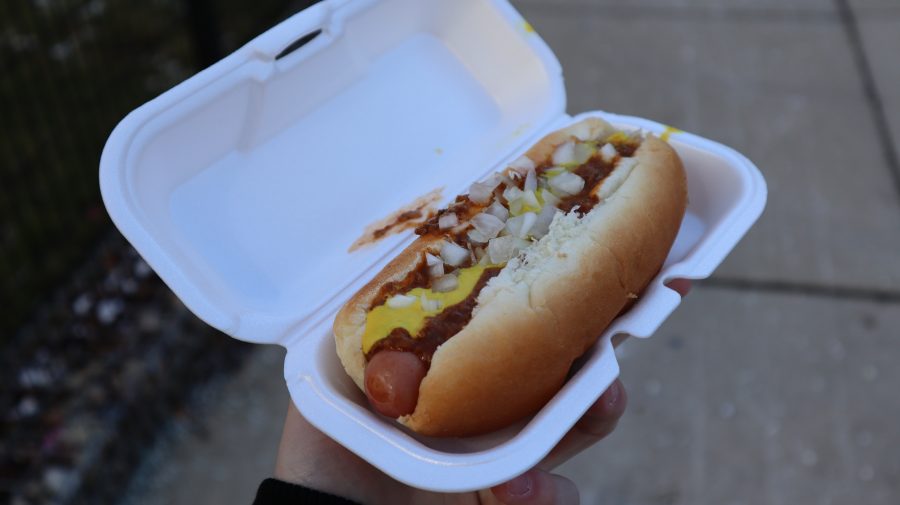
Coney Dog
Credits: Ryan Patrick Hooper, Conor Anderson, Sophia Jozwiak, Jose Llanas

Membership Appeal
Fall OAF 2025 – “The Boulevard”
Credits: Sam Beaubien, Wajeed

Mini-Documentary or Series
“CuriosiD”
Credits: WDET News

Marketing Materials & Promos
WDET Music Show Promo 2
Credits: Sam Beaubien, Conor Anderson, Jose Llanes, Nate Bender

Musical Programming
“The Detroit Move”
Credits: Mike Latulippe

Special Interest & Cultural Programming
“Container on the Metro”
Credits: Tia Graham, Conor Anderson, Jose Llanes, David Leins

Use of Multiplatform Media – Programming Materials
“Container on the Metro”
Credits: Tia Graham, Conor Anderson, Jose Llanes, David Leins

Use of Multiplatform Media – Promotional/Membership Materials
Trust fall
Credits: Ryan Patrick Hooper, Cary Junior II, Sophia Jozwiak

Membership Appeal
Fall OAF 2025 – Protest
Credits: Sam Beaubien, Russ McNamara

Community Involvement
“Citizen Vox Project”
Credits: WDET News

National Awards

National Headliner Awards

Founded in 1934 by the Press Club of Atlantic City, the National Headliner Awards are among the oldest and most respected journalism competitions in the country. Earning national recognition in the contest is an achievement in itself, and WDET received two awards this year.

Radio local documentary or public affairs
“The Metro”
The Metro staff

Radio local news series
“Trump Tariff Effects”
Russ McNamara

Public Media Journalists Association

The Public Media Journalists Association (PMJA) champions journalistic excellence across public media, honoring journalists whose work informs, engages and empowers their communities. The national awards program recognizes some of the best reporting and storytelling from stations across the country. This year, WDET earned five PMJA awards, highlighting the impact of its journalism and community-focused programming.

Arts Feature
First Place
“Container on the Metro – Bevlove”
Tia Graham, Conor Anderson, Jose Llanes

Audience Engagement
First Place
“CuriosiD”
WDET

Second Place
“Detroit to Gloryland” (Yosemite)
Sascha Raiyn

Human Interest Feature
First Place
“CuriosiD: What is the origin of “What up doe?””
Russ McNamara

Interview
Second Place
“Former Russian hostage Paul Whelan still feels trapped by Michigan red tape”
Quinn Klinefelter

Support local journalism.

WDET strives to cover what’s happening in your community. As a public media institution, we maintain our ability to explore the music and culture of our region through independent support from readers like you. If you value WDET as your source of news, music and conversation, please make a gift today.

The post And the award(s) go to…WDET appeared first on WDET 101.9 FM.

CuriosiD: Which communities are considered “Downriver”?

Have you ever wondered which communities in Metro Detroit are part of the Downriver area, and how it got that name?

Listener Scott Troia of Ann Arbor wonders.

I was curious about where the term ‘Downriver’ originated from: Who, when, why they started using it. Is it a geographic boundary, or is it cultural? Who identifies as being from Downriver?”

WDET’s Pat Batcheller does. He was born and raised in Trenton and has lived in Southgate with his wife Amy since 1999. Pat’s happy to answer Scott’s question.

What does “Downriver” mean?

Elizabeth Park sits along the Detroit River in Trenton, Michigan.

As the name suggests, Downriver refers to those communities on the Detroit River as it flows down into Lake Erie. Humans have lived in the area for thousands of years. The term Downriver is more recent. It appears as two words in a 1917 magazine published by the city of Wyandotte. In 1963, Thomas J. Anderson wrote a book called “The History of Southgate and Downriver”—one word. Today, the term covers a lot more territory than just the riverfront.

Which communities make up Downriver?

That depends on who you ask. Lisa Wayne is the CEO of the Downriver Community Conference. The nonprofit helps people find jobs through the Michigan Works program. It also coordinates grants for its 20 member communities. 

“We serve Allen Park, Brownstown, Dearborn, Dearborn Heights, Ecorse, Flat Rock, Gibraltar, Grosse Ile, Huron Township, Lincoln Park, Melvindale, River Rouge, Riverview, Rockwood, Romulus, Southgate, Taylor, Trenton, Woodhaven and Wyandotte,” Wayne says.

The DCC started with 11 communities and includes Dearborn and Dearborn Heights. Many consider those cities to be outside of the traditional definition of Downriver. Ron Hinrichs grew up in Dearborn but didn’t consider himself a Downriver resident. 

“I remember someone asking me once, ‘where are you from?'” Hinrichs recalls. “And I said, ‘I’m from Dearborn.’ And they said, ‘oh, so you’re—you’re from Downriver.’ And I said, ‘I’m not from Downriver, I’m from Dearborn.'”

Hinrichs leads the Southern Wayne County Regional Chamber, which promotes the Downriver area. He says if you ask ten people where Downriver is, you’ll get ten different answers.

Where does Downriver end?

Downriver does not have defined borders, but most descriptions stop at the Huron River separating Wayne and Monroe counties. That would make Rockwood part of Downriver, but not its next-door neighbor, South Rockwood, a village in Monroe County’s Berlin Township. Stephanie Hawkins is the president of the Berlin Charter Township Historical Society. She says if you ask South Rockwood residents, they’ll say they feel closer to Downriver than Monroe.

“They mentioned that when they want to do something like go shopping, they go north because it is closer than driving all the way down to Monroe,” Hawkins says. “So, I think that’s why you’ll find that the folks who live in the village itself do identify with being Downriver.”

So do people in Taylor, which is not on the Detroit River. Karl Ziomek is Taylor’s communications director and a former journalist at the area’s paper of record, the News-Herald. He recalls newsroom arguments about how far west Downriver reaches.

“And there are a lot of people I think to this day who would believe that Taylor is even stretching it,” Ziomek says. “Certainly, Romulus does. It goes on the other side of Metro Airport, then people start going, ‘well wait a minute, is this really Downriver?”

Pearl Varner laughs at the suggestion that Romulus is part of Downriver because of its distance from the Detroit River. Her family has lived in Romulus for over a century. She runs the city’s historical museum. But Varner says if it brings more visitors to the museum and the downtown area, she’s fine with being considered Downriver.

“You want people to come and see what you’re doing, what your museum is like, what your city is like, what your people are like,” Varner says.

What are people like Downriver?

Ted Butkin is a lifelong Wyandotte resident.

Each community is unique, but they all share common roots. Many are descendants of European immigrants who worked in factories or started their own businesses. Some settled in Wyandotte, where Ted Butkin has lived his whole life.

“We had a German festival, a Polish festival, a Mexican festival and there was one other that were just huge because everyone was represented in this melting pot of Wyandotte,” Butkin says.

Wyandotte is the second oldest incorporated city in Wayne County, after Detroit. Joe Gruber is the city’s economic development director. He says its vibrant downtown attracts people from Downriver and beyond.

Joe Gruber is Wyandotte’s economic and downtown development director.

“All of the small business owners and entrepreneurs in our community are really, really engaged and hard working,” Gruber says. “We try to offer a lot of fun quality-of-life events and opportunities for families to come, especially those events that are free.”

Anthony Beitel moved to Wyandotte a couple of years ago. Before that, he had lived in Detroit and the northern suburbs. Beitel says he didn’t know much about Downriver before relocating with his partner, who is from the area. He says he loves how people support the local economy.

“They have this whole ‘Shop The Dotte’ initiative, which is all about promoting small businesses,” Beitel says. “And it’s just really great to see that sense of community and everybody kind of supporting each other and lifting each other up.” 

Industry drove Downriver for decades, for better or worse

Small businesses have always been a vital part of the Downriver economy, but through much of the 20th century, heavy industry was the main source of jobs and tax revenue. It was also a major source of pollution, such as coal dust. Lisa Donovan lives in Brownstown Township but grew up in Wyandotte. She says sometimes when the wind blew, it turned houses black with ash.

“And they would have piles of coal next to the park in Wyandotte that’s on the waterfront, and you’d come home with ash on you.”

More: New book explains how working class shaped Downriver

Because of that, Donovan says some people—mainly outsiders—saw Downriver as a dirty place to live. That reputation lingered long after downturns in the automotive and steel industries forced many factories to close. Business and civic leaders suggested dumping Downriver in favor of something they thought sounded more attractive—Metro Shores. But, unlike coal dust, that name didn’t stick.

People have pride in Downriver, even those who are new to the area

Michael Echols moved from Detroit to Ecorse a couple of years ago. Ecorse started as one of Wayne County’s original townships in 1827. Today, the cities of Ecorse, Allen Park, Lincoln Park, Melvindale, River Rouge, Southgate, and Wyandotte comprise what used to be Ecorse Township.

Echols says Ecorse is a peaceful place.

“It’s a different variety of people down here, but it’s everybody getting on, and that’s the most beautiful part,” he says.

The river itself defines the region

John Hartig managed the Detroit International Wildlife Refuge for 14 years and has written several books about the Great Lakes.

Just a few hundred feet offshore from Ecorse is Mud Island, part of the Detroit River International Wildlife Refuge. John Hartig once managed the refuge, which includes Grosse Ile and the entire Michigan shore of Lake Erie. He says it took decades to repair the industrial damage to the environment and restore the river’s natural habitat.

“We’ve seen some dramatic improvements in water quality,” he says. “Bald eagles are back, and peregrine falcons, osprey, lake whitefish, lake sturgeon, river otter and beaver are back.”

Downriver has its own culture

Hartig says the river’s revival is changing perceptions of Downriver, its people, and its culture. Linda Francetich is trying to do the same. 15 years ago, she started a website called Discover Downriver to promote the area’s cultural activities, such as festivals and concerts. Francetich says the area might not have the vibe of Royal Oak or Birmingham, but that’s OK.

“Everyone has their own regional culture,” she says. “But I think Downriver has a very unique culture because of how close everybody is and how supportive everybody is.”

Francetich says Downriver has a lot of musical talent, including bands such as 50 Amp Fuse and the Transit Brothers. Chris French plays trumpet for the Transit Brothers and the Downriver Community Band. He also owns a family law firm and organizes yearly concerts to benefit Downriver veterans. French says the region has a lot to offer, including a variety of real estate.

“You want a farm, we have farms,” he says. “We’ve got water everywhere, so you can buy a house on the water.”

Some of the most impressive homes on the water are on Grosse Ile, which sits in the middle of the Detroit River. Tony Krukowski is the vice president of the Grosse Ile Historical Museum. He says the island’s scenery is a big draw.

“People just love to drive around the island, especially around East River Road and West River Road to take in the natural scene,” he says.

Two bridges connect Grosse Ile to the rest of Downriver.   Listener Scott Troia, who asked the question, says he understands the area better now that we’ve connected the dots for him.

“What are the boundaries of it and do people from different communities actually self-identify with being part of Downriver that might be on some of those fringe cities? You very much covered those topics, really.”

Thanks, Scott. It’s why we’re here. 

WDET’s CuriosiD series answers your questions about everything Detroit. Subscribe to CuriosiD on Apple PodcastsSpotifyNPR.org or wherever you get your podcasts.

We want to hear from you!

Have a question about Southeast Michigan’s history or culture? Send it our way at wdet.org/curious or fill out the form below. You ask, we answer.

Support the podcasts you love.

One-of-a-kind podcasts from WDET bring you engaging conversations, news you need to know and stories you love to hear. Keep the conversations coming. Please make a gift today.

The post CuriosiD: Which communities are considered “Downriver”? appeared first on WDET 101.9 FM.

CuriosiD Extra: Belle Isle has long history of hosting koi

In the latest episode of CuriosiD, WDET’s Russ McNamara examined why so many fire stations in Detroit have koi ponds. Now he’s taking a closer look at the koi pond on Belle Isle – or at least trying to. 

The pond sits between the aquarium and the conservatory, and with some HVAC work going on, experts at the aquarium are worried about dust and debris getting into the water. 

Curator of the Belle Isle Aquarium, Dr. Paul Shuert, posing in front of tanks full of koi.

Paul Shuert, curator of the Belle Isle Aquarium, said the main danger of debris comes from the koi’s eating habits.  

“They eat just about anything, they’ll graze on leaves that fall in into the pond, stuff that grows in the bottom,” Shuert said.  

For now, the koi are stored in the basement of the aquarium. Shuert added that the koi have been on the island and were once housed at the now-defunct zoo. 

“They were even on the island when the aquarium was closed for seven years,” Shuert said.  “They were still here and cared for.” 

Weathering the seasons

There was a time when the koi did not live in the pond year-round as they do now, according to Shuert. In October, he said people would help bring the fish to the basement to keep them safe during the winter because they weren’t sure it would stay filled with water.  

“Once we got the pond fixed, we stopped bringing them in because we didn’t want to handle them. It’s not good to handle fish anytime,” Shuert said. 

The annual moving of the fish became a tradition known as the Koi Festival, and Shuert said each fish had to be caught one at a time. 

Koi swimming in tanks in the basement of the Belle Isle Aquarium

“We drain the pond, so we get down to maybe six inches of water, where we can chase them, and we scoop them up one at a time until we get all the water out and all the fish out,” Shuert said. 

During winter, Shuert said the koi go into “almost a hibernation stage” where they shut down their metabolism and wait out the cold weather. 

“When the water gets about 50 degrees, they become active again. And then we start feeding them, and they just love it out there all summer long,” Shuert said.  

Looking forward to a homecoming

However, the koi will spend this summer in the basement due to new air conditioning being installed in the aquarium. Meagan Elliot, president and CEO of the Belle Isle Conservancy said the project costs $10 million and will be the first major update to the aquarium in 75 years. 

President and CEO of the Belle Isle Conservancy, Meagan Elliot, poses in the basement of the park’s aquarium

“These are beloved assets, but they are over 120 years old, and take a lot of care and particular detail when it comes to their restoration,” Elliot said.  

As for the koi, Elliot said they will be returned to their home in the pond before the end of this year. 

“We’d like to do some sort of a celebration,” Elliot said, “kind of similar to the historic Koi Festival that celebrates returning the koi back to the pond.” 

Support the podcasts you love.

One-of-a-kind podcasts from WDET bring you engaging conversations, news you need to know and stories you love to hear. Keep the conversations coming. Please make a gift today.

The post CuriosiD Extra: Belle Isle has long history of hosting koi appeared first on WDET 101.9 FM.

CuriosiD: Why do Detroit fire stations have koi ponds?

After a stressful run, firefighters are always looking for ways to unwind.  

For some, like Fire Engine Operator (FEO) Sean McSpadden, the koi pond at Engine No. 7 is his go-to method.  

“We see a lot of stuff, so it’s always good to come back, sit down, take a breath, just relax, collect yourself, and get ready for the next run,” McSpadden said. “Just the water slapping around, that’s a stress reliever.” 

Detroit Firefighters Alexander Spitzig, Sgt. Jeffrey Hess, and Skyler Morgan pose in front of the koi pond at Engine 39 on Detroit’s West side.

Sergeant Jeffrey Hess noticed most firefighters in Detroit have the same opportunity during their downtime. 

“I’ve been around every firehouse in the city, and I would say ninety percent of them have some kind of pond, fish tank, something going to where you can sit in that room or outside here, and that’s the background noise, a stream of water,” Hess said.  

Japanese culture’s influence 

While none of the firefighters knew exactly how or why their stations came to have koi ponds, Rie Masuda, professor of Japanese culture and language at Wayne State University, offered an interesting connection.  

In the five elements in Japanese and Chinese philosophy, or gogyo, koi represents water.  

The koi and goldfish at the Detroit Fire Station in TechTown

“The water is going to go over the fire, then fire extinguish,” Masuda said, “so that usually the fish figure, which is usually on top of the roof, that is supposed to protect the whole entire (samurai) household, or usually the castle, we call it shachi ho ko.”  

Koi ponds are a luxury in Japan, Masuda said, but they are more common in the U.S. because of how much space is available.  

“The people who are working so hard for the people of Detroit, they need to have some relaxing moment,” Masuda said. “I think that’s one of the reasons that somebody started to have koi.” 

In 1960, Detroit became a sister city to Toyota, Japan. Symbols of friendship have been shared between the two cities including hundreds of cherry trees and 12 Japanese snow monkeys. But there’s no record of gifting koi.

Another possible explanation for the origin of koi ponds could be a lighthearted rivalry between stations, according to Battalion Chief Troy Klann.  

“It was way before me, but all the houses around us had ponds, so it was kind of a competition thing, too,” Klann said. “You know, who could get the biggest fish?”  

Klann said it takes work to build and maintain the ponds, but they provide great therapy on and off the job. 

“Some guys do the koi ponds at home, too,” Klann said. “I thought about it a few times. I just never dug the hole.”  

Therapy dogs 

Along with the koi ponds, firefighters have access to other ways to relieve stress. One of those ways comes in the form of two golden retrievers, Oakland and Luca with First Responder Therapy Dogs who visit different stations to entertain the firefighters. 

Firefighter Skyler Morgan shows therapy dog Oakland how to plant marigolds at Engine Company 39 in Detroit.

Senior Chief Darnell McLaurin said the dogs are a result of Detroit Fire Department leadership taking mental health seriously. 

“We have our personal guidance unit, as well as the peer support team, and they have access to the first responder therapy dogs, amongst other things,” McLaurin said.  

Therapy dog handler Kathy Deland said the work she does is rewarding for both her and the dogs.  

“When they see the dog, they instantly go (gasp), and then they exhale, and that exhale is everything,” Deland said.  

Leaning on each other  

Firefighters also often rely on each other. FEO Andrew Simmons learned how to meditate on the job and said he hopes to help his coworkers do the same. 

Fire Engine Operator Andrew Simmons stands in front of a fire truck at Engine 17 in TechTown.

“Yoga really helps with the maneuvering and moving around in such big, bulky gear a lot,” Simmons said. “I’m really looking forward to more firefighters actually getting into yoga.” 

Even if the origins of the koi ponds are still uncertain, Hess said they tie into two important things for firefighters: distraction and purpose during the downtime of a stressful and dangerous job.  

“You never know when it’s going to be the worst day of your life,” Hess said, “so in the meantime, let’s just have as much fun as we can.”  

WDET’s CuriosiD series answers your questions about everything Detroit. Subscribe to CuriosiD on Apple PodcastsSpotifyNPR.org or wherever you get your podcasts.

We want to hear from you!

Have a question about Southeast Michigan’s history or culture? Send it our way at wdet.org/curious or fill out the form below. You ask, we answer. Loading…

Support the podcasts you love.

One-of-a-kind podcasts from WDET bring you engaging conversations, news you need to know and stories you love to hear. Keep the conversations coming. Please make a gift today.

The post CuriosiD: Why do Detroit fire stations have koi ponds? appeared first on WDET 101.9 FM.

CuriosiD: What is Detroit ballroom and hustle style dancing?

In this episode of CuriosiD, listener Katie Byerly asks the question:

What is Detroit ballroom and hustle dancing?

The short answer

Detroit ballroom and hustling are two distinct dance styles. Ballroom is a partnered dance traced back to the 70s that was loosely based on the Cha-Cha and accompanied by R&B or Soul Music. Detroit, or “urban ballroom”, is a smoother, more fluid dance style, as opposed to more structured and formal standard or Latin ballroom dances.

Hustling is another name for line dancing. It’s a group dance often set to specific songs. You might have heard the songs “Wobble” by V.I.C, or “Cupid Shuffle” by Cupid played at parties to get people on the dance floor.

Detroit Hustles

The most famous line Dance would be the Electric Slide, popularized in the 1970s. It’s done to many songs. But in Detroit, it most famously was danced to the song “My Eyes Don’t Cry” by Stevie Wonder.

There are hundreds of variations of line dances that go along with specific songs across different cultures.

And Detroit has popularized a few of its own, such as the Tamia Hustle danced to the song “Can’t Get Enough” by Tamia.  Or the In the Line of Duty hustle created by a former Detroit police officer and danced to the song “Feels So Right” by Janet Jackson.

And then there is the Turbo Hustle created by Detroit’s own legend, Frederick “Fast Freddy” Anderson.

“Right, right, right, left, left, left. That’s mine… I created that,” said Freddy. “But what they did, after a while, somebody took my name off of it. They had the same music. It started with me.”

In the original version, you can hear him saying “Freddy’s on the move” at the beginning of the song.

Fast Freddy leading a hustle at The Office Lounge

Freddy says he created the Turbo Hustle in the now closed Northland Shopping Center.

“We had a contest inviting groups to come in, and we all migrated and put this together, but I was the one who put the foundation to it, and we put it together, and that’s how it became the Turbo,” said Freddy.

Creating this line dance is only one of Freddy’s accolades. He’s had an extensive career in dancing, DJ-ing and modeling, since appearing on Detroit’s popular TV show The Scene in the 1970s and 80s. Now, at nearly 80 years old, Freddy can be found still emceeing parties across the city.

“This means an awful lot to me. You see, I take it seriously. People that generally don’t dance, they get up and dance for me,” Freddy said.

Freddy also teaches classes at rec centers in Detroit. On multiple days he can be found in senior homes for his class, “Getting Down While You Sit Around.”

Freddy says ballroom and hustling are easy ways to get people on the dance floor comfortably and without any social stakes.

“It’s an exceptional thing, because, you know, a guy takes a girl out, they don’t have to go on one side of the room, and you dance by yourself. This is thing that we all, we all do together, and to see a room full of people do it is truly exceptional.”

Hustle Classes

Finding a place to learn the steps to these dances isn’t difficult. Freddy is only one of dozens of instructors across the city teaching hustle and ballroom classes.

On Wednesday’s at Shield’s Pizza in Southfield Steven “Silk” Sturkey can be found teaching hustle classes from 6-8 p.m.

Silk says there are simple basic steps that make up a hustle.

“Like a cha, cha box, square, tick, walk, easy, reverse, full, turn, half, turn, pivot. There’s tons of names for each. Most of the moves are recycled. It’s just the choreography of the moves, where they go, how they go, the timing,” Silk said.

Steven “Silk” Sturkey leading a hustle at Shield’s Pizza in Southfield.

Silk has been teaching classes since 2012. He says in his time, there were more restrictions to becoming an instructor and an instructor certificate was required.

“Nowadays, it’s not so stringent. But from where I came from, there is a deep history the instructors that instructed me were instructed by instructors, and it was kind of passed down from generation to generation, so to speak,” Silk said. 

It’s a community

Detroit’s community of hustlers and ballroom dancers is tight knit, but still welcoming to newcomers and beginners.

Ask Maurice Franklin, better known as DJ RocWitMoe. He hosts the city’s Dancing in the D event in Downtown Detroit’s Spirit Plaza.

RocWitMoe says the hustle community feels like family.

“Because it gives a community feel. Because there’s a certain amount of people that do hustling and ballroom, not that it’s a community that’s closed off, you know?” RocWitMoe said.

“I mean, it’s a community where other people could come in, but it’s a community style to where everyone pretty much knows, you know everyone else. So we looked at more like as a family, rather than, you know, just people out partying.”

DJ RocWitMoe at WDET studios.

RocWitMoe says while hustling and line dances are seem more prevalent as they are done at almost every party, ballroom is also still very popular among Detroiters.

He’s been hosting several ballroom events called the Ballroom Bash at the Norwood on Woodward. The next one will be on May 1.

RocWitMoe says events like these are good for the city because they give people a fun, safe outlet.

“You know, people working day in and day out, you know, doing what they got to do to feed their families and everything you need that outlet. And it can’t be the head banging club scene,” RocWitMoe said.

“But you may still want to go somewhere and you know, maybe have a cocktail or two and then go home. And that in between part where you can have a release and a getaway from regular life is what you know ballroom is.”

WDET’s CuriosiD series answers your questions about everything Detroit. Subscribe to CuriosiD on Apple PodcastsSpotifyNPR.org or wherever you get your podcasts.

We want to hear from you!

Have a question about Southeast Michigan’s history or culture? Send it our way at wdet.org/curious or fill out the form below. You ask, we answer.

Support the podcasts you love.

One-of-a-kind podcasts from WDET bring you engaging conversations, news you need to know and stories you love to hear. Keep the conversations coming. Please make a gift today.

More CuriosiD

The post CuriosiD: What is Detroit ballroom and hustle style dancing? appeared first on WDET 101.9 FM.

❌