The investing information provided on this page is for educational purposes only. NerdWallet, Inc. does not offer advisory or brokerage services, nor does it recommend or advise investors to buy or sell particular stocks, securities or other investments.
If you’ve ever decided to save less cash in your retirement account so you could do more traveling or support an expensive hobby, you might be “soft saving” (and not even know it).
Soft saving is about choosing to spend money on things you enjoy today and stashing money away less aggressively for your later years. People who take this approach are more concerned about what they’re doing tomorrow than what they’ll be doing at age 65 or 70.
“Soft saving is being more mindful about your lived experience now and not being willing to sacrifice too much in favor of your future yet,” says Rebecca Palmer, a certified financial planner in Washington, D.C., and head of guidance for financial planning platform Fruitful. “So, the balance between prioritizing future you versus current you.”
Is soft saving new?
While revenge saving has gotten more attention recently, soft saving isn’t a new phenomenon — for years, people have chosen current wants over elevated saving for future needs. But today’s soft saving trend is a purposeful mindset shift.
Jesica Ray, a certified financial planner with Brighton Jones in Washington, D.C., recently talked to a young client who didn’t want to focus on retirement savings. “They said, ‘I’m not going to do that because I don’t really care what’s in that bucket when I’m 50 years old, I care about using that money now and knowing it’s not tied up in some retirement account that I can’t access until I’m 59,’” Ray says.
Soft saving is often attributed to Gen Zers who’ve watched their parents navigate strict rules around money and budgeting — and they don’t want to take that same approach.
“I really felt allergic to this idea of budgeting when I was getting my own financial life together,” says Nicole Lapin, a Los Angeles-based financial expert, author and host of the “Money Rehab” podcast. “It felt really scary. It felt like, ‘Wow, I can’t have any fun.’ Where are the extras?”
The pros and cons of soft saving
In some cases, soft saving serves as a gentle entry to a consistent savings habit, which can be a boon for people feeling anxious about how to approach financial planning.
“Soft saving invites people to just start,” Palmer says. “It does need to be consistent for it to work, though. It can’t be just, ‘Oh, I’ll save a little when I want to.’ Consistency here is really important so it can be increased later.”
One disadvantage, however, is that if your savings rate is smaller as a person in your 20s, it may be tough to boost it in your 40s — especially if you’ve experienced lifestyle creep and have more financial obligations like a mortgage and children. It’s easier to downsize your savings rate than to upsize it.
The advantage to starting with a higher savings percentage, Palmer says, is that “if stuff comes up, you might need that space.”
Is soft saving smart for long-term goals?
“I actually don’t think this is an irresponsible strategy,” Ray says. “I like the idea of reframing the conversation to, ‘Is your money supporting the life that you want to have today?’”
Good financial planning is about being aware of your decisions, Ray says, and she does her best to make sure her clients understand the pros and cons of their choices. If they understand the tradeoffs and choose to take certain steps anyway, “I think that’s OK,” she says.
Palmer points out that it’s important that people don’t stop investing for retirement, even if it’s not a huge percentage. “If they don’t do some investing for the long term early on, they’re going to miss out on a massive amount of compounding interest, and later you have to work twice as hard to get half as far,” she says.
How to find the middle ground
Soft saving doesn’t mean no saving — it means saving some while giving yourself room to enjoy your life.
The key to making soft saving work is to keep an eye on future you — are your choices going to force you to work until age 75? If so, you may want to tweak your approach. Consider having a financial professional run the numbers on your planned savings rates over time.
“What I do is show them, ‘If you do that, here’s what that means for the lifestyle you can afford when you’re in your 50s and 60s,’ so they understand the impact of the choices that they’re making,” Ray says.
To set yourself up for success, try saving first and spending what’s left. Lapin refers to it as making your “end game” money moves first. “I like to think about paying my future self, that old lady Nicole,” Lapin says.
And make sure you’re leaving room in your budget for some extras. “Whatever that small indulgence is for you, allow for it in the overall plan so it keeps you on track and keeps you from binging later on,” Lapin says.
In the end, soft saving is a great way to get started, Palmer says, but you have to couple it with a consistent system for bumping up your savings over time.
“Don’t rely on memory or willpower or ‘shoulds,’ — automate your soft savings,” Palmer says. “Then maybe have a check-in point for increasing that. Bump it up a little every quarter, every year, whatever that cadence is so you’re slowly building the space for more savings over time.”
By JAMES POLLARD and LINLEY SANDERS The Associated Press
NEW YORK (AP) — Most Americans aren’t making end-of-year charitable giving plans, according to the results of a new AP-NORC poll, despite the many fundraising appeals made by nonprofits that rely on donation surges in the calendar’s final month to reach budget targets.
The survey, which was conducted in early December by The Associated Press-NORC Center for Public Affairs Research, found that about half U.S. adults say they’ve already made their charitable contributions for 2025. Just 18% say they’ve donated and will donate again before the year is over. Only 6% report they haven’t given yet but will do so by December’s end. The rest, 30%, haven’t donated and don’t plan to.
But weaker income gains and steep price inflation meant that lower-income households had less money to redistribute. Other surveys have also found a yearslong decline in the number of individuals who give.
December still serves as a “very important deadline” for donors, according to Dianne Chipps Bailey, managing director of Bank of America’s Philanthropic Solutions division. She cited estimates from the National Philanthropic Trust that nearly one-third of annual giving happens in the final month.
“December 31 does provide a target to make sure that they’ve given what they intended to give before the year is over,” Bailey said.
Few donate on GivingTuesday
Perhaps no day is more consequential for fundraisers than GivingTuesday. Beginning as a hashtag in 2012, the well-known celebration of generosity now sees many nonprofits leverage the attention to solicit donations on the Tuesday after Thanksgiving. Americans donated an estimated $4 billion to nonprofits this most recent GivingTuesday.
But Americans were much more likely to make a Black Friday purchase than a GivingTuesday gift this year. Just under half say they bought something for Black Friday, according to the poll, compared to about 1 in 10 who say they donated to a charity for GivingTuesday.
“Black Friday gets the lion’s share of things,” said Oakley Graham, a 32-year-old from Missouri. “And then you’ve got GivingTuesday a couple days later. Most people have probably spent all their spending money at that point.”
Graham said his family has “definitely tightened the financial belt” in recent years. He and his wife are dealing with student loan debts now that the Trump administration suspended their repayment plan. Their two young children are always growing out of their clothes. It’s good if there’s anything left for savings.
He still tries to help out his neighbors — from handiwork to Salvation Army clothing donations.
“Not that I’m not willing to give here and there,” he said. “But it seems like it’s pretty tough to find the extra funds.”
Checkout charity proves more popular
Another avenue for nudging Americans to give is more widely used, even if individual donations are small. The AP-NORC poll found that about 4 in 10 U.S. adults say they donated to a charity when checking out at a store this year.
Graham is among those who reported giving at the cash register. As an outdoorsy person who enjoys hunting and fishing when he can, he said he is “always susceptible to giving for conservation.” He said he likely rounded up once or twice at Bass Pro Shops for that reason.
“With the finances, I don’t do a lot of buying these days. But a couple cents here or there is like — I can do that,” he said. “It doesn’t sound like much. But I know if everybody did it would make a difference.”
The poll found that older adults — those over 60 — are more likely than Americans overall to donate at store checkouts.
One Texas architect’s unusual process for year-end donations
About one-quarter of Americans plan to donate in the last weeks of the year, and Chuck Dietrick is one of them. The 69-year-old architect applies what he calls a “shotgun approach” as the year comes to a close.
He and his wife give monthly to Valley Hope, a nonprofit addiction services provider where their son did inpatient rehab. And then there are eight or so organizations that they support with end-of-the-year gifts.
“We’re doing our own thing,” he said. “I don’t do Black Friday or Cyber Monday, either … So, I don’t do the GivingTuesday thing.”
Dietrick estimates their household donated somewhere between $501 and $2,500. The Dallas-Fort Worth area couple mostly contributes to organizations that have touched their lives or those of their friends.
There’s the Florida hospice that Dietrick said did a “super job” caring for his mother. He has relatives and friends who served in the military, so he also gives to the Disabled American Veterans and the Wounded Warrior Project.
“I would rather give a smaller amount of money to a variety of institutions that I care about rather than giving a big chunk of money to one,” he explained.
Giving plans went unaffected by federal funding cuts or the shutdown
Most 2025 donors say the amount they gave wasn’t affected much by this year’s federal funding cuts or the government shutdown, according to the AP-NORC poll, although about 3 in 10 say those situations did impact the charities they chose to support.
The survey suggests that, while private donors mobilized millions to fill funding gaps and hunger relief groups saw donation totals spike last month, many Americans did not respond with their pocketbooks to the nonprofit sector’s newfound pressures this year.
Jeannine Disviscour, a 63-year-old Baltimore teacher, is among 2025 donors who say the cuts prompted them to give more.
“I did not donate on GivingTuesday,” she said. “But I did donate that week because I was feeling the need to support organizations that I felt might not continue to get the support they needed to get to be successful.”
She estimates her household gave between $501 and $2,500. That included support for National Public Radio. Congress eliminated $1.1 billion allocated to public broadcasting this summer, leaving hundreds of NPR stations with some sort of budget hole. She said she wanted to ensure journalism reached news deserts where residents have few media options.
Living in an area that is home to many refugees, Disviscour also donated her time and money to the Asylee Women Enterprise. She said the local nonprofit helps asylum-seekers and other forced migrants find food, shelter, clothing, transportation and language classes.
“There is a gap in funding and there’s more need than ever,” she said. “And I wanted to step up. And it’s in my community.”
___
Sanders reported from Washington.
___
Associated Press coverage of philanthropy and nonprofits receives support through the AP’s collaboration with The Conversation US, with funding from Lilly Endowment Inc. The AP is solely responsible for this content. For all of AP’s philanthropy coverage, visit https://apnews.com/hub/philanthropy.
___
The AP-NORC poll of 1,146 adults was conducted Dec. 4-8 using a sample drawn from NORC’s probability-based AmeriSpeak Panel, which is designed to be representative of the U.S. population. The margin of sampling error for adults overall is plus or minus 4 percentage points.
Chuck Dietrick poses for a portrait at his home in Anna, Texas, Thursday, Dec. 18, 2025. (AP Photo/LM Otero)
MARIENBERG, Germany – In a workshop tucked into the rolling hills of eastern Germany’s Ore Mountains, rows of wooden soldiers stood at attention. Their red coats gleamed and their square-jawed mouths – designed to crack nuts but mostly decorative – formed the trademark stiff grin of Steinbach Nutcrackers.
For decades, these handmade figures have sailed across the Atlantic and into American homes, filling mantels and collectors’ shelves and appearing in countless Christmas card photos. Alongside gingerbread houses and fir trees with all the trimmings, they are one of the most recognizable German exports of the holiday season.
This year, however, tariffs imposed by President Donald Trump have given the stern-faced ornaments a new reason to grimace: About 95 percent of sales by the family-founded manufacturer, Steinbach Volkskunst, come from the United States and the company’s most reliable market has become its biggest bureaucratic headache.
Under a deal between Trump and the European Union reached earlier this year, most exports to the U.S. are subject to a 15 percent tariff. Separately, the Trump administration also ended the “de minimis” exemption – a rule that had allowed small parcels under $800 to enter duty-free.
The move was aimed at curbing low-cost imports from Chinese e-commerce giants such as Temu and Shein. But for niche businesses that rely on direct-to-consumer shipments, like Steinbach, that change hit even harder than 15 percent tariff.
“The biggest concern wasn’t price – it was instability,” CEO Rico Paul said, standing in front of a glass cabinet filled with colorful nutcrackers. “Policies changed depending on political mood. For us, planning ahead is essential. One day, the rules were one way, the next day they changed.”
For six months after Trump’s inauguration, confusion reigned. Initially, the president threatened tariffs of 30 percent or more on most goods, prompting the E.U. to ready plans for retaliation. The deal on 15 percent tariffs, reached in late July, ended that uncertainty.
But in late August, Trump issued an executive order ending the “de minimis” exemption, meaning a slew of new paperwork and bureaucracy.
Costs rose and delays mounted as Customs and Border Protection grappled to keep up with the surge in new parcels requiring clearance. With the holiday season approaching, Steinbach faced the possibility of its nutcrackers getting stuck in customs warehouses.
More than half of Steinbach’s business comes from online orders shipped directly to American doorsteps, and customers soon felt the increase. Prices are up roughly 25 percent compared to last year, because of the tariffs and customs costs, as well as rising wages.
“In the United States, our name is extremely well known,” Paul said. “We’re practically synonymous with the word nutcracker.” The outsize U.S. demand for Steinbach products, he added, “was always an advantage – until the tariff dispute.”
American affection for Steinbach’s products seems undiminished by the price increases. “We were worried Americans wouldn’t pay more,” Paul said, pulling up a fresh order from Monticello, Florida, on his phone. “But the loyalty is incredible. They’re still buying, even if it’s more expensive.”
That loyalty stretches back to the 1950s, when U.S. service members stationed in postwar Germany discovered the nutcrackers and brought them home as souvenirs. They quickly became a cultural shorthand for authentic European Christmas.
The nutcracker legacy itself is older. In Saxony’s Ore Mountain region, miners began carving these wooden figures in the 1600s, meant to bring protection and keep evil spirits at bay during the darkest months of winter.
French author Alexandre Dumas’ adaptation of E.T.A. Hoffmann’s 1816 story “The Nutcracker and the Mouse King” later inspired Tchaikovsky’s 1892 ballet “The Nutcracker.” The ballet, initially a flop in Russia, became an American holiday institution in the mid-20th century – catapulting the nutcracker to global fame as a Christmas icon.
On a late November morning at the Steinbach factory, about 40 artisans carved, sanded and painted wooden limbs, while sewing machines upstairs stitched miniature outfits. Outside, snow settled on fir branches as workers packaged the finished products for their long journey.
One detail is new: a bright yellow sticker on every box, addressed to the person who will decide if the toy enters the United States smoothly: “Dear U.S. Customs Officer,” it says, “Thank you for keeping the trade flowing.”
It may be wishful thinking. In October, U.S. news outlets reported that thousands of packages had stalled in customs hubs under the new rules. Some carriers reportedly disposed of abandoned shipments.
“Because of changes to U.S. import regulations, we are seeing many packages that are unable to clear customs due to missing or incomplete information,” UPS, the shipping company, said in a statement. “Our goal is to speed every package to its destination, while complying with federal customs regulations.”
In late November, UPS said that its brokerage team was clearing more than 90 percent of packages on the first day – but not without complications.
Still, Steinbach nutcrackers continue to sell well, particularly those with pop culture and political themes.
Last year, Steinbach introduced a pair of nutcrackers dubbed “Republican” and “Democrat,” bearing more than a passing resemblance to Trump and Kamala Harris. The Republican model sold out before Election Day.
Prices for the smallest nutcrackers start at about $150, while the largest and most intricate figures cost more than $700. Alongside traditional soldiers and Santas, Steinbach has embraced the American appetite for nutcrackers in all forms, including Star Wars stormtroopers, “Wizard of Oz” characters and even Pope Leo XIV.
But the tariffs and customs delays have prompted Steinbach to seek a work-around. “We are building a warehouse in Pennsylvania and hiring staff,” Paul said.
The nutcrackers will still be made in Germany – local craftsmanship remains a central selling point – but pre-shipping and storing finished goods in the United States stands to insulate the business from further regulatory whiplash. The tariffs and additional costs of maintaining and staffing the warehouse will be passed on to customers, but the move should eliminate paperwork and delays for shipments to individual buyers.
Steinbach is not alone. Across Germany, exporters large and small are recalculating.
“The escalation of U.S. import duties – now effectively averaging 15 percent on key industrial goods – has hit Germany particularly hard,” said Andreas Baur, foreign trade expert at the Munich-based Institute for Economic Research. “If you take January to September and compare it to the previous year, we have a decline [in exports] of about 8 percent, and for cars around 14 percent.”
OTTENDORF-OKRILLA, GERMANY – NOVEMBER 26: Baker Marlon Gnauck carries a board of traditional Dresden Christmas stollen in the Gnauck bakery on November 26, 2025 in Ottendorf-Okrilla, Germany. The Gnauck bakery is a fifth-generation family business. (Photo by Carsten Koall/Getty Images)
But beyond automakers, chemical giants and heavy industrial goods, the regulatory shift has quietly reshaped the fate of artisans whose exports trade more in memories than volume.
On the outskirts of Dresden, a 90-minute drive northeast of the nutcracker workshop, the sweet smell of raisins and butter filled Bäckerei Gnauck in the district of Ottendorf-Okrilla.
Bäckerei Gnauck is one of about 100 bakeries permitted to bake true Dresdner Christstollen – a dense fruitcake that is tightly regulated by the Dresden Stollen Protection Association.
Here too, the lifting of the de minimis rule has left fifth-generation baker Marlon Gnauck kneading frustration into this year’s cake loaves.
Stollen, another German Christmas tradition that has gone global, has deep roots in and around Dresden, where it first appeared in the 14th century as a simple, butter-free loaf made under strict Advent fasting rules.
That changed in 1491, when Pope Innocent VIII issued the “Butter Letter,” allowing bakers to enrich the dough. Spices, candied fruit and almonds followed and, by the 18th century, Dresden bakers were presenting enormous loaves to royalty, securing the bread’s vaunted holiday status.
OTTENDORF-OKRILLA, GERMANY – NOVEMBER 26: A traditional Dresden Christmas stollen is packaged at the Gnauck bakery on November 26, 2025 in Ottendorf-Okrilla, Germany. The Gnauck bakery is a fifth-generation family business. (Photo by Carsten Koall/Getty Images)
Today, mass-produced versions fill German supermarkets, but only a small group of certified bakeries may call their loaves Dresdner Stollen. Dotted with raisins, and carefully folded together before being baked and doused in confectioners sugar, Stollen is supposed to represent the image of a swaddled baby Jesus.
Every holiday season since 1999, Gnauck, a fifth-generation baker in his family, has shipped some of his stollen to Americans – half as corporate gifts, he estimates, and a quarter to families with German ancestry.
He has enjoyed hearing from happy customers, even those who make him wince with their “American innovations” such as toasting stollen or spreading it with peanut butter.
“Just a good slice of stollen, with a cup of coffee – that’s it, ” he said. “That’s how it should be enjoyed.”
But now a single two-kilogram shipment, with postage and duties, costs more than $170, he said as he attached the required documents to parcels bound for Dorchester, Massachusetts; Raleigh, North Carolina; and Houston.
“You’re looking at paying between $60 and $70 in import charges for a two-kilo stollen,” Gnauck said. “The product costs 50 euros [about $59]. Shipping is almost another 50. And then roughly $70 of customs and administrative fees.”
Only about 2 percent of Gnauck’s sales are to the United States, but the time required for paperwork and the additional costs for longtime customers have tainted the festive cheer. Gnauck’s verdict: “The Grinch lives in the White House,” he said. “Because what he’s actually doing is completely ruining the gifts.”
In October, after the first seasonal orders were shipped across the Atlantic, Gnauck temporarily stopped shipping to the U.S. after customers complained about unpredictable costs.
“We called the next 50 customers who had placed an order,” he said. “A quarter of them canceled. Another quarter of them reduced their order to a 1 kg, and the rest said they’d pay no matter what.”
Sending stollen to America was never economically logical, he said. “It was emotional. A gesture. And now that gesture is expensive.”
Some Dresden bakeries have stopped exporting to the United States altogether. But like Paul, the Steinbach CEO, Gnauck isn’t ready to quit. Both men said they simply want one thing from Trump: predictability.
Paul said a limited-edition nutcracker resembling Trump at the Resolute Desk – with a price tag of $399 – has nearly sold out. “The president is sitting at his desk and is signing a declaration, granting the Steinbach company duty-free status for all eternity,” he quipped.
For now, that remains fantasy: a wooden wish for stability in a season built on nostalgia – and customs logistics.
MARIENBERG, GERMANY NOVEMBER 26: Wooden nutcrackers stand on a shelf at Steinbach Volkskunst in Marienberg, Germany, on November 26, 2025. Steinbach Volkskunst is a family-run business that produces traditional nutcrackers as well as modern versions featuring characters such as Darth Vader, Sherlock Holmes, and Uncle Sam. Located in the Ore Mountains of Saxony, a region known for its Christmas crafts, Steinbach Volkskunst exports 95 percent of its production to the USA. (Photo: Carsten Koall/Getty Images)
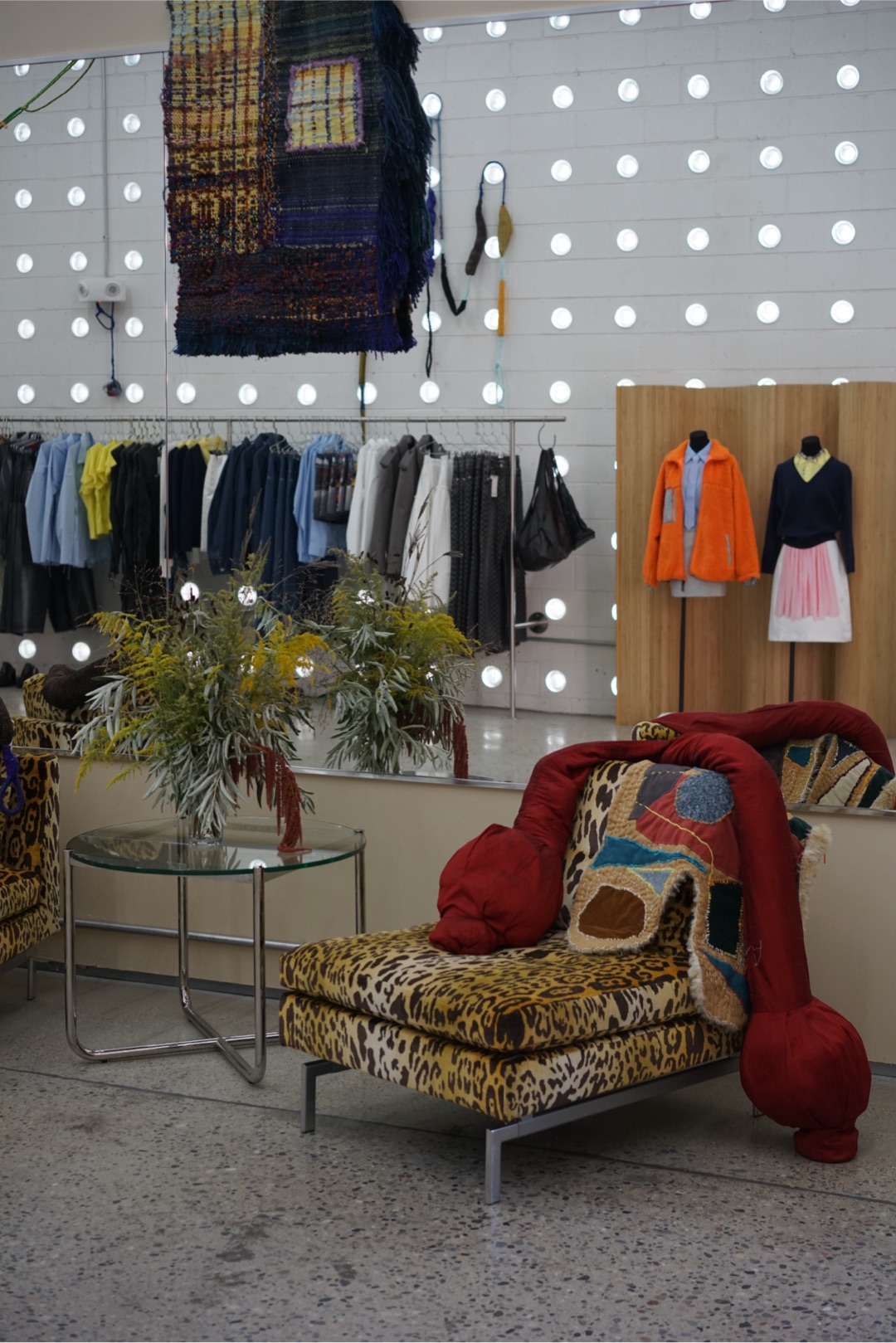
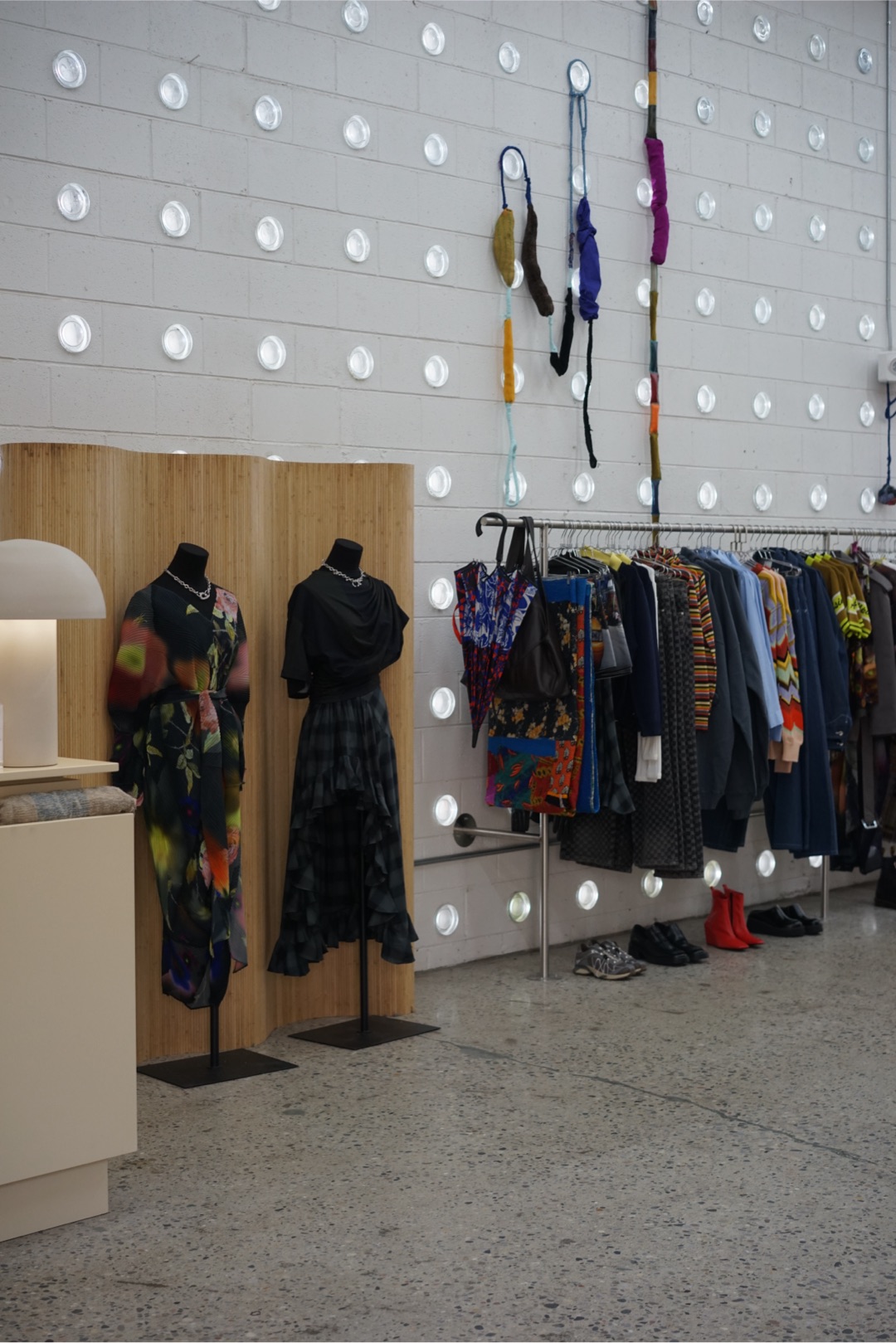
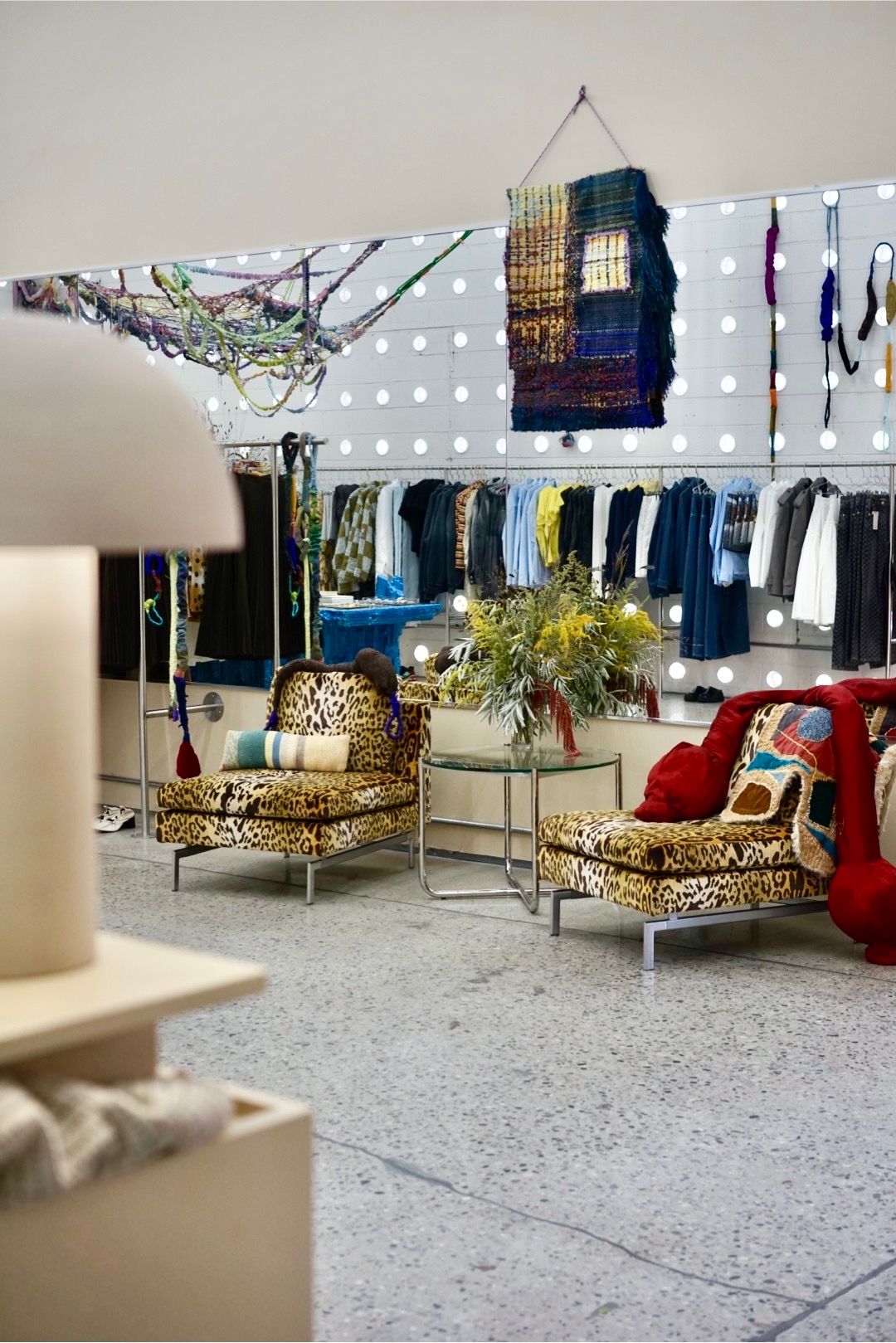
Coup D’état is a one of two local shops in Michigan to be chosen for New York Times list of 50 Best Clothing Stores in America. The article states Coup D’etat is inspirational and distinctive in its approach to customers and its community.
Located on Detroit’s east side, its nestled in a growing community of new and legacy Detroit residents. The store has embedded itself with local movers and shakers, making sure to be present and open to support local makers.
In 2025, Coup D’état held an art exhibition honoring the legacy of Detroit photographer Bill Rauhauser, highlighting the work he did capturing everyday life in Detroit through the 20th century.
Angela Wisenski-Cobbina is the owner and founder of Coup D’état. She wanted to make sure the boutique was than luxury shop, she wanted it to be inclusive for all people at all price points.
Angela spoke with The Metro’s Tia Graham about opening the space in 2019 and the journey so far.
Listen to The Metro weekdays from 10 a.m. to noon ET on 101.9 FM and streaming on demand.
WDET strives to cover what’s happening in your community. As a public media institution, we maintain our ability to explore the music and culture of our region through independent support from readers like you. If you value WDET as your source of news, music and conversation, please make a gift today.
New car prices didn’t spike after President Donald Trump announced sweeping tariffs in the spring, as some experts and dealers projected.
But prices on many models are now pushing notably higher — and analysts said carmakers recouping Trump’s higher import costs is a key factor.
Consider a recent analysis that found automakers are implementing more aggressive price increases on 2026 model-year vehicles compared to when 2025s were hitting dealership lots last year.
Cloud Theory, which tracks car inventory on dealer websites across the country, found the average marketed price increase on 2026 models was nearly $2,000, compared to an approximately $400 uptick during last year’s model year changeover. This year, 23 models have at least a $2,000 price hike; last year there were just nine.
“What I think is different this year is you have a lot of cost increases that are $1,000 or $1,500 or more, $2,000 or more,” said Rick Wainschel, Cloud Theory’s vice president of data and analytics, whose analysis looked at 2026 models with at least 2,000 vehicles in inventory.
“I think that’s a big change and a big shift that’s occurred, and it’s hard to point to any other catalyst for that (except for) tariff costs that the OEMs have had to absorb for the last eight months, and will likely have to absorb going forward,” he said.
Any increase comes on top of average car prices that were already hovering around $50,000. Pair that with stubbornly high interest rates, and the average monthly car payment is now $766, according to Edmunds.com Inc., up more than 3% from a year ago. A record share of subprime borrowers has been falling behind on their auto loans this fall.
Yet the huge car sticker price increases tied to tariffs — which analysts originally warned might tally anywhere from an extra $5,000 to $15,000 per vehicle — haven’t come to pass.
Among the reasons: competitive pressures between rival automakers, concern over blowback from Trump, large pre-tariff vehicle inventories that gave companies a lag time before pricing adjustments were needed, as well as policy adjustments that reduced the pain of the tariffs themselves.
Automakers opted to absorb many of the extra costs in the near term.
But if you’re shopping for a new car right now or plan to in the coming months, experts said it is likely tariffs will cost you in one way or another, even if it’s tough to discern exactly how. Automakers haven’t been eager to publicly disclose any connection between tariffs and their pricing adjustments.
Vehicle destination charges — those mandatory fees for transporting the car to the dealership — are rising, revealing one area where automakers “might be trying to make up a little bit of the costs,” said Erin Keating, an executive analyst at Cox Automotive Inc.
There are also signs of automakers pulling features out of certain models in a bid to trim costs while holding the same sticker price, a phenomenon known as shrinkflation. And then there are indications of carmakers offsetting their tariff costs with higher 2026 model-year MSRPs.
“Automakers really held their prices throughout the ’25 model year, and we’re starting to see a bit (of an impact) in ’26,” said Stephanie Brinley, an auto analyst with S&P Global Mobility. “But it’s being wrapped up in different ways, so it’s very difficult to suss out.”
Car companies often adjust pricing on new model-year vehicles, whether due to minor repackaging of features and trim levels, or full overhauls that include new technology and freshened sheet metal. Brinley said that means there’s no clear way for consumers to figure out where those extra tariff costs might’ve been tacked on.
Keating agrees the tariff impacts have been hard to pin down. Average car prices have been rising steadily much of this year — with September reaching an all-time high above $50,000 — but she said some of that uptick would have been expected anyway because of normal inflation.
Sy Newman of Walled Lake checks out the vehicles in the showroom while waiting for his car to be serviced at the Golling Chrysler Dodge Jeep Ram dealership in Bloomfield Hills, April 10, 2025. (David Guralnick, Detroit News/The Detroit News/TNS)
The analyst now feels confident those initial shocking projections of price hikes in the 10% to 15% range aren’t going to happen: “The market just won’t bear it,” she said.
Automakers appear to be settling into their new normal under Trump. They’ve secured at least some tariff relief on parts and vehicles imported from certain countries, while simultaneously feeling the benefits of Trump’s moves to loosen federal vehicle emissions and fuel economy standards.
A September J.P. Morgan report estimated combined tariff costs on vehicles and parts will amount to $41 billion in the first year, rising to $45 billion in year two and $52 billion in year three.
The bank expects automakers and consumers to ultimately share the burden equally, which could lead to a 3% increase in new vehicle prices: “This will hit consumers hard,” the report said, “especially as many are already struggling to afford new vehicles.”
Wainschel, the Cloud Theory analyst, said average prices listed on dealer websites have only increased a few hundred dollars per vehicle since the tariffs took effect in early April. But that’s because automakers have pushed an increasing number of affordable models and trims into the market, which has helped hold the overall average price down.
If the current mix of vehicle types listed for sale was the same as it was back in April, Wainschel said, average prices would, in fact, look approximately $1,300 higher now: “So there are some things that are masking the increases that are taking place, the segment mix being a big part of it.”
Brendan Harrington, president of Autobahn Fort Worth in Texas, which sells Porsche, BMW, Mini, Volvo, Volkswagen, Jaguar and Land Rover brands, said big price hikes didn’t occur early on as companies fretted over losing market share.
But now, carmakers are beginning to make larger changes in response to tariffs, he said, including trimming back slower-selling models and increasing MSRPs where they can. He said Porsche and Land Rover are two examples of brands that have upped prices in response to tariffs.
And carmakers are also passing through higher destination charges, he said — increases that are adding $200 to $300 to the cost of a car. Tariffs also are contributing to steadily rising costs for Harrington’s parts and service departments.
“Until now, every OEM has really tried to hold the line,” he said. “But we are seeing prices now come up.”
(Detroit News Staff Writer Grant Schwab contributed.)
Cars sit in the showroom at the Golling Chrysler Dodge Jeep Ram dealership in Bloomfield Hills, April 10, 2025. (David Guralnick, Detroit News/The Detroit News/TNS)
The city of Trenton is hosting its first ever Noel Nights. The three-week event aims to bolster its local businesses and highlight extracurricular activities.
This is the first year Trenton has a Downtown Development Authority Director. Angelia Pusino is a lifelong resident of Trenton and the city’s first Director of Downtown Development Authority.
Director of Downtown Development Authority Angelia Pusino
The Metro’s Tia Graham spoke with Angelia about the three week long event, family friendly activities and what makes Trenton a tight-knit community.
Listen to The Metro weekdays from 10 a.m. to noon ET on 101.9 FM and streaming on demand.
WDET strives to cover what’s happening in your community. As a public media institution, we maintain our ability to explore the music and culture of our region through independent support from readers like you. If you value WDET as your source of news, music and conversation, please make a gift today.
Detroit Mayor Mike Duggan gave his exit interview at the Detroit Economic Club Monday.
He says he doesn’t plan to align himself with either party’s congressional races during his campaign for governor in 2026. Duggan was a lifelong Democrat until he decided to run for Whitmer’s seat. He says he’s not worried about how Michiganders vote in the U.S. House races.
“I am going to work with the people in both parties to get results that won’t get reversed every two years as the state flips back and forth. I’m going to try to do what I did in Detroit, convince people that actually solving problems is better politics than tearing each other down.”
Duggan says he plans to run his campaign for governor just like he ran his campaign for mayor—by meeting with voters directly.
His term as mayor ends in January.
Additional headlines from Tuesday, December 9, 2025
Mayor-elect Sheffield gets married
Detroit Mayor-elect Mary Sheffield got married over the weekend. Her transition team confirmed social media chatter, saying she and Ricke Jackson, Jr. tied the knot in a private ceremony at The Godfrey Hotel on Sunday.
Jackson works for the Community Foundation for Southeast Michigan. He runs a youth sports program.
Menorah in the D
Hanukkah starts Sunday and that means Menorah in the D! This will be the 15th annual lighting of the 26 foot menorah. The event begins at 4:30 p.m. with the menorah lighting at 5:30 p.m.
There will be musical performances, strolling street performers, the Detroit Pistons Extreme Team, a chance to take photos with the Chanukah Mensch and Dreidel Man & the dancing Dreidels, and free soup and hot chocolate.
Pontiac welcomes new businesses
The City of Pontiac will celebrate several new additions to its downtown business community tomorrow with a “mass ribbon cutting.”
Eight new businesses will be welcomed to North Saginaw Street with ceremonies starting between noon and 4:00 p.m. Several of the new offices are opening in the building at 91 North Saginaw Street, including an emergency health training services organization, a salon, and a multicultural community center.
At 4:30 p.m. there will be a celebration of the one year anniversary of interior design firm Designed Mindfully.
Free admission to history museums
Admission to the Dossin Great Lakes Museum and the Detroit Historical Museum is free Sunday, Dec. 14 and Dec. 21 this month.
The Dossin on Belle Isle highlights the maritime history of Michigan and the U.S. The Detroit Historical Museum is focused on the comprehensive history of Detroit.
Listen to the latest episode of the “Detroit Evening Report” on Apple Podcasts, Spotify, NPR.org or wherever you get your podcasts.
Trusted, accurate, up-to-date.
WDET strives to make our journalism accessible to everyone. As a public media institution, we maintain our journalistic integrity through independent support from readers like you. If you value WDET as your source of news, music and conversation, please make a gift today.
A Michigan judge ruled against marijuana businesses in the state Monday, rejecting their arguments that a new 24% wholesale tax on their products, imposed by the Legislature as part of a road-funding deal, should be immediately blocked.
The Michigan Cannabis Industry Association has contended that the new tax should have required supermajority support from lawmakers during votes in October, which it didn’t get, because the policy amends a ballot proposal that voters approved in 2018 to legalize recreational marijuana and set a 10% tax on retail sales.
However, Court of Claims Judge Sima Patel said in her 28-page decision Monday that the new wholesale tax bill was “consistent” with the text of the ballot proposal, which recognized “other taxes.”
“Plaintiffs have not met the stiff burden of demonstrating that they will likely succeed on the merits,” Patel wrote of not granting a preliminary injunction against the new law.
For now, her ruling allows the new 24% tax to go into effect Jan. 1.
But it wasn’t an outright victory for the Legislature and Gov. Gretchen Whitmer’s administration.
Patel said there “remain questions of fact” whether the 24% wholesale excise tax interferes with the purposes of the 2018 ballot proposal. Patel noted the businesses had argued that voters “purposefully selected the 10% excise tax on retail sales to keep retail prices reasonable” and to diminish the illicit market.
“Discovery will be required to develop the evidence needed to support the parties’ positions in this regard,” Patel wrote, rejecting the state’s pursuit of a summary judgment against the businesses on the matter.
Patel set a scheduling conference for Jan. 13 but referenced “the high likelihood that both parties will seek an appeal to the Court of Appeals.” Whitmer appointed Patel to the Court of Appeals in 2022.
In reaction to the decision, Rose Tantraphol, spokeswoman for the Michigan Cannabis Industry Association, said the organization plans a “swift appeal.”
“We don’t believe the Court of Claims made the right call,” Tantraphol said. “While we are deeply frustrated by this ruling, I can tell you this: The fight is far from over.”
The wholesale tax was at the center of a road-funding compromise that ended a months-long budget standoff between Democrats and Republicans in the Capitol in October.
The nonpartisan Michigan House Fiscal Agency has projected the wholesale marijuana tax would create about $420 million in additional revenue for roads annually.
Under the state Constitution, to amend a voter-approved policy, three-fourths of the lawmakers in the House and Senate would have to support the change. While the new wholesale tax wasn’t added directly to the voter-approved law, the lawyers argued the tax’s passage effectively amended it.
The 24% new tax didn’t get three-fourths support in the House or Senate. In the Senate, only 19 of the 37 lawmakers supported it.
The Michigan Cannabis Industry Association represents about 400 licensed marijuana businesses. Last year, Michigan’s recreational marijuana retail sales came in at about $3.2 billion, according to monthly reports from the Cannabis Regulatory Agency.
A large crowd gathers outside of the Michigan State Capitol to protest against a potential tax increase on marijuana sales on Tuesday, Sept. 30, 2025 in Lansing. (Katy Kildee/The Detroit News)
WASHINGTON (AP) — President Donald Trump said Monday that he would allow Nvidia to sell an advanced type of computer chip used in the development of artificial intelligence to “approved customers” in China.
There have been concerns about allowing advanced computer chips to be sold to China as it could help the country better compete against the U.S. in building out AI capabilities, but there has also been a desire to develop the AI ecosystem with American companies such as chipmaker Nvidia.
The chip, known as the H200, is not Nvidia’s most advanced product. Those chips, called Blackwell and the upcoming Rubin, were not part of what Trump approved.
Trump said on social media that he had informed China’s leader Xi Jinping about his decision and “President Xi responded positively!”
“This policy will support American Jobs, strengthen U.S. Manufacturing, and benefit American Taxpayers,” Trump said in his post.
Trump said the Commerce Department was “finalizing the details” for other chipmakers such as AMD and Intel to sell their technologies abroad.
The approval of the licenses to sell Nvidia H200 chips reflects the increasing power and close relationship that the company’s founder and CEO, Jensen Huang, enjoys with the president. But there have been concerns that China will find ways to use the chips to develop its own AI products in ways that could pose national security risks for the U.S., a primary concern of the Biden administration that sought to limit exports.
Nvidia has a market cap of $4.5 trillion and Trump’s announcement appeared to drive the stock slightly higher in after hours trading.
President Donald Trump speaks with Elon Musk and Nvidia CEO Jensen Huang, during the Saudi Investment Forum at the Kennedy Center, Wednesday, Nov. 19, 2025, in Washington. (AP Photo/Evan Vucci)
New car prices didn’t spike after President Donald Trump announced sweeping tariffs in the spring, as some experts and dealers projected.
But prices on many models are now pushing notably higher — and analysts said carmakers recouping Trump’s higher import costs is a key factor.
Consider a recent analysis that found automakers are implementing more aggressive price increases on 2026 model-year vehicles compared to when 2025s were hitting dealership lots last year.
Cloud Theory, which tracks car inventory on dealer websites across the country, found the average marketed price increase on 2026 models was nearly $2,000, compared to an approximately $400 uptick during last year’s model year changeover. This year, 23 models have at least a $2,000 price hike; last year there were just nine.
“What I think is different this year is you have a lot of cost increases that are $1,000 or $1,500 or more, $2,000 or more,” said Rick Wainschel, Cloud Theory’s vice president of data and analytics, whose analysis looked at 2026 models with at least 2,000 vehicles in inventory.
“I think that’s a big change and a big shift that’s occurred, and it’s hard to point to any other catalyst for that (except for) tariff costs that the OEMs have had to absorb for the last eight months, and will likely have to absorb going forward,” he said.
Any increase comes on top of average car prices that were already hovering around $50,000. Pair that with stubbornly high interest rates, and the average monthly car payment is now $766, according to Edmunds.com Inc., up more than 3% from a year ago. A record share of subprime borrowers has been falling behind on their auto loans this fall.
Yet the huge car sticker price increases tied to tariffs — which analysts originally warned might tally anywhere from an extra $5,000 to $15,000 per vehicle — haven’t come to pass.
Among the reasons: competitive pressures between rival automakers, concern over blowback from Trump, large pre-tariff vehicle inventories that gave companies a lag time before pricing adjustments were needed, as well as policy adjustments that reduced the pain of the tariffs themselves.
Automakers opted to absorb many of the extra costs in the near term.
But if you’re shopping for a new car right now or plan to in the coming months, experts said it is likely tariffs will cost you in one way or another, even if it’s tough to discern exactly how. Automakers haven’t been eager to publicly disclose any connection between tariffs and their pricing adjustments.
Vehicle destination charges — those mandatory fees for transporting the car to the dealership — are rising, revealing one area where automakers “might be trying to make up a little bit of the costs,” said Erin Keating, an executive analyst at Cox Automotive Inc.
There are also signs of automakers pulling features out of certain models in a bid to trim costs while holding the same sticker price, a phenomenon known as shrinkflation. And then there are indications of carmakers offsetting their tariff costs with higher 2026 model-year MSRPs.
“Automakers really held their prices throughout the ’25 model year, and we’re starting to see a bit (of an impact) in ’26,” said Stephanie Brinley, an auto analyst with S&P Global Mobility. “But it’s being wrapped up in different ways, so it’s very difficult to suss out.”
Car companies often adjust pricing on new model-year vehicles, whether due to minor repackaging of features and trim levels, or full overhauls that include new technology and freshened sheet metal. Brinley said that means there’s no clear way for consumers to figure out where those extra tariff costs might’ve been tacked on.
Keating agrees the tariff impacts have been hard to pin down. Average car prices have been rising steadily much of this year — with September reaching an all-time high above $50,000 — but she said some of that uptick would have been expected anyway because of normal inflation.
The analyst now feels confident those initial shocking projections of price hikes in the 10% to 15% range aren’t going to happen: “The market just won’t bear it,” she said.
Automakers appear to be settling into their new normal under Trump. They’ve secured at least some tariff relief on parts and vehicles imported from certain countries, while simultaneously feeling the benefits of Trump’s moves to loosen federal vehicle emissions and fuel economy standards.
A September J.P. Morgan report estimated combined tariff costs on vehicles and parts will amount to $41 billion in the first year, rising to $45 billion in year two and $52 billion in year three.
The bank expects automakers and consumers to ultimately share the burden equally, which could lead to a 3% increase in new vehicle prices: “This will hit consumers hard,” the report said, “especially as many are already struggling to afford new vehicles.”
Wainschel, the Cloud Theory analyst, said average prices listed on dealer websites have only increased a few hundred dollars per vehicle since the tariffs took effect in early April. But that’s because automakers have pushed an increasing number of affordable models and trims into the market, which has helped hold the overall average price down.
If the current mix of vehicle types listed for sale was the same as it was back in April, Wainschel said, average prices would, in fact, look approximately $1,300 higher now: “So there are some things that are masking the increases that are taking place, the segment mix being a big part of it.”
Brendan Harrington, president of Autobahn Fort Worth in Texas, which sells Porsche, BMW, Mini, Volvo, Volkswagen, Jaguar and Land Rover brands, said big price hikes didn’t occur early on as companies fretted over losing market share.
But now, carmakers are beginning to make larger changes in response to tariffs, he said, including trimming back slower-selling models and increasing MSRPs where they can. He said Porsche and Land Rover are two examples of brands that have upped prices in response to tariffs.
And carmakers are also passing through higher destination charges, he said — increases that are adding $200 to $300 to the cost of a car. Tariffs also are contributing to steadily rising costs for Harrington’s parts and service departments.
“Until now, every OEM has really tried to hold the line,” he said. “But we are seeing prices now come up.”
While car prices didn't spike after tariffs took effect, they have been climbing. Experts say it's difficult to track exactly how tariffs are impacting consumers because there is not a line item on the windown sticker for the higher import taxes. (Bess Adler, Bloomberg)
WASHINGTON (AP) — President Donald Trump said Sunday that a deal struck by Netflix to buy Warner Bros. Discovery “could be a problem” because of the size of the combined market share.
“There’s no question about it,” Trump said, answering questions about the deal and various other topics as he walked the red carpet at the Kennedy Center Honors.
The Republican president said he will be involved in the decision about whether the federal government should approve the $72 billion deal. If approved by regulators, the merger would put two of the world’s biggest streaming services under the same ownership and join Warner’s television and motion picture division, including DC Studios, with Netflix’s vast library and its production arm.
The deal, which could reshape the entertainment industry, has to “go through a process and we’ll see what happens,” Trump said.
“Netflix is a great company. They’ve done a phenomenal job. Ted is a fantastic man,” he said of Netflix CEO Ted Sarandos, noting that they met in the Oval Office last week before the deal was announced Dec. 5. “I have a lot of respect for him but it’s a lot of market share, so we’ll have to see what happens.”
Asked if Netflix should be allowed to buy the Hollywood giant behind “Harry Potter” and HBO Max, the president said, “Well that’s the question.”
“They have a very big market share and when they have Warner Bros., you know, that share goes up a lot so, I don’t know,” he said. “I’ll be involved in that decision, too. But they have a very big market share”
Sarandos made no guarantees at their meeting about the merger if it is approved, Trump said, adding that the CEO is a “great person” who has “done one of the greatest jobs in the history of movies and other things.”
FILE – Ted Sarandos arrives at the premiere of “The Electric State” on Monday, Feb. 24, 2025, at The Egyptian Theatre in Los Angeles. (Photo by Jordan Strauss/Invision/AP, File)
He repeated that a merger would create a “big market share” for the company.
“There’s no question about it. It could be a problem,” Trump said.
Associated Press writer John Carucci contributed to this report.
President Donald Trump and first lady Melania Trump walk the red carpet before the 48th Kennedy Center Honors, Sunday, Dec. 7, 2025, at the John F. Kennedy Center for the Performing Arts in Washington. (AP Photo/Julia Demaree Nikhinson)
Michigan House Speaker Matt Hall said Friday he’s considering pursuing a new state commission or fee schedules to limit what hospitals can charge for their services, as part of a bid to lower health care costs.
The Kalamazoo County Republican made the comments during an appearance on WKAR’s “Off The Record” overtime segment while discussing his caucus’s priorities for the upcoming year. The speaker referenced the Michigan Public Service Commission, which currently gets to approve or alter rate increases proposed by gas and electric utilities that have monopolies within their service territories.
“I am looking at potentially proposing a new … public service commission, but for the hospitals, to regulate their price increases,” Hall said.
He added later, “We might need fee schedules.”
Hall’s comments came amid reports of rising health care costs nationwide and a push by some political candidates to focus on lowering medical bills and insurance premiums paid by their constituents. However, a new government panel to intervene in hospitals’ financial decision-making would represent a significant change for an industry that employs hundreds of thousands of Michigan residents.
Brian Peters, CEO of the Michigan Health and Hospital Association, said Friday that his group “is always willing to engage in discussions that can improve affordability and reduce government intervention.”
“Hospitals remain committed to addressing rising healthcare costs,” Peters said. ”Insurance premiums are ultimately determined by insurance companies, not hospitals, while independent analyses show that prescription drug costs and administrative expenses are driving insurance premium inflation.”
“The price a patient sees on their hospital bill reflects not just the specific care team who treated them, but also overall operational costs that keep the hospital running 24 hours a day, 365 days a year,” the McLaren website says.
The Detroit News reported in October that Blue Cross Blue Shield of Michigan was hiking its small group insurance premiums an average of 12.4% next year for its Blue Care Network HMO plans. In the individual market, state regulators allowed Blue Cross to hike its premiums by 24%, as three insurers stopped selling so-called “Obamacare” plans in Michigan.
In an interview in October, Tricia Keith, Blue Cross’s CEO, referenced a study by the RAND Corp. that concluded hospital mergers gave the health systems more negotiating power with insurers, increased patient volume for services, reduced competition and contributed to increased health care spending.
“We are concerned with (hospital) consolidation because there are a number of studies that have come out and shown — the RAND study, for instance — that hospital consolidation does drive up prices,” Keith said.
During his public television interview on Friday, Hall said something has to be done to lower health care costs.
“We see these big Taj Mahals they’re building,” Hall said of new facilities built by Michigan hospital systems. “I’m just saying it’s out of control.”
Some hospital executives, including Henry Ford Health CEO Bob Riney, have defended new medical facilities. Henry Ford Health is currently erecting a new $2.2 billion hospital across West Grand Boulevard from its flagship Detroit hospital, where the tower dates back to 1915.
“I would ask people to think about the inefficiencies in the design of a building that was designed to be a hospital over 100 years ago,” Riney said. “… If anyone has shown a great use of a building for a hundred-plus years, it’s us.”
Democrats in the Michigan Senate have approved bills to create a new state board with the power to study prescription drug costs and set maximum caps on prices if they’re determined to be too expensive for patients.
Sen. Darrin Camilleri, D-Trenton, said the ideas Hall floated Friday seemed somewhat similar to the Senate’s plan for the Prescription Drug Affordability Board.
“We have a great plan that’s sitting in the House chamber and that’s been sitting there for many months,” Camilleri said.
Camilleri added that Hall has continued to attack Michigan’s hospitals. In September, Hall called for the ouster of Brian Peters, the leader of the Michigan Health and Hospital Association, after the group criticized the House GOP’s budget plan.
Michigan House Speaker Matt Hall, R-Richland Township, said Friday he is toying with the idea of having a state panel set limits on what hospitals can charge for medical care in a bid to drive down the escalating cost of health care. (Daniel Mears, The Detroit News/The Detroit News/TNS)
WASHINGTON (AP) — Nvidia CEO Jensen Huang met separately with President Donald Trump and Republican senators Wednesday as tech executives work to secure favorable federal policies for the artificial intelligence industry, including the limited sale of Nvidia’s highly valued computer chips to U.S. rivals like China.
Huang’s closed-door meeting with Republicans on the Senate Banking Committee came at a moment of intensifying lobbying, soaring investments and audacious forecasts by major tech companies about AI’s potential transformative effects.
Huang is among the Silicon Valley executives who warn that any restrictions on the technology will halt its advancement despite mounting concerns among policymakers and the public about AI’s potential pitfalls or the ways foreign rivals like China may use American hardware.
“I’ve said repeatedly that we support export control, that we should ensure that American companies have the best and the most and first,” Huang told reporters before his meeting at the Capitol.
He added that he shared concerns about selling AI chips to China but believed that restrictions haven’t slowed Chinese advancement in the AI race.
“We need to be able to compete around the world. The one thing we can’t do is we can’t degrade the chips that we sell to China. They won’t accept that. There’s a reason why they wouldn’t accept that, and so we should offer the most competitive chips we can to the Chinese market,” Huang said.
Huang also said he’d met with Trump earlier Wednesday and discussed export controls for Nvidia’s chips. Huang added that he wished the president “a happy holidays.”
The Trump administration in May reversed Biden-era restrictions that had prevented Nvidia and other chipmakers from exporting their chips to a wide range of countries. The White House in August also announced an unusual deal that would allow Nvidia and another U.S. chipmaker, Advanced Micro Devices, to sell their chips in the Chinese market but would require the U.S. government to take a 15% cut of the sales.
The deal divided lawmakers on Capitol Hill, where there is broad support for controls on AI exports.
A growing battle in Congress
Members of Congress have generally considered the sale of high-end AI chips to China to be a national security risk. China is the main competitor to the U.S. in the race to develop artificial superintelligence. Lawmakers have also proposed a flurry of bills this year to regulate AI’s impact on dozens of industries, though none have become law.
Most Republican senators who attended the meeting with Huang declined to discuss their conversations. But a handful described the meeting as positive and productive.
“For me, this is a very healthy discussion to have,” said Sen. Mike Rounds, a South Dakota Republican. Rounds said lawmakers had a “general discussion” with Huang about the state of AI and said senators were still open to a wide range of policies.
Asked whether he believed Nvidia’s interests and goals were fully aligned with U.S. national security, Rounds replied: “They currently do not sell chips in China. And they understand that they’re an American company. They want to be able to compete around the rest of the world. They’d love to some time be able to compete in China again, but they recognize that export controls are important as well for our own national security.”
Other Republicans were more skeptical of Huang’s message.
Sen. John Kennedy, a Louisiana Republican who sits on the upper chamber’s Banking Committee, said he skipped the meeting entirely.
“I don’t consider him to be an objective, credible source about whether we should be selling chips to China,” Kennedy told reporters. “He’s got more money than the Father, the Son and the Holy Ghost, and he wants even more. I don’t blame you for that, but if I’m looking for someone to give me objective advice about whether we should make our technology available to China, he’s not it.”
Some Democrats, shut out from the meeting altogether, expressed frustration at Huang’s presence on Capitol Hill.
“Evidently, he wants to go lobby Republicans in secret rather than explain himself,” said Massachusetts Sen. Elizabeth Warren, the top Democrat on the Senate Banking Committee.
Warren added that she wanted Huang to testify in a public congressional hearing and answer “questions about why his company wants to favor Chinese manufacturers over American companies that need access to those high-quality chips.”
Nvidia CEO Jensen Huang listens as President Donald Trump speaks during the Saudi Investment Forum at the Kennedy Center, Wednesday, Nov. 19, 2025, in Washington. (AP Photo/Evan Vucci)
Merchants and organizations in the midtown area have organized a holiday event to keep the spirit of Noel Night going. The annual event’s 51st run has been canceled. But almost 60 shops, restaurants, and community organizations have come together to launch “Merry Midtown” in the spirit of Noel Night.
City Bird’s Andy Linn says there will be concerts at the Detroit School of the Arts, exhibits at Wayne State, DJs at several sites and more.
“And there’s going to be pop up markets at about a dozen of the larger businesses including a really cool vintage and flea market at the majestic. And then there’s going to be live music at a number of locations including Red Hook and Motor City Brewing Works. There’s going to be so many little surprises.”
Business owners say Noel Night is often one of the most lucrative of the whole year – and also when many people discover small businesses in the area. They hope it returns next year, but Merry Midtown may also be here to stay.
Additional headlines from Tuesday, December 2, 2025
New Detroit lions
Detroit has welcomed three new lions at the Detroit Zoo.
A 9 year-old African lioness named Amirah gave birth to the cubs late last month. A fourth cub did not survive. The kitty cats are expected to meet the public in a few months.
Go Lions!
Pontiac’s Holiday Extravaganza
Pontiac is hosting its 44th Holiday Extravaganza Saturday. There will be a 5K Elf Run, a “Run, Little Elf” Run, a holiday parade, pony rides, winter festival, a visit from the Clauses and more.
The event is a holiday celebration for Pontiac, Auburn Hills, Waterford and White Lake. It starts at 8 a.m. and runs until 2 p.m. around Saginaw Street in downtown Pontiac.
Dry autumn
This fall was metro Detroit’s driest autumn since 1998. The National Weather Service’s preliminary data show we got just over four inches of rain, the least amount of precipitation for any fall this century.
That also ranks as the tenth driest autumn in southeast Michigan since the government started keeping records in 1874.
Listen to the latest episode of the “Detroit Evening Report” on Apple Podcasts, Spotify, NPR.org or wherever you get your podcasts.
Support local journalism.
WDET strives to cover what’s happening in your community. As a public media institution, we maintain our ability to explore the music and culture of our region through independent support from readers like you. If you value WDET as your source of news, music and conversation, please make a gift today.
Bitcoin and companies tied to cryptocurrencies extended a nearly two-month swoon Monday, tracking with a broader market sell-off in technology companies that many see as overvalued.
Bitcoin slid 6.5% after being down nearly 12% earlier in the day, settling in just above $85,000. The most-traded cryptocurrency is down about 33% since hitting a record $126,210.50 on Oct. 6, according to crypto trading platform Coinbase. Bitcoin had soared since April in line with the stock market and driven partly by a more crypto-friendly tone in Washington.
Companies that enable investors to buy and sell cryptocurrencies, as well as the growing number of companies who have made investing in bitcoin their main business focus, were hammered in Monday’s sell-off.
Coinbase Global fell 5.4% and online trading platform Robinhood Markets lost 4.4%. Bitcoin mining company Riot Platforms dropped 2.8%.
Strategy, the biggest of the so-called crypto treasury companies that raises money just to buy bitcoin, tumbled 10%. The company has reported holding 649,870 bitcoin. As of 1 p.m. ET Monday they were worth about $55 billion.
American Bitcoin, in which President Donald Trump’s sons Eric Trump and Donald Trump Jr. hold a stake, fell 8.1% and is now down more than 41% since Sept. 30.
Other Trump-related crypto ventures have seen declines as well. The market value for the World Liberty Financial token, or $WLFI, has fallen to about $4.14 billion from above $6 billion in mid-September, according to coinmarketcap.com And the price of a meme coin named for President Donald Trump, $TRUMP, is $5.67, a fraction of the $45 asking price just before his inauguration in January.
One popular way of investing in bitcoin is through spot bitcoin ETFs, or exchange-traded funds, which allow investors to have a stake in bitcoin without directly owning the cryptocurrency. According to data from Morningstar Direct, investors pulled $3.6 billion out of spot bitcoin ETFs in November, the largest monthly outflow since the ETFs began trading in January 2024.
Bitcoin futures are down nearly 24% in the past month. At the same time, gold futures are up almost 7%.
Analysts point to a number of factors that have led to the sell-off in bitcoin and other crypto investments, including a broad risk-off sentiment that has gripped markets this fall, sending investors toward safer havens such as bonds and gold.
In a research note to clients last week, Deutsche Bank analysts also attributed the recent declines in crypto to institutional selling, other long-term holders collecting profits and a more hawkish Federal Reserve. Stalled crypto regulation has also contributed to the uncertainty, Deutsche Bank said.
“While volatility remains inherent, these conditions indicate Bitcoin’s portfolio integration is being tested, and raises questions of whether this is a temporary correction or a more prolonged adjustment,” the analysts wrote.
On the regulatory front, the crypto industry received a boost in July when Trump signed into law regulations that set initial guardrails and consumer protections for stablecoins, which are tied to assets like the U.S. dollar to reduce price volatility compared with other forms of cryptocurrency.
But a bill that creates a new market structure for cryptocurrency remains stalled in the Senate. The bill has been a top priority for the crypto industry since it spent heavily to elect Trump and install other allies in Washington.
FILE – Bitcoin tokens are seen on April 3, 2013, in Sandy, Utah. (AP Photo/Rick Bowmer, File)
In this episode of CuriosiD, we begin to answer the question:
What happens to the Campus Martius tree after the holidays?
… By first looking into where our Christmas trees come from.
At Hillside Christmas Tree Farm in southern Michigan, the work of growing holiday trees begins long before December.
Tony Stefani runs the multi-generation family operation, and also serves as president of the Michigan Christmas Tree Association. He first became involved with the organization more than a decade ago, after his father brought him to a growers’ meeting.
“I had no idea how large this industry truly is,” he says. “There’s a farm in Michigan that sells a million trees annually. It’s quite astonishing when you consider the scale of this business.”
What customers want to know
Customers at Hillside Christmas Tree Farm often ask how long their trees will last. Stefani says a fresh-cut tree should hold up through the holidays. “I’ve received photos in mid-February showing trees still standing and even beginning to sprout new growth,” he says.
Another category of questions has to do with ornaments. “I’m very detail-oriented,” Stefani says. “If you have heavy decorations, I recommend certain species based on their characteristics.”
Young saplings, like these, require more attentive care.
Tree height is also a growing topic, especially as more homes are built with vaulted ceilings. He says, “There is a strong market for tall trees…but taller trees are generally older [and take] more time in the ground, more effort, and higher costs.”
Better for the environment?
Questions about sustainability are becoming increasingly common, and Stefani believes the benefits of real Christmas trees are clear.
“We offer a product that spends seven to ten years growing in nature, supporting various microecosystems, ” Stefani says. “One acre of trees produces enough oxygen for 18 people.”
He contrasts that with artificial trees, which are “manufactured on assembly lines from petroleum-based materials,” arguing that there’s no environmental case in their favor.
Real trees are also biodegradable. He says that after the holiday season, a tree can be recycled and mulched. “On our farm, we recycle the waste and return it to the land, something that can’t be done with artificial trees,” Stefani says.
A full, healthy tree ready for the holiday season.
A Michigan tree heads to the White House
This year, Michigan earned national attention in the industry. “For the first time in 38 or 40 years, Michigan won the national competition,” Stefani says. Corson’s Tree Farm will send a roughly 15-foot concolor fir to the White House.
“If you win the state competition, you can compete nationally,” he explains. “And if you win nationally, your tree is presented to the president and the first lady.”
Beyond the holidays
Hillside has become a hub for other members of the community. Beekeepers place hives on the property during the summer. Search-and-rescue teams train their dogs on the acreage. Falconers and professional photographers also make use of the farm.
“We’ve hosted hives for supporting pollination,” Stefani said. “Search and rescue training, falconry activities, and collaborations with photographers seeking scenic backgrounds are also part of what we do.”
It takes time to grow
Stefani says one of the biggest misconceptions about the industry is how much time it takes for a Christmas tree to grow to commercial height. “I wish people understood how long these trees are actually in the ground,” he said. “The trees we harvested this year were planted back in 2016.”
Luke Gleason of Clinton, MI returns each year to find the perfect tree.
As president of the Michigan Christmas Tree Association, Stefani says many growers worry about how difficult it is to enter the business, mainly because trees take years to mature before they can be sold.
“Our biggest competitor is the artificial tree,” he says. “Entering this business can be quite difficult for new growers. You’re typically looking at a 7 to 10-year period before you start recouping your investment.”
As the holiday season approaches, he says one of the things he wants those searching for the perfect Christmas tree to understand is the time, energy, and effort it takes to bring this holiday centerpiece to your home.
Stay tuned for the next CuriosiD, where we answer what happens to our Christmas trees after the holidays.
WDET’s CuriosiD series answers your questions about everything Detroit. Subscribe to CuriosiD on Apple Podcasts, Spotify, NPR.org or wherever you get your podcasts.
We want to hear from you!
Have a question about southeast Michigan’s history or culture? Send it our way at wdet.org/curiosid, or fill out the form below. You ask, we answer. Want more stories like this? Sign up for WDET’s weekly newsletter and never miss a curiosity uncovered.
Support the podcasts you love.
One-of-a-kind podcasts from WDET bring you engaging conversations, news you need to know and stories you love to hear. Keep the conversations coming. Please make a gift today.
A WDET listener wanted to know what happened to the big tree in Campus Martius after the holiday season… but first, we take a look at Michigan’s Christmas tree industry to provide more context.
In this episode of “CuriosiD,” we answer a question about a beloved Detroit holiday tradition that ran for nearly 40 years before quietly ending in 2002.
When the curtain rises on “Irving Berlin’s White Christmas” this December, it won’t just mark the start of Grosse Pointe Theatre’s 78th season. It will christen a new artistic home.
After nearly a decade of performing in borrowed and temporary spaces, the company steps into the gleaming, state-of-the-art Schaap Center with a production that celebrates community, honors veterans and embraces the heart of the holidays.
Running Dec. 5-21, this beloved musical offers everything audiences come to the theater for this time of year: romance, nostalgia, lavish costumes, spirited dance numbers, and, of course, Berlin’s timeless music. But behind the sparkle is a deeper message. It’s one that resonates strongly with this company and the community it serves.
A new stage, a new chapter
For Director Nick Marinello, this performance at the Schaap Center stage is both a milestone and a moment of gratitude.
“Stepping onto the Schaap Center stage feels like the culmination of eight years of creativity, resilience and gratitude,” Marinello said. “We’ve been itinerant performers for nearly a decade, and the Grosse Pointe schools graciously kept us alive during that time. Now, there’s this incredible sense of responsibility that comes with walking into our new performance home.”
That responsibility is woven through every design choice, every rehearsal and every collaborative moment among the cast and crew.
“The Grosse Pointe community, the Detroit community, and so many generous partners came together to make this space a reality,” Marinello added. “We feel called to be good ambassadors for the arts here.”
It’s a fitting sentiment for a production that centers on service, generosity and the bonds that hold people together, particularly during the holidays.
A story rooted in gratitude and service
Based on the iconic 1954 film starring Bing Crosby and Danny Kaye, “White Christmas” follows Army buddies Bob Wallace and Phil Davis as they pursue a pair of singing sisters to Vermont, only to discover that the failing inn where the women are booked is owned by their beloved former commander, Gen. Waverly. In true musical-comedy fashion, romance, laughter and heartwarming surprises ensue.
But beyond the snow-dusted charm and big dance breaks, the story has an emotional core that speaks directly to audiences and to this year’s creative team.
“For me, the song ‘What Do You Do With a General?’ captures the heart of those themes,” Marinello said. “It’s a poignant reflection on how retired service members can be celebrated for their heroism yet still overlooked when they return to civilian life. The show invites us to make sure our words of thanks aren’t hollow, but supported by real acts of service.”
Those themes hit especially close to home for Apprentice Director Kyle Weatherbee, an eight-year Marine Corps veteran who served in Hawaii and Okinawa. Weatherbee sees the musical not simply as a holiday classic, but as a story of reintegration and support.
“The Marine Corps has a way of humbling people through hardship, sacrifice and service,” he said. “Some of the characters in this production are navigating life after the military, trying to find purpose and joy again. I have walked that path and understand the struggles and triumphs of adjusting to a new normal.”
Weatherbee added that the show’s depiction of chosen family — the Army veterans who rally together for their general — reflects the real impact of community support. “At its core, ‘White Christmas’ is about people helping people. Acts of kindness can have a lasting impact.”
Grosse Pointe Theatre’s production of "Irving Berlin’s White Christmas" will run Dec. 5-21 at the Schaap Center in Grosse Pointe Park. Leading the cast are Mario Simone (Bob Wallace), top, Manda Borden (Betty Haynes), Jillian Evennou (Judy Haynes),and Zak Shugart (Phil Davis). (Photo courtesy of Grosse Pointe Theatre)
A GPT production through and through
While the story is timeless, the production itself is uniquely Grosse Pointe Theatre. A cast of 26 performers and a backstage crew of 25 bring the musical to life, supported entirely by the passion, talent and craftsmanship of volunteers.
“What makes this production uniquely GPT is the signature blend of artistry, craftsmanship and heart that comes from a volunteer-driven community,” Marinello said. “Every detail — the costumes, choreography, musical arrangements, and set design — carries that unmistakable ‘GPT touch.’ It’s the pride, care and collaborative energy that people in this community pour into a show.”
Audiences can look forward to all the classic visual hallmarks of “White Christmas” — elegant 1950s winter glamour, sweeping dance numbers, and musical favorites such as “Blue Skies,” “Sisters,” “Count Your Blessings Instead of Sheep,” and, of course, “White Christmas.” For many, these songs are woven into the fabric of the season itself.
In this production, they will be complemented by stunning costumes, vivid sets and “the kind of warmth only community theatre can deliver,” Marinello said.
In addition to the musical itself, audiences can enjoy festive pre-show entertainment. Metro Detroit choral groups will perform seasonal favorites 30 minutes before each curtain, and Santa and Christmas Carol will appear at select performances. Patrons are encouraged to arrive early to explore the theater and enjoy the amenities of the Schaap Center and the Manoogian Art Gallery.
For the broader GPT community, this production is more than the start of a new season; it’s the start of a new home.
“This marks a historic moment in our 78-year history,” said Linda Zublick, executive director of Grosse Pointe Theatre. “The move to a new performance home would not be possible without our dedicated members, passionate patrons, generous donors, and the vibrant community that has supported us every step of the way.”
Marinello echoes that sentiment.
“‘White Christmas’ is Grosse Pointe Theatre’s holiday card to the metro Detroit community,” he said. “Our way of saying ‘thank you’ for making a difference and supporting the arts. We invite everyone to celebrate this special season with us.”
As the company looks ahead, Marinello hopes this production sets the tone for the next chapter.
“I hope this production feels like a housewarming for us and for the audience,” he said.
If you go
What: “Irving Berlin’s White Christmas,” presented by Grosse Pointe Theatre
When: Dec. 5-21, with evening shows at 7:30 p.m. and Sunday matinees at 2 p.m. Pre-show choral performances begin 30 minutes before. Special Santa appearances on Dec. 11 and Dec. 14.
Where: Schaap Center for the Performing Arts, 15001 E. Jefferson Ave., Grosse Pointe Park
Parking: Free self-parking and complimentary valet
Runtime: About 2 hours, 30 minutes, with an intermission
Manda Borden as Betty Haynes and Jillian Evennou as Judy Haynes perform the iconic number “Sister” in "Irving Berlin’s White Christmas", presented by Grosse Pointe Theatre.
(Photo courtesy of Grosse Pointe Theatre)
Grosse Pointe Theatre’s production of "Irving Berlin’s White Christmas" will run Dec. 5-21 at the Schaap Center in Grosse Pointe Park. Leading the cast are Mario Simone (Bob Wallace), left, Manda Borden (Betty Haynes), Zak Shugart (Phil Davis) and Erin Johnson (Judy Haynes). (Photo courtesy of Grosse Pointe Theatre)
NEW YORK (AP) — Maybe your car broke down, your computer was stolen, or you had a surprise visit to urgent care. Emergencies are inevitable, but you can prepare to deal with them by building an emergency fund.
“There are so many things that happen in our lives that we don’t expect and most of them require financial means to overcome,” said Miklos Ringbauer, a certified public accountant.
The industry standard is to save three to six months of expenses in an emergency fund. However, this can feel daunting if you live paycheck to paycheck or if you have debt. But if you’re in either of these situations, it’s even more crucial to build a financial safety net that can help you in times of crisis.
“Emergency funds allow you to prevent further debt,” said Jaime Eckels, certified financial planner and wealth management leader for Plante Moran Financial Advisors.
Suppose you’re paying multiple credit cards and other loans. In that case, Rachel Lawrence, head of advice and planning for Monarch Money, a financial planning and budgeting app, recommends that you make the minimum payments while you build your emergency fund. Once you’ve hit an amount that feels right for your lifestyle, you can go back and continue tackling your debt more aggressively.
Whether you want to start an emergency fund or create better habits while you save, here are some expert recommendations:
Start with small milestones
The idea of saving for three to six months’ worth of expenses can be daunting, so it’s best to start with a smaller milestone. Lawrence recommends starting with a goal of saving $1,000, then moving on to save one, three, and six months of expenses.
The way you approach this goal can vary depending on your income and your budget. But starting with small, attainable goals can help you build an emergency fund without feeling financially strained.
“Starting small is okay. Even if it’s $20 right out of your paycheck, those small things can add up,” Eckels said.
She recommends building your emergency fund in a separate account from your regular savings account, ideally a high-yield savings account, which offers a higher interest rate than a traditional savings account.
Decide on the appropriate amount for your life
Knowing how much to save for your emergency fund depends on your life situation. Lawrence suggests you gauge your own financial responsibilities to estimate how much your ideal emergency fund should be.
For single professionals with no significant financial responsibilities, such as a mortgage or a car, the amount might be $2,000 to $3,000. At the same time, people with children and several pets might aim to save for six months’ expenses.
“There’s no one-shoe-fits-all solution. Everybody is different, especially if you have variable expenses on a monthly basis,” Ringbauer said.
Lawrence recommends that self-employed people maintain two emergency funds: one to buffer low-income months and another for true emergencies. To build your buffer account, Lawrence recommends setting aside some money during high-earning months.
“You set that amount aside in your buffer account until you have two or three months of the amount that you want, she said. “Because that way any month where you have less money, you go pull from the buffer and it’s no big deal.”
Automate your savings
Eckels recommends setting up automatic savings as a low-effort way to build your emergency fund.
Scheduling your savings to be withdrawn from your bank account as soon as your paycheck arrives is an effective way to build a savings habit without having to transfer the money manually.
“I always tell people if it was never in your bank account, you never had it, right?” Eckels added.
She also recommends that her clients open a separate account, one that isn’t at the same bank as their checking account, so they aren’t tempted to transfer the money in a non-emergency.
Make it visual
As you’re making progress towards your emergency fund goal, making it visual can help you stay motivated, according to Lawrence.
She recommends getting creative with how you track your progress, ideally with a method that brings you joy.
“You want your brain to get rewarded as often as possible when you’re seeing a bunch of progress,” she said.
Some options to make your progress visual include drawing a thermometer-like tracker and keeping it updated as you advance toward your goal, documenting your progress on a habit-building tracker on your phone, or using a budgeting app with a tracking tool.
Save windfalls
If your budget is really tight and you don’t have much wiggle room to set aside money for an emergency fund, Lawrence recommends saving windfalls.
“Unexpected chunks of money that maybe you weren’t expecting, like tax refunds or getting a third paycheck when you normally get paid twice a month, or a bonus, those are your best ways to make progress when you’re tight otherwise,” said Lawrence.
In general, Lawrence recommends that people keep 10% of their windfall for themselves and the rest for their emergency fund. With that breakdown, you can both save and feel rewarded by the unexpected income.
If you use it, don’t feel guilty
FILE – Medical bills are seen in Temple Hills, Md., on June 26, 2023. (AP Photo/Jacquelyn Martin, File)
Chances are that an emergency will happen, and when it does, you don’t need to feel guilty for using your emergency fund, Lawrence said. Instead, it’s best to think about how you’ve achieved your goal of building a financial safety net for yourself.
“You wouldn’t feel bad about using your down payment to buy a house, you wouldn’t feel bad about saving for retirement, actually to retire,” Lawrence said.
The Associated Press receives support from Charles Schwab Foundation for educational and explanatory reporting to improve financial literacy. The independent foundation is separate from Charles Schwab and Co. Inc. The AP is solely responsible for its journalism.
FILE -Customers of American International Assurance (AIA), a wholly owned subsidiary of American Insurance Group (AIG) stand in line outside the AIA office as they wait to speak to customer service officers, and some others seeking advice on terminating their insurance policies on Tuesday Sept. 16, 2008 in Singapore amid fears that that American Insurance Group, the world’s largest insurer, was fighting for its survival after downgrades from major credit rating firms, adding pressure as AIG seeks billions of dollars to strengthen its balance sheet.(AP Photo/Wong Maye-E, File)
The growing awareness of the value among parents wanting to develop and inspire their child’s interests is not only driving more companies to develop educational products but pushing sales.
According to a report by Global Market Insights the STEAM (Science, Technology, Engineering, Arts and Mathematics) toy market is projected to reach $13 billion by 2032. Among the toymakers meeting the demand is Assaf Eshet, CEO and founder of Clixo , a flexible, origami-inspired magnetic system that was recently named one of Time magazine’s Best Inventions of 2025. As an industrial designer who has worked for some of the top names in the toy industry, Eshet said his mission has always been to create toys that inspire exploration rather than dictate outcomes.
Brooklyn Knott, 9, left, and Ava Salcio, 9, fourth-graders at Clintondale Community Schools’ McGlinnen Elementary School and members of its student council try out Clixo, one of several STEAM toys not only earning awards but the attention of kids who love to build things. (Photo courtesy of Alexandra Hichel/Clintondale Community Schools)
“Kids should have a real appetite for curiosity,” said Eshet. “Our job as parents, teachers and toymakers is to strike that nerve of wonder and keep it alive.”
That’s what Playmobil did for him as a child.
“I used to assemble them and then reassemble them to make them my own,” Eshet said during a phone interview from New York City.
Now children are taking his kits, assembling them as they are and then reimagining them to be something else.
“Things that we can’t even imagine they are already creating,” said Eshet, who launched the brand in 2020 with a few kits and has expanded it to include 20 kits ranging from $15 to $200. New this year for aspiring paleontologists is Dinosaur Adventure (6-up, $49.99).
“It’s an amazing set,” Eshet said, of the newest addition to the Clixo family featuring 36 pieces that can be used to make a variety of dinosaurs or whatever creature comes to mind.
“You can mix and match them, too,” said Eshet, whose Clixo brand is also in the running for the Toy Foundation’s Best Creativity Toy of the Year.
The company also earned the Best Creative Fun Award by Tillywig and was named to Toy Insider’s Top Holiday Toys list in 2023.
Clixo is a new favorite but the launch of STEM toys happened around the same time as the space race and the inauguration of the National Aeronautics and Space Administration in 1958.
“The scientific achievements of the next three decades from the moon landing, artificial heart, personal computing and cell phones all yielded a call for enhanced science education,” according to a report from Forbes. “The call was answered by the National Science Foundation (NSF), which established guidelines for the teaching of science, math, engineering and technology in grades K-12, introducing the acronym SMET. However, educators and policymakers found the term awkward and unappealing, evensuggesting it sounded like ‘smut’. So in 2001, the NSF officially rebranded the initiative STEM and more recently STEAM, as ‘Art’ was added.”
“A lot of parents are buying STEAM toys that have educational value and those toys become treasures,” said Julie Everitt, co-owner of Whistle Stop Hobby and Toy in St. Clair Shores, which has been in the business of selling toys for more than 50 years. Everitt said there are a number of cool new STEAM toys out this year including Rail Cube by Sanko Toys (3-up, $99.99-$199.99).
“The set comes with magnetic tubes that you connect to create a little monorail for a little engine,” Everitt said. “It’s a super cute set and it really goes.”
Another favorite at Whistle Stop is Hape’s Lock and Learn Playboard (3-6, $34.99), a wooden busy board featuring little exercises that teach kids meaningful tasks like how to unlock a latch or turn on a light. Among the STEAM toys growing in popularity among older kids is Rolife’s miniature kits ($49.99). Tweens and teens, even adults can build everything from little houses and book nooks to tiny greenhouses.
“Most of them are for ages 14 and up but we do carry some for 8-plus,” Everitt said, sharing but a few of the STEAM toys making this year’s hot list.
More toys
Looking for a few more toys. Check out our kids’ review of this year’s lineup of STEAM toys along with many others that are expected to make Santa’s Wish List inside the Homefront section and on our website.
Meet toymaker Assaf Eshet, an industrial designer who came up with the idea for Clixo, a STEAM toy that’s been making everyones hot list of toys this holiday season including Time’s 2025 Best Inventions. (Photo courtesy of Clixo)

 Login
Login
 writes for NerdWallet. Email: kashford@nerdwallet.com. Twitter: @kateashford.