
Normal view

There are new articles available, click to refresh the page.
Before yesterdayMain stream

CuriosiD: What happens to the Christmas tree in Campus Martius after the holidays?

18 December 2025 at 21:05

In this episode of CuriosiD, we answer the question:

What happens to the Campus Martius tree after the holidays?

According to the National Christmas Tree Association, real trees are a renewable and recyclable resource, and there are more than 4,000 local Christmas tree recycling programs across the country.

Recycled trees can be used in a number of ways, from making mulch to burning the wood for energy. Up to 30 million live trees are sold every year in the U.S.

According to the company Mid-Michigan Recycling, if all those Christmas trees were recycled and turned into electricity, it could power 650,000 homes for a month.

Campus Martius Xmas Tree

The options

The Downtown Detroit Partnership, which is in charge of the Christmas Tree display at Campus Marius,  sent this statement:

“The Norway spruce that the city chooses each year is near the end of its life cycle. For every Michigan tree harvested, three new ones are planted. Each tree is recycled in a number of ways, whether into mulch or lumber, and then reused in Detroit parks, donated to local schools, or set aside for special cultural projects.”

Tree recycling of Christmas past

Mid-Michigan Recycling was once hired to recycle the tree.

Aaron Hess is the company’s operations manager.

“So the tree was cut up and put into a dumpster. Unfortunately, whoever loaded it got like some street barriers and ornaments and some other things kind of mixed into it, into the loads as it was delivered,” Hess said.

Hess says that because the tree had too many contaminants, namely, tree ornaments and tinsel, they were not able to do the job a second year in a row.

“We worked with the crews to clean it up and get the tree recycled, but it was a little extra work that we can’t normally do, uh, at least regularly.”

Mid-Michigan Recycling

Mid-Michigan Recycling is the exclusive wood supplier for the Genesee Power Station, which is an energy plant that produces green, renewable energy from wood waste.

The facility receives most of its trees from cities with curbside pick-up in their neighborhoods. But people can also drop off trees at any time at their sites in Livonia or Macomb Township for free.

Hess says sending the trees to his company is a good option because there are not a lot of alternatives to salvage pine trees after the holidays.

“A Christmas tree doesn’t have the greatest value as a mulch product,” Hess says. “The needles and the bark content of a Christmas tree is pretty high compared to the, you know, to the wood itself.  And then the pine needles just don’t make a good mulch.”

A full, healthy tree ready for the holiday season.

More creative uses

But there are other uses for an old Christmas tree. Amy Start is the Executive Director of the Michigan Christmas Tree Association. She says one option is to use the tree as a different kind of decoration in your own backyard.

“You can put it outside and put like different kinds of crumbs and bird seed and things like that on it.” Start says. “And then just watch the birds come throughout the winter. It’s a great spot for them to perch, and you can really get some good entertainment out of it.”

Start says some have even used old evergreens for erosion control on beaches or as fish habitats in lakes. She even suggests contacting local farms who may be collecting trees.

“Goats love Christmas trees. So, check with a farm like that. You can also check with the Christmas tree farm itself. Some of them will have a program where they take the tree back, and then they can chip it up for you as well,” Start says.

How to get your tree recycled

Most cities have some sort of Christmas tree pick-up. Detroit is one of those cities. For two weeks after the new year, Detroit will collect Christmas trees placed on the curb on the neighborhood’s normal garbage collection days.

And those who miss that window can take their tree to a citizen drop-off site—locations can be found on Detroit’s Department of Public Works website.

But residents should be sure to remove all ornaments, lights, and tinsel from the trees first, as they can make them ineligible for recycling.

WDET’s CuriosiD series answers your questions about everything Detroit. Subscribe to CuriosiD on Apple PodcastsSpotifyNPR.org or wherever you get your podcasts.

We want to hear from you! 

Have a question about southeast Michigan’s history or culture? Send it our way at wdet.org/curiosid, or fill out the form below. You ask, we answer.
Want more stories like this? Sign up for WDET’s weekly newsletter and never miss a curiosity uncovered.

Support the podcasts you love.

One-of-a-kind podcasts from WDET bring you engaging conversations, news you need to know and stories you love to hear. Keep the conversations coming. Please make a gift today.

More CuriosiD

The post CuriosiD: What happens to the Christmas tree in Campus Martius after the holidays? appeared first on WDET 101.9 FM.
Best music of 2025 on WDET

12 December 2025 at 15:02

Beginning Friday, December 12, Ryan Patrick Hooper kicks off a week-long celebration for the best music of 2025 on In The Groove.

Each day, a different WDET music host will join Ryan to share their favorite releases of the year and reflect on the artists, albums and sounds that shaped 2025. From jazz to hip-hop, indie, electronic and beyond, experience the full spectrum of the music that defined the year, all through the ears of WDET’s trusted music hosts.

  • Friday, Dec. 12: Ryan Patrick Hooper from In The Groove noon to 3 p.m

Tune in »


A year of community and creativity

2025 was a year of remarkable community commitment for WDET. When government funding for Detroit Public Radio was cut, our listeners showed up in force. We reached our fall fundraising goals and welcomed more than 250 new members in the first week of December alone. Detroit once again demonstrated that this community stands up for independent media, storytelling, music and culture when it matters most.

And let’s be honest — Detroit is a music city. As global audiences released unforgettable work across every genre, Detroit’s own music scene continued to thrive, innovate and put out some of its strongest recordings yet. From celebrated artists to emerging talent, the city’s creative energy remains unmatched.

Celebrating sound together

In The Groove is rooted in no genres — just good music, and this year’s “Best Of” series is a celebration of the artists, recordings and musical moments across the full spectrum of sound that moved us in 2025. It’s a musical reflection of the year we just lived through and a reminder of the power of music to connect and inspire us.

And the celebration wouldn’t be complete without you! Let us know your favorite songs of 2025, and we’ll share your picks on the air. Leave us a message on the Groove Hotline at 313-577-3414, or use the “Open Mic” feature in the WDET mobile app before Dec. 19 to be included.

Join us all week long as we honor the art, artists and listeners who made 2025 unforgettable.

See the Best of 2025 playlists »

Listen to the full playlist:

Tune in starting Friday, Dec. 12 on 101.9 WDET FM, stream anytime at wdet.org — and follow along online for daily Best Of playlists and reflections from our music hosts.

See the Best of 2025 playlists »

Support the shows you love.

WDET’s unique music programs are dedicated to exploring the music and culture of our region and the world. Keep the music going. Please make a gift today. Give now »

The post Best music of 2025 on WDET appeared first on WDET 101.9 FM.

VERDAD disinformation monitoring AI tool receives grant to expand services

4 December 2025 at 21:07

Wayne State University Law School’s Damon J. Keith Center for Civil Rights received a $350,000 grant to expand a disinformation tool, “VERDAD: Verifying and Exposing Disinformation and Discourse.”

The AI-powered tool monitors U.S.-based ethnic radio stations for disinformation in Latino media.

VERDAD Founder and journalist Martina Guzmán says the tool will expand to all 50 states in multiple languages and also globally.

“Oftentimes, people think there’s going to be like, this commercial that’s complete disinformation. And what happens is on Latino radio stations, on ethnic radio stations, people have talk shows. And on those talk shows, it is often those people that host the talk shows that are spreading disinformation,” she says. 

Guzmán says the tool began monitoring Latino radio stations in battleground states ahead of the 2024 election.

“We felt that the election would be won or lost in those states at the time. And that was the capacity we had that we could do these eight battleground states and maybe a few more,” she says. 

The grant was awarded to the Wayne State University Law School’s Damon J. Keith Center for Civil Rights by the John D. and Catherine T. MacArthur Foundation to expand its reach of languages and locations.

Guzmán says the tool works as a civil rights safeguard to empower voters.

“The tool records 24 hours a day, and once it hears misinformation, right? And it hears it based on hundreds and hundreds of disinformation keywords that we’ve uploaded into its system. And once it hears one of those words, it begins to really focus… it has an analysis component,” she says.

Since the VERDAD tool’s inception last year, more than 320 academics and journalists have registered to use the free tool on Verdad.app to write articles and research trends of LatinX voters.

The tool will add several languages, including Arabic, Haitian Creole, and Vietnamese to inform voters.

Trusted, accurate, up-to-date.

WDET strives to make our journalism accessible to everyone. As a public media institution, we maintain our journalistic integrity through independent support from readers like you. If you value WDET as your source of news, music and conversation, please make a gift today.

Donate today »

The post VERDAD disinformation monitoring AI tool receives grant to expand services appeared first on WDET 101.9 FM.

Macomb executive says county thrives despite economic uncertainty

4 December 2025 at 18:55

The head of Macomb County’s government says the economic uncertainty felt in some sections of Michigan has yet to truly impact his area.

County Executive Mark Hackel summed up the situation in his annual State of Macomb County speech.

Hackel says the county is not just weathering the ebbs and flows of the overall U.S. economy but thriving in the midst of them.

Listen: Macomb executive says county thrives despite economic uncertainty

The following interview has been edited for length and clarity.

Mark Hackel: With our financial situation, our economic foundation, we’re in a great place. I know the things that you’re hearing across the country are challenging. But there’s so many things that kind of help lift us up. We’re pretty diverse too, though we rely heavily upon the automotive and defense industries and manufacturing. But the reality is Macomb is in a very sound place.

Quinn Klinefelter, WDET News: President Trump’s tariffs have impacted various segments of the U.S. economy, including the auto sector, which does have a pretty significant presence in Macomb County. Some of the prices for vehicles are starting to climb now. Do you have any concerns about how tariffs or the overall economic outlook are going to impact jobs or other parts of Macomb County’s economy?

MH: We’re always concerned about what happens at the federal and or state level that may have an impact on our economy. But look at what happened in 2010. There was a huge challenge with manufacturing, job losses, housing shortages that we faced back then. And we doubled down on manufacturing. By doing so, we’ve seen our economy continue to grow here.

Macomb County is a $54.2 billion economy. That’s bigger than the states of Vermont and Wyoming. We are right now at an all-time high. There’s never been a better time in Macomb County with our economy being as robust as it is right now. So whatever might happen with some of these tariffs or other economic concerns, we’re not seeing it directly have an impact right now. We’re in a good place with that.

QK: There is some financial stress in other parts of the country, other parts of Michigan, other parts of metro Detroit, for that matter. In your view, why is Macomb County doing well when some of these other places are having a bit of a struggle?

MH: We decided to double down on manufacturing. We retooled some of our manufacturing facilities. They’re different than they once were. We upgraded them. We really put a full-court press on making sure people understood that with our workforce, from concept to consumer, no one does it better than right here in southeast Michigan. And Macomb County is a major part of that. We are the defense capital of the Midwest. More contracts are awarded to Macomb County, as far as the actual number and the money associated with them, than anywhere else in the entire Midwest. So we keep promoting that, we keep pushing that.

And I think all the attention that we’ve been trying to drive has really helped us. We used a protecting growth strategy when we first got in and worked with the state on that. And we’ve done so well that we’re not really as worried about protecting anymore because we’re seeing that continuous growth. So we’re fortunate. Working with everybody has really had an impact on where we’re at today.

QK: In last year’s State of the County speech, you said that Macomb needed to focus on partnerships instead of partisanship. There was a line about not reaching across the aisle but getting in the aisle. How’s that bipartisan effort been going for you?

MH: Aside from a certain election here or there, for the most part, partisanship is not our conversation. None of that drives what we do here in Macomb County. People are willing to work with each other. You’ve heard that phrase, “Us versus everybody.” Some sports teams use it sometimes, municipalities or communities use it, as a sense of pride, a sense of esprit de corps. But when I look back on 15 years of how Macomb County has got to where it’s at and how we’ve evolved, we’ve kind of flipped the narrative on that. We look at it as, “Macomb with everybody.”

We’re trying to partner at the local, state and federal level. And never do we look at it as, “We can’t talk to them because they’re Democrats or Republicans. We can’t let their idea soak through or let them get successful because their party may get credit for it.” We don’t talk about that, don’t think about it. It’s a call for everybody who wants to come to be part of the solution. And if somebody looks more like they’re wanting to be part of the problem or be just a naysayer, we accept that. But the reality is we continue to forge ahead with people that want to provide solutions and help us get to where we need to go.

QK: When you talk about bipartisan cooperation, there are elections next year that could be pretty significant on a number of fronts. Michigan U.S. Rep. John James, for one, is running for governor and leaving a seat open that represents part of Macomb County. And there is a gubernatorial race underway. Whoever ultimately wins, what would you like to see from Lansing that you think could really affect Macomb County?

MH: That same willingness to partner and work with us rather than figure out how they could get credit by giving support to one particular area or segment of the state as opposed to somewhere else. Ensuring they are not ignoring any community within the state of Michigan. Specifically for Macomb County, whoever the governor is needs to realize they’re not the governor on behalf of the party, they’re the governor on behalf of the people. So govern on behalf of the people. That’s all I ask from whoever the next governor is. Work together on projects that matter, whether it’s in Macomb County, southeast Michigan or beyond.

QK: In terms of the partnerships that you’ve had, are there specific projects that you would like to see either the state or the federal government partner with Macomb on? Or projects that you’re pleased that they have partnered with you on to date?

MH: I’ll go with the ones I’m pleased that they have done to date. We got some support from the state because they realized the importance of our new jail project. It isn’t just about a jail. It’s about dealing with people that are going to be assessed for mental health or substance abuse when they’re brought in at the first point of contact. Every municipality now is partnered-in on this particular facility. We make a determination whether there’s any substance abuse, then decide what we need to do. The state partnered with us with some financial contributions because it impacts the state prison system too. When people are leaving our facility and sentenced on a felony, they’re going to the state facility. We look at what happened with Mound Road, a quarter of a billion dollar project. We got some state funding to help support that as well as federal and local. And then look what happened with Selfridge Air National Guard Base and us pushing the defense industry here in Macomb County. We are the defense capital of Midwest. And I do declare that at some point in time we’re going to be the defense capital of America.

There’s so much happening and we’re so excited about that. But there’s more to be done. We’re partnering on trying to figure out how we retool a facility or find a new use for the Romeo Ford engine plant. We’re looking at the Romeo airport. There’s a lot more that we need to do with our water quality. The support we get from Candice Miller and her team at Public Works. I’m telling you, there’s another trusted voice and a fierce advocate for cleaning our waterways and making sure we’re addressing underground issues. So, a lot has been happening. We’re going to continue those conversations and hopefully wherever the next governor is, they’re willing to address the issues that we’re talking about as opposed to politics.

The whole issue of where we’re headed as a region and even as a state is incredibly important. The biggest thing is that we all need to come together because we need to be competitive with other regions around the globe. And southeast Michigan is a major player. But our biggest challenge right now is our workforce, making sure that we’re attracting people to this area so they take on these jobs. That provides better opportunities for these manufacturers or companies that do the things that they do here in southeast Michigan. Us all coming together to promote the region as one.

Trusted, accurate, up-to-date.

WDET strives to make our journalism accessible to everyone. As a public media institution, we maintain our journalistic integrity through independent support from readers like you. If you value WDET as your source of news, music and conversation, please make a gift today.

Donate today »

The post Macomb executive says county thrives despite economic uncertainty appeared first on WDET 101.9 FM.

WDET’s Klinefelter honored by Ball State University

10 November 2025 at 21:50

Reporter Quinn Klinefelter has been inducted into Ball State University School of Journalism and Strategic Communication Hall of Fame.

Klinefelter graduated from BSU in 1986 with degrees in journalism and political science.

During the ceremony, Ball State faculty highlighted Klinefelter’s “deep ability to connect with people from all walks of life and reveal their shared humanity.”

Ball State’s journalism program is one of the most well-respected in the country.

He was inducted alongside longtime Voice of America reporter and anchor Navbahor Imamova.

In his speech to colleagues, family, faculty, and alumni, Klinefelter highlighted the need for journalism now more than ever – while still finding ways for people on the vast political spectrum to find common ground.

The Journalism Hall of Fame plaque for Quinn Klinefelter that will reside at Alumni House on Ball State University’s campus

A well deserved honor

WDET News Director Jerome Vaughn—who has worked with Quinn for more than two decades—was thrilled by the news of Klinefelter’s recognition.

“Quinn is one of the most dedicated and hardest working journalists I know. He has connections everywhere from the presidential candidates, down to the owner of the gas station around the corner. He’s great at talking to people, everyday Detroiters that he meets on the street. And he can get them to talk in authentic, heartfelt ways that few other can. It’s really a gift.

“Quinn has often worked the big story in Detroit over the years, whether it’s presidential candidates coming through the state, or a national story like the conviction of former Mayor Kwame Kilpatrick, or even leaving a tour with then-Texas Governor George W. Bush to go cover a threat to public safety elsewhere in town.  

“But Quinn’s not just a breaking news guy. He uses his witty writing, his curiosity and natural sound to lure listeners in and create stories that stick in their minds for years,” Vaughn said.

Winners of national press and strategic communications awards at Ball State University.

WDET General Manager Mary Zatina echoes those same sentiments.

“WDET listeners recognize Quinn’s voice immediately and they know the reports that follow will be well-researched, true, balanced and illuminating. This Hall of Fame recognition is well deserved and makes all  WDET listeners around the world and around metro Detroit very proud,” Zatina said.

Support local journalism.

WDET strives to cover what’s happening in your community. As a public media institution, we maintain our ability to explore the music and culture of our region through independent support from readers like you. If you value WDET as your source of news, music and conversation, please make a gift today.

The post WDET’s Klinefelter honored by Ball State University appeared first on WDET 101.9 FM.

High prices leave a bitter taste for Detroit coffee shop owners, drinkers

13 October 2025 at 20:46

Caffeine is a part of our daily routine. From that morning cup of Earl Grey to an evening espresso, days are stimulated by cups of coffee and tea. Over the past year, getting that fix is roasting your wallet.

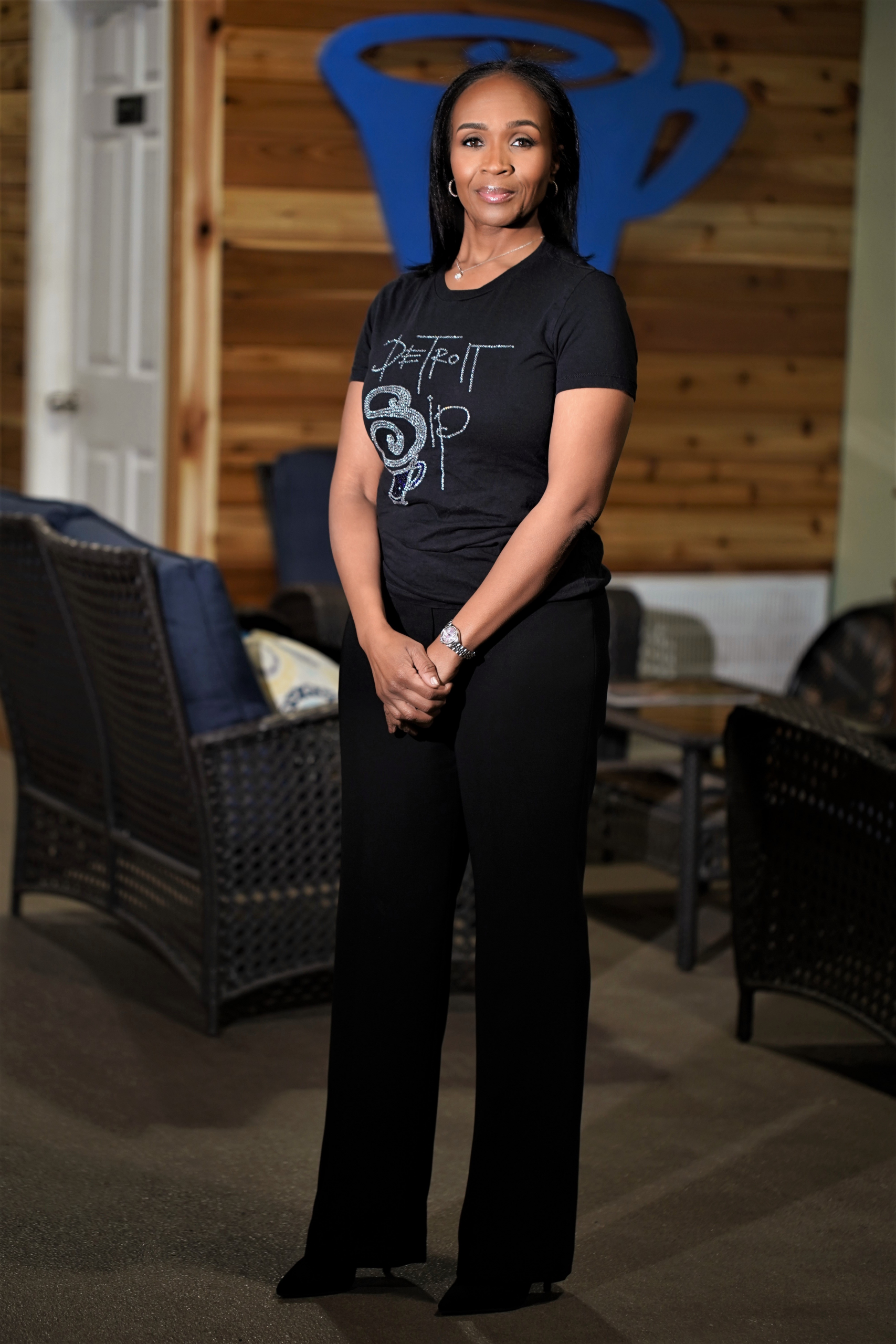
At Detroit Sip, a coffee shop in the city’s Bagley Neighborhood, owner Jevona Fudge has lent out the space for a campaign kickoff event. She and two employees are working to keep everyone happy and caffeinated.

Fudge says business has been a little inconsistent.

“My God, it’s up and down, to be honest, just trying to find creative ways to bring people in,” Fudge said.

“Everybody loves coffee.”

The National Coffee Association says two thirds of American adults drink coffee at a clip of 3 cups per day.

Fudge, whose day job is as an assistant Macomb County prosecutor, says money is tight.

“I don’t really know I’m going to try to make it through the end of the year. I have a job that helps fund the dream, and I need to keep my employees happy,” Fudge said. “So really, just trying to do a balancing act.”

There’s a lot of that going around within metro Detroit’s coffee community, and the industry as a whole.

Craig’s Coffee owner, Craig Batory stands in front of his shop in Detroit’s Chinatown.


Craig Batory, owner of Craig’s Coffee in Detroit’s resurgent Chinatown neighborhood, feels that way. He says prices are up 25-50% over the past year.

“Yeah, I’ve had to raise prices a couple of times in the last year, and that’s just been sort of reflective on the rising cost of coffee,” Batory said. “And that’s not even talking about the tariffs, right?”

About those tariffs, the biggie for coffee drinkers is a Trump Administration levy on imports from Brazil. The South American country is the leading provider of coffee beans in the U.S.

Batory says he’s covered—for now.

“I still have inventory from Brazil, but when that runs out, we’ll have to either figure out a different sourcing option or set our prices accordingly, based on the cost of the coffee rising by 40% the last year and the 50% tariff,” Batory said.

“So you’re looking at potentially a 90% increase.”

Not just tariffs

Coffee prices were rising before the on-again-off-again tariffs.

Frank Lanzkron-Tamarazo moves about 60,000 pounds of beans each year through Chazzano Coffee Roasters in Berkley. He’s spent years developing relationships and sourcing his beans directly from farms.

“So the tariffs really aren’t the problem, and they’re only a temporary problem,” Lanzkron-Tamarazo said.

Turns out there are a bunch of factors that go into that cup o’ joe.

“There are not enough truck drivers, there are not enough workers in in warehouses. There are not enough people picking coffee beans, and there are not enough containers to put the coffee beans in,” Lanzkron-Tamarazo said.

That’s on top of changes to growing conditions due to climate change and changing political climates in coffee growing nations. At Chazzano, that’s translated into a $2-3 per pound increase.

Lanzkron-Tamarazzo says after 15 years in the business he’s used to the ups and downs.

“I lived through a time when coffee prices were unnaturally low, just maybe like three or four years ago, where it was so low that I was worried about the farmers, whether they’re doing well enough during that time, it was so incredibly low,” Lanzkron-Tamarazo said.

Roasted coffee beans at Chazzano Coffee in Berkley.


So while the tariffs aren’t the focus for rising coffee prices, Craig Batory says there is some concern about the levies changing the habits for coffee growers and importers.

“Tariffs have made certain countries sort of shift where they’re selling their coffee. So a lot of countries like Brazil might start shifting their sales from the United States to China, because a lot of Asian countries are starting to consume more coffee.”

Those Asian countries also consume a lot of tea—which has largely avoided the price increases.

Though there’s one big exception according to Jeff Urcheck, a Detroit-based importer of high-end teas for restaurants and coffee shops.

“The past few years have really skyrocketed matcha, in particular, into everybody’s social media algorithm because it’s been such a huge trending health and fitness focused product as an alternative to coffee,” Urcheck said.

Through his company, Hamtramck-based Noka Imports, Urcheck says the politics—even outside of tariffs—hurts his business.

Jeff Urcheck of Noka Imports discusses the difficulties tariffs and the current political climate have put on his business.


“So it’s not really viable for us to deal with tea from China, because there hasn’t been an administration in the past like, well, frankly, during my entire lifetime, who’s been amenable to non-aggressive foreign policy when it comes to China,” Urcheck said.

Urcheck says America First attitudes don’t work for things that won’t grow in the U.S.

“If you’re having a bunch of inconsistent—and frankly maladaptive—trade agreements that are just there to be some kind of a bullying flex on a market that is increasingly reliant on globalization and global trade, you’re kind of putting yourself in a losing position,” Urcheck said.

“We can’t get or make a lot of stuff here. We don’t have the climate for it. We don’t have the natural resources for it. So we are we have to import a lot of stuff.”

So while the initial impact of seemingly arbitrary and constantly changing tariffs isn’t the biggest driving factor for prices it’s still having an impact.

“Smaller businesses, including the ones that I work with… just everybody’s been really kind of stalled and nervous about how these tariffs are going to affect the consumer demand, but also the longevity of their own businesses,” Urcheck said.

Getting creative

Even through this time of higher prices, there’s a thought that independent roasters and importers can provide something that chains like Dunkin’ and Starbucks cannot.

Unroasted beans at Chazzano Coffee in Berkley.

“I think that consumers are going to start being a lot more thoughtful about how they’re spending their money. So the focus right now is to provide a good quality bean, a good quality cup of coffee. And, you know, focus on what our messaging is like. We provide sustainable, traceable coffee, we roast it with care, and we want to make sure that our consumers are have something that’s enjoyable for them to drink,” Batory said.

At Chazzano, Frank Lanzkron-Tamarazo ships out coffee beans to every state in the nation. He feels like he’s threading the needle when it comes to prices.

Owner of Detroit Sip, Jevona Fudge Photo: Ant Green

“There’s an axiom that if you raise your prices and everyone complains, then it’s too high, and if you raise your prices and and no one complains, then it’s too low, and a couple people complain then it’s perfect. And unfortunately for the consumer, no one has complained.”

Back at Detroit Sip, that’s something Jevona Fudge has been thinking about even as she’s been hesitant to adapt to the current coffee market.

“I haven’t raised my prices really like I need to, because I have to balance my customer base and what’s happening in terms of inflation, the increased prices, the tariffs, hoping that they will reach some sense of normalcy before, you know, passing that cost on to the customer. So for right now, I’m eating it,” Fudge said.

Since the pandemic, consumers have been eating the cost of higher food prices too making this rise in coffee prices even tougher to swallow.

Trusted, accurate, up-to-date.

WDET strives to make our journalism accessible to everyone. As a public media institution, we maintain our journalistic integrity through independent support from readers like you. If you value WDET as your source of news, music and conversation, please make a gift today.

Donate today »

The post High prices leave a bitter taste for Detroit coffee shop owners, drinkers appeared first on WDET 101.9 FM.

Jane Goodall, remembered by WDET’s Ryan Patrick Hooper

1 October 2025 at 20:14

Last month, I got the chance to interview Dr. Jane Goodall ahead of her sold-out speaking engagement at the Fisher Theatre.

The ethologist and conservationist died at the age of 91 on Wednesday, according to a statement from the Jane Goodall Institute.

She opened up her two-night stand with a warm embrace of the city: “I think Detroit is happy I’m here,” she joked, to applause and laughter.

Dr. Goodall’s life has a lot to unpack. Throughout her nearly 90-minute time on the stage, her insatiable curiosity for the world was on full display. 

From her time forging a reputation as the world’s foremost expert and advocate for chimpanzees after spending decades studying them in the wild in Tanzania’s Gombe Stream National Park to her global conservation efforts today, she approached each topic with detail and grace; like someone who was clearly not done doing the work she had dedicated her life to.

It’s a story of inspiration, which Dr. Goodall used to help reassure the next generation that there’s still work to be done.

“Go to your community and what you care about,” Dr. Goodall told me during our interview pre-show. “Get involved. If you want to make a difference, you can in your community. It’ll make you feel good. It’ll inspire other people.”

You can read my full interview with the late Dr. Goodall below, and listen to it above—including Dr. Goodall’s attempt to teach me how to “pant-hoot,” a noise that chimpanzees use to identify themselves to other chimps in the wild.

The following interview has been edited for clarity and length.

Ryan Patrick Hooper: You’re holding a stuffed animal. Tell me about this.

Jane Goodall: This is Mr. H. He’s 35 years old, given to me by a man called Gary Horn, who went blind when he was 21 in the US Marines decided to become a magician. Children don’t realize he’s blind, and then he’ll say, “Something may happen in your life. Never give up. There’s always a way forward.”

So he thought he was giving me a stuffed chimpanzee for my birthday, and I made him hold a tail. Gary, chimps don’t have tails. So he said, “never mind, take him where you go. You know my spirit’s with you.” So he’s an example of the indomitable human spirit.

Ryan Patrick Hooper: And I know these have been part of you talking to the next generation, the youth about conservation and the work that still needs to be done still.

Jane Goodall: It needs to be done more than ever before. We are continually destroying the natural world—and not only are we part of it, we depend on it. The food, water, fresh air, clothes, everything. But we depend on healthy ecosystems and one by one by one, we are destroying them.

Ryan Patrick Hooper: People right now, I think feel a little hopeless. I talk to people a lot, “what can I do, what can still be done?” I’m sure you’ve had moments in your career where you’ve felt that way, but you didn’t stop. So what would you wanna say to people that are feeling lost, confused, not so hopeful?

Jane Goodall: I speak to hundreds of them because they all come and say that to me and I say, you know, we have an expression. “Think globally, act locally.” It’s the wrong way around because if you think globally, you become depressed, you can’t help it. Now it’s grim time we’re living in, so, but go to your, in your community, what do you care about there? Maybe you don’t like the letter, maybe you don’t want the the city council to build yet another supermarket.

See what you can do about it. Get people to help you. You find you make a difference that makes you feel good, so then you want to make a bigger difference. Then you inspire more people and then you realize around the world there are people just like me, and then you dare think globally.

Ryan Patrick Hooper: How have you and your relationship changed with these efforts? Because I’m sure you felt very strong and ready to go when you were younger, how has that evolved as you’ve gotten older—with your relationship, really with the natural world and the work you’re doing?

Jane Goodall: Well, you know, when I was little, I wanted to do nothing except live in Africa and study animals. And I did that for many years.

And then when I realized the plight of chimps across Africa, numbers dropping forests being destroyed, um. I realized that I needed to leave Gombe, a place I love and see what I could do. And so that led to the Jane Goodall Institute starting a program to alleviate poverty and the people who were cutting down the trees just to make some money from charcoal or timber or something like that.

And that program is working. It’s now in six African countries where different chapters of JGI work to conserve and study chimpanzees.

Ryan Patrick Hooper: What would be that one message you would want to give to people to keep that hope up as they deal with climate change and a lot of regulation, especially here in the United States, being rolled back beyond.

Just think locally what? What is a piece of advice that can maybe give us some fuel to keep fighting like you are?

Jane Goodall: Well, we have a program for young people from kindergarten through university called Roots and Shoots. Which began with 12 high school students in Tanzania. It’s now in 76 countries with members from kindergarten through university.

And the main message every single day you live, you make some kind of impact. You get to choose what sort of impact you make, and that’s a message for all of us. We all make a difference every day, and by making the right choices. What do you buy? How was it made? Did it harm the environment? Was it cruel to animals like factory farm?

Is it cheap ’cause of unfair wages? Then look for a more ethical alternative, and it might cost a bit more, but you will value it more and waste less.

Ryan Patrick Hooper: Tell me a little bit about what goes into these talks and what people can expect.

Jane Goodall: Well, what people can expect is a sort of look back over 91 years, what’s changed?

We are living through dark times. People are losing hope. Why should we have hope? How can we have hope? And also, in between all of that, it’s, you know, we, we need a new attitude to the environment. We need to understand where part of it and depend on it. We need to understand that animals like us have personalities, minds, and emotions.

We need to start thinking about how we treat them in the wild and domestic animals. We need to think how eating a lot of meat is destroying the environment all over the world. Because these billions of animals in factory farms have to be fed. Huge areas of land are cleared to grow food for them. More food is grown for animal than for starving people, which is shocking.

And water. It takes a lot of water to change plant-animal protein. And they all produce methane gas in their digestion. And that’s a very virulent greenhouse gas. So, you know, I think the main thing is for people to start thinking. About their own environmental footprint, what they can do, the choices they make each day.

Ryan Patrick Hooper: So much of the work has been holding a mirror up to ourselves and our relationship with the natural world as well as chimps and other animals. Yes. Relationship. What can we take away today from chumps? Is there a lesson we need to be thinking about?

Jane Goodall: Well, there’s a lesson in the way that the mothers treat their young. The mothers, the good mothers have the same quality my mother had. They’re supportive of their young ones, and because we’ve now been studying them for 65 years, we know that the chimps who had supportive mothers never mind whether they were high ranking or low ranking. If they supported their child, then the child will grow up to be a better mother.

And if a male, a higher position in the male hierarchy. We can also learn that they’re pretty good at resolving conflict. And we can also realize, which is a bit of a shock, but they have a dark side, can be brutal, aggressive, and kill, but they can also be compassionate and and altruistic.

Ryan Patrick Hooper: That’s in all of us. Hopefully

Jane Goodall: That’s the point. We, they’re just like us. We have a dark side. We have a lighter side, we have a different kind of intellect. We should be able to suppress that dark, aggressive side. We are not doing a very good job right now.

Ryan Patrick Hooper: I love that… And I was tipped off that you can perform something called a pant-hoot?

Jane Goodall: Mm-hmm.

Ryan Patrick Hooper: What, what is this? Explain this and, show it to me if you can.

Jane Goodall: You mean listen to it? I can’t show you.

Ryan Patrick Hooper: You can show me, but we can hear it on the radio.

Jane Goodall: Yeah. Well, chimps don’t live in a group. They live in scattered units, which sometimes come together. And so they need to maintain contact with each other.

And so each chimp has an individual pant-hoot. So if you hear it on the other side of the valley, you know, oh, there’s mom. So [performs pant-hoot]

Ryan Patrick Hooper: Dr. Jane Goodall, thank you so much. Thank you.

Support local journalism.

WDET strives to cover what’s happening in your community. As a public media institution, we maintain our ability to explore the music and culture of our region through independent support from readers like you. If you value WDET as your source of news, music and conversation, please make a gift today.

The post Jane Goodall, remembered by WDET’s Ryan Patrick Hooper appeared first on WDET 101.9 FM.

❌
❌